
At 10:40 a.m. on Monday, January 21st, a pipeline carrying natural gas ruptured in rural Noble County, in southeastern Ohio, producing a fireball that surged 120 feet into the air and engulfed the Noll family home, with 12-year-old son Nash inside. The boy’s grandfather rushed into the inferno and rescued him, says Noble County Emergency Management Agency Director Chasity Schmelzenbach, and together the two ran for their lives. Nash ended up with burns on the back of his legs and neck and on top of his head. “We are just happy our son is alive, honestly,” said mother Brittany Noll when reached by phone at a Comfort Inn, where the family was staying after the explosion. Their home had been largely destroyed.
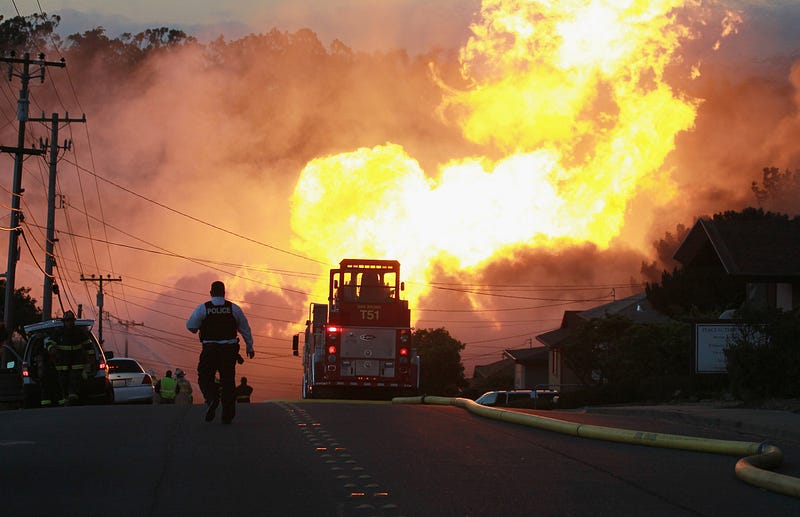 |
| A law enforcement official runs towards a massive fire in a residential neighbourhood on September 9, 2010, in San Bruno, California. |
It was the second time in three years that an explosion carrying a furious wave of burning methane gas had erupted into the lives — and bedrooms and living rooms — of residents living along this 76-year-old pipeline system. The 9,029-mile Texas Eastern Transmission Pipeline, which runs from the Gulf Coast to the Philadelphia and New York City metro areas and is operated by Canadian energy giant Enbridge, also exploded in April 2016 in Salem Township, Pennsylvania, about 30 miles east of Pittsburgh. That incident produced a crater 50 feet long by 12 feet deep and generated a fireball — videotaped by morning commuters — that obliterated a home, melted a road and sent a 26-year-old man to the hospital with third-degree burns over 75 percent of his body.
Read the story from Rolling Stone magazine by Justin Nobel - “The Hidden Risk in the Fracking Boom."

No comments:
Post a Comment