
A few years ago, I found myself in Gunaikurnai country, in a place more recently given the lusty name Paradise Beach. I was driven there by my own strong settler/coloniser impulse, after googling a list of “cheapest beachside addresses in Australia”. My notion was that, given the unlikeliness of my owning an everyday home, I could skip straight to “beach house”. I was looking to cut off a slice of so called Australia, put a fence around it, and indulge in endless summer. I booked an extraordinarily cheap Airbnb and decided to take a recce.
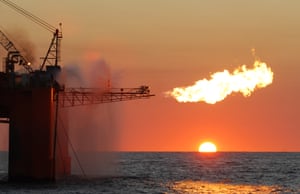 |
| ‘It was a hot midweek day, the first of the smoky ones for Melbourne, and there, in the middle of infinity, was an offshore big rig.’ |
I sped up the highway past the smoking Hazelwood power station and Loy Yang open-cut brown coalmine before turning onto a lonely, unpoliced road through vast swathes of clear-cut pine plantations and agricultural green. I hit Paradise singing country music, taking note of the free but nearly empty RV park, the foreclosed takeaway joint and general store selling nothing but booze and tackle. The action in town was clearly at the two real estate agents, side by side like gunslingers on a dusty main drag.
The whole area smacked of grand enterprise unfulfilled. Fibro shacks, flat pack houses and shanti lean-tos hustled together in the scrubby blocks on streets named Bondi and Clovelly for wealthier beaches. “It’s like the 1970s there,” I’d henceforth tell anyone willing to ignore my 1983 birthdate and nostalgically understand the 70s to mean rebellion, entitlement and AC/DC in any order or combination.
Read the story from The Guardian by Briohny Doyle - “Does writing books still matter in an era of environmental catastrophe?”

No comments:
Post a Comment