
Man-made "volcanoes" shooting sulphur into the sky. A giant space umbrella made up of tiny mirrored ships to block the sun’s light. Re-freezing the poles by pumping seawater through clouds. Covering deserts in reflective sheeting.
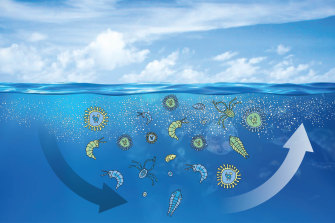 |
| Iron filings dumped in the sea stimulate carbon-gobbling algal blooms, which take the carbon dioxide back down to the bottom of the ocean with them when they die. |
They sound like plots from James Bond films. But as the world teeters closer to climate catastrophe, it’s increasingly scientists, not supervillains, who are giving serious thought to these radical methods of cooling the planet.
Proposals once relegated to the fringes of science are now being tested by the likes of NASA, Cambridge and Harvard. Major scientific authorities, including the Royal Society of London and the UN's own Intergovernmental Panel on Climate Change (IPCC), say we should at least canvass our options for hacking the planet - as an insurance policy if nothing else. This year, for the first time, the US Congress approved millions of dollars in solar reflection research. At the 2020 World Economic Forum almost every head of state, including US President Donald Trump, threw their support behind a large-scale plan to plant and restore one trillion trees across the globe.
Read the story from The Age by Sherryn Groch - “Space mirrors, fake volcanoes: the radical plans to fix the climate.”

No comments:
Post a Comment