Showing posts with label climate movement. Show all posts

07 December, 2019

Should we call climate change an emergency?

The term Climate Emergency has appeared in public discourse with remarkable speed and is now increasingly the language of not just the climate movement, but also a growing number of cities, states, parliaments and Universities. Yet it is not without its critics who argue the language of emergency may have unintended consequences by providing license for potentially dangerous interventions in the climate system, such as solar geoengineering. This article briefly reviews where the term came from, its current influence, risks and prospects.
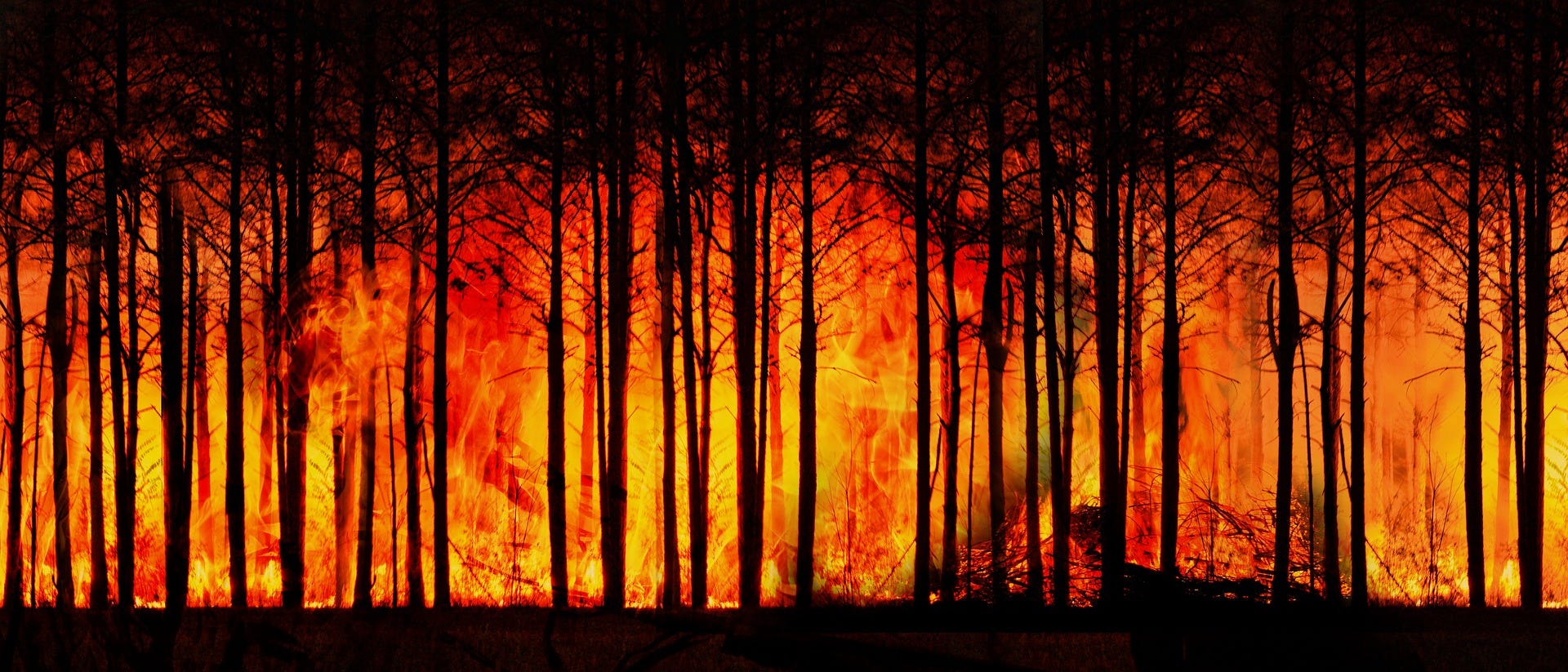
Climate change is increasing the frequency and severity of forest fires.
None of what follows reduces the urgency and seriousness of the climate crisis. In 2018 the Intergovernmental Panel on Climate Change (IPCC) released their most blunt report to date, stating that to stay under 1.5ºC requires the world economies to reach net zero emissions by 2050. Some researchers have since argued that climate change is happening faster than the IPCC has anticipated, potentially breaching the 1.5ºC temperature threshold by 2030. With still rising emissions, and bereft of a politically viable plan to date, current projections point to a 3ºC plus world before the end of this century, with the high risk of crossing climate thresholds from which we may not be able to escape. This is the risk, but not yet the unavoidable future; the world still has capacity to ensure a less dangerous future climate.

Read the story from Medium by Simon Kerr - “Should we call climate change an emergency?

08 September, 2019

Should we call climate change an emergency?

The term Climate Emergency has appeared in public discourse with remarkable speed and is now increasingly the language of not just the climate movement, but also a growing number of cities, states, parliaments and Universities. Yet it is not without its critics who argue the language of emergency may have unintended consequences by providing license for potentially dangerous interventions in the climate system, such as solar geoengineering. This article briefly reviews where the term came from, its current influence, risks and prospects.
Climate change is increasing the frequency and
severity of forest fires,  which seems frighteningly
 relevant in view of the considering the many bushfires
troubling parts of northern New South Wales and
south-eastern Queensland.
None of what follows reduces the urgency and seriousness of the climate crisis. In 2018 the Intergovernmental Panel on Climate Change (IPCC) released their most blunt report to date, stating that to stay under 1.5ºC requires the world economies to reach net zero emissions by 2050. Some researchers have since argued that climate change is happening faster than the IPCC has anticipated, potentially breaching the 1.5ºC temperature threshold by 2030. With still rising emissions, and bereft of a politically viable plan to date, current projections point to a 3ºC plus world before the end of this century, with the high risk of crossing climate thresholds from which we may not be able to escape. This is the risk, but not yet the unavoidable future; the world still has capacity to ensure a less dangerous future climate.
There are at least two distinctive views on the language of emergency, one rooted in concerns that incremental change is too slow and therefore the language around climate change had to change. The second is the assessment by some scholars that dangerous geoengineering technologies may be implemented to reduce global warming in the event emergency action is deemed necessary.

Read the Medium story by Simon Kerr - “Should we call climate change an emergency?

06 April, 2019

Parents around the world mobilise behind youth climate strikes

Parents and grandparents around the world are mobilising in support of the youth strikes for climate movement that has swept the globe.
 Eve White and her children join climate protests in Tasmania.
Under the banner Parents for the Future, 34 groups from 16 countries on four continents have issued an open letter. It demands urgent action to fight climate change and prevent temperatures rising by more than 1.5C, beyond which scientists say droughts, floods and heatwaves will get significantly worse.

“What our kids are telling us is what science has been telling us for many years – there is no time left,” the letter says. “We now owe it to them to act.”


Read the story from The Guardian by Damian  Carrington - “Parents around the world mobilise behind youth climate strikes.”

14 March, 2019

Greta Thunberg nominated for Nobel peace prize.

Greta Thunberg, the founder of the Youth Strike for Climate movement, has been nominated for the Nobel peace prize, just ahead of the biggest day yet of global action.
 ‘I am honoured and very grateful for this nomination,’ said Thunberg. 
Thunberg began a solo protest in Sweden in August but has since inspired students around the globe. Strikes are expected in 1,659 towns and cities in 105 countries on Friday, involving hundreds of thousands of young people.

“We have proposed Greta Thunberg because if we do nothing to halt climate change it will be the cause of wars, conflict and refugees,” said Norwegian Socialist MP Freddy André Øvstegård. “Greta Thunberg has launched a mass movement which I see as a major contribution to peace.”


Read the story from The Guardian by Damian Carrington - “Greta Thunberg nominated for Nobel peace prize.

02 November, 2016

We Don’t Need a ‘War’ on Climate Change, We Need a Revolution

This year is on track to become the hottest ever recorded, and a growing number
Shoes representing protesters at the climate
talks summit in Paris last year.
of environmentalists are using a particular type of language in response. Some are calling for a huge “mobilization” to “combat” climate change. In an article in the New Republic in August, Bill McKibben, the unofficial spokesperson of the climate movement in the United States, insisted in very literal terms that, we
are at war with climate change.

In the United States, we are familiar with war metaphors; and they are often politically useful. We have been through wars on poverty, drugs, cancer and even Christmas. In these cases, metaphors are understood as metaphors, but when McKibben points to territory ceded, space invaded, cultural loss and human suffering, he intends to be taken at face value: “It’s not that global warming is like a world war,” he writes. “It is a world war.”

War rhetoric serves a valuable function. It stresses the seriousness of the harm, its structural nature and the need to struggle against it. Wars require people to sacrifice and to share responsibility for a joint effort larger than individual preferences and comforts. They can also motivate solidarity: The goal of defeating the enemy orients all activity, and whatever may divide or distract us from achieving that goal must be put aside. In the rhetoric-bag of political discourse, “war” is a forceful weapon.

20 July, 2016

U.S. Democratic Party aligns with climate emergency

Last weekend in Orlando the platform committee of the Democratic Party added language into their platform acknowledging the official position of the Democratic Party to be that we are in a global climate emergency. 

Further, the platform acknowledges the scale of the threat to be so large that it will require a leadership response from our country on the scale of our national mobilization to confront the threat of fascism during WWII.  The platform language I offered through an amendment entitled, "Global Climate Leadership", explicitly acknowledges that anything short of that will bring catastrophic consequences to civilization:

Democrats believe it would be a grave mistake for the United States to wait for another nation to lead the world in combating the global climate emergency. In fact, we must move first in launching a green industrial revolution, because that is the key to getting others to follow; and because it is in our own national interest to do so. Just as America’s greatest generation led the effort to defeat the Axis Powers during World War II, so must our generation now lead a World War II-type national mobilization to save civilization from catastrophic consequences.

Adopting this language in our platform is courageous.  It is bold.  It could be said that with the declaration, the Democratic Party has actually stepped out in front of the climate movement in its articulation of the threat, which it seems worthy to note, is appropriately placed as the closing paragraph of the entire platform.

29 January, 2016

Rebooting the climate movement


Until recently, the climate movement has relied on climate denial — be it outright denial of the science or political denial of the need to act — as a major uniting force.

For the ecosystem of groups, people and organizations that make up the climate movement, it was a metaphorical sun. Now, though, the era of climate denial as we’ve known it is gasping its last breaths. As a Guardian headline read in December, “The Paris agreement signals that deniers have lost the climate wars.” Without that unifying force, cracks in the climate movement are starting to deepen. Looking forward, our challenge is whether we can see these cracks as a chance to learn and adapt to an era where this movement shifts from the defensive to the offensive. To do that, however, we’re going to need to build the DNA of the climate movement.

Read the Waging Nonviolence story - “Why the climate movement needs a reboot.”