Showing posts with label discussion. Show all posts

27 January, 2020

Libertarians Can’t Save the Planet

The decline of libertarianism — also known as propertarianism — has inspired a lot of discussion in the past couple of years. The economist Tyler Cowen recently disavowed the label, affirming his commitment to a modified version of the philosophy that he calls “State Capacity Libertarianism.”
The Maria Fire burns on a hillside as it expands up to 8,000
 acres on its first night on November 1, 2019 near Somis, California.
Cowen’s defection continues the exodus of intellectually serious figures from the libertarian milieu, most notably to the so-called liberaltarian Niskanen Center. Both Cowen and the Niskanen cohort have stressed the failure of mainstream libertarianism to formulate an honest response to the climate crisis.
Free-Market Environmentalism: Theory and Practice
When the issue of climate change first received serious attention in the 1990s, for a time it looked set to establish common ground between environmentalists and libertarians. There was much interest in the concept of “free-market environmentalism” or FME, drawing upon the work of British economist Ronald Coase, who had suggested that environmental problems could be resolved through the proper allocation of property rights. Terry Anderson of Montana State University exercised a strong influence in these debates.
FME’s key proposal for addressing climate change was the creation of tradable emissions permits, a model that had been successfully deployed in the case of sulfur dioxide emissions. According to this view, a market in permits would supply incentives to find the most cost-effective path toward reducing emissions, as long as there were appropriate limits on the volume of permits.

Read the story from Jacobin magazine by John Quiggin - “Libertarians Can’t Save the Planet.”

20 November, 2019

Angus Taylor to seek states' support for emissions reduction fund overhaul

Angus Taylor has scheduled a discussion with state and territory energy ministers about the planned overhaul of the Morrison government’s emissions reduction fund, a move following the government’s decision to quietly appoint an expert panel to come up with new ways to cut greenhouse gas emissions.
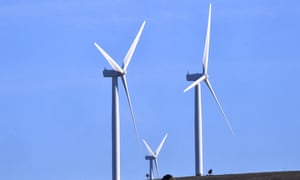
Wind farm turbines east of Canberra
Angus Taylor plans to discuss the emissions reduction
 fund overhaul at Friday’s long-delayed meeting of
federal and state energy ministers.
According to the draft agenda for Friday’s Coag energy council meeting, obtained by Guardian Australia, the commonwealth has scheduled a discussion about the $2.55bn ERF, now rebadged the Climate Solutions Fund, at the long delayed meeting of federal and state energy ministers.
Ahead of Friday’s meeting, the first in nearly 12 months, Taylor has signalled he wants to pursue a series of deals with the states to roll out new generation and transmission – an approach that has followed the Morrison government’s decision to ditch the national energy guarantee (Neg). The Neg was a casualty of the federal Liberal party’s leadership eruption last August.

Read the story from The Guardian by Katharine Murphy and Adam Morton - “Angus Taylor to seek states' support for emissions reduction fund overhaul.” 

03 May, 2018

Westacott calls for growth, ignoring its impact on climate change

A discussion today on Radio National featuring the Chief Executive of the Business Council of Australia, Jennifer Westacott, reduced me to tears (metaphorically).
Chief Executive of the Business Council of Australia, Jennifer Westacott.
The 15-minute discussion was loaded with claims, from Ms Westacott naturally, that whatever problems Australia faced those difficulties could be resolved through reduced taxation for businesses and a focus on growth.

Never was it hinted at that growth as understood and promoted by Ms Westacott is exactly the root cause of a worsening climate system that will derail the aims and goals she so cherishes.


Listen to the interview on Radio National.

28 October, 2017

'Solar Solution' discussed at Shepparton round table event

If all goes to plan, GVCE chief executive Geoff Lodge said the facility could start being built in the second half of next year.

GV Community Energy's Geoff Lodge with
 GVCE board member, Terry Court (back).
Goulburn Valley Community Energy’s chief says the group is on the way to developing a 20 megawatt, $30 million solar farm for the Goulburn Valley.


But representatives stopped short of revealing where, as negotiations around lease and investment continue.

Mr Lodge unveiled some of the group’s plans when Shepparton hosted a northern Victorian new energy and technology round-table discussion.

‘‘We were announcing GV Community Energy is working on a solar farm,’’ he said this week.

‘‘We’re negotiating with a landowner. When negotiations are finished, we can announce where that solar farm will be.’’

Mr Lodge said battery storage had been planned for the facility, which was to take up about 40 ha of land.

The project had been about four years in the making and the round-table was a chance to provide some detail about the project, he said.

‘‘We’ve got multiple discussions going on with landowners to finalise a lease, and then we’re also having discussions with investors.’’

The group would be seeking large electricity users in the Goulburn Valley interested in buying the power generated.
‘‘We will be inviting local investors . . . to invest in the project.’’

Mr Lodge acknowledged Victorian Government funding for the group to work on a business plan ‘‘was pivotal in us being able to put in the bid’’ to develop the project.

Greater Shepparton City Council has recently been making efforts to develop a significant solar facility on Goulburn Valley Link land south of Mooroopna, while Moira Shire Council is moving ahead with a 100 MW solar farm for Wunghnu.

The large-scale solar farm proposal for Mooroopna was addressed during the confidential section of a recent council meeting, with one councillor questioning why the matter was behind closed doors.

Following an expressions of interest call to parties interested in developing a solar facility, the council moved to a limited tender process.


Thomas Moir’s story in today’s Shepparton News -“Solar Solution”.

25 October, 2017

EPA keeps US scientists from presenting climate report, agency accused of censorship

The US Environmental Protection Agency has kept three scientists from speaking at an event, in a move condemned by researchers and Democratic members of Congress as an attempt by the agency to silence a discussion of climate change.

EPA administrator Scott Pruitt has rejected
 the scientific consensus on climate change.
The scientists were scheduled to discuss a report on the health of Narragansett Bay, New England's largest estuary, on Monday (local time).

Among the findings in the 500-page report is that climate change is affecting air and water temperatures, precipitation, sea level and fish.

The EPA did not explain why the scientists were told not to speak, but said in a statement that the agency supports the program that published the document with a $US600,000 annual grant. The EPA is the sole funder of the program.


30 August, 2017

Why are the crucial questions about Hurricane Harvey not being asked?

It is not only Donald Trump’s government that censors the discussion of climate change; it is the entire body of polite opinion. This is why, though the links are clear and obvious, most reports on Hurricane Harvey have made no mention of the human contribution to it.
 ‘Hurricane Harvey offers a glimpse of a likely global future;
a future whose average temperatures are as different from ours
 as ours are from those of the last ice age.’
In 2016 the US elected a president who believes that human-driven global warming is a hoax. It was the hottest year on record, in which the US was hammered by a series of climate-related disasters. Yet the total combined coverage for the entire year on the evening and Sunday news programmes on ABC, CBS, NBC and Fox News amounted to 50 minutes. Our greatest predicament, the issue that will define our lives, has been blotted from the public’s mind.

This is not an accident. But nor (with the exception of Fox News) is it likely to be a matter of policy. It reflects a deeply ingrained and scarcely conscious self-censorship. Reporters and editors ignore the subject because they have an instinct for avoiding trouble. To talk about climate breakdown (which in my view is a better term than the curiously bland labels we attach to this crisis) is to question not only Trump, not only current environmental policy, not only current economic policy – but the entire political and economic system.


Read the opinion piece on The Guardian by George Monbiot -  “Why are the crucial questions about Hurricane Harvey not being asked?

09 May, 2017

Climate change will accelerate death for many, let's talk about it

Death is something we all have to confront, understand and deal with, eventually,  and yet for many its arrival will be accelerated unless significant societal changes are made to address and slow the advance of Death 

Cake is a staple at the Death Cafe.
Many compartmentalise death and avoid discussing it arguing that any familiarity with this once-in-a-lifetime event will bring it on quicker. That's false!

Death can be likened to climate change  as both appear such prickly problems, without a solution, that people will simply not go there.

Dearth will be the topic this Saturday for a discussion in Shepparton’s Maude St Mall. 

Shepparton’s first Death Cafe movement next Saturday.
The city's first Death Cafe will be held in the Maude St Mall at 10:30am.

Death Cafes began in London in 2011 using model developed by Jon Underwood and Sue Barsky Reid, based on the ideas of Bernard Crettaz, they spread quickly across Europe, North America and Australasia. 

Shepparton’s Robert McLean has initiated the city’s first Death Cafe and quotes the movement in saying: “Our objective is to increase awareness of death with a view to helping people make the most of their (finite) lives." 
He said those at a Death Cafe, often strangers, gather to eat cake, drink tea and discuss death. 

A Death Cafe is a group discussion of death with no agenda, objectives or themes. 

Enjoy a cup of tea and
talk about death.
Mr McLean said, ”It is a discussion group rather than a grief support or counselling session.”

The first Death Cafe will, interestingly, not be held in an actual cafe as Mr McLean was uncomfortable about suggesting the idea to any local venues fearing their cafe might then become known as the “Death Cafe”.

Subsequently, he has opted for a neutral venue, the Maude St Mall, and that will be something like a “picnic in the park” - that is people bring their own cakes, tea, coffee and chairs, and of course, Mr McLean said, “Their thoughts about death.”


Those with questions about the Death Cafe can phone Mr McLean 0400 502 199 and more details about the Death Cafe movement can be found at Death Cafe.

06 May, 2017

Have we entered a new epoch? - Clive Hamilton on Radio National

For most ordinary people, the ecological crisis can seem like something that takes place outside of our everyday lives.
Political leaders, intellectuals and commentators often break this issue down into bite sized components, without looking at the picture as a whole.

Professor of Public Ethics, Clive Hamilton argues that all the evidence points to the fact that humans have become so powerful that we have entered a new and dangerous geological epoch…one in which the human imprint has now become so large and active that it rivals the great forces of Nature in its impact on the Earth’s functioning.


Listen to a discussion on Radio National’s Late Night Live between Phillip Adams and Clive Hamilton - “Have we entered a new epoch?

04 March, 2017

Public-owned Australian power grid could solve energy issues, paper argues

Australia’s electricity woes could be solved through a unified and publicly owned national power grid, a discussion paper has said.
 Australia needs a nationalised power grid to
deal with the current and future energy
 supply challenges. 

The paper authored by University of Queensland economist Prof John Quiggin says the creation of the national electricity market in the 1990s has failed to lower power prices and improve system reliability or environmental sustainability.

It argues the electricity grid, including physical transmission networks in each state and interconnectors linking them, should instead be publicly owned.

And it says that “renationalised” grid should be responsible for maintaining a secure power supply and moving towards a zero emissions industry.


31 May, 2016

A discussion about 'Changing the climate of discussion'

A discussion about “Changing the Climate of Discussion” is coming up this month at Deakin University’s Burwood Campus.

The university’s School of Health and Social Development has organized the discussion for Thursday, June 16.

Head of school, Catherine Bennett, said the discussion, “Changing the climate of discussion: climate change in our times” will cover many things, among them consideration of the junction between climate change and health.

“With innovative and interesting perspectives on how we as a society are dealing with climate change now, and how it might impact upon us and our health in the near future,” she said.

Speakers include:

The CEO of Climarte, Guy Abrahams;

The executive director of The Climate and Health Alliance (CAHA), Fiona Armstrong;

The Health Promotion Manager at the Kooweerup Regional Health Service, Aileen Thoms;


A representative of the Health, Nature and Sustainability Research Group from the School of Health and Social Development in the Faculty of Health at Deakin, Teresa Capetola.

The forum, in the Burwood Corporate Centre, starts at four o’clock and continues until 6:00pm.

More information is available from Stacie Bobele at 5427 2854 and those eager to attend can register here.

12 June, 2015

Many young people simply too busy with life to concern themselves with climate change


A

 recent discussion arrived at the conclusion that many young people are simply too busy with living to worry about and act upon the climate disruption that will severely limit their lives.

While the was a parochial conversation, the Guardian has talked with young people from around the world about why it’s hard for their peers to care about the environment, how they reconcile their fears about the future, what made them start caring, and the little things that give them hope.

Their story - “Young people speak out about their fears and hopes on climate change” – helps us understand why there is not a more sweeping mobilization of young people helping mitigate the causes of global warming.

16 March, 2015

Local Government and sustainability at Euroa


Local Government and sustainability will be discussed on Saturday in the next of the series of events for this “watershed year” organized by Strathbogie Voices.

The Saturday, March 21, event will be held from 11am – 3pm, at The Flour Mill, Kirkland Avenue, Euroa and with lunch is provided the cost is $15 each, and free for pensioners and students.

The group believes that 2015 is a watershed year for action on climate change. And what does this mean for the Strathbogie region, they ask?

Strathbogie Voices, together with the Euroa Environment Group, have put together a series of seminars on climate change and its associated impacts on issues such as business, health, biodiversity and fire.

Community participation will be at the core of this series.  Discussion, ideas, actions will all be developed.

Speaking on Saturday will be Winsome McCaughey, Mike Hill (formerly Mayor Moreland City Council), Lorna Pitt (formerly councillor Melbourne City Council), Janet Bolitho (former chair of the Local Sustainability Accord) with the Labor Government (State).

17 January, 2014

Climate change falls in and out of favour with the media


Sadly, climate change is one of the things that fall in and out of favour.

As recent as 2009, people all around the world were taking note and would have acted, had they then been asked and not been swayed by the powerful lobby groups funded via the deep pockets of the fossil fuel industries.

It was about then that the media was alive with discussion about the causes of, and complications arising from climate change, but now the mood has changed.

Coverage of climate change, at least on American news services and happenings there probably reflect the Australian market, peaked in 2009 and then dropped significantly from there.

That significant change in priorities is explained in a story published on the Huffington Post headed: “This is how little time television news devotes to climate change”.

The twist is that while TV coverage of climate change has dropped significantly, the evolving catastrophic change humanity faces from this human-induced injury to our atmosphere has not, rather the reverse is true as climate change is tightening its grip on the world.