
A pair of humpback whales has been inspecting the expedition cruise ship Roald Amundsen, lying a notch below 65 degrees south in the mirrored waters of the Lemaire Channel. But they’ve had a change of mind. It’s our tiny Zodiac boat, little more than a high-tech tyre, that now intrigues them.
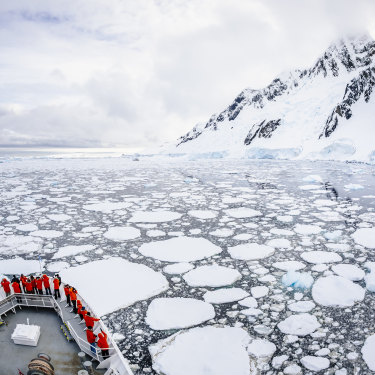 |
| “Last-chance tourism” is how travel operators describe the urge of some to get to Antarctica “before it melts”. |
The driver cuts the engine as the humpbacks draw closer. Every few minutes they surface to spout. The temperature today in the Antarctic Peninsula, a 1300-kilometre-long tendril of ice, snow and bedrock reaching towards the tip of South America, is close to freezing. Each blast from a humpback blowhole is followed by a plume of steam.
Suddenly a barnacle-encrusted tail slices through the still black water, just out of reach. For the fearful, it’s too close for comfort; for the intrepid, it’s too good to be true. The leviathans slide beneath us, descending as steadily as elevators, and disappear. I study the depths, looking one way, then another. Nothing. Then, a scant few metres below, the larger of the two reappears, turning its immense white belly upwards like an outsized puppy begging for a scratch.
Read the story from The Age by Luke Slattery - “The abnormal new normal: confronted by a cluster of threats this summer, is Antarctica at a tipping point?”

