Showing posts with label relevant. Show all posts

29 August, 2019

Export coal emissions: consider the social impacts, don't just account for them

Twelve years ago, in New South Wales, a landmark court case over a new coalmine called Anvil Hill found that downstream emissions – or “scope 3” – are relevant to the assessment of a mine’s environmental impact.
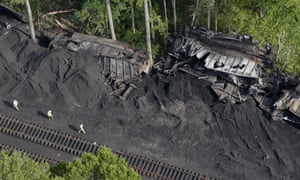
A derailed coal train
The chief justice made it clear that the primary reason
for refusal of the proposed coalmine was its
unacceptable social impacts.’
So, when a state planning policy for mining was created six months later, these emissions were explicitly included in the matters to be considered when weighing up new coalmines.

This court case and that planning policy were instrumental in the inclusion of climate change and downstream emissions among the reasons given by the chief justice of the land and environment court, Brian Preston, in February when he upheld the NSW government’s refusal of the Rocky Hill coalmine next to Gloucester, north of the Hunter Valley.


Read the opinion piece from The Guardian - “Export coal emissions: consider the social impacts, don't just account for them.” 

22 May, 2012

Observations about population still relevant

Three-year-old observations by a University of Melbourne lecturer appear as relevant today as when they were made.


Dr Robert Crawford.
A lecturer in construction and embodied energy, Dr Robert Crawford, said, in 2009: “The environmental consequences from a 60 per cent increase in people living in a country that is already showing significant signs of environmental degradation and climate change could be enormous.”

Dr Crawford, writing on the Melbourne Energy Institute’s website about the likelihood of Australia’s projected population growth of 13 million by 2049, said current demands for energy and other resources were already having a dramatic impact on our environment.

His opinion piece, headed: “Population growth and the environment” Dr Crawford said possible solutions such as reducing house size and using materials that last longer and use less energy to produce could significantly reduce energy needs.