Showing posts with label status quo. Show all posts

25 August, 2019

Want to reduce the power of the finance sector? Start by looking at climate change

In the lead-up to a revolutionary change, the status quo often seems both unyielding and untenable. The Soviet bloc in the 1980s provides a dramatic example: neither the rulers nor the ruled had any faith in the system, yet it stayed in place, seemingly untouchable. Then, in 1989, a picnic on the border between Hungary and Austria precipitated a collapse that brought down most of the governments of Eastern Europe in a matter of months, and the Soviet Union itself a couple of years later.
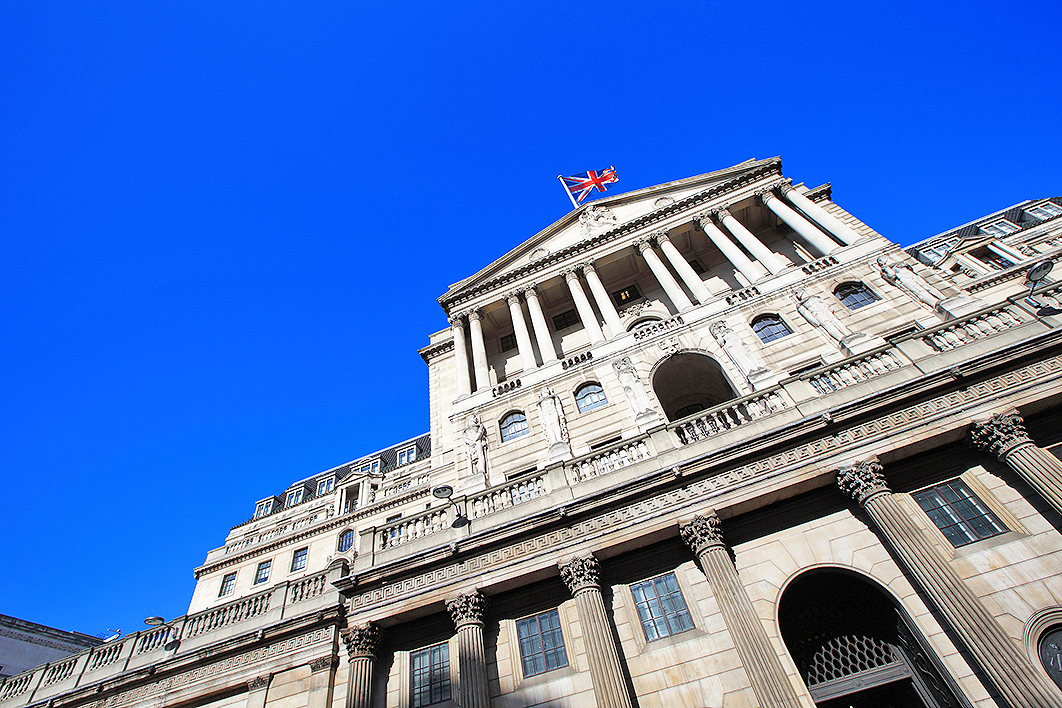
Where it all began: the Bank of England building in London. 
Over the past decade, two institutions that have endured far longer than did the Soviet Union and are far more central to our way of life have come under challenge: the carbon-based industrial economy and the finance-based system of global capitalism. The two have been intertwined since their near-simultaneous birth at the end of the seventeenth century. The Bank of England was created in 1694, shortly after the first major private banks, Barclays and Coutts; the first steam-powered pump was patented only four years later by Thomas Savery, and then rapidly superseded by Thomas Newcomen’s 1712 design.

For nearly three centuries, they proceeded in tandem, periodically interrupted by crises of one kind or another. Since 1945, though, their paths have diverged.


Read the story from The Monthly by John Quiggan - “Want to reduce the power of the finance sector? Start by looking at climate change.”

04 January, 2015

Many loved, accepted and understood traditions will be unsettled by climate change


-by Robert McLean
New ways of living forced upon us by climate change will unsettle many traditions.

This recently published book
encourages us to adopt
a vocabulary for a new era.
Chief among them and probably the most disconcerting for most will be society’s governance.

Market driven capitalism has existed in its concentrated form for about two centuries and while the benefits to humanity have been many its fundamental thesis of infinite growth has led us into a blind canyon.

Not only is there no apparent way out, also crowding in as humanity mills about, huddled in a finite space, are the effect and impacts of a seriously disrupted climate system.

That climate disruption has been brought upon us by an incessant need for profit and, within that, our careless and wasteful use of fossil fuel powered energy and ceaseless consumption of “stuff”.

Existing forms of societal governance, primarily democracy in the developed world, seem illusory in the benefits they promise and despite the many advances that can be pointed to, they simply take us deeper into that blind canyon.

Any reasonable response to the dilemmas of climate change insists that we live and behave differently and that by implication equally insists that we consider our governance processes.

Adhering to existing status quo practices simply ensuring our ongoing association with “business as usual”, means methods and behaviours that have unleashed climate disrupting gases remain uninterrupted.

Governance processes covering every variety of “isms” have been contemplated, but most every considered option or alternative seems to fall within the boundaries of what exists.

The recently published book, “Degrowth: A Vocabulary for a New Era”, edited by Giacomo D'Alisa, Federico Demaria and Giorgos Kallis does however reject the illusion of growth.

It calls for a fresh public debate; a debate that has been colonized by the idiom of “economism”.

An Amazon.com comment about the book says, “Degrowth is a project advocating the democratically-led shrinking of production and consumption with the aim of achieving social justice and ecological sustainability.”

Here in Australia we have “The Simplicity Institute”, a non-profit education and research centre dedicated to advancing the Simplicity Movement.

The Institute says it is: “Directing our critique toward consumerist and growth-obsessed economies, our defining objective is to show that lifestyles of reduced and restrained consumption are a necessary and desirable part of any transition to a just, sustainable, and flourishing human community.

“We aim to promote this vision of the good life and help build a new society based on material sufficiency,” the Institute says.

The one “ism” rarely even considered, even by adventurous thinkers, is that of anarchism.

Anarchy is a desperately misunderstood idea

Interestingly, it is a method of governance, or lack of governance that should appeal to the libertarians among us.

However, most equate anarchy with disarray in every sense, portraying it as primarily as rape and pillage in which man’s base and less than honourable behaviours are given full rein.

Such a judgement is incorrect and makes no allowance for the fact that most men, in fact the overwhelming majority irrespective of culture, colour or any other difference, are fundamentally decent and wholesome people who inherently align with all that is good about being human.

Stereotypical incantations have seen anarchy wrongly lumped in with political evils that are about dominating and controlling people, rather than seeing it through the clear lens of freedom.

Noam Chomsky - he has thought
deeply about anarchism.
Renowned public intellectual, who aligns himself with the values of anarchy, linguist Professor Noam Chomsky, has written extensively about this form of human freedom.

Looked at through the prism of what exists, few of us sufficiently intellectually athletic to imagine or contemplate a life unencumbered by state control.

Centuries of living under, and within a statist system has produced little about which we can boast and bequeathed a process in which millions, probably billions of people have died violent deaths and, as a bonus, endowed us with a way of life that has seriously disrupted earth’s climate system and threatened an apocalyptic end to life as we know it.

So where do we stand, what do we do?

We can point to what exists and say with confidence “it doesn’t work” and as the Degrowth editors, and others suggest, initiate urgently a public conversation about the governance of society.

19 January, 2014

Escaping from this mess will demand courage, innovation and sanity.


Here in Shepparton we have a head of the local council’s environment and sustainability committee who equates the resolution of those issues with the elimination of septic tanks.

On a somewhat larger scale Australia’s PM considers climate change “crap” and now American Republicans have chosen a climate skeptic to head its environment subcommittee.

It’s bizarre: humanity faces its most pressing problem ever for which solutions will need to be innovative, new, courageous and devoid of any trace of the status quo and yet we appear to continually retreat to the ideas and processes that landed us in this present mess.

That process turns thoughts to what Albert Einstein once said: “The definition of insanity is doing the same thing over and over again and expecting different results”.

Considering that, it is interesting to note in a Huffington Post story headed: “House Republicans pick climate skeptic to head environment subcommittee”, that such insanity is at work again.

14 March, 2012

Far too little, far too late!


Proposals to upgrade the rail infrastructure on the Seymour line are far too little, far too late.

Prof Kevin Anderson
Rail is unquestionable to most environmentally friendly way to move people and goods, but the climate change broadside that is about to pin us down will ensure we are not going anywhere.

Rather than invest time, money and effort into figuring out how we can maintain the status quo, that being “business as usual”, those energies and resources should be directed at strengthening communities, making them more resilient and so more able to cope with the unfolding and unquestionable changes.

Rather than worry about our rail network, we need help people understand and create the “five-minute-life”, that is, a way of living which everything important in our day-to-day lives is five minutes cycling or walking away.

Writing in his latest book, “The Conundrum”, American journalist, David Owen, argued that if we are to endure the emerging difficulties; we should not be going anywhere.

"The Conundrum" by 
David Owen.
His “stay at home” philosophy is about each of us using less energy and so reducing our carbon dioxide emissions; emissions that according to the world’s leading climatologist, James Hansen, are making the world an uncomfortable place.

Hansen’s thoughts, and warnings, have been repeated by a former director of Manchester University’s Tyndall Centre, the UK's leading academic climate change research organization, Professor Kevin Anderson.

Watching what is happening in and around Shepparton suggests that many continue blissfully unaware of the shifts in lifestyle predicted by the likes of Hansen and Anderson.

After two century-long indoctrination into the capitalistic insistence on growth, most of us, myself included, are unable to escape the mantra that life should be bigger, better, faster, safer, happier and packed with consumer goods, mostly resulting from fossil-fuelled energies.

A few minutes spent listening to either Hansen or Anderson will remind us, that our future will be somewhat different from that decades-long promise.

Interestingly, a friend recently said many young people have fallen into a depressive malaise because of such doom and gloom, but there is little I can do other than apologise.

However, what we can do as a broader society is encourage our governments, at all levels, to force us into decided austerity; an austerity that would enforce a degree of poverty and so slow our consumptive behaviour.

Hansen and Anderson’s thoughts were reinforced when the ABC reported that carbon dioxide levels were now higher than at any time in the last 800 000 years, while the last decade in Australia was the warmest on record.

To ease the doom and gloom malaise my friend pointed to, we need to invest time and energy into making our neighbourhoods and our communities more inclusive and happier places, rather than making them easier to leave.