
Greenland has been in the news a bit lately. From Huskies seemingly walking on water, to temperatures soaring to 20℃ above average for the time of year, to predictions of the vast ice sheet being lost entirely, what is going on?
At its most simple: ice melts when it gets too warm.
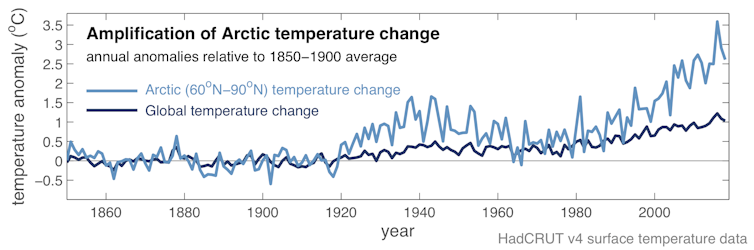
Of course, some ice melts every time summer rolls around, but the amount of Arctic ice that melts each summer is growing, and we’re waiting to see whether this turns out to be a record-breaking year for Greenland ice melt.
No part of the planet is free from the impacts of human-caused climate change. But Greenland, and the Arctic more generally, is experiencing the impacts particularly severely. Temperatures in the planet’s extreme north are rising twice as fast as the global average.
Read the story from The Conversation by an ARC Future Fellow from the Research School of Earth Sciences, who is a chief investigator for the ARC Centre of Excellence for Climate Extremes with the Australian National University, Nerilie Abram - “Time will tell if this is a record summer for Greenland ice melt, but the pattern over the past 20 years is clear.”

