
Summers in Phoenix pose a daily health threat to Leonor Juarez and her family. She and her five children have asthma, and struggle to breathe the ovenlike air that ripples off the sidewalks when they walk their neighborhood’s shadeless streets. The sun beats down on them at uncovered bus stops during the five-hour round-trip to the doctor, leaving them suffering headaches, dehydration and chest pains. “It feels like I’m having a heart attack,” Juarez says. “It feels like you’re drowning in a swimming pool or you have a pillow over your head.”
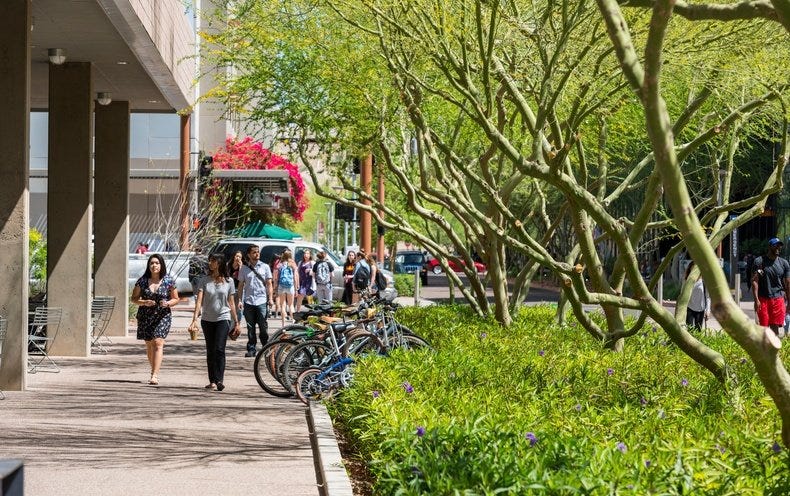 |
| In downtown Phoenix, investments in urban greening have been made to reduce the impact of heat waves. |
Stories like Juarez’s are not unusual in Phoenix, the nation’s fastest-warming big city, which hit triple-digit temperatures on 128 days last year — and where at least 172 people died of heat-related causes in 2017. With the urban heat island effect acting in concert with global warming, U.S. cities could be up to 10 degrees Fahrenheit warmer in the afternoon and 14 degrees warmer at night by the end of the century, according to a recent study in Nature Climate Change. As temperatures spike, researchers and urban planners worry heat deaths will rise across the country.
Read the story from Scientific American by Keridwen Cornelius - “How Phoenix Is Working to Beat Urban Heat.”

No comments:
Post a Comment