
Australia has the technology to move from fossil fuels to renewable energy, but the social dynamics remain challenging. The Stop Adani protest convoy during the 2019 federal election campaign brought this difficulty to the fore.
A real sticking point for navigating any social change, including the energy transition, is finding a way through entrenched attitudes in which people see themselves as “us” in conflict with “them”. In these situations, people tend to focus on trying to defeat their opponents rather than finding mutually beneficial solutions to the problem.
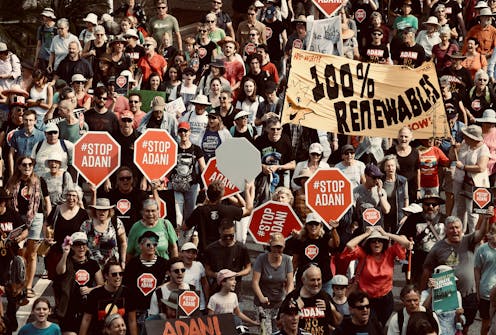 |
| Debate over Australia’s coal industry is fraught and involves entrenched attitudes. |
In research just released, I examined media coverage of the Stop Adani protest convoy to better understand these social identity divides. In particular, I analysed the factors shaping who was an “us” and who was a “them” in the conflict.
I found that the media, with the help of politicians, crafted a narrative of division between inner-city “greenies” and Queensland mining communities. These divisions foster a social dynamic that ultimately inhibits co-operation and good policy outcomes.
Read the story from The Conversation by a lecturer from the Crawford School of Public Policy at the Australian National University, Rebecca Colvin - “Our social identity shapes how we feel about the Adani mine – and it makes the energy wars worse.”

No comments:
Post a Comment