Showing posts with label Carbon farming. Show all posts

23 July, 2017

‘The idea is coming of age': Indigenous Australians take carbon farming to Canada

Australia’s world-leading Indigenous land management and carbon farming programs are spreading internationally, with a formal agreement signed to help build a similar program in Canada.
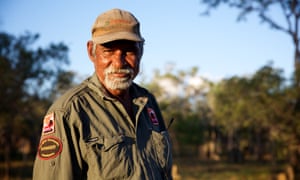
Philip Yam
 Traditional owner Philip Yam at Oriners station, Cape York,
where rangers teach land management skills based on
Indigenous knowledge and innovative technology. 
A chance meeting between Rowen Foley from the Aboriginal Carbon Fund and a Candian carbon credit businessman at the 2015 Paris climate conference spawned a relationship that led to an agreement this week that will help Canadian First Nations peoples learn from the Australian Aboriginal carbon farming success.
“Sometimes chance meetings are a form of karma or synchronicity at play,” Foley says.

Foley set up the Aboriginal Carbon Fund in 2010 to help other Indigenous organisations make money by managing land in such a way that it sequesters carbon in the soil.


Read Micheal Slezak’s story on The Guardian - “‘The idea is coming of age': Indigenous Australians take carbon farming to Canada.”

10 April, 2017

Carbon abatement helping farmers but not doing much for emissions

As the Emissions Reduction Fund (ERF) runs out of money for carbon farming offsets, Australia is falling short of international commitments.
Under carbon farming, Fairlight Station
can get carbon credits worth millions.
The Emissions Reduction Fund is the centrepiece of the Coalition Government's direct action policy, paying landholders to sequester carbon through revegetation, changed agricultural practices, and savanna burning.

For $2.1 billion, it has bought 180 million tonnes worth of emission abatements over a 10-20 year period, at an average price of $11/tonne carbon dioxide.

The fifth auction, with $440 million to spend on carbon credits, will be announced on April 13.

The Climate Institute has supported the ERF for helping landholders manage their activities, but argues it is largely ineffectual in reducing overall emissions.


30 April, 2016

Californian farmers turning their pastures into carbon sinks

Californian farmers are turning their
 pastures into carbon sinks.
For many climate change activists, the latest rallying cry has been, “Keep it in the ground,” a call to slow and stop drilling for fossil fuels. But for a new generation of land stewards, the cry is becoming, “Put it back in the ground!”

As an avid gardener and former organic farmer, I know the promise that soil holds: Every ounce supports a plethora of life. Now, evidence suggests that soil may also be a key to slowing and reversing climate change.

“I think the future is really bright,” said Loren Poncia, an energetic Northern Californian cattle rancher. Poncia’s optimism stems from the hope he sees in carbon farming, which he has implemented on his ranch. Carbon farming uses land management techniques that increase the rate at which carbon is absorbed from the atmosphere and stored in soils. Scientists, policy makers, and land stewards alike are hopeful about its potential to mitigate climate change.