Showing posts with label indigenous. Show all posts

26 January, 2020

How Does a Nation Adapt to Its Own Murder?

BRUNY ISLAND, Australia — The name of the future is Australia.
These words come from it, and they may be your tomorrow: P2 masks, evacuation orders, climate refugees, ocher skies, warning sirens, ember storms, blood suns, fear, air purifiers and communities reduced to third-world camps.
Billions of dead animals and birds bloating and rotting. Hundreds of Indigenous cultural and spiritual sites damaged or destroyed by bush fires, so many black Notre Dames — the physical expression of Indigenous Australians’ spiritual connection to the land severed, a final violence after centuries of dispossession.
Everywhere there is a brittle grief, and it may be as much for what is coming as for what is gone.
The dairy farmer Farran Terlich, whose properties in the South Coast were razed in a firestorm that killed two of his friends, described the blaze as “a raging ocean.” “These communities are destroyed across the board,” he said, “and most people are running dead.”
Dead, too, is a way of life.
Read the story from The NewYork Times by Richard Flanagan - “How Does a Nation Adapt to Its Own Murder?

05 February, 2018

Remote communities finding success with renewable energy tech

Indigenous Australians are becoming key players in the renewable energy market, with stakes in two groundbreaking projects.
Renewable energy is finding a place in remote Australia.
In Western Australia (WA), a new model of renewable energy investment is being pioneered with Indigenous enterprises as equity partners.

Carnegie Clean Energy Limited selected the Perth Noongar Foundation (PNF) and Indigenous Business Australia (IBA) as co-equity investors in the $17 million 10 MW Northam Solar Farm.

The project was designed to offer profit to investors from a range of revenue streams in addition to power sales. These include sales of renewable energy certificates, reserve capacity credit payments, a project development fee when the project reaches financial close and a share of the Engineer Procure Construct (EPC) as well as operation and maintenance margins.


Read Nadine Cranenburgh’s create engineering story - “Remote communities finding success with renewable energy tech.

23 July, 2017

‘The idea is coming of age': Indigenous Australians take carbon farming to Canada

Australia’s world-leading Indigenous land management and carbon farming programs are spreading internationally, with a formal agreement signed to help build a similar program in Canada.

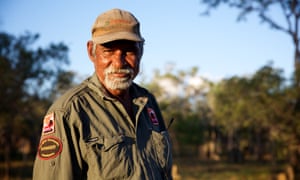
Philip Yam
 Traditional owner Philip Yam at Oriners station, Cape York,
where rangers teach land management skills based on
Indigenous knowledge and innovative technology. 
A chance meeting between Rowen Foley from the Aboriginal Carbon Fund and a Candian carbon credit businessman at the 2015 Paris climate conference spawned a relationship that led to an agreement this week that will help Canadian First Nations peoples learn from the Australian Aboriginal carbon farming success.
“Sometimes chance meetings are a form of karma or synchronicity at play,” Foley says.

Foley set up the Aboriginal Carbon Fund in 2010 to help other Indigenous organisations make money by managing land in such a way that it sequesters carbon in the soil.


Read Micheal Slezak’s story on The Guardian - “‘The idea is coming of age': Indigenous Australians take carbon farming to Canada.”

20 October, 2014

Solar-diesel plan promises power savings

Remote Indigenous communities in central Australia will be given access to cleaner solar energy, under a $55 million plan funded by the federal and Northern Territory governments.

 The NT Government said the money had been allocated to install solar panels at diesel power plants in more than 30 communities across the Territory.

 The panels would be used to establish hybrid systems at existing diesel generators in communities, providing a cheaper and more reliable power supply.

The Power and Water Corporation estimated the project, when completed, would save nearly four million litres of diesel a year.

23 July, 2013

Community health and climate change are intimately implicated


Prof Kate Auty.
The direct connection between community health and climate change became blatantly obvious at an indigenous two-day conference at Echuca about a year ago.

Victoria’s Commission for Environmental Sustainability, Professor Kate Auty, told those at the conference that the reported number of deaths from Victoria’s “Black Saturday” bushfires was about half that who died in the week leading up to the fires.

More than 170 people died in the February fires, but even more remarkably, and concerning according to Prof Auty, was the death of about double that number of heat related difficulties in the previous week.

Prof Auty, who has long advocated about indigenous concerns, was alarmed that the pre-bushfire deaths had almost passed unnoticed.

Interestingly the Echuca conference was about the response of indigenous people to climate change and it was there that Prof Auty took the opportunity to introduce the topic of community health and its direct and obvious connection to our damaged atmosphere.

The observations of Prof Auty was somewhat prescient as some are now arguing that the health implications of climate change should be a Federal Election iss

And just yesterday (July 22), The Conversation commented on that very issus in a story headed: “Why climate change should be a key issue this election”.

It said, “We have a planet to manage, not just a local economy. Climate change and its threat to human health, survival and social stability should be at the top of the election agenda – and with at least a hint of bipartisan understanding and strategic agreement.”