Showing posts with label future. Show all posts

01 February, 2020

George Monbiot on the unholy trinity of ideologies trashing our planet

If you get into debt buying your child branded trainers, if you fear redundancy, if you suffer anxiety about the future of the planet and you blame yourself for all of these things then you are showing symptoms of drowning in the “insidious” and “sinister” ideology of neoliberalism.
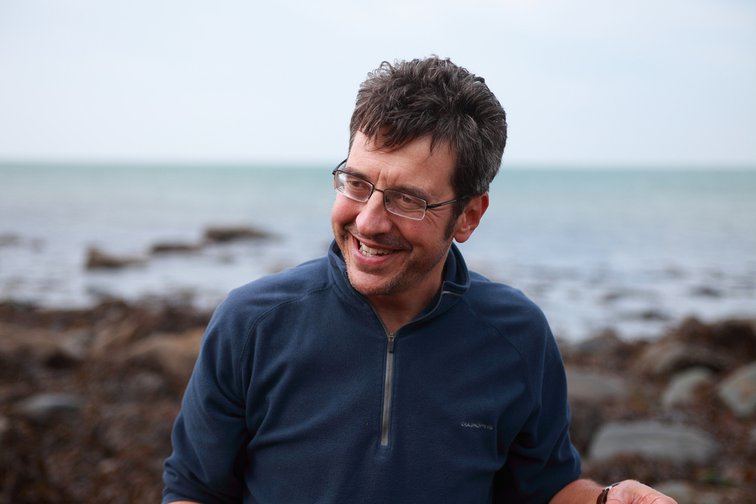
Campaigner and journalist George Monbiot
George Monbiot.
The escalating environmental and social crises that confronted us - climate breakdown, collapse in biodiversity, the threat of war - are all failures of a worldview that puts profit making, the markets and economic growth ahead of human happiness. This is George Monbiot’s prognosis.
The journalist and campaigner will be speaking at a three-hour special event at the Gillian Lynne Theatre in London on 11 February 2020 under the title The Invisible Ideology Trashing Our Planet. The tour will continue on Thursday, 12 March 2020 at the UBSU Richmond Building in Bristol.
The invisible ideology referred to is neoliberalism. But when I caught up with Monbiot at his home in Oxford this month he had already extended the scope of his speech to include capitalism and consumerism. This is the holy trinity: capitalism is the father, consumerism the son and neoliberalism the holy ghost.

Read the story from Open Democracy by Brendan Montague - “George Monbiot on the unholy trinity of ideologies trashing our planet.”

26 January, 2020

How Does a Nation Adapt to Its Own Murder?

BRUNY ISLAND, Australia — The name of the future is Australia.
These words come from it, and they may be your tomorrow: P2 masks, evacuation orders, climate refugees, ocher skies, warning sirens, ember storms, blood suns, fear, air purifiers and communities reduced to third-world camps.
Billions of dead animals and birds bloating and rotting. Hundreds of Indigenous cultural and spiritual sites damaged or destroyed by bush fires, so many black Notre Dames — the physical expression of Indigenous Australians’ spiritual connection to the land severed, a final violence after centuries of dispossession.
Everywhere there is a brittle grief, and it may be as much for what is coming as for what is gone.
The dairy farmer Farran Terlich, whose properties in the South Coast were razed in a firestorm that killed two of his friends, described the blaze as “a raging ocean.” “These communities are destroyed across the board,” he said, “and most people are running dead.”
Dead, too, is a way of life.
Read the story from The NewYork Times by Richard Flanagan - “How Does a Nation Adapt to Its Own Murder?

04 January, 2020

Tackle climate change

With more than five per cent of NSW and close to 1 000 000 ha of Victoria burnt, with the loss of many lives, destruction of the natural environment, property and stock, we now realise what we will have to confront in the future if we don’t act now.
While not experiencing first-hand the dreadful force of wildfire I empathise with the tens of thousands of Australians dealing with such a terrifying event. It is of utmost importance we do everything required to bring the fires under control and ensure everyone is safe as soon as possible.

The links between drought, increased temperatures, wildfire and climate change are indisputable.
It is now time for an all-ofgovernment approach at federal level so we are in a position to act with extreme urgency to combat climate change impacts.
In the past 10 years we have done very little to reduce our CO2 emissions, let alone take advantage of the opportunities that abound in the low-carbon economy. Our lack of direction at federal level over this period is inexcusable.
It is possible with an all-ofgovernment approach that by the end of March we could have agreed climate change and energy policies in place and have established a national bushfire management plan. Some would consider this impossible; however, the government is in a good position to meet this target, as these issues have been discussed to death by five prime ministers over the past 10 years.
The task is not insurmountable. It is time for our federal politicians to put aside party politics and provide the leadership we so desperately need.

Letter fromTatura’s Terry Court in The Shepparton News - “Tackle climate change.”

27 September, 2019

Premier says kids' climate emergency fears are 'entirely healthy’

Young people's concerns about a warming world and a strong focus on their future are an ‘‘entirely healthy thing’’, Premier Daniel Andrews says.
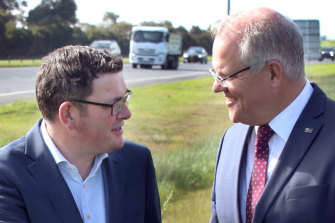
Daniel Andrews and Scott Morrison are in agreement on some things.
The Premier's stance puts him at odds with Prime Minister Scott Morrison who, in response to this week's impassioned speech by teenage Swedish activist Greta Thunberg, said the climate debate was subjecting children to ‘‘needless anxiety’’.

Read the story from The Age by Charlotte Grieve - “Premier says kids' climate emergency fears are 'entirely healthy’."

15 September, 2019

A crying shame: humanity sleepwalking to disaster

Almost every day I read or hear commentators on diverse fields of human activity blithely talking about trends and conditions that are likely to play out in the future. Some of them are happy to extend their prognostications decades into the future and adopt a business-as-usual approach.
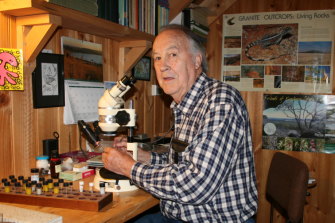
Dr Ian Bayly at work in his private, post-retirement zooplankton laboratory.
Very few of them display any overt awareness that humanity is facing the prospect of a climate-induced societal collapse in the near term and that consequently much of their commentary is likely to be incapable of fulfilment.
I recently read Losing Earth: the Decade We Could Have Stopped Climate Change by Nathaniel Rich. Which decade was he referring to? The 1980s. To be a bit more conservative, and allow for some reasonable degree of time-lag, my view is that the 1990s is a fairer nomination for when effective climate change mitigation could have, and should have, commenced.
Here I have some personal experience: for six years before my retirement at the end of 1995, I taught climate change science to a second-year class at Monash University.

Read the story from The Age by Ian Bayly - “A crying shame: humanity sleepwalking to disaster.”

19 June, 2019

Call to arms: how can Australia avoid a slow and painful decline?

Australia is at a crossroads. Drift towards a future of slow decline economically and socially or, if action is taken now to address our most important challenges, create a future of greater prosperity for all, globally competitive industries and a sustainable environment.
Ken Henry
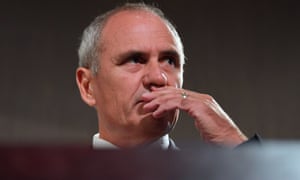
Dr Ken Henry says the Australian National Outlook report
 aims to ‘help kickstart a national conversation about
where Australia is heading’. 
That is the conclusion of a major report bringing together the thinking of more than 50 leaders in business, academia, NGOs and the community sector, working with the CSIRO to model alternative futures for Australia. The report is described as a “clarion call” for the nation.

The Australian National Outlook 2019, two years in the making, aims to “help kickstart a national conversation about where Australia is heading”, says its co-chair, Dr Ken Henry, the chairman of the National Australia Bank and former secretary of the Treasury department.


Read the story from The Guardian by Gay Alcorn - “Call to arms: how can Australia avoid a slow and painful decline?

25 April, 2019

Councils to review collecting plastic bags in recycling bins

The future of a popular recycling service that allows half a million Victorians to put plastic bags in their kerbside recycling bins is in doubt following the crisis precipitated by China’s crackdown on waste imports.
Four Victorian councils are reviewing a service that
allows residents to put plastic bags in recycling bins.
Flexible plastics recycling was introduced with great fanfare in 2016 and 2017 by four pioneering Victorian councils – Nillumbik, Cardinia, Hobsons Bay and Boroondara – which said the “exciting change takes us one step closer to eliminating waste sent to landfill”.


Read the story from The Age by Jewel Topsfield - “Councils to review collecting plastic bags in recycling bins.”

13 March, 2019

Fossil Fuels’ Dirty Secret: Climate Action or Not, Things Look Bad.

Ten years ago Blockbuster CEO Jim Keyes said he wasn’t worried about digital streaming. “I’ve been frankly confused by this fascination that everybody has with Netflix,” he said. Blockbuster’s head of digital strategy echoed this sentiment, asserting the company was “strategically better positioned than almost anybody out there.” Not long after, Blockbuster went the way of the butter churn, while Netflix became a household fixture. Today, the movie streaming service is worth almost as much as Disney.


To most people, that’s a funny story about the hubris of a technological dinosaur. Imagine, however, if Blockbuster had been a cornerstone of the U.S. economy, that millions of people had been employed in the manufacture and sales of Jurassic Park DVDs, that there were hundreds of cities dotting the South and Midwest where brick-and-mortar video rental was the only job in town. Then, the collapse of Blockbuster wouldn’t be so funny. It would be a catastrophe.

This, experts warn, could be the future of fossil fuels.


Read the NexusMedia story by Jeremy Deaton - “Fossil Fuels’ Dirty Secret: Climate Action or Not, Things Look Bad.

23 October, 2018

If Everyone Ate Beans Instead of Beef

Ecoanxiety is an emerging condition. Named in 2011, the American Psychological Association recently described it as the dread and helplessness that come with “watching the slow and seemingly irrevocable impacts of climate change unfold, and worrying about the future for oneself, children, and later generations.”
Soybeans in a silo at a cattle feed in the Amazon rainforest in Brazil.
It’s not a formal diagnosis. Anxiety is traditionally defined by an outsized stress response to a given stimulus. In this case, the stimulus is real, as are the deleterious effects of stress on the body.

This sort of disposition toward ecological-based distress does not pair well with a president who has denied the reality of the basis for this anxiety. Donald Trump has called climate change a fabrication on the part of “the Chinese in order to make U.S. manufacturing non-competitive.” He has also led the United States to become the only G20 country that will not honor the Paris Climate Accord, and who has appointed fossil-fuel advocates to lead the Department of Energy and Environmental Protection Agency.


Read the story from The Atlantic by James Hamblin  - “If Everyone Ate Beans Instead of Beef.”

10 October, 2018

IPCC Report Reveals Urgent Need For CEOs To Act On Climate

The Intergovernmental Panel on Climate Change (IPCC) released a sobering report this week detailing the dramatic effects of climate change and the immediate steps we need to take to make significant progress on limiting warming in the future. The report makes it clear that apathy and inaction are no longer viable options. Unprecedented action is needed by both the public and private sector to transform our energy, transportation and other systems around the world.
Corporate CEOs have the clout and credibility to lead
the charge for climate action while our federal
 government lags behind.
Could this report finally be the clarion call to our nation’s business leaders to take responsibility for ensuring a prosperous and clean energy future for all?

There has been encouraging progress to date, but much more needs to be done. Businesses have an essential role to play in building political will for action, which may be the biggest challenge of all. Moreover, new research shows corporate stakeholders want – and expect – climate leadership, including policy advocacy.

Read the story by Tom Murray from Forbes magazine -“IPCC Report Reveals Urgent Need For CEOs To Act On Climate.

18 July, 2018

Is coal dying? Deciphering the new AEMO report

The future of Australia’s dirtiest habit, coal-fired power, was laid out in stark detail in a report on Tuesday, and instantly spawned a mass of confused and contradictory interpretations.
Coal-fired power stations will be with us for a while yet.
Coal-lovers interpreted it as proof that coal has a long future in Australia. Environmentalists claimed it sounded the death knell for the most carbon-heavy of all the fossil fuels.

Others read it as a pragmatic solution to a thorny issue.

But what did it really say? On one point the report, by the Australian Energy Market Operator, was unequivocal: ultimately coal will disappear from the Australian energy mix.


Read the story from The New Daily by James Fernyhough - “Is coal dying? Deciphering the new AEMO report.”

03 May, 2018

UN Climate Change Launches First-Ever Annual Report

UN Climate Change News, 30 April 2018 – UN Climate Change today launched its first-ever Annual Report, laying out the key 2017 achievements and pointing to the future of the climate change process.

"Climate Change is the single biggest threat to life, security and prosperity on Earth," said UN Climate Change Executive Secretary Patricia Espinosa. “This annual report shows how UN Climate Change is doing everything it can to support, encourage and build on the global response to climate change.”

The report covers many areas of the 2017 work of UN Climate Change, which includes the UN Framework Convention on Climate Change, Kyoto Protocol and Paris Agreement, as well as their bodies, institutional arrangements, organs and the secretariat.

For example, at the UN Climate Change conference (COP23) presided over by Fiji last November, almost 30,000 people from all levels came together in Bonn, Germany, to drive action on climate change. The conference saw financial commitments amounting to almost USD 1 billion to tackle climate change.


05 April, 2018

Tensions rise inside the Coalition over energy policy

Senior cabinet ministers have offered sharply different public positions over the future of new coal in Australia, as tensions inside the Coalition deepen over energy and climate policy.
Treasurer Scott Morrison rejected calls for the government
to build a new coal-fired power station.
As the Turnbull government applied new pressure on energy giant AGL to keep its ageing Liddell coal-fired power station open beyond its planned closure date, a “ginger group” of Coalition MPs ramped up demands for direct federal investment in a new coal-fired power station, claiming the intervention would lower power bills and plug a potential supply shortfall.

The so-called Monash Forum has caused friction inside the government, with ministers arguing privately the real aim of disgruntled MPs like Tony Abbott, Barnaby Joyce and Eric Abetz was to undermine Prime Minister Malcolm Turnbull’s authority as he seeks the agreement of the states and territories for his National Energy Guarantee.


Read Mark Kenny’s story from The Age - “Tensions rise inside the Coalition over energy policy.”

01 April, 2018

Falling renewable costs 'chilling' for fossil fuels

The rapidly falling cost of renewable energy and batteries is "chilling" for the future of the fossil fuels sector, raising doubts about the viability of new coal power stations.
The combination of batteries and wind farms
is providing more power flexibility.
A Bloomberg New Energy Finance report has found the price of renewables has fallen by almost a fifth over the last year, with wind and solar generators becoming cheaper than both coal and gas-fired power stations.

Elena Giannakopoulou, head of energy economics at BNEF, said the rapidly falling cost of renewable generation and battery power is changing the game for the electricity sector.

"The conclusions are chilling for the fossil fuel sector," she said.


Read Cole Latimer’s story from The Sydney Morning Herald - “Falling renewable costs 'chilling' for fossil fuels.”

30 March, 2018

‘We’re Talking Very Big Bucks’: New Bill Could Put Oil Companies on the Hook for Climate Change Costs

Oil companies have become some of the wealthiest organizations in history by producing a product that we now know is endangering the future of humanity.
Many of these companies have known about the effects of carbon dioxide for decades, yet while they adapted their own businesses to survive climate change, they actively undermined efforts to understand it.

Should Canadians be able to sue oil companies for that?

“They are in a position to pay for this damage; they have the responsibility to pay for this damage,” Peter Tabuns, the NDP’s climate change critic in the Ontario legislature, told DeSmog Canada. “We’re talking very big bucks.”

23 February, 2018

Renewables hub, or coal museum? Australia’s energy debate plays out in Latrobe Valley

If you were looking for a neat summation of the current state of the energy debate in Australia, the tug-of-war over the future of a retired brown coal power plant in Victoria’s Latrobe Valley would be a good place to start.

A renewables hub or a coal museum?
The old Morwell Power Station and briquette factory on the outskirts of the town of the same name was last week listed for protection by the Heritage Council of Victoria.

The former Energy Brix Power Station, which once supplied brown coal-fired electricity to the grid, was closed in 2014 – two years after receiving a $50 million federal government bailout package.
At the same time, the plant’s final operator went into liquidation.


Read Sophie Vorrath’s One Step Off the Grid story - “Renewables hub, or coal museum? Australia’s energy debate plays out in Latrobe Valley.”

09 February, 2018

Unearthing the Capitalocene: Towards a Reparations Ecology.

Settled agriculture, cities, nation-states, information technology and every other facet of the modern world have unfolded within a long era of climatic good fortune. Those days are gone. Sea levels are rising; climate is becoming less stable; average temperatures are increasing. Civilization emerged in a geological era known as the Holocene. Some have called our new climate era the Anthropocene. Future intelligent life will know we were here because some humans have filled the fossil record with such marvels as radiation from atomic bombs, plastics from the oil industry and chicken bones.

What happens next is unpredictable at one level and entirely predictable at another. Regardless of what humans decide to do, the twenty-first century will be a time of “abrupt and irreversible” changes in the web of life. Earth system scientists have a rather dry term for such a fundamental turning point in the life of a biospheric system: state shift. Unfortunately, the ecology from which this geological change has emerged has also produced humans who are ill-equipped to receive news of this state shift. Nietzsche’s madman announcing the death of god was met in a similar fashion: although industrial Europe had reduced divine influence to the semi-compulsory Sunday-morning church attendance, nineteenth-century society couldn’t imagine a world without god. The twenty-first century has an analogue: it’s easier for most people to imagine the end of the planet than to imagine the end of capitalism.


Read the Roar story by Jason W. Moore and Raj Patel - “Unearthing the Capitalocene: Towards a Reparations Ecology.

30 January, 2018

How Bikes Will Take Their Revenge on Cars and Help Us Reclaim Our Streets.

Big cities are going car-free. London’s Mayor Saqid Khan’s newest “London Plan” envisions that 80% of all trips in London will be made by foot, bicycle or public transport by 2041.


Without this shift away from car use, London cannot continue to grow sustainably. […] The design and layout of development should reduce the dominance of cars, and provide permeability to support active travel (public transport, walking and cycling), community interaction and economic vitality.

London is one of a number of major cities committing to the future where getting from point A to point B doesn’t depend on personal cars.

Reflected in this decision is a move towards micromobility, a trend of adopting more compact, efficient, and often shared modes of transportation in the urban setting. It is a counterweight to macromobility— transportation that relies on large vehicles for long distances and generic applications. As industry analyst Horace Dediu put it, “it’s the personal computer of 1980s.”


Read the NewCo Shift story by Marija Gavrilov - “How Bikes Will Take Their Revenge on Cars and Help Us Reclaim Our Streets.

24 January, 2018

Harness the power of nature

Dan Menezes knows renewable energy is the way of the future.

The electrical engineer recently started GV Wind and Solar to provide solar installation solutions for small and large-scale operations.
Dan Menezes understands the renewable energy is the way of the futrure.
The Shepparton resident is hoping to raise awareness of this new frontier for the solar industry.

‘‘I work closely with clients to understand their current energy usage,’’ Dan said.

‘‘I then design personalised systems which are suited to their homes and will offer them the best results.’’

With electricity costs rising rapidly, Dan believes renewable energy provides the solution for the future with wind, solar and battery storage solutions available to clients.

Having lived in Shepparton most of his life, Dan has seen first-hand the effect electricity prices can have on people.

‘‘I am here to help people in the Goulburn Valley by offering them my best advice at the best price,’’ he said.

Dan specialises in battery storage solutions which he believes offer people a number of benefits.

The batteries mean people can store solar energy from the day to be used later on that night.

Dan is hoping to eventually have a shopfront to offer his services on a larger scale.

Dan encourages anyone interested to give him a call and have a chat about how solar energy can benefit them.

● Dan can be contacted on 0432 727 377 or via email gvwindandsolar@gmail.com


Story from the Shepparton News - “Harness the power of nature.”

19 January, 2018

Formula E could be the only viable motorsport series by 2040

Alejandro Agag, the founder and CEO of Formula E championship has predicted that, given the current climate policies, the electric vehicles racing series will be the motorsport of the future.
Formula E will be the motorsport of the future.
Mr. Agag said that advanced technological developments, the direction of climate policies in restricting carbon emissions and the increasing decline in conventional combustion engine vehicles manufacturing will soon take over the motorsports industry too.

"I think Formula E is going to get really, really big. I believe that in 20, 30, 40 years, we will be the only motorsport out there”, he said.


Read the Climate Action story - “Formula E could be the only viable motorsport series by 2040.”