Showing posts with label victoria. Show all posts

01 May, 2020

Loggers return to native forests burnt in summer bushfires

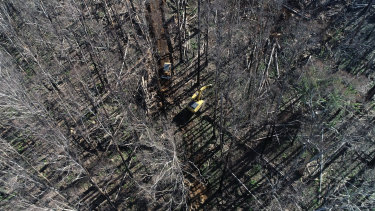
Government logging has resumed in fire-damaged forests in Victoria and New South Wales despite warnings that devastated bushland and endangered wildlife are too fragile to withstand "business as usual".
Salvage logging south of the Alpine National Park in the Boulun-Deera State Forest, north of Dargo.
Salvage logging south of the Alpine National Park
 in the Boulun-Deera State Forest, north of Dargo.
The Victorian government's logging agency, VicForests, has revealed plans to log 3500 hectares of forests burnt during the catastrophic summer fires in the next few years, saying salvage logging will occur in areas where "most of the standing trees have been killed”.
The agency's chief executive officer, Monique Dawson, has also levelled extraordinary criticism at internationally-regarded Australian ecologist Professor David Lindenmayer, saying the agency "does not accept his published opinions".
Conservationists, including Professor Lindenmayer, say salvage logging has a lasting effect on wildlife, which relies on burnt and unburnt forest for refuge. They also say logging forests after bushfires increases future fire risk, damages soil with trucks and equipment and causes run-off to waterways.
Read the story from The Age by Miki Perkins and Mike Foley - “Loggers return to native forests burnt in summer bushfires.”

21 April, 2020

Five big solar farms set to increase energy output after tests

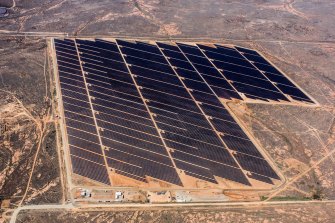
Grid constraints that have forced the electricity regulator to deliberately halve the output of five big solar farms in Victoria and NSW could soon be lifted if tests on the utilities succeed this week.
The Broken Hill solar farm has been affected by transmission constraints. Testing this week will determine whether the plant - and four others in Victoria - can resume full output to the grid.
The Broken Hill solar farm has been affected by transmission
constraints. Testing this week will determine whether the plant - and
four others in Victoria - can resume full output to the grid.
The Australian Energy Market Operator (AEMO) intervened last September to slash the amount of power entering the grid from the plants - which have a rated capacity of 350 megawatts - because "unprecedented technical issues" threatened its stability.
Regulators have tested the performance of individual plants - four of which are in Victoria and the other in Broken Hill - after engineers used a technical fix to smooth the energy output from the plants and make them more compatible with the grid.
Tests involving all five plants began on Monday and will continue this week to ensure grid stability can handle the resumption of their full output, according to AEMO and company officials.
Read the story from The Age by Peter Hannam - “Five big solar farms set to increase energy output after tests.”

17 April, 2020

Land-Based Carbon Dioxide Removal Options for Victoria

This paper considers land-based carbon dioxide removal (CDR) approaches for Australia, looking specifically at Victoria in the context of considering how the land sector can contribute to a net-zero emissions goal under the Victorian Climate Change Act 2017.

While emissions from agricultural land have remained relatively stable for decades, emissions from land use, land-use change, and forestry activities in Australia have fluctuated dramatically, from a source in the 1990s and 2000s to a net sink today. However, this net sink is projected to decline over the next decade.
For Australia’s land sector overall to make a major contribution to climate mitigation through CDR, land clearing and deforestation would need to be further reduced, while the CDR potential of other activities (forest management, reforestation, farm forestry, plantations, soil management) is enhanced beyond current projections. This paper suggests there is potential for this to be done in Victoria, with significant economic and ecological co-benefits for biodiversity, agricultural productivity and ecosystem services.
In this report the authors identify four broad activities which could have a significant carbon sequestration potential in Australia and Victoria in particular. These are native forest regeneration, carbon and environmental plantings, soil carbon removal, and restoration of degraded lands.
Read the report from Melbourne Sustainable Society Institute - “Land-Based Carbon Dioxide Removal Options for Victoria.”

18 March, 2020

Onshore gas drilling to resume as Victoria scraps years-long ban

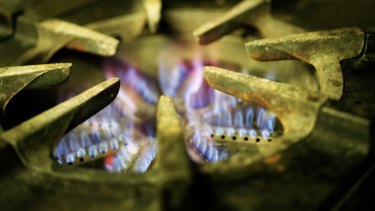
Drilling for gas reserves underground will once again be allowed across Victoria as the state moves to lift its years-long moratorium on conventional onshore gas exploration.

A moratorium on onshore gas exploration in Victoria will be lifted.
A moratorium on onshore gas exploration in Victoria will be lifted. 
Surprising many, as a decision was not required to be made for another three months, the Andrews government unveiled legislation allowing an "orderly restart" of conventional gas exploration and development onshore from July 1, 2021.

Oil and gas producers, unions and heavy gas-users such as manufacturers have been calling for the years-long moratorium to be abolished, but environment groups have railed against the possibility arguing it will drive up greenhouse gas emissions and threaten state ecosystems.

Read the story from The Age by Benjamin Preiss, Nick Toscano and Miki Perkins - “Onshore gas drilling to resume as Victoria scraps years-long ban.”


(This is a tragedy for those of us concerned about Australia’s carbon dioxide emissions as “onshore gas” means fracking and while that means many things, it is fundamentally about removing a fossil fuel from where it presently safely resides and letting it loose into our atmosphere, something we simply should not be doing - Robert McLean)

12 March, 2020

Victoria needs strong climate targets

An open letter to Victoria’s Premier Andrews, signed by 285 businesses and organisations, has been published in a full-page advertisement in today’s Melbourne Age.


The letter was headed: “Victoria needs strong climate targets”.

It said:

Dear Premier Andrews,

Now is the time for courage on climate change.

This summer’s unprecedented bushfires are a tragic demonstration of the climate crisis we all face.

With only 1 degree of global warming, Victoria is experiencing more dangerous fires, heatwaves, storms and drought. These events cost lives. 

They put families, workers, businesses and all Victorians at risk.

Yet this is just the beginning. Without urgent action to reduce the pollution overheating our planet, we are on track for temperatures and consequences beyond our ability to cope.

We can only solve this crisis by acting together. Through the Paris Climate Agreement, the global community aims to limit warming to 1.5 degrees.

If Victoria wants others to do their part, we must do ours. By doing what’s right in this moment of crisis, you can send a clear signal to other states and countries.

Your government has taken some welcome steps – particularly with renewable energy – but now more is needed, and Victoria can reap the benefits of a cleaner economy with new industries and secure jobs.

By the end of March 2020, your government will set emissions targets for the next decade.

We call on you to set targets that ensure Victoria does our fair share to limit global warming to 1.5 degrees.


Environment Victoria played a key roll in the placing of the advertisement.


01 February, 2020

State onshore gas ban a federal deal-breaker

The Coalition will not fund any multibillion-dollar energy deal with Victoria to reduce carbon emissions and lower power costs unless the Andrews government ditches its longstanding ban on onshore gas exploration.
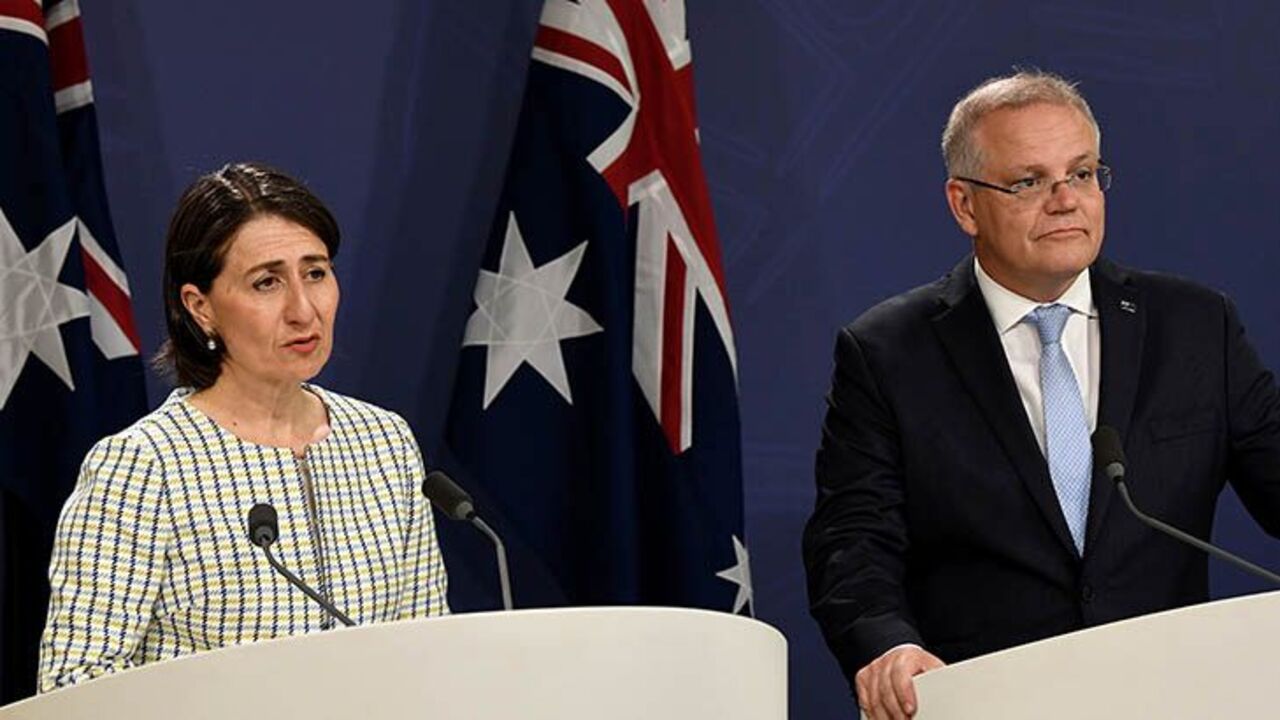
Morrison, Berejiklian announce energy deal
The federal and NSW state governments have made a
$2 billion joint deal to up gas supply and lower emissions.
The Morrison government would also demand Victoria safeguard against sudden shocks to power prices and supply, like the closure of the Hazelwood power station in 2019, in any deal similar to the $2 billion agreement it struck with NSW.
Victorians were asked to cut their power use in Friday’s searing heat to avoid crashing the state’s fragile grid, on the same day, the Morrison government and NSW announced a deal they say will reduce carbon emissions, lower electricity prices and improve reliability.
The deal, which could be the first in a series of agreements between the Commonwealth and states, will see nearly $1 billion of federal money go to NSW to pay for carbon abatement and energy projects.

Read the story from The Age - “State onshore gas ban a federal deal-breaker.”

22 January, 2020

No amount of hazard reduction will protect human lives, animals and properties from catastrophic fires.

Australia’s 2019-20 bushfire season is shaping up as being the worst on record. Already, New South Wales and Queensland have suffered more property damage and forest loss than in any previous fire season, with the worst fire danger period yet to come for Victoria, Tasmania and South Australia.

This guide sets out the facts on hazard reduction and the role of climate change in this catastrophic bushfire season. 

“Hazard reduction is absolutely an important factor, but it is not the panacea. When you're running fires under severe, extreme or worse conditions, hazard reduction has very little effect at all on fire spread" - Shane Fitzsimmons, RFS NSW Commissioner.

Unless we address climate change and urgently reduce our emissions as part of a global effort, the window of opportunity for prescribed burning will continue to shrink. 

And as bushfire weather worsens, the effectiveness of hazard reduction will diminish – no amount of hazard reduction will protect human lives, animals and properties from catastrophic fires.


Check out the full fact sheet.

03 January, 2020

Victoria declared a disaster zone as weekend weather threatens even worse fires

Victoria has declared a state of disaster and asked for the Prime Minister to send in the Australian Defence Force to set up safe zones including tents and emergency housing for hundreds of bushfire-affected evacuees.
Farmer Steve Shipton puts a calf out of its misery in a blackened paddock near Cobargo. 
Announcing unprecedented powers in an 11pm press conference, Premier Daniel Andrews urged thousands of tourists and residents to leave regions at risk ahead of catastrophic weather at the weekend.
“If you can leave, then you must leave. Your safety cannot be guaranteed,” Premier Dan Andrews said.
In a statement last night, the Premier said he was satisfied there is “an emergency that constitutes or is likely to constitute, a significant or widespread danger to life or property in nine shires across the state.

Read the story from The New Daily by Samantha Maiden - “Victoria declared a disaster zone as weekend weather threatens even worse fires.”

27 December, 2019

Victoria rolls out electric car charging stations to tackle 'range anxiety

A widespread network of highly visible electric car charging stations in Victoria is critical to prevent “range anxiety” - a fear of being stranded and unable to recharge - according to a consultation paper into how to make the state ready for zero emissions vehicles.
"It's a totally new way of driving": Chris Stone has become a fan of electric cars after being given a company car.
"It's a totally new way of driving": Chris Stone has become
 a fan of electric cars after being given a company car.
The Victorian government has launched a new map of existing and proposed electric charging stations across Victoria with the latest ultra-rapid charging station opening in Moe earlier this month.

Read the story from The Age by Jewell Topsfield - “Victoria rolls out electric car charging stations to tackle 'range anxiety.”

09 December, 2019

Victoria swelters, fire danger "extreme" - but the heat won't last

Victoria is feeling the heat for the start of the working week and firefighters are bracing for "extreme" fire danger before temperatures are set to nosedive, just in time for dinner.
Beachgoers seek a break from hot weather at South Melbourne last month.
Total fire bans have been declared for the north of the state on Monday, while V/Line trains will run to an altered, extreme heat timetable.
Victoria is feeling the heat for the start of the working week and firefighters are bracing for "extreme" fire danger before temperatures are set to nosedive, just in time for dinner.
Total fire bans have been declared for the north of the state on Monday, while V/Line trains will run to an altered, extreme heat timetable.

Read the story from The Age by Ashleigh McMillan and Paul Sakkal - “Victoria swelters, fire danger "extreme" - but the heat won't last.”

19 November, 2019

Unreliable coal a risk to energy supply, report finds

“The main risk to reliable supply in Victoria is the demonstrated unreliability of all three of Victoria’s brown coal generators” reads the summary of the report from Victoria Energy Policy Centre, released today.
Image result for environment victoria logoOlder power stations Yallourn and Loy Yang A have had “a trend of consistently high outage” in the last few years, the report found (PDF).
“It’s clear we cannot keep relying on these polluting brown coal power stations,” said Environment Victoria Campaigns Manager Dr Nicholas Aberle. “We need a plan to phase out coal and to support affected workers and communities to benefit from new jobs and a more diverse regional economy with a long-term future.”
This report also shows a perverse side effect of our energy market. Because there is no price on pollution from coal power stations, building more renewable energy in Victoria doesn’t necessarily replace highly polluting brown coal in Victoria. According to this analysis, it actually pushes out slightly less polluting black coal generators in NSW and Queensland first.

Read the story from Environment Victoria - “Unreliable coal a risk to energy supply, report finds.” 

20 July, 2019

$198m solar farm opens

The Goulburn Valley officially houses the largest solar farm in Victoria after a nine-month construction period. 
The Numurkah Solar Farm, which sits on 515 hectares of land about 5 km east of Wunghnu, was opened yesterday. 
Moira Shire Mayor, Libro Mustica, Energy, Environment
and Climate Change Ministrer, Lily  D'Ambrosio, and
 Neoen Managing Director, Louis de Sambucy, at Numurkah.
Moira Shire Mayor Libro Mustica said the Numurkah Solar Farm was a promising induction to the shire. 
‘‘For this to be the biggest in the state and have it in the Moira Shire, we as councillors approved it because we wanted it to happen within our shire,’’ he said. 
‘‘What makes this great is, it’s more than a $140 million investment and to have it in our shire is wonderful. 
‘‘I don’t know how many local people would’ve been employed but it would have been substantial. 
‘‘It doesn’t matter where power goes providing it’s generated into the system.’’ 
The $198 million solar farm is almost 75 per cent functional and is expected to be fully operational in four weeks. 
Victorian Energy, Environment and Climate Change Minister Lily D’Ambrosio said the solar farm would play an important role for the state government’s 2030 renewable energy target. 
‘‘This is (a) fantastic project that has been made possible by the Victorian Government backing,’’ Ms D’Ambrosio said. 
‘‘When we provide the certainty for investors to actually put their dollar into the state, we can see fantastic projects being built. 
‘‘We can see globally there are billions of dollars of investment that are looking for places to invest because of our government’s strong Victorian Renewable Energy Targets.’’ 
Representatives from French company owner Neoen, constructor Downer, Cr Mustica and Ms D’Ambrosio attended the opening. The Numurkah Solar Farm is one of two solar farms supplying 100 per cent renewable energy to offset Melbourne’s entire tram network. 
The facility will generate about 250 000 MW hours of electricity into the national power grid each year. 
Neoen is also constructing NSW solar farms in Coleambally, Griffith, Parkes and Dubbo

Story by James Bennett from The Shepparton News - “$198m solar farm opens”.

20 June, 2019

Plastic bag ban looms as Victoria acts to match big stores, other states

Single-use plastic bags will be banned in all shops and supermarkets across Victoria from November this year to stop millions of them flowing into the streets and natural environment.
Illustration: Matt Golding
The ban will extend to all lightweight, single-use bags including those made from degradable, biodegradable and compostable plastics.
But plastic bin liners, small clear plastic bags used for fresh fruit and vegetables and animal waste bags will still be allowed.
Legislation will be introduced in the Victorian Parliament on Wednesday banning supermarkets, clothing stores, fast food outlets and service stations from distributing the bags.

Read the story from The Age by Benjamin Preiss and Michael Flower - “Plastic bag ban looms as Victoria acts to match big stores, other states.”

13 June, 2019

Coal unit failure a threat to Victorian energy security this summer

The head of Australia’s energy market operator said threats to the reliability of the electricity grid in Victoria were its main concern following AGL’s announcement that one of four generating units at the Loy Yang A power station will be out of action for seven months.
AGL says one generating unit at Loy Yang A will be out for repairs until December.
AGL says one generating unit at Loy Yang A
 will be out for repairs until December.
Failures and planned outages at multiple coal and gas-fired units in the Latrobe Valley played havoc with Victoria’s energy grid last summer, forcing the energy market operator to cut the power to hundreds of thousands of customers during two days of extreme heat in late January.AEMO chief executive Audrey Zibelman said the operator was working with AGL and the rest of the industry on plans to cover the loss of generating power at Loy Yang A, which provides about 30 per cent of Victoria’s electricity capacity.

Read the story from The Age by Adam Carey - “Coal unit failure a threat to Victorian energy security this summer.”

07 June, 2019

Victoria pushed to make much deeper emission cuts, but quicker coal closures loom.


Victoria has been urged to cut its carbon emissions by as much as 60 per cent over the next 10 years – more than double the Morrison government’s 26 to 28 per cent target – to help the state play its part in preventing the worst effects of global warming.
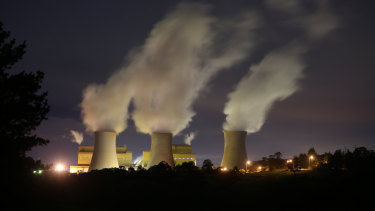
A coal reckoning? Yallourn Power Station in the Latrobe Valley, Victoria.


An expert panel chaired by Greg Combet, the former federal Labor minister for climate change, called on the Andrews government to make deep cuts to emissions in the next decade in sectors including electricity, industry and agriculture.


17 May, 2019

Great Australian Bight: parties soften stance as voters protest over drilling

A last-ditch effort to win votes in key seats in South Australia and Victoria has prompted both major parties to make changes to their policies on oil drilling in the Great Australian Bight.
Protests against offshore drilling in the Bight have forced
the Coalition and Labor to shift ground in the 2019 Australian election
The resources minister Matt Canavan – who has previously said offshore oil exploration should be a national priority – said on Thursday a re-elected Coalition government would commission an independent audit of the oil regulator’s consideration of exploration in the Bight.

Canavan and the environment minister Melissa Price said in a statement they recognised “the Great Australian Bight and the surrounding region are important to local communities, and the fishing and tourism industries”.


Read the story from The Guardian by Lisa Cox - “Great Australian Bight: parties soften stance as voters protest over drilling.”

31 March, 2019

Be bold now or risk missing zero greenhouse emissions target, state told

The Andrews government has 12 months to show "bold and ambitious" leadership on climate change or Victoria could miss its target for zero net greenhouse emissions by more than a decade, climate experts and environmentalists say.
Interim emissions reduction targets must be set by next March.CREDIT:
Climate Change Minister Lily D’Ambrosio was handed independent advice on Friday from a government-convened expert panel on how to reach the state's commitment of zero net emissions by 2050.


Read the story from The Age by Joe Hinchliffe - “Be bold now or risk missing zero greenhouse emissions target, state told.”

05 February, 2019

Melbourne weather: Victoria could endure month's worth of rain in a single day

Victoria could get drenched with more than a month's worth of rain in a single day.
Victoria could get drenched with more than a month's worth of rain in a single day.CREDIT:
The Bureau of Meteorology has warned Melburnians to brace for torrential rain on Wednesday with parts of the state expected to get a deluge of up to 50 millimetres bringing with it the risk of flash flooding.


Read the story from The Age by Melissa Cunningham -  “Melbourne weather: Victoria could endure month's worth of rain in a single day.”

02 February, 2019

Total fire ban declared for Sunday as extreme heat, strong wind tipped

High winds, extreme heat and lightning expected on Sunday have sparked a Total Fire Ban amid what has been described as a "really concerning day" for Victoria.
Firefighters battled blazes across south-east
Victoria on Saturday, including one at Grantville.
CREDIT:
With emergency services already fighting fires across the state, authorities fear they may not be able to keep up if major blazes break out on Sunday.


Read the story from The Age by Nicole Precel - “Total fire ban declared for Sunday as extreme heat, strong wind tipped.”

22 January, 2019

Hot, dry year breaks records

NSW recorded its warmest year on record, as Victoria and the country as a whole sweltered through their third warmest year on record.


The Bureau of Meteorology’s annual climate statement for 2018 said Australia’s annual mean temperature last year was 1.14°C above average, while both mean annual maximum and minimum temperatures were above average for all states and the Northern Territory.

While 2018 was the warmest on record for NSW for both mean temperature (1.68°C above average) and mean maximum temperature, the mean minimum temperature was the state’s fourth-warmest on record.

The bureau said NSW’s year was dominated by very dry conditions, with the third-driest January to September on record, and NSW experienced its sixth lowest annual rainfall on record; its driest year since 2002.

Victoria also saw below average rainfall last year, with all months except December being drier than average, and both mean maximum and minimum temperatures above average across 2018.

Rainfall in Victoria last year was about 25 per cent below average, the lowest since 2006.

Victoria’s mean temperature was 1.14°C above average, making it the third warmest year on record.

Looking forward, NSW DPI expects drought conditions affecting the state are likely to continue into 2019.

NSW DPI climate applications and digital agriculture leader Anthony Clark said large parts of western and central NSW remained in the ‘Drought’ or ‘Intense Drought’ categories of the NSW monitoring framework, despite some isolated storms throughout December.

‘‘While some parts of the state received scattered storm activity leading up to the new year, this hasn’t been sustained enough to allow for significant pasture or crop production,’’ Dr Clark said.

‘‘That means there has been very minimal opportunity for dryland summer cropping, and there are very low levels of ground cover so farmers have had to continue feeding their livestock.’’

Data from an NSW farm dam survey has underlined how critical conditions have become in some areas, particularly in western NSW.

‘‘In this part of NSW, the nature of the drought event has shifted such that farmers and communities are not just managing an agronomic event (low primary production), but the hydrological impact is evident with critically low water reserves,’’ Dr Clark said.

The bureau’s climate outlook for January to March backs up the NSW DPI predictions, as it indicates a drier than average three months to start 2019 for eastern mainland Australia.

Warmer than average days and nights are likely for almost all of Australia during the same period.


Story from Country News in The Shepparton News - “Hot, dry year breaks records.”