Showing posts with label underground. Show all posts

18 March, 2020

Onshore gas drilling to resume as Victoria scraps years-long ban

Drilling for gas reserves underground will once again be allowed across Victoria as the state moves to lift its years-long moratorium on conventional onshore gas exploration.
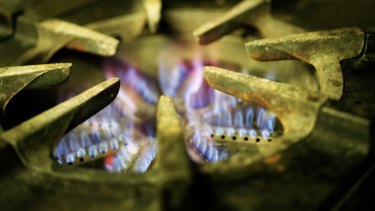
A moratorium on onshore gas exploration in Victoria will be lifted.
A moratorium on onshore gas exploration in Victoria will be lifted. 
Surprising many, as a decision was not required to be made for another three months, the Andrews government unveiled legislation allowing an "orderly restart" of conventional gas exploration and development onshore from July 1, 2021.

Oil and gas producers, unions and heavy gas-users such as manufacturers have been calling for the years-long moratorium to be abolished, but environment groups have railed against the possibility arguing it will drive up greenhouse gas emissions and threaten state ecosystems.

Read the story from The Age by Benjamin Preiss, Nick Toscano and Miki Perkins - “Onshore gas drilling to resume as Victoria scraps years-long ban.”


(This is a tragedy for those of us concerned about Australia’s carbon dioxide emissions as “onshore gas” means fracking and while that means many things, it is fundamentally about removing a fossil fuel from where it presently safely resides and letting it loose into our atmosphere, something we simply should not be doing - Robert McLean)

27 August, 2019

Underground line to heat up London homes during winter

The sweltering temperatures on the tube’s Northern line will soon begin keeping homes in Islington, north London, cosy through the colder months, under a scheme to harness the heat from the underground.
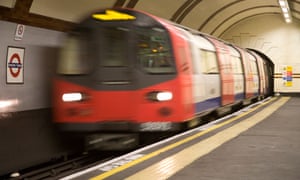
A Northern Line tube train
A Northern line tube train coming into Kentish Town station.
By the end of the year the project will pipe heat from the underground into hundreds of homes and businesses that are part of a heating scheme in the borough.

The project is one of a growing number of schemes across the UK designed to warm homes using “waste heat” from factories, power plants, rivers and disused mine shafts.

The hunt for alternative sources of renewable heat has gained pace after the government’s pledge to ban gas-fired boilers from new-build homes from 2025.


Read the story from The Guardian by Jillian Ambrose - “Underground line to heat up London homes during winter.”

26 March, 2017

7,000 underground gas bubbles poised to ‘explode’ in Arctic

Scientists have discovered as many as 7,000 gas-filled 'bubbles' expected to explode in Actic regions of Siberia after an exercise involving field expeditions and satellite surveillance, TASS reported.
With time the bubble explodes, releasing gas. This
 is how gigantic funnels form.' Picture: Yamal Region.

A number of large craters - seen on our images here - have appeared on the landscape in northern Siberia in recent years and they are being carefully studied by scientists who believe they were formed when pingos exploded.  

Alexey Titovsky, director of Yamal department for science and innovation, said:  'At first such a bump is a bubble, or 'bulgunyakh' in the local Yakut language. 

'With time the bubble explodes, releasing gas. This is how gigantic funnels form.' 


25 February, 2016

Removing C02 from the atmosphere is 'risky business'

Radical new ways of removing CO2 from the atmosphere could prove to be a risky business – according to an environmental scientist at the University of East Anglia.

Techniques put forward include growing crops to be burned in power stations, large-scale tree plantations, adding biochar to soil, adding nutrients to sea water to boost plankton and seaweed, and using chemicals to extract CO2 from the atmosphere – to be buried deep underground.

But a comment piece published today in Nature shows that most, if not all, of these methods pose environmental risks - and that much more research is needed before the wheels are set in motion on global-scale ‘climate geoengineering’ schemes.

Read the environmentalresearchweb  story  - “Radical CO2 removal projects could be a risky business.”