Showing posts with label atmosphere. Show all posts

03 April, 2020

While we fixate on coronavirus, Earth is hurtling towards a catastrophe worse than the dinosaur extinction

At several points in the history of our planet, increasing amounts of carbon dioxide in the atmosphere have caused extreme global warming, prompting the majority of species on Earth to die out.
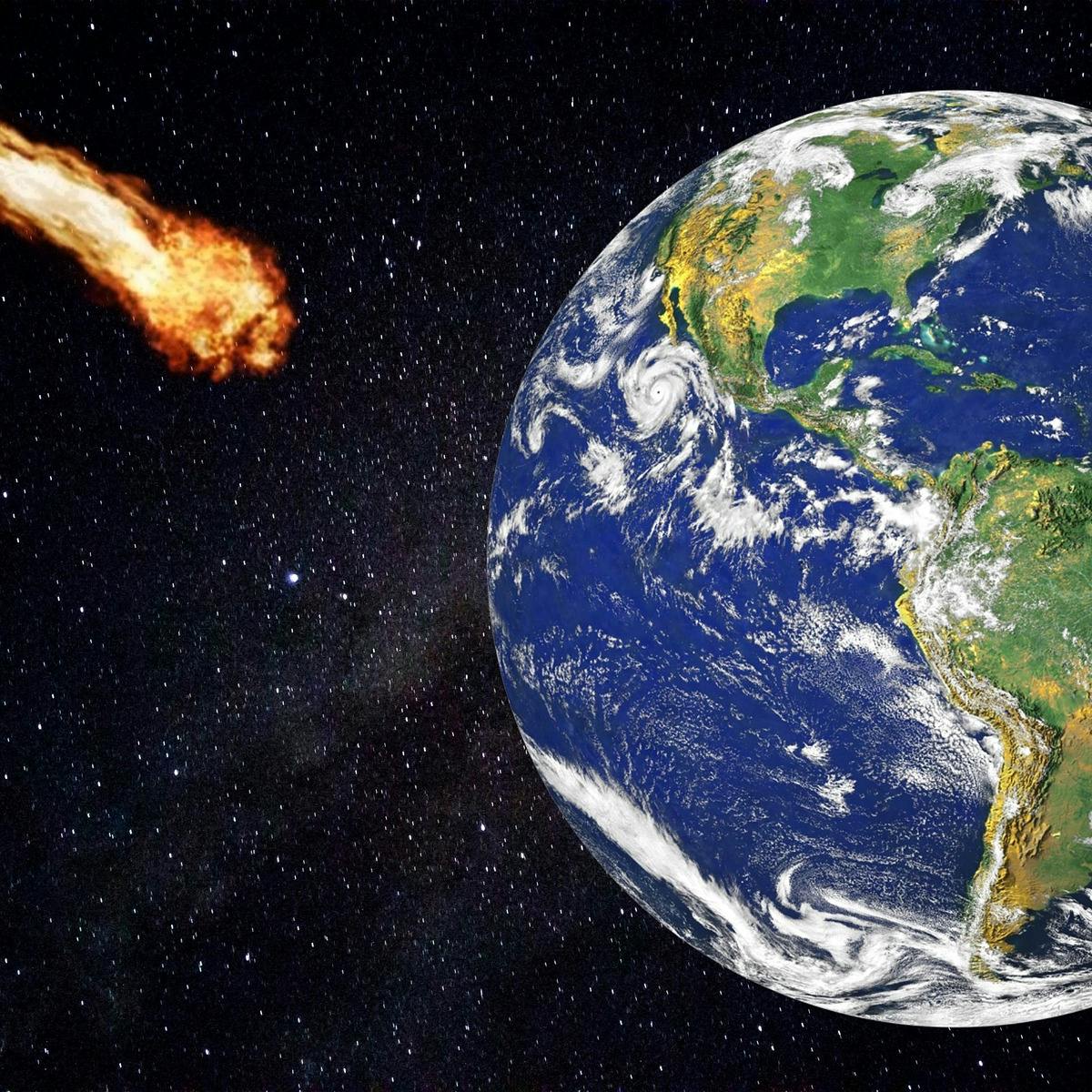
While we fixate on coronavirus, Earth is hurtling towards a ...
Earth is heading for a disaster worse than that which eliminated the dinosaurs.
In the past, these events were triggered by a huge volcanic eruption or asteroid impact. Now, Earth is heading for another mass extinction – and human activity is to blame.
I am an Earth and Paleo-climate scientist and have researched the relationships between asteroid impacts, volcanism, climate changes and mass extinctions of species.

Read the story from The Conversation by an Earth and paleo-climate scientist with the Australian National University, Andrew Glikson -  “While we fixate on coronavirus, Earth is hurtling towards a catastrophe worse than the dinosaur extinction.”

06 March, 2020

Tropical forests losing their ability to absorb carbon, study finds

Tropical forests are taking up less carbon dioxide from the air, reducing their ability to act as “carbon sinks” and bringing closer the prospect of accelerating climate breakdown.

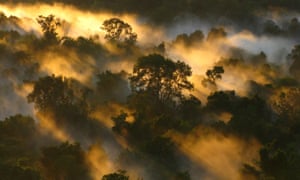
Amazon forest canopy at dawn.
Amazon forest canopy at dawn. The loss of forests as ‘carbon
sinks’ is likely to make climate breakdown more severe.
The Amazon could turn into a source of carbon in the atmosphere, instead of one of the biggest absorbers of the gas, as soon as the next decade, owing to the damage caused by loggers and farming interests and the impacts of the climate crisis, new research has found.

If that happens, climate breakdown is likely to become much more severe in its impacts, and the world will have to cut down much faster on carbon-producing activities to counteract the loss of the carbon sinks.

“We’ve found that one of the most worrying impacts of climate change has already begun,” said Simon Lewis, professor in the school of geography at Leeds University, one of the senior authors of the research. “This is decades ahead of even the most pessimistic climate models.”


Read the story from The Guardian by Fiona Harvey - “Tropical forests losing their ability to absorb carbon, study finds."

22 December, 2019

Top scientists warn of an Amazon ‘tipping point’

Deforestation and other fast-moving changes in the Amazon threaten to turn parts of the rainforest into savanna, devastate wildlife and release billions of tons carbon into the atmosphere, two renowned experts warned Friday. 
“The precious Amazon is teetering on the edge of functional destruction and, with it, so are we,” Thomas Lovejoy of George Mason University and Carlos Nobre of the University of Sao Paulo in Brazil, both of whom have studied the world’s largest rainforest for decades, wrote in an editorial in the journal Science Advances. “Today, we stand exactly in a moment of destiny: The tipping point is here, it is now.”
Combined with recent news that the thawing Arctic permafrost may be beginning to fill the atmosphere with greenhouse gases, and that Greenland’s ice sheet is melting at an accelerating pace, it’s the latest hint that important parts of the climate system may be moving toward irreversible changes at a pace that defies earlier predictions.

Read the story from The Washington Post by Chris Mooney and Brady Dennis - “Top scientists warn of an Amazon ‘tipping point’.”

03 July, 2019

Australia’s politicians will not be alive when climate impacts accelerate

If a plastics factory dumps toxic sludge into a river, we see, in days, the consequences. If a coal-fired power station in New South Wales dumps carbon emissions into the atmosphere, the impacts diffuse into a stupidly big sheet of roiling fluid film covering our planet, and the consequences manifest among a trillion hyperactive climate variables.
Our present politicians will be dead and gone
when climate change really begins to bite.
As you peer further into the future, the impacts of climate change get worse, and consequently, easier to detect on a personal, lived scale. They get so bad that I feel silly talking literally about them:

“In a six-degree-warmer world, the Earth’s ecosystem will boil with so many natural disasters that we will just start calling them “weather”: a constant swarm of out-of-control typhoons and tornadoes and floods and droughts, the planet assaulted regularly with climate events that not so long ago destroyed whole civilisations”


02 June, 2019

We need SpaceX BFR not just get us to MARS but to save EARTH from Global Warming

Almost 10.000.000.000.000 kg of CO2 is every year released and mainly stays in the atmosphere. We increased the concentration from 300 ppm to more than 400 ppm during the last hundred year. And we will most likely double it before we move to CO2 neutral methods of energy production.

So, can we even avoid the negative consequences of the released CO2?
Despide all negative news on global warming, I see one viable option to save our civilization. But we need to change our thinking in two ways: Firstly, we need to start using tools of 21st century and secondly, we need to start looking for the solution out of Earth boundaries. The most effective way to counter the inevitable greenhouse effect is to build a sun-shade in space. If we block just 1% of the Sun’s light, we will compensate for the temperature increase of 1.5°C!


19 April, 2019

Climate Change Will Alter The Way We Think About Energy

Although the current 413 ppm CO2 in our atmosphere may have been experienced as recently as the Miocene ten to fifteen million years ago, we have yet to see some of the radical effects of such a CO2 level. Seas were a hundred feet higher, and average surface temperatures were 11 degrees Fahrenheit hotter in the Miocene. 


One explanation may be that nowhere can we find a rate of change (upper 200s ppm to lower 400s ppm of CO2 over a period of a couple hundred years) as rapid as this, as far as we know, in the past three and a half billion years that life has been present on planet Earth.

Because of this blink-of-the-eye rise (geologically speaking), there may be a significant lag time before the Earth starts to once again look like the Miocene.

Because we are so short-lived, we scoff at people that warn us of these future changes. Yet, when these changes come along we think of them as normal because that’s the way it’s been most of our lives. This life span problem is a major disadvantage to our species. It ranks up there with greed and stupidity.

If we do manage to transition to lower CO2 levels and successfully reverse climate change, we should then be ever vigilant of our greenhouse gas outputs and our use, or misuse, of energy.


Read the story from Medium by Glen Hendrix - “Climate Change Will Alter The Way We Think About Energy."

06 April, 2019

Why the Guardian is putting global CO2 levels in the weather forecast

The simplest measure of how the mass burning of fossil fuels is disrupting the stable climate in which human civilisation developed is the number of carbon dioxide molecules in the atmosphere.
The Mauna Loa weather observatory in Hawaii. The
Guardian will publish the Mauna Loa carbon count every day. 
Today, the CO2 level is the highest it has been for several million years. Back then, temperatures were 3-4C hotter, sea level was 15-20 metres higher and trees grew at the south pole. Worse, billions of tonnes of carbon pollution continues to pour into the air every year and at a rate 10 times faster than for 66m years.

At the dawn of the industrial revolution, CO2 was at 280 parts per million (ppm) in the atmosphere. By 1958, when the first measurements were made at Mauna Loa in Hawaii, it had reached 315ppm. It raced past 350ppm in 1986 and 400ppm in 2013.


Read the story from The Guardian by Damian Carrington - “Why the Guardian is putting global CO2 levels in the weather forecast.”

20 November, 2018

As Toxic Smoke Blankets California, Who Has the Ability to Escape?

There was a time, not so long ago, when one of the challenges faced by environmental activists was making the threat of climate change concrete. How do you convince the public that small changes in the atmosphere can have catastrophic consequences? The threat was real, but it was a threat that needed to be taught, a threat that required explanation, a threat that most people, in their daily lives, couldn’t feel or see.
The Golden Gate Bridge is obscured by smoke and
 haze from wildfires, November 16, 2018, in this
 view from Fort Baker near Sausalito, California. 
In California, those days are over. The Camp Fire in Butte County has become the most destructive wildfire in state history, at one point devouring a football field every second and largely erasing the town of Paradise, population 26,000. By Friday, the death toll from the fire had risen to 71, with more than 1,000 people now missing. (California’s second-most-deadly fire, the Griffith Park Fire in 1993, killed 29 people.) Down south, in Ventura and Los Angeles counties, the Woolsey Fire has consumed nearly 100,000 acres, destroyed more than 600 structures, and killed three people. The impact of the fires has spread well beyond the areas devastated by flames, with the sky turning a sickly grey from Sacramento to Los Angeles. In the past week, school closures caused by the fires resulted in the cancellation of classes for 1.1 million students, a number that amounted to 18 percent of the state’s public-school enrollment, a figure that doesn’t include parochial or private schools. Also closed were a number of colleges, including Stanford, UC Berkeley, San Francisco State University, and San Jose State University.


Read the story by Gabriel Thompson from The Nation - “As Toxic Smoke Blankets California, Who Has the Ability to Escape?”

10 April, 2018

Is climate change really too hard to understand?

It’s a big subject, all right. And a difficult one to address. But too big to understand it isn’t. Quantum physics is too big to understand. Climate change is simple. I’ll put it in one sentence: There are known heat-trapping gasses, and if we add too much of them to the atmosphere, it will cause large, foreseeable damage to humans and natural environments. That is not too big to understand.A lot of people wonder why we are doing so little to prevent the slow-motion catastrophe of climate change. One theory is that it’s too big a subject to understand.


And a majority of people understand it just fine. They are making the assumption that the political process will work normally and that the government will take the steps necessary to deal with it. Like government did with smog, and with polluted water, and with acid rain, and with ozone depletion. The thing that is hard to understand is how people in positions to do something about it do nothing. Or rather, do everything in their power to stop action.


Read the opinion piece from The Washington Post by Tom Toles - “Is climate change really too hard to understand?”

01 April, 2018

Learning about geoengineering

Climate geoengineering refers to large-scale schemes for intervention in the earth’s oceans, soils and atmosphere with the aim of reducing the effects of climate change, usually temporarily.


Learn more about what is happening and what is proposed from Geoengineering Monitor.

04 March, 2018

Ancient carbon discovered coming from Arctic soil

Scientists have published new evidence that old or even ancient carbon, pulled out of the atmosphere and stored in the bodies of plants hundreds or thousands of years ago, is being set loose again from soils in the Arctic region.
The discovery is a potentially worrying indicator that "permafrost"
soils may already be worsening the problem of climate change.
It's a potentially worrying indicator that these "permafrost" soils may already be worsening the problem of climate change. However, scientists are still debating just how much old carbon Arctic soils should release normally even without climate change, leaving the ultimate significance of the findings unclear.


Read Chris Mooney’s story in The Age - “Ancient carbon discovered coming from Arctic soil.”

22 February, 2018

How Crushed Volcanic Rock in Farm Soil Could Help Slow Global Warming — and Boost Crops

Pulverizing volcanic rock and spreading the dust like fertilizer on farm soils could suck billions of tons of carbon from the atmosphere and boost crop yields on a warming planet with a growing population.
Volcanic plains tend to be fertile farmland. A new study
explores how spreading crushed volcanic rock on
 farms can increase carbon storage and crop yields.
In a paper published this week in the scientific journal Nature Plants, an international team of researchers lays out the prospects for "enhanced rock weathering"—a process that uses pulverized silicate rocks, like basalt, to speed the ability of minerals to store carbon in soil.

The team, led by the University of Sheffield in the UK and including U.S. climate scientist James Hansen, says the technique of enhanced weathering on swaths of the world's cropland could potentially offset a meaningful chunk of global carbon emissions.


Read the Inside Climate News story by Georgina Gustin - “How Crushed Volcanic Rock in Farm Soil Could Help Slow Global Warming — and Boost Crops.”

18 January, 2018

Study narrows range of Earth's warming response as greenhouse gases rise

New research has sharply narrowed the likely estimate of how much the Earth will warm with a doubling of carbon dioxide in the atmosphere, potentially honing estimates that have stood for a quarter century.
Estimating how much the planet will warm as we lift
greenhouse gas levels has been an active area of research.
The long-standing estimate for the so-called equilibrium climate sensitivity used by the Intergovernmental Panel on Climate Change had been that surface temperatures would rise between 1.5 and 4.5 degrees for each doubling of CO2 or equivalent greenhouse gases.


Read Peter Hannam’s story in today’s Melbourne Age - “Study narrows range of Earth's warming response as greenhouse gases rise.”

23 August, 2017

World has missed chance to avoid dangerous global warming – unless we start geo-engineering the planet

The world has missed the chance to avoid dangerous global warming – unless we start geo-engineering the atmosphere by removing greenhouse gases, according to new research.

Planet Earth - do we resort to geo-engineering?
Scientists used computer models to assess what needs to be done to restrict global warming to between 1.5 and 2 degrees Celsius, the limits adopted by the Paris Agreement on climate change.

They found that the world was likely to overshoot this temperature but could bring it back down to 1.2C by the end of this century by using techniques to remove carbon dioxide from the air.

Giant biological machines could be created to do this by growing vegetation which absorbs carbon, then burning the resulting biomass in power stations that capture the emissions.


Only green growth can bring prosperity

Our global commons – the land, seas and atmosphere we share, and the ecosystems they host – are under severe threat from human activities.

We can have cities that are attractive and
 productive, where we can move and breathe,
and where communities flourish.
We are at risk of irreversibly damaging the natural assets of the planet that allow human communities to thrive and prosper.

Our world is being depleted of plant and animal species at an alarming rate, our natural landscapes and productive agricultural land are becoming progressively degraded, and our cities are choking from air pollution and congestion. In addition to this, our atmosphere is filling up with greenhouse gases that are pushing us towards the potentially catastrophic impacts of climate change.

We are making the world a more hostile and difficult place for ourselves and for future generations. But we have the opportunity to save and preserve our global commons by implementing the global agenda created by the international agreements in 2015 on sustainable development, finance and climate change.


Read The Guardian story - “Only green growth can bring prosperity.”

21 July, 2017

Carbon dioxide must be removed from the atmosphere to avoid extreme climate change, say scientists

Humans must start removing carbon dioxide from the atmosphere as soon as possible to avoid saddling future generations with a choice between extreme climate change or spending hundreds of trillions of dollars to avoid it, according to new research.

Image result for james hansen images
James Hansen - we have already
overshot climate targets.
An international team of researchers – led by Professor Jim Hansen, Nasa’s former climate science chief – said their conclusion that the world had already overshot targets to limit global warming to within acceptable levels was “sufficiently grim” to force them to urge “rapid emission reductions”.
But they warned this would not be enough and efforts would need to be made to reduce the amount of carbon dioxide in the atmosphere by about 12.5 per cent.


23 May, 2017

Climate Stabilization: Planting Trees Cannot Replace Cutting CO2 Emissions

Growing plants and then storing the CO2 they have taken up from the atmosphere is no viable option to counteract unmitigated emissions from fossil fuel burning, a new study shows. The plantations would need to be so large, they would eliminate most natural ecosystems or reduce food production if implemented as a late-regret option in the case of substantial failure to reduce emissions. However, growing biomass soon in well-selected places with increased irrigation or fertilization could support climate policies of rapid and strong emission cuts to achieve climate stabilization below 2 degrees Celsius.
Poplar plantation. 
“If we continue burning coal and oil the way we do today and regret our inaction later, the amounts of greenhouse gas we would need to take out of the atmosphere in order to stabilize the climate would be too huge to manage,” says Lena Boysen from the Potsdam Institute for Climate Impact Research (PIK), Germany, lead-author of the study to be published in a journal of the American Geophysical Union, Earth’s Future. Plants suck CO2 out of the atmosphere to build their woody roots, stems and leaves. This is low-tech terrestrial carbon dioxide removal that could be combined with high-tech carbon storage mechanisms, for example underground.


Read the Science and Technology Research News story - “Climate Stabilization: Planting Trees Cannot Replace Cutting CO2 Emissions.”

28 April, 2017

French and Australian experts on solving the world’s sustainability challenge

Since the Earth Summit in Rio de Janeiro in 1992, sustainable development has gradually become a key issue for public policy in many countries. Despite many global efforts - for example - to reduce carbon dioxide emissions into the atmosphere, most small initiatives are being taken at the local level.
Take the example of sustainable mobility in cities. The majority of urban agglomerations have been designed or redeveloped for cars. In order to limit the use of cars, various devices have been put in place, such as the introduction of urban road tolls (for example in Singapore, London and Stockholm), the removal of parking lots in inner city centres, or more recently the installation of eco stickers (road tax) for polluting vehicles in Paris.

In parallel, many French cities have seen a reduction in car use in favour of more sustainable forms of transport. As well as public transport such as trains, buses or trams, bikes and walking are alternative solutions to cars. However, depending on the urban environment, bicycling or walking is not always possible, or is dangerous.


27 April, 2017

Research finds a hidden carbon sink in the soils beneath our feet

Research on grasslands in Ireland, supervised by Prof Gary Lanigan (Teagasc – the Irish Agriculture and Food Development Authority) and Prof Rachel Creamer and Prof Rogier Schulte (Wageningen University & Research) has revealed that soils with high clay content in deeper layers lock away carbon for much longer, and at much greater depth than previously known. Publishing their results in Nature scientific-reports/” title=”View all articles about Scientific Reports here”>Scientific Reports, the authors demonstrate how these soils may play a prominent role in mitigating climate change and compensating for some of the greenhouse gas emissions from agriculture.
Carbon storage in deeper soil layers may play a prominent role in mitigating climate change and compensating for some of the greenhouse gas emissions from agriculture. In the upper layer of the soil (upper part of the graph), the carbon is mostly linked to large soil particles (right side of the graph). This carbon is easily accessible for e.g. insects and microbes, causing a fast conversion into carbon dioxide. The lower layers of the soil (lower part of the graph) contain more carbon than expected. This carbon is linked to small soil particles (left side of the graph) and is therefore hard to get to for soil organisms, causing the carbon to remain in the soil for many decades. 
It is well known that all soils play an important role in the global cycle of carbon: soils store three times the amount of carbon that is contained within the atmosphere, and can be either a source of carbon emissions through land degradation, or a sink through the fixation of carbon into soils, a process known as sequestration. The Paris Agreement of the United Nations Framework Convention on Climate Change (UNFCCC) acknowledges the role of soils in climate mitigation through the 4per1000 initiative.


Read the Science and Technology Research News story - “Research finds a hidden carbon sink in the soils beneath our feet.”

05 April, 2017

The Climate Could Hit a State Unseen in 50 Million Years

No, the headline is not a typo. Current carbon dioxide levels are unprecedented in human history and are on track to climb to even more ominous heights in just a few decades.
Weekly carbon dioxide levels at Mauna Loa
Observatory are already nearing last year's peak.
If carbon emissions continue on their current trajectory, new findings show that by mid-century, the atmosphere could reach a state unseen in 50 million years. Back then, temperatures were up to 18°F (10°C) warmer, ice was almost nowhere to be seen and oceans were dramatically higher than they are now.

The implications of the research, published on Tuesday in Nature Communications, are some of the starkest reminders yet that humanity faces a major choice to curtail carbon pollution or risk pushing the climate outside the bounds that have allowed civilization to thrive.


Read Brain Kahn’s ClimateCentral story - “The Climate Could Hit a State Unseen in 50 Million Years.”