Showing posts with label dinosaurs. Show all posts

03 April, 2020

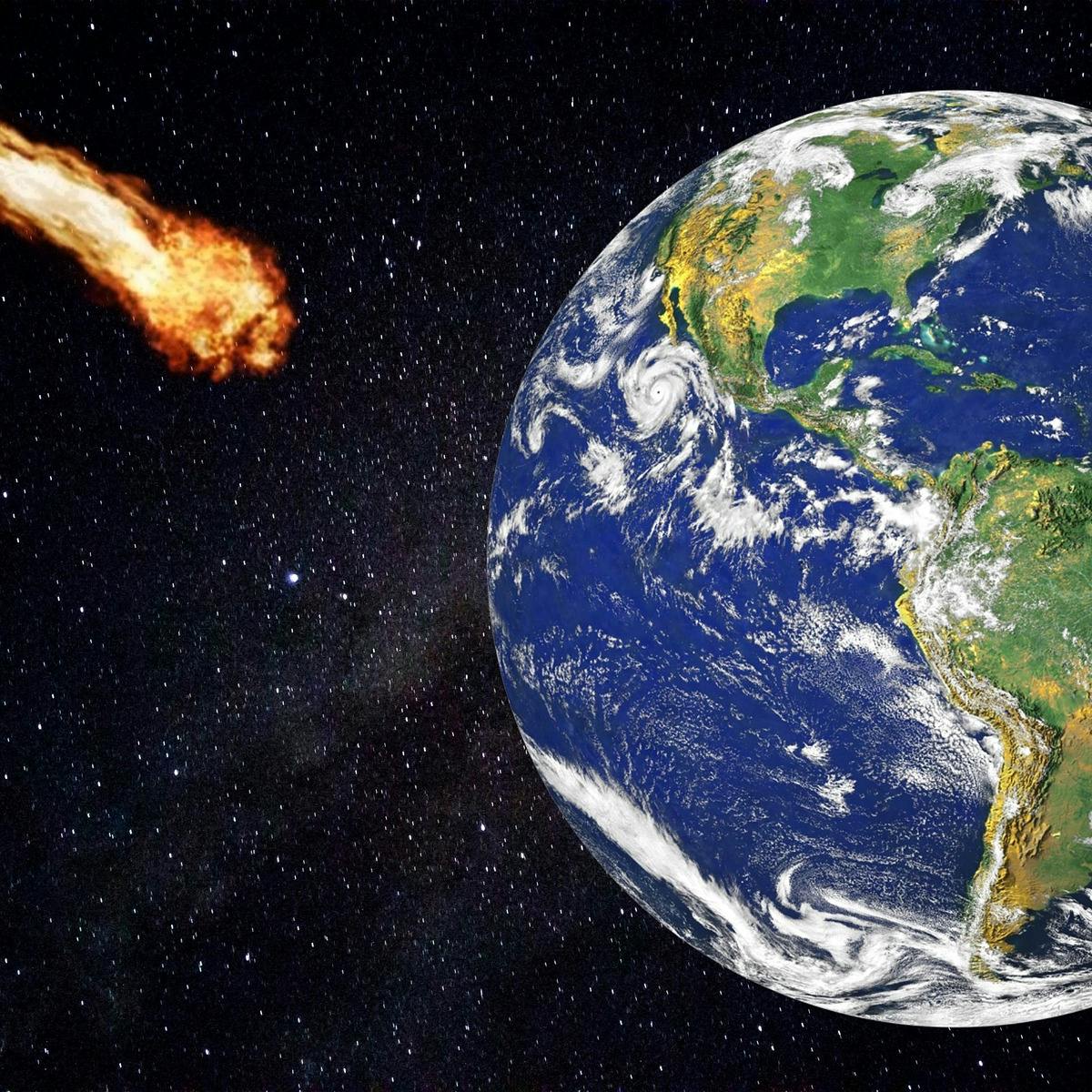
While we fixate on coronavirus, Earth is hurtling towards a catastrophe worse than the dinosaur extinction

At several points in the history of our planet, increasing amounts of carbon dioxide in the atmosphere have caused extreme global warming, prompting the majority of species on Earth to die out.
While we fixate on coronavirus, Earth is hurtling towards a ...
Earth is heading for a disaster worse than that which eliminated the dinosaurs.
In the past, these events were triggered by a huge volcanic eruption or asteroid impact. Now, Earth is heading for another mass extinction – and human activity is to blame.
I am an Earth and Paleo-climate scientist and have researched the relationships between asteroid impacts, volcanism, climate changes and mass extinctions of species.

Read the story from The Conversation by an Earth and paleo-climate scientist with the Australian National University, Andrew Glikson -  “While we fixate on coronavirus, Earth is hurtling towards a catastrophe worse than the dinosaur extinction.”

09 November, 2016

Radical overhaul needed to halt Earth’s sixth great extinction event

Once a widespread and dominating
predator, the tiger today is vanishingly
 rare across most of its former range.
Life has existed on Earth for roughly 3.7 billion years. During that time we know of five mass extinction events — dramatic episodes when many, if not most, life forms vanished in a geological heartbeat. The most recent of these was the global calamity that claimed the dinosaurs and myriad other species around 66 million years ago.

Growing numbers of scientists have asserted that our planet might soon see a sixth massive extinction — one driven by the escalating impacts of humanity. Others, such as the Swedish economist Bjørn Lomborg, have characterised such claims as ill-informed fearmongering.

We argue emphatically that the jury is in and the debate is over: Earth’s sixth great extinction has arrived.

Read the piece on The Conversation by a distinguished research professor and Australian Laureate at the James Cook University, Bill Laurance, and the President at the Center for Conservation Biology, Bing Professor of Population Studies at Stanford University, Paul Ehrlich - “Radical overhaul needed to halt Earth’s sixth great extinction event.”

09 December, 2014

Foot-draggers for leaders, spinters for followers


The Climate Institute found June this year that Australia’s political leaders risked being stuck in the past as public attitudes on climate change and its solutions were on the rebound.

Little has changed, maybe even worsened.

Australians are general progressive and liberal thinkers, but our leaders are mostly mired in the past, unable to free themselves, and their thinking, the paradigms of the 20th Century.

The Climate Institute report is headed: “Australians are no climate dinosaurs as support for action evolves: poll”.

31 December, 2013

2013 slips away and the urgency of 2014 arises


With the end of 2013 less than five hours away, it seems reasonable to say something that recognizes the occasion.

The year just past was less than encouraging for those of us concerned about issues that are impacting of the health of our atmosphere.

Ideas proposed by Swedish Scientist, Svante Arrhenius, explained the link between carbon dioxide and global warming in the 19th Century, but had he predicted our current plight then, that would have been considered “wild-eyed alarmism”.  

The thought about “wild-eyed alarmism” was suggested by David Archer in his 2008 book: “The Long Thaw: How Humans Are Changing the Next 100 000 Years of Earth’s Climate”.

Archer, a computational ocean chemist and a Professor at the Department of Geophysical Sciences at the University of Chicago, said: “The potential climate change in the future is not subtle. If humankind burns all of the coal, the new climate of the Earth could be the warmest in tens of millions of years, since long before our evolution as a species. The transition from the natural climate to the new one would be the most severe global change since the Cretaceous/Tertiary boundary 65 million years ago that brought a close to the 150-million-year era of the dinosaurs”.

The final gathering Beneath the Wisteria for this year less than a week ago, considered the question: “Is it worth it?”

The rhetorical question was answered, without hesitation, in the positive and in fact those among the 12 who attended, felt that each of us needed to boldly spread the message about the need for climate change abatement.

In fact our January gathering (Saturday, January 25) will concentrate on defining our purpose.

So the struggle to implant the idea of a need among our fellows to seriously think about and act upon ideas to mitigate the effects of the causes of climate change takes on a new urgency in 2014 and so our responsibility increases, rather than decreases.

It is almost a cliché to say “Stay safe” and although it might be a cliché, I do urge you to have a safe 2014 and join me in doing what we can to ensure that when we say “stay safe”, it is an intergenerational hope; a hope that will become a reality as we work to help people understand that only changed behaviour will ease the certain difficulties ahead.

-      Robert McLean.