Showing posts with label coal-fired. Show all posts

28 April, 2020

Climate crisis: Sweden closes last coal-fired power station two years ahead of schedule

Sweden has closed the country’s last coal-fired power station two years ahead of schedule.
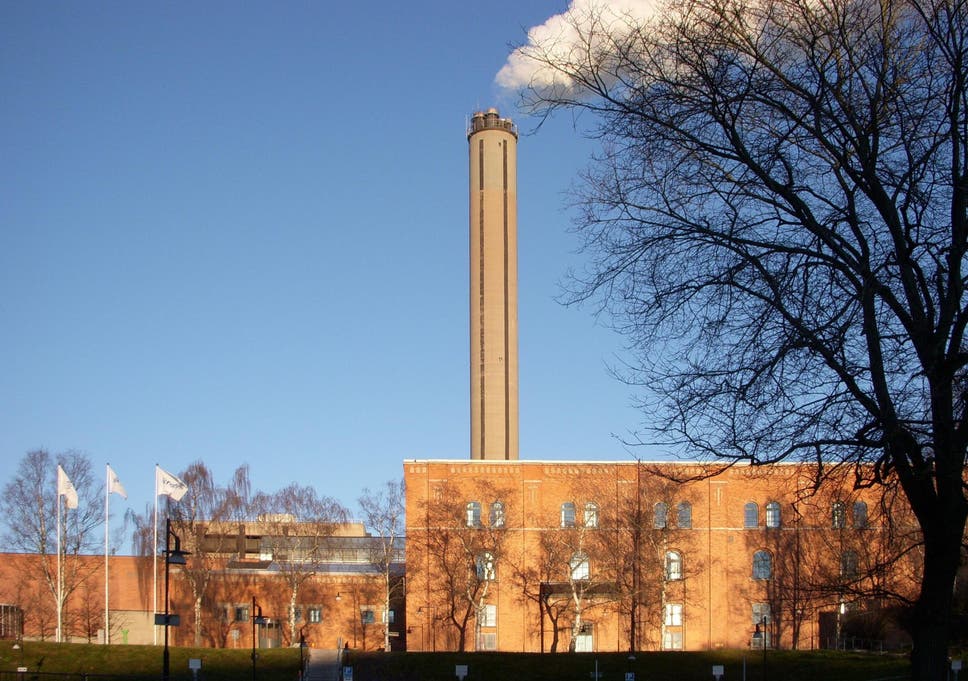
The plant at Värtaverket, in Hjorthagen in eastern Stockholm, pictured in 2008.
It becomes the third European country to exit coal completely after Belgium closed its last coal power station in 2016, and Austria ended its final coal-fired energy operations earlier this month.
The plant at Värtaverket, in Hjorthagen in eastern Stockholm is owned by Stockholm Exergi, a company part owned by the City of Stockholm and which described the closure as “a milestone” for clean energy in Sweden.
The move will cut the CO2 emissions of the company by half, it said.
The Swedish capital is on track for its district heating to be produced entirely by renewable or recycled energy by 2030. District heating, which is used in many European cities, tends to provide higher efficiencies and less pollution than localised boilers in each dwelling. 
Read the story from the Independent by Harry Cockburn - “Climate crisis: Sweden closes last coal-fired power station two years ahead of schedule.”

06 April, 2018

AGL chief determined to turn Liddell into renewables hub

The AGL chief executive, Andy Vesey, says he plans to “fully execute” his vision of transforming the Liddell coal-fired power station into a renewables hub, saying it will bring cheaper, greener and more reliable energy, while providing quality, long-term jobs for decades.
 AGL’s Andy Vesey speaks at an event in Sydney on Friday,
 where he also addressed the Liddell plant issue. 
Vesey left little doubt about his desired future for the plant during a speech on energy policy on Friday, again defying renewed pressure from the Turnbull government.

He said transforming the site into an integrated renewables hub – comprising renewable generation, batteries, gas and demand response – would be vastly preferable to extending its life for several years. 


Read the story by Christoper Knaus from The Guardian - “AGL chief determined to turn Liddell into renewables hub.”

05 April, 2018

Malcolm Turnbull puts AGL board on notice in power crisis

Prime Minister Malcolm Turnbull is targeting the board of energy giant AGL in his push to keep the Liddell coal-fired power station open, warning the company has a duty to consider a sale and prevent a looming east coast power shortage.
Malcolm Turnbull has stepped up the pressure AGL and its
 boss Andy Vesey to keep the ageing Liddell power station open
But the Prime Minister has signalled a compromise with the directors and their combative chief executive, Andy Vesey, telling Fairfax Media the company could avoid selling the plant to a competitors as long as it kept Liddell running “for a few more years”.


Read David Crowe’s story from The Age - “Malcolm Turnbull puts AGL board on notice in power crisis.”

04 April, 2018

Scott Morrison blasts coal rebels, says new coal power twice as expensive

Treasurer Scott Morrison has blasted a call by Coalition MPs for the government to build a coal-fired power station, saying it would not provide cheap electricity as claimed, but power that could be twice as expensive.
Scott Morrison has blasted a call by Coalition MPs for the
government to build a coal fired power station, saying it
 would not provide cheap electricity. 

With a ginger group of Liberal and Nationals MPs called the Monash Forum demanding the government invest up to $4 billion to build a High Efficiency, Low Emissions (HELE) coal-fired plant in Victoria, Mr Morrison said such a project would take many years to build and the electricity it produced would be far more expensive than that being generated by existing coal-fired power stations.

"There's a difference between old coal and new coal. Old coal bids into the energy grid at about $30 a megawatt hour, it could be up to $40,' he told The Australian Financial Review Banking & Wealth Summit.


Read the story from The Financial Review by Phillip Coorey - “Scott Morrison blasts coal rebels, says new coal power twice as expensive.”

Coal-fired power stations caused surge in airborne mercury pollution, study finds

Airborne mercury pollution from coal-fired power stations in Victoria’s Latrobe valley increased 37% in just 12 months, according to an annual national survey of toxic emissions.
The mercury output from Loy Yang B coal-fired power station alone
 more than doubled to 831kg in 2016-2017, the national survey of
toxic emissions found.
The mercury output from Loy Yang B power station alone more than doubled to 831kg in 2016-2017, an increase of 123% over five years.

The brown coal burning power station produced more than 640 times the airborne mercury pollution of Eraring power station near Newcastle, New South Wales.

Eraring, Australia’s largest coal-fired power station, produces three times the energy of Loy Yang B power station but reported just 1.3kg of airborne mercury pollution in 2016-17, a reduction of 97% over the past five years.


Read Calla Wahlquist’s story from The Guardian - “Coal-fired power stations caused surge in airborne mercury pollution, study finds.”

24 March, 2018

NSW government's power plan reveals huge renewable energy resources

The Berejiklian government has identified three priority renewable energy zones in NSW that potentially have seven times the capacity of the state's coal-fired power plants.
A wind turbine at Crookwell in NSW: there's
 huge untapped potential in the state.
In a submission to the Australian Energy Markets Operation, the government said the zones, in New England, the central-west and the south-west of NSW "could unlock 77,000 megawatts of new generation capacity”.


Read Peter Hannam’s story from The Sydney Morning Herald - “NSW government's power plan reveals huge renewable energy resources.”

23 March, 2018

Coal plant construction extends dive - but not fast enough: report

Coal-fired power is on track to start shrinking globally by 2022, dimming prospects for exporters of the fossil fuel, including Australia, according to a report by environmental groups.
On current trends, coal plant capacity worldwide could peak by 2022.
China and India, which have dominated construction of new power plants for more than a decade, both cut new capacity sharply for the second year in a row in 2017, the annual Boom and Bust report by Greenpeace, Sierra Club and CoalSwarm found.


Read Peter Hannam’s story from The Age - “Coal plant construction extends dive - but not fast enough: report.”

25 February, 2018

Environment watchdog could slap tougher emissions caps on power plants

Victoria’s environmental watchdog is reviewing the licences of the state’s three remaining coal-fired power plants, amid claims toxic emissions have contributed to an unusually high number of low-birthweight babies in the Latrobe Valley and even poisoned native dolphins.
Burrunan dolphins in the Gippsland Lakes have 
recorded some of the highest mercury levels in the world.

The Environment Protection Authority is considering imposing tighter emissions caps on the three power stations, Yallourn, Loy Yang A and Loy Yang B, which together supply about 80 per cent of the state’s electricity.
At the end of the review, revised licence conditions will set legal emissions levels for potentially harmful substances including nitrogen, carbon monoxide, sulphur, mercury and particulate matter.
But the EPA has given no indication it will impose new limits on carbon dioxide emissions, despite calls from Victorian environmental groups to do so as a way to tackle global warming.

Combined, the plants emit about one-third of Victoria’s greenhouse gases.


Read Adam Carey’s story in The Age - “Environment watchdog could slap tougher emissions caps on power plants.”

10 December, 2017

AGL rebuffs Malcolm Turnbull and commits to ditching Liddell power station for gas, wind and solar

The Turnbull government will seek expert advice on AGL's new electricity generation plan after the energy giant rebuffed the government and confirmed it would close its coal-fired Liddell power plant.
Prime Minister Malcolm Turnbull after meeting
with AGL boss Andy Vesey in September.
The company believes it can meet the energy shortfall and reduce emissions through a multi-phase development of gas, wind and solar plants, while proceeding with the long-slated closure of Liddell in 2022.

Prime Minister Malcolm Turnbull, who has made electricity supply and power prices a key electoral issue, had implored AGL to consider extending the life of the ailing power station or find a willing buyer.

He said yesterday AGL's plan was "not at all" a rebuke of the government and it will be assessed by the Australian Energy Market Operator by mid-February.


Read Michael Kaziol’s story in today’s Melbourne Age - “AGL rebuffs Malcolm Turnbull and commits to ditching Liddell power station for gas, wind and solar.”

18 October, 2017

Malcolm Turnbull's 'energy revolution': lower prices, lower emissions, greater supply

Coal-fired power plants have been thrown a lifeline by Malcolm Turnbull's "game-changing" new energy policy, which boasts it can cut electricity bills, end summer blackouts, and meet Australia's Paris emissions commitments with "no subsidies, no taxes, and no trading schemes”.

Prime Minister Malcolm Turnbull with Environment
and Energy Minister Josh Frydenberg.
 
The Prime Minister said the framework, which is scheduled to begin from 2020, was recommended by "real experts in this field, in the national energy market and its operation”.

"It creates a level playing field for the first time. No more industry policy, no more picking winners, no more favouring one technology after another, but simply ensuring that we have a reliable energy system, that we keep the lights on, that we do so in a way that is affordable and, of course, we meet those international commitments," he said.

The proposed system, which requires the approval of states leaders at future Council of Australian Governments meetings, will work by requiring electricity retailers to source a minimum component of their power from so-called "dispatchable" or baseload suppliers - that is, not intermittent energy such as wind and solar but coal, gas, and hydro.


Read Mark Kenny’s story in today’s Melbourne Age -  “Malcolm Turnbull's 'energy revolution': lower prices, lower emissions, greater supply.”

20 September, 2017

AGL may turn to gas, as power units fai

AGL may consider converting its Liddell power station to gas as its coal-fired generation units fail in future years.

The Liddell Power Station in the Hunter Valley. 
The potential of the re-purposing of the existing plant was highlighted during a media site visit on Tuesday to a plant that has become a focal point for the increasing toxic energy policy debate.

During the tour, high-level AGL management outlined the potential, and likelihood, of the site being repurposed from coal-fired power.

AGL chief economist Tim Nelson said "repowering'' was an option for the site, due to its access to transmission services, adding that this could include gas or biomass.


Read Cole Latimer’s story in today’s Melbourne Age - “AGL may turn to gas, as power units fail.”

15 September, 2017

Energy market operator says Liddell doesn't have to stay open, as Tony Abbott casts doubt on Paris pledge

The Turnbull government's insistence that the ageing Liddell coal-fired power plant must stay open longer has been cast into doubt by the operator of Australia's electricity market, who says there are other ways to head off a predicted power shortfall.

Prime Minister Malcolm Turnbull and Environment
and Energy Minister Josh Frydenberg. 
Australia's energy quandary dominated question time on Thursday, as the government and Labor tussled over who was responsible for rising power prices and how best to deliver a reliable, affordable power supply.

Appearing at a hearing in Canberra on Thursday, Australian Energy Market Operator chief executive Audrey Zibelman said battery storage, renewable energy, management of consumer demand and upgrading existing power plants could all help meet a predicted 1000-megawatt shortfall in flexible, dispatchible capacity – power that can be created on demand – when energy giant AGL closes its Liddell power plant in 2022.

The Turnbull government is pressuring AGL to keep the Liddell station open for five more years. However, the power company insists it has no plans to sell the plant or keep it open.


13 September, 2017

Turnbull government is working on a major redesign of the clean energy target

The Turnbull government is working on a major redesign of the clean energy target that will likely fall short of the plan for almost half of Australia's electricity to be generated by renewables by 2030.
Clean energy target: Chief Scientist Alan Finkel. 
Internal discussions have commenced about a revised target that would set a higher emissions baseline than the 0.6 tonnes of carbon per megawatt hour suggested by the Finkel review. The revised scheme would allow high-efficency, low-emission coal-fired power plants that emit about 0.7 tonnes of carbon to receive partial certificates, or credits.

Political hard-heads in the Coalition believe that if the government were to adopt the 42 per cent target proposed by Chief Scientist Alan Finkel, which is not far short of Labor's 50 per cent target, the government will not be able to win a fight that frames the opposition as the party of higher power prices at the next election.

As one MP put it, "if we were going to do Finkel's CET, it would be done already”.


Read James Massola’s story in today’s Melbourne Age - “Turnbull government is working on a major redesign of the clean energy target.”

11 September, 2017

Turnbull, AGL attempt to thrash out solution to Liddell coal plant stand-off

The Turnbull government is piling pressure on electricity company AGL to keep the Liddell coal-fired power station open for five more years, ahead of a meeting on Monday designed to thrash out a solution to the political impasse over the future of the plant.

The Turnbull government wants the Liddell Power
Station to operate for another five years from 2022,
when it is supposed to close.
And junior coalition partner, the Nationals, have stepped up their war on renewable energy after they adopted a policy of phasing out all subsidies over the next six years at their party conference.

Former resources minister Senator Matt Canavan told the conference "the biggest protection racket going around is in our renewable energy sector", in comments that underscore the ideological fault lines within the Coalition government over energy policy and the difficulty the government faces in deciding whether to adopt a clean energy target.


Read the story in today’s Melbourne Age - “Turnbull, AGL attempt to thrash out solution to Liddell coal plant stand-off.”

09 September, 2017

Record drop in electricity emissions cancelled out by rises in other sectors

Emissions from the electricity sector in the three months to June dropped by the biggest amount on record, as the effect of the Hazelwood coal-fired power station closure is seen for the first time in quarterly projections produced exclusively for the Guardian.

Australia’s most polluting generator, the Hazelwood
power station in Victoria may have closed, but
overall emissions in 2016-17 were the highest since 2011.
But even that drop wasn’t enough to stop Australia’s overall greenhouse gas emissions from continuing to rise. Emissions from almost every other sector – industrial energy, transport, industrial heat and agriculture – all rose. They are the highest levels seen since before the carbon tax was repealed, according to projections by consultants at Ndevr Environmental.

The results mean Australia has now consumed 24% of its carbon budget set by the government’s Climate Change Authority – the total amount of carbon it can release from 2013 while doing its fair share to keep global warming under 2C. Once a certain amount of carbon goes into the atmosphere, warming over 2C will be inevitable.


Read the story by Michael Slezak and Nick Evershed on The Guardian - “Record drop in electricity emissions cancelled out by rises in other sectors.”

13 August, 2017

New coal plants have a role in Australia's energy future, Josh Frydenberg says

New high-efficiency low-emission (HELE) coal-fired power plants have a role in the energy mix and the government is prepared to intervene in the market, Josh Frydenberg has said.

Energy minister Josh Frydenberg has lamented the
fact that no coal stations have been built since
 2007 and blamed the closure of older plants
for part of the rise in electricity prices. 
The energy and environment minister told Sky News on Sunday that new coal plants “need to be considered” alongside other sources of baseload power, and the government could intervene if the market failed to deliver the “best possible outcomes” in the electricity market.

The comments leave open the possibility of government intervention in favour of coal, despite Frydenberg saying in July that the government would only support new coal power plants “if the market supports that”.


(Please, Mr Frydenberg, let us see the numbers that illustrate why and how these so-called “high-efficiency low-emission (HELE) coal-fired power plants” have a role in Australia’s future energy mix - Robert McLean)

07 June, 2017

Tony Abbott warns against low emissions target ahead of Finkel review

Tony Abbott has fired a public warning shot ahead of Friday’s release of the Finkel review, declaring it would be a “big mistake” for the government to adopt a low emissions target which knocked out new high-efficiency coal-fired power stations.

Tony Abbott: ‘Anything that makes it impossible for us
 to bank new, efficient coal-fired power
stations I think is a big mistake.’ 
The former prime minister used a radio interview on 2GB on Wednesday afternoon to add his dissenting voice to commentary already expressed by government conservatives in the wake of Donald Trump’s withdrawal from the Paris climate agreement.

Abbott said he was concerned about media reports that Australia’s chief scientist, Alan Finkel, would recommend a low emissions target to the prime minister and the premiers this Friday.

He said he was anxious, based on “well briefed” reports, that the Finkel review “gives us not 50%, but 70% renewables by 2030 – and coal, which is by far the cheapest form of baseload power … goes from currently about 65% to 20% of total energy generation.”


25 May, 2017

India cancels plans for huge coal power stations as solar energy prices hit record low

India has cancelled plans to build nearly 14 gigawatts of coal-fired power stations – about the same as the total amount in the UK – with the price for solar electricity “free falling” to levels once considered impossible.
A field of solar panels at Cochin International Airport in southern India.
Analyst Tim Buckley said the shift away from the dirtiest fossil fuel and towards solar in India would have “profound” implications on global energy markets.

According to his article on the Institute for Energy Economics and Financial Analysis’s website, 13.7GW of planned coal power projects have been cancelled so far this month – in a stark indication of the pace of change.

In January last year, Finnish company Fortum agreed to generate electricity in Rajasthan with a record low tariff, or guaranteed price, of 4.34 rupees per kilowatt-hour (about 5p).

Mr Buckley, director of energy finance studies at the IEEFA, said that at the time analysts said this price was so low would never be repeated.


10 April, 2017

Labor’s plan to kill coal-fired power

Labor would retire coal-fired power plants and never fund new ones under recommendations from a Senate committee to be released on Monday, forcing thousands of workers to transition into new jobs while pushing towards and emissions intensity scheme. 
French energy major Engie closed down the
Hazelwood coal-fired power station in Morwell. 
The recommendations, contained within a Labor-steered Senate select committee draft report into electricity resilience, have been "fundamentally rejected" by the Coalition as part of "a report that is so biased that it could have been written before the inquiry even commenced”.

The committee recommended the government "stop providing public financing for new coal-fired power plants, noting such public support would not represent value for taxpayer money, violate notions of competitive neutrality and would not be consistent with meeting international emission reduction objectives”.

The recommendations made by Labor senators Jenny McAllister, Alex Gallacher and Anne Urquhart mark a shift within Labor ranks over the future of coal-fired plants after a March committee stopped short of calling for an outright halt to public funds, noting "that coal-fired power generation will continue to play a significant role over the coming decades". 


Read Eryk Bagshaw’s storey in today’s Melbourne Age - “Labor’s plan to kill coal-fired power.”