Showing posts with label Finkel review. Show all posts

13 September, 2017

Turnbull government is working on a major redesign of the clean energy target

The Turnbull government is working on a major redesign of the clean energy target that will likely fall short of the plan for almost half of Australia's electricity to be generated by renewables by 2030.
Clean energy target: Chief Scientist Alan Finkel. 
Internal discussions have commenced about a revised target that would set a higher emissions baseline than the 0.6 tonnes of carbon per megawatt hour suggested by the Finkel review. The revised scheme would allow high-efficency, low-emission coal-fired power plants that emit about 0.7 tonnes of carbon to receive partial certificates, or credits.

Political hard-heads in the Coalition believe that if the government were to adopt the 42 per cent target proposed by Chief Scientist Alan Finkel, which is not far short of Labor's 50 per cent target, the government will not be able to win a fight that frames the opposition as the party of higher power prices at the next election.

As one MP put it, "if we were going to do Finkel's CET, it would be done already”.


Read James Massola’s story in today’s Melbourne Age - “Turnbull government is working on a major redesign of the clean energy target.”

16 August, 2017

Energy solutions but weak on climate – experts react to the Finkel Review

The keenly anticipated Finkel Review, commissioned in the wake of last year’s South Australian blackout, has made a range of recommendations aimed at delivering a reliable, secure and sustainable National Electricity Market.

Dr Alan Finkel. 
Among the proposals is a new Clean Energy Target to boost investment in low-carbon electricity generation, as well as moves to require high-emitting power stations to give three years’ notice before shutting down.

Below, our experts react to the measures.


21 July, 2017

Building new coal-fired power stations should be market's decision, Turnbull says

Malcolm Turnbull says it is better the market decides whether or not to build a new coal-fired power station in Australia rather than delivering that outcome through government intervention.

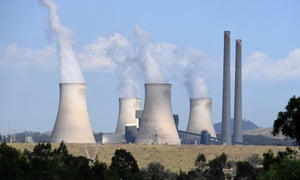
Coal-fired power plant
 PM says as ageing coal-fired plants close the government
must ensure there is enough baseload power, and the
technology to deliver it ‘should be judged on its merits’.
The prime minister was asked at an economic forum in Melbourne on Thursday whether the government would intervene to see new coal plants constructed, or whether it would leave that decision to the market.
Nationals, including the deputy prime minister, Barnaby Joyce, favour the construction of new coal-fired power, or the retrofitting of existing coal assets to extend their operating life, and have tied the future of coal to the resolution of a new national energy policy following the Finkel review.

The Minerals Council of Australia is also campaigning behind the scenes in Canberra to ensure “clean” coal is in the mix as the government responds to the Finkel review.

Read Katharine Murphy’s story on The Guardian - “Building new coal-fired power stations should be market's decision, Turnbull says.”


(This idea from Malcolm Turnbull illustrates conclusively that he misunderstands completely the seriousness of climate change and his ideological belief in the intelligence of the market-system is misguided as it is the “market" that has brought humanity to the edge of the abyss - we need, urgently, government intervention, just as the world had when it was preparing to embark on the Second World War. This is clearly one of those moments when “public” clearly trumps “private” - Robert McLean).

16 July, 2017

Memo to COAG: Australia is already awash with gas

Federal, state and territory energy ministers are gathering today in Brisbane for the tenth meeting of the COAG Energy Council. In the wake of the Finkel Review, and against a backdrop of rising electricity and gas prices, they have much to  electricity and gas prices, they have much to discuss.

Image result for Memo to COAG: Australia is already awash with gas
The controversial Narrabri coal seam gas project. Australia has plenty
of gas reserves that are cheaper to develop and a safer bet.

Some of the focus will certainly be on gas policy and prices. Earlier this week, the federal energy minister, Josh Frydenberg, argued that state governments should develop their onshore gas reserves to relieve pressure on the gas market.

Victoria and the Northern Territory both have bans on onshore gas development, introduced partly to protect prime farming land.

Controversially, federal Liberal MP Craig Kelly suggested on Thursday that pressure from renewable resources on energy prices meant that “people will die” this winter if they’re afraid to turn on their heating.

Yet it is gas generation, not renewables, that typically sets the price in the electricity market. As Fairfax reported yesterday, electricity prices move up and down with the gas price, almost exactly in tandem.


Read the piece on The Conversation by a Researcher from the Australian German Climate and Energy College at University of Melbourne,  Dylan McConnell -  “Memo to COAG: Australia is already awash with gas.”

14 July, 2017

States may go it alone on clean energy target, says Victoria's energy minister

Willing state governments could band together to implement a new clean energy target consistent with the central recommendation of the Finkel review if the Turnbull government can’t deliver the required national leadership on a post-2020 scheme.

Victoria’s energy minister, Lily D’™Ambrosio: ‘Investors, industry
need policy certainty and clarity. We can’t continue to be
on this terrible rollercoaster ride of policy uncertainty.’
Victoria’s climate and energy minister, Lily D’Ambrosio, told Guardian Australia that state governments going it alone was a real possibility if the Turnbull government couldn’t determine a position on the clean energy target in time for a meeting of energy ministers on Friday.

She said if states emerged from Friday’s meeting with no clear resolution on the clean energy target, “willing” states could ask the Australian Energy Market Commission to provide advice about how the scheme envisaged by the chief scientist could be implemented by state government action.

“The willing states are looking at the real prospect of potentially having to go it alone,” she said.


Read Katherine Murphy’s story on The Guardian - “States may go it alone on clean energy target, says Victoria's energy minister.”

29 June, 2017

Finkel Review is not about forecasts, it is about making informed choices

The Finkel Review delivered an energy system blueprint with a clear objective: secure and reliable electricity, at the lowest cost, while Australia moves to a lower emissions future. Regrettably, the current political debate seems more likely to deliver the opposite outcome: less secure and reliable electricity, at higher cost.

Finkel Review encourages a smarter choice.
There is justifiable concern about electricity prices, security of supply, and the future of the coal-fired power stations that have underpinned our energy system for decades.

The economic modelling of the Finkel Review provides forecasts of what might change under various assumptions. Unfortunately, the debate over the Review’s recommendations has focused on the forecasts rather than the substance of what drives investment, prices and emissions. Such debate does little more than support the view of JK Galbraith, who famously said that “The only function of economic forecasting is to make astrology look respectable.”


Read the Grattan Institute story by Tony Wood - “Finkel Review is not about forecasts, it is about making informed choices.”

18 June, 2017

Coal to stay in energy mix for foreseeable future, says Barnaby Joyce

Barnaby Joyce says coal-fired power needs to remain in Australia’s energy mix for the foreseeable future and he has not ruled out the Turnbull government either indemnifying or funding a new power plant.
Deputy PM Barnaby Joyce sees coal as a
part of Australia foreseeable energy future.
In an interview with the ABC on Sunday morning as the government is considering its response to the Finkel review of the national electricity market, the deputy prime minster and Nationals leader said if coal was phased out “then your TVs should go dark and the lights go out”.

Australia should look to refurbishing coal-fired power stations nearing the end of their life, he said, and if there was a proposal in Queensland to construct new plants then “we wouldn’t rule out discussions” about Canberra indemnifying or financing the plant.


Read Katherine Murphy’s story on The Guardian - “Coal to stay in energy mix for foreseeable future, says Barnaby Joyce.”

Does the Finkel review provide a solution to our energy crisis, or is it just another report destined to gather dust?

Discussing the Finkel Review.
The Finkel Review was was claimed to be the paper that would end the divisive “climate wars”.

Just over a week ago, a plan for the future of the National Electricity Market was released by the chief scientist, Alan Finkel.

While some experts have lauded the review, others say it goes too far, particularly in relation to a Clean Energy Target - or CET.

Is the Finkel review a panacea to Australia's energy challenges - or just another report destined to gather dust? 


Listen to the Roundtable discussion on Radio National’s Sunday Extra - “Does the Finkel review provide a solution to our energy crisis, or is it just another report destined to gather dust?”

15 June, 2017

Malcolm Turnbull under climate pressure as Tony Abbott makes demands

Malcolm Turnbull is under mounting pressure to water down the proposed climate policy measures outlined in the Finkel Review or face a backbench reversal and leadership instability, as pro-coal figures led by Tony Abbott lay out a series of climate policy demands.
Prime Minister Malcolm Turnbull says "enough is
enough" on the ideological debates over climate change.
The issue has inflamed old wounds and brought warnings from Turnbull backers that Mr Abbott is headed for a "bruising" because of the "serious people" on the party's right wing standing firm behind the Prime Minister.


Read the story in today’s  Melbourne Age - “Malcolm Turnbull under climate pressure as Tony Abbott makes demands.”

14 June, 2017

Finkel modelling ignores new technologies, cheaper renewables

Here we go again. The Australian public and the Coalition party room are being told that allowing coal-fired generators to continue beyond their 50 year life offers the cheapest path to a transition to a low carbon economy.
Dr Alan Finkel.
But they are being misled. This conclusion is only reached through modelling prepared by a private consultancy for the Finkel Review that deliberately ignores certain new technologies such as battery storage that can provide grid security and replace coal-fired generation at a much cheaper cost than gas.

The detailed modelling – prepared by consultancy Jacobs for the panel led by chief scientist Dr Alan Finkel – also ignores recent big falls in the costs of wind and solar, and over-estimates the cost to build new wind and solar plants.

The Australian public – and the Coalition party room – are being told that the cheapest and most effective way to address emissions is to allow coal-fired power stations to remain in the system beyond their 50-year asset life.


Read the story on RenewEconomy by Giles Parkinson - “Finkel modelling ignores new technologies, cheaper renewables.”

Finkel review: PM Malcolm Turnbull hits out amid Coalition disquiet over Clean Energy Target.

Prime Minister Malcolm Turnbull has angrily defended the Federal Government's position on energy policy, declaring the nation needs "wise leadership" not "glib" answers.

Dr Alan Finkel.
The PM was speaking after Treasurer Scott Morrison and Energy Minister Josh Frydenberg said the cost of power for businesses and households was the major concern for Coalition MPs who are pushing for new investment in coal or nuclear power.

When challenged about backbench concern over chief scientist Alan Finkel's report on a clean energy target, Mr Turnbull said "glib answers and one-liners have been of no assistance in keeping Australians' energy secure and affordable”.

"What Australians need is wise leadership, not glib leadership," he said.


13 June, 2017

New coal tech would gain approval under clean energy target: Finkel

Labor has increased the pressure on Prime Minister Malcolm Turnbull to shut down pro-coal MPs in his party room ahead of a crucial meeting in Canberra on Tuesday in which the Finkel Review will be canvassed at length.
Dr Alan Finkel on the ABC's Q&A program last night.
While Tony Abbott has warned against anything that would become a carbon tax equivalent by shifting costs to consumers, observers within the government and opposition are hopeful of ending the climate policy war that has led to political crises and a lost decade of investment in electricity generation.

Arguments over the science of global warming and the policy settings needed to address it have resulted in an abundance of arguments, and a dearth of investment certainty.

Coalition MPs will hold their first discussion of the Chief Scientist's keenly anticipated recommendations when Parliament returns for the final fortnight before the long winter break.


Read Mark Kenny’s story in today’s Melbourne Age - “New coal tech would gain approval under clean energy target: Finkel.”

12 June, 2017

The truth behind the Finkel report and your power bills

The placards just write themselves. What do we want? "Orderly transition measures, system planning and stronger  governance." When do we want it? About 10 years ago. But now will have to do.

The final report of the independent Finkel review is not a revolutionary document. It is, however, an important and long overdue acknowledgment of our need, as a nation, to do three things simultaneously: stop burning so many dirty lumps of coal, keep the lights on and keep electricity prices affordable.

At present, of course, we're failing abjectly on all three fronts, with power bills set to soar again on July 1.

Modelling by the review suggests households will save about $90 a year, or up to $1000 over the decade to 2030, by implementing its suggestion of a Clean Energy Target, compared with a business-as-usual scenario.


Read Jessica Irvine’s comment in today’s Melbourne Age - “The truth behind the Finkel report and your power bills.”

10 June, 2017

Households to save under Clean Energy Target, but questions loom for Turnbull over Paris

Australian households could save about $90 a year, or up to $1000 on their electricity bills over a decade to 2030 under a Clean Energy Target proposed by the Finkel review of the electricity sector, compared to a business-as-usual scenario.

As the long-awaited review was released on Friday at a Council of Australian Governments meeting, Prime Minister Malcolm Turnbull promised a CET was "no barrier to building a coal-fired power station", in a carefully calibrated message to conservative MPs who have already expressed concern about the scheme.

"There is nothing in the Clean Energy Target that would prevent a new coal-fired power station being built. It would provide an incentive for lower emissions technologies, however," he said.

But Mr Turnbull and Energy Minister Josh Frydenberg will likely face a barrage of questions from conservative MPs about the CET - and whether it would, for example, facilitate investment in new coal-fired power - as soon as Tuesday, when the Parliament returns and the party room meets.


09 June, 2017

Climate Council comments about Finkel Review - a 'mixed bag'

Climate Council CEO, Amanda McKenzie, has written to supporters about the release today of the Finkel Review.

Climate Council CEO, Amanda McKenzie.
She wrote:

The long awaited Finkel Review into Australia’s electricity market has launched today. And it’s a mixed bag.

“Australians across the board are desperate for a policy solution, which can address climate change and tackle emissions from our ageing, inefficient and polluting electricity sector. Ultimately, it was hoped that the Finkel Review would seriously address these issues.

“But disappointingly - the Finkel plan does not pass the climate test. Ultimately if the scheme goes ahead emission reductions must be much stronger.

“What does the Finkel Review recommend?

“The Review’s “blueprint” sets out to reduce emissions in the electricity sector - 28% emissions reduction below 2005 levels by 2030. We need to slash emissions further and faster. Other sectors such as building, agriculture and transport, will need to do more if the electricity sector does less.

“The Review also proposes introducing a Clean Energy Target between 2020 to 2030, to encourage new power plants to be built. The target would be similar to the current Renewable Energy Target, except that it would allow a broader range of power plants to qualify including renewable energy, gas, and coal with carbon capture and storage.

“Additionally, the review confirms that Australia has huge opportunities in renewable power, as renewables are now our cheapest source of new power. It also highlights the importance of coupling solar and wind with battery storage and other storage technologies.

What’s the bottom line?

“Our emissions and electricity prices are going up due to a long term vacuum in Australia's climate policy. What Finkel has proposed will need to be significantly strengthened to meet the demands of climate science.

“Want to hear more? Tune in to Q&A on Monday night where I’ll be appearing as a panelist alongside Alan Finkel, Australia’s Chief Scientist and author of the Finkel Review, and Federal Environment & Energy Minister Josh Frydenberg. It’s sure to be an interesting discussion,” she wrote,


Meanwhile, the Climate Council has produced a short video aimed as exposing the myths around gas.

Finkel climate review outlines Clean Energy Target to put downward pressure on prices

The long-awaited Finkel review of Australia's electricity market will promise lower energy prices for households and business under a new Clean Energy Target, compared to under an emissions intensity scheme or the current business-as-usual scenario.

The Finkel review of the electricity sector will
promise a new clean energy target to put
downward pressure on prices.
Power generators looking to shut a coal-fired power plant would have to give three years notice before doing so, to avoid a repeat of the Hazelwood shutdown, which took place in just six months, and to ensure energy security.

Chief Scientist Alan Finkel's review will be released at a Council of Australian Governments meeting in Hobart on Friday. It will offer a path forward for the Turnbull government to end the political stand-off over climate policy, while finally delivering business and investors certainty on energy policy.

It lays out a trajectory that would see the power sector reduce its emissions by 28 per cent by 2030, against 2005 levels, in line with Australia's Paris Accord commitments. This implies the electricity sector merely do its "fair share" of cuts even though it's been widely expected generators would do more of the heavy lifting.


Read the story by James Massola and Peter Hannam in today’s Melbourne Age - “Finkel climate review outlines Clean Energy Target to put downward pressure on prices.”

07 June, 2017

Tony Abbott warns against low emissions target ahead of Finkel review

Tony Abbott has fired a public warning shot ahead of Friday’s release of the Finkel review, declaring it would be a “big mistake” for the government to adopt a low emissions target which knocked out new high-efficiency coal-fired power stations.

Tony Abbott: ‘Anything that makes it impossible for us
 to bank new, efficient coal-fired power
stations I think is a big mistake.’ 
The former prime minister used a radio interview on 2GB on Wednesday afternoon to add his dissenting voice to commentary already expressed by government conservatives in the wake of Donald Trump’s withdrawal from the Paris climate agreement.

Abbott said he was concerned about media reports that Australia’s chief scientist, Alan Finkel, would recommend a low emissions target to the prime minister and the premiers this Friday.

He said he was anxious, based on “well briefed” reports, that the Finkel review “gives us not 50%, but 70% renewables by 2030 – and coal, which is by far the cheapest form of baseload power … goes from currently about 65% to 20% of total energy generation.”