Showing posts with label sustainable. Show all posts

07 March, 2020

Suing For Survival

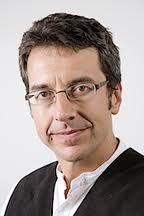
Image result for george monbiot
George Monbiot.
Our survival is not an afterthought. The defence of the living planet cannot be tacked retrospectively onto business as usual. Yet this is how almost all governments operate. They slap the word “sustainable” on damaging projects they have already approved, then insist this means they’ve gone green. If we are to survive and prosper, everything must change. Every decision should begin with the question of what the planet can withstand. 
This means that any discussion about new infrastructure should begin with ecological constraints. The figures are stark. A paper published in Nature last year showed that existing energy infrastructure, if it is allowed to run to the end of its natural life, will produce around 660 gigatonnes of CO2. Yet, to stand a reasonable chance of preventing more than 1.5°C of global heating, we can afford to release, in total, no more than 580 gigatonnes. In other words, far from building new fossil power plants, the survival of a habitable planet means retiring the damaging projects that have already been built. Electricity plants burning coal and gas and oil will not secure our prosperity. They will destroy it.
But everywhere special interests dominate. Construction projects are driven, above all, by the lobbying of the construction industry, consultancies and financiers. Gigantic and destructive schemes, such as the Oxford-Cambridge Expressway, are invented by lobbyists for the purpose of generating contracts. Political support is drummed up, the project achieves its own momentum, then, belatedly, a feeble attempt is made to demonstrate that it can somehow become compatible with environmental promises. This is what destroys civilisations: a mismatch between the greed of economic elites and the needs of society.

Read the piece by Guardian columnist,  George Monbiot - “Suing For Survival.”


03 February, 2020

Enova Community Energy expands to cover all of NSW


Image result for radio national logo"

The chair of Enova Energy, Alison Crook, talks about “our vision”.

Enova Energy wants to make communities as sustainable as possible.

“We want to ensure the everyone can share in the shift to renewables and share in the benefits”, Ms Crook said.


Listen to the story from The Science Show on the ABC  - “Enova Community Energy expands to cover all of NSW.”

19 June, 2019

Call to arms: how can Australia avoid a slow and painful decline?

Australia is at a crossroads. Drift towards a future of slow decline economically and socially or, if action is taken now to address our most important challenges, create a future of greater prosperity for all, globally competitive industries and a sustainable environment.
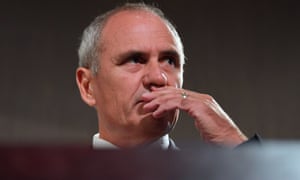
Ken Henry
Dr Ken Henry says the Australian National Outlook report
 aims to ‘help kickstart a national conversation about
where Australia is heading’. 
That is the conclusion of a major report bringing together the thinking of more than 50 leaders in business, academia, NGOs and the community sector, working with the CSIRO to model alternative futures for Australia. The report is described as a “clarion call” for the nation.

The Australian National Outlook 2019, two years in the making, aims to “help kickstart a national conversation about where Australia is heading”, says its co-chair, Dr Ken Henry, the chairman of the National Australia Bank and former secretary of the Treasury department.


Read the story from The Guardian by Gay Alcorn - “Call to arms: how can Australia avoid a slow and painful decline?

02 November, 2018

Making developments green doesn’t help with inequality

Around the world, new developments are increasingly framed as sustainable to both policymakers and prospective buyers. They are seen as a “win-win” for the environment and the economy. However, recent concerns suggest social inequality often results.
Barangaroo is a development on Sydney Harbour
with strong green credentials, but it’s overwhelmingly
 the well-off who enjoy the benefits.
Barangaroo is one such green development on the harbourfront in Sydney, Australia. What was once a contaminated, dilapidated, post-industrial wharf is now home to a six-hectare park, three office towers and two residential complexes. More is to come, in the form of a 275-metre hotel-casino.

Beyond its immense scale, Barangaroo is significant for another reason: it has a commendable sustainability agenda.


Read the piece from The Conversation by a PhD Candidate from University of Technology Sydney, Rupert Legg - “Making developments green doesn’t help with inequality.”

31 March, 2018

Sustainable shopping: save the world, one chocolate at a time

Cocoa is probably the most sustainable of all internationally traded commodities, so there are several “feelgood” reasons for eating the chocolate made from it this Easter – at least when the cocoa is grown by smallholder producers and traded by processors that are committed to equitable sharing of profits.
These are the chocolates you’re looking for. 
Here are some ways to tell if you are onto a good thing.As a wild species, cocoa (Theobroma cacao) originates from the rainforest of the Amazon basin and the foothills of the Andes. In nature, it grows as an “understorey” species, shaded by the rainforest canopy. Much of the world’s cocoa crop is similarly grown in the shade of taller trees in mixed plantings.

Unlike many plantation crops, like rubber and oil palm, cocoa can be grown with a diverse mixture of other plants. Of course, not all growers produce this way, so if preserving biodiversity is a priority for you, look for Rainforest Alliance certification.


Read the piece on The Conversation buy a trio of authors - “Sustainable shopping: save the world, one chocolate at a time.”

22 March, 2018

India, France come together to reiterate their climate commitment

NEW DELHI: India and France came together to reiterate their commitment to provide leadership to slow down global warming and transition to a sustainable and low carbon development pathway to economic growth and development. As the founding conference of the International Solar Alliance got underway in New Delhi, co-hosts Prime Minister Narendra Modi and French President Emmanuel Macron left little room for doubt that concrete action would be the defining principle of the alliance. 
India and France have emerged as proactive leaders on climate
action, even as United States has retreated from global action.
“Now let’s get to work”, French President Macron told leaders at the founding conference of the International Solar Alliance. Macron called on the leaders from the ISA member countries to use the opportunity of the summit make concrete announcements that would pave the way for rapid deployment of solar energy. 

Read The Economic Times story by Urmi Goswami - “India, France come together to reiterate their climate commitment.”


(France and India appear intent on powering their respective countries with renewable energy sources, therefore removing fossil fuel powered generators from their energy infrastructure, leaving the proposed massive Adani Queensland coal mine as a stranded asset and as such  a financial catastrophe for the Indian Adani company, as it will be for Australia, along with being an ethical, moral, and environmental embarrassment - Robert McLean)

18 February, 2018

Father and son build this minimalist, energy-efficient family cabin (Video)

What does it take to build a small, sustainable home close to nature? 
The energy efficient family cabin.
For William and Daniel Yudchitz -- father and son and both architects -- that meant thinking in a modular way for fitting the interior spaces of their 340-square-foot family cabin on the shores of Lake Superior, as well as carefully selecting materials and designing custom-made, multipurpose furniture that maximizes space. Seen previously in Lloyd's post, we now get a personal tour of how this energy-efficient home works via Fair Companies.


Read/watch the Treehugger story by Kimberley Mok - “Father and son build this minimalist, energy-efficient family cabin (Video).”

15 February, 2018

Rooftop urban farm revealed at Frasers’ Living Building Challenge retail site

The Burwood Brickworks retail centre, designed to be the world’s most sustainable shopping centre, has revealed it will house a 2000-square-metre urban farm and restaurant on its roof.
The Burwood Brickworks retail centre.
Teaming up with environmentalist Joost Bakker on the project, building developer Frasers Property Australia is now calling for expression of interest from tenants wanting to take over the rooftop space.

Last year, Frasers executive general manager, retail Peri Macdonald revealed to The Fifth Estate intentions to create an urban farm that would be a financial boon for the developer.


Read Cameron Jewell’s story on The Fifth Estate - “Rooftop urban farm revealed at Frasers’ Living Building Challenge retail site."

20 January, 2018

Adidas moves forward sustainability in fashion

Adidas, one of the global leaders in the sporting industry, has partnered with Fashion For Good – a global platform acting as a convener for change, to scale up sustainable innovation in the apparel industry.

The partnership intends to illustrate the benefits of cross-industry collaboration to integrate disruptive innovations in the fashion supply chain.

Katrin Ley, Managing Director at Fashion for Good, said: “Together with Adidas and our other partners, we are accelerating the transition to a circular apparel industry and reimagining the way fashion is designed, made, worn and reused”.


Read the Climate Action story - “Adidas moves forward sustainability in fashion.”

17 January, 2018

Why we need to 'climate proof' our sports stadiums

For many Australians summer is synonymous with cricket and tennis. But as Australian summers become more prone to extreme heat conditions, sustainable and climate-adaptable stadium design has become a leading consideration for both sporting codes and governments.
The SCG was measured at 57.6 degrees
Celsius on Sunday during the fifth Ashes Test.
The final Ashes Test played at the Sydney Cricket Ground recently showed that the cricketing community must adapt to heatwaves made worse by climate change.

And in recent years the Australian Open has produced many stories of both tennis players and spectators suffering in extreme heat. And more are expected over the two weeks of the current tournament.

As the New South Wales Government embarks on a hugely expensive rebuild of major stadiums across Sydney, now is a good time to ask whether major Australian sports venues are adequately "climate-proofed" for a warming future.


Read the story on ABC News from The Conversation by Macquarie University’s Paul J Govind - “Why we need to 'climate proof' our sports stadiums.”

21 October, 2017

The government’s energy policy hinges on some tricky wordplay about coal’s role

The most important thing to understand about the federal government’s new National Energy Guarantee is that it is designed not to produce a sustainable and reliable electricity supply system for the future, but to meet purely political objectives for the current term of parliament.

The new policy could end up feeding demand for coal. 
Those political objectives are: to provide a point of policy difference with the Labor Party; to meet the demands of the government’s backbench to provide support for coal-fired electricity; and to be seen to be acting to hold power prices down.

Meeting these objectives solves Prime Minister Malcolm Turnbull’s immediate political problems. But it comes at the cost of producing a policy that can only produce further confusion and delay.


Read the piece on The Conversation by a professor from the School of Economics at The University of Queensland, John Quiggan - “The government’s energy policy hinges on some tricky wordplay about coal’s role.”

09 September, 2017

How to Feed Ourselves in a Time of Climate Crisis

Changing the food system is the most important thing humans can do to fix our broken carbon cycles. 
30 percent of global greenhouse gas emissions is
 from industrial agriculture, including deforestation
to support livestock.
Meanwhile, food security is all about adaptation when you’re dealing with crazy weather and shifting growing zones. 

How can a world of 7 billion—and growing—feed itself? Here are 13 of the best ideas for a just and sustainable food system. 


Read the Yes! magazine story - “How to Feed Ourselves in a Time of Climate Crisis.”

16 August, 2017

Energy solutions but weak on climate – experts react to the Finkel Review

The keenly anticipated Finkel Review, commissioned in the wake of last year’s South Australian blackout, has made a range of recommendations aimed at delivering a reliable, secure and sustainable National Electricity Market.

Dr Alan Finkel. 
Among the proposals is a new Clean Energy Target to boost investment in low-carbon electricity generation, as well as moves to require high-emitting power stations to give three years’ notice before shutting down.

Below, our experts react to the measures.


03 April, 2017

After 25 years of trying, why aren’t we environmentally sustainable yet?

In 1992, more than 170 countries came together at the Rio Earth Summit and agreed to pursue sustainable development, protect biological diversity, prevent dangerous interference with climate systems, and conserve forests. But, 25 years later, the natural systems on which humanity relies continue to be degraded.
After decades of sustainability initiatives,
key environmental indicators keep getting worse.
So why hasn’t the world become much more environmentally sustainable despite decades of international agreements, national policies, state laws and local plans? This is the question that a team of researchers and I have tried to answer in a recent article.

We reviewed 94 studies of how sustainability policies had failed across every continent. These included case studies from both developed and developing countries, and ranged in scope from international to local initiatives.


Read the piece on The Conversation by an Associate Professor in Environmental Studies at Griffith University, Michael Howes - “After 25 years of trying, why aren’t we environmentally sustainable yet?

24 March, 2017

Morocco’s clean energy, clear advantage: lessons on energy access

Clean energy lessons from Morocco.
Africa has tremendous energy resources, yet 600 million people across the continent lack energy access. We take a look at clean energy in Morocco for lessons on reducing energy poverty in Africa.

Providing reliable, affordable, and sustainable access to energy has become a core focus of the international development community and is the seventh goal of the 2015 United Nations Sustainable Development Goals.

‘Roughly 1.2 billion people, or 17 percent of the global population, are energy poor’

Roughly 1.2 billion people, or 17 percent of the global population, are energy poor, meaning that they have no access to electricity. Meanwhile, more than 2.7 billion people, primarily in developing Asia and sub-Saharan Africa, rely on fuelwood and other traditional biomass sources for cooking.

Morocco’s experience with solar power offers key lessons for policymakers elsewhere in Africa who are seeking a robust pathway for addressing energy access challenges.


Read the WorldWatch Institute story - “Morocco’s clean energy, clear advantage: lessons on energy access.”

23 October, 2016

A community aiming for empowerment through sustainable, wealth-creating jobs

Earthworker is a community-led initiative to provide sustainable, wealth-creating jobs that empower local communities and provide clean energy solutions.

Earthworker is setting up an Australia-wide network of community owned cooperatives, beginning with Eureka’s Future – a worker owned factory to manufacture high quality solar hot water systems in Dandenong, and then Morwell, in the heart of Victoria’s coal-burning LaTrobe Valley.

Forging unlikely alliances between trade unionists, environmentalists and small manufacturers, the project is a powerful and positive endeavour to revitalise local economies, address climate change, and assist a ‘just transition’ from fossil fuel to clean renewable energy.

Earthworker is helping to create new ways to meet our needs – fostering fair, democratic workplaces, local manufacturing, strong communities and sustainable technologies.

Learn more here about EarthWorker.

03 September, 2015

Not just renewable, but sustainable


D

ue to growing world population and increasing wealth, demand for energy – specifically electricity – is rising, especially for the 1.3 billion people who don’t have access.

The most commonly used source for electricity production today is coal; 41% of all electricity is produced from coal, according to the World Coal Association.
 
Due to its high level of pollution (water and air pollution during mining and air pollution during burning) and often miserable circumstances for miners, we can conclude that this is not a sustainable source for electricity.

Read the World Economic Forum Agenda story - “Renewable energy is not enough: it needs to be sustainable”.

17 June, 2015

Many misuse and abuse 'sustainability' and 'sustainable'


M

any take advantage of society’s broad misunderstanding of what sustainability and sustainable really mean.

Frequently companies, and many individuals, exercise these terms to claim that what it is they are doing, or the various ideologies they adhere to play no part in damaging the atmosphere and neither risking or depleting our resources.

Equally frequently, those claims are both distorted and deceptive and in fact do both, that is damage the atmosphere and further erode our finite resources.

Circular Ecology says: “The definition of sustainability is not nearly as simple as it might seem, likewise with the definition of sustainable development. This is best illustrated by the fact that there are over 200 different definitions to what is sustainable development.”

27 April, 2015

Carbon dioxide and water to diesel - too good to be true?


E

conomists have long pointed out that if it sounds too good to be true, then it probably is.

The idea that diesel fuel can be made from carbon dioxide and water is another of those things.

However, the German car company, Audi claims it has made it work and can now produce a carbon neutral fuel currently being used by the country’s Federal Minister of Education and Research, Johanna Wanka.

“The creation of the fuel is a huge step forward for sustainable transport, but the fact that it’s being backed by an automotive giant is even more exciting. Audi has now set up a pilot plant in Dresden, Germany, operated by clean tech company Sunfire, which will pump out 160 litres of the synthetic diesel every day in the coming months,” the company reports.

24 October, 2014

Farming our way towards sustainability


Farming, in all its forms and complexity of processes, is a major contributor to the world’s carbon dioxide emissions.

Subsequently, the humble small family farm or the mighty mono-cropping monster has to become sustainable.

Sustainability can be simple or complex, depending on personal interpretation, but whatever view prevails, it is essential that each of us, including farmers, work toward that outcome.

Meanwhile, a story on The Guardian headed: “Investing in sustainable agriculture by converting farms to 'beyond organic'” tells about a San-Francisco based fund aimed at making conventional farms sustainable while providing high returns to investors.

The story reports: “Its newfangled approach moves specialist farmers around the property based on ecology, biodiversity and what’s best for the land in the long run.”