Showing posts with label renewables. Show all posts

03 February, 2020

Enova Community Energy expands to cover all of NSW


Image result for radio national logo"

The chair of Enova Energy, Alison Crook, talks about “our vision”.

Enova Energy wants to make communities as sustainable as possible.

“We want to ensure the everyone can share in the shift to renewables and share in the benefits”, Ms Crook said.


Listen to the story from The Science Show on the ABC  - “Enova Community Energy expands to cover all of NSW.”

15 April, 2019

AEMO to model rapid transition to renewables, quicker exit from coal

The Australian Energy Market Operator is to include modelling for a rapid transition to renewables, a quicker exit from coal generation, and even a zero emissions grid as part of its next Integrated System Plan.

The commitment to a “step change” scenario – as it has been tentatively named – has been made by AEMO in a series of workshops and consultations with industry members over the past few weeks to discuss what inputs should be included in its next ISP, which is designed to be the 20-year blueprint for the electricity grid.

Importantly, this call for scenario planning to a more rapid shift to a renewables-dominated grid comes not from climate activists, green groups or renewables advocates, but from the incumbent fossil fuel generators and utilities themselves – who admit that the current planning blueprint does not take into account climate change and the realities of Australia’s ageing coal fleet.


Read the story from RenewEconomy by Giles Parkinson - “AEMO to model rapid transition to renewables, quicker exit from coal."

02 April, 2019

New figures show we’re using more energy and still pumping out more emissions — so why aren’t we moving the dial?

This comes as no surprise. The analysis from the International Energy Agency is in line with other preliminary reports from other organizations. But it raises an awkward question: if renewables are growing and the prices of solar, wind, and batteries are falling, why is the world’s climate pollution still going up?
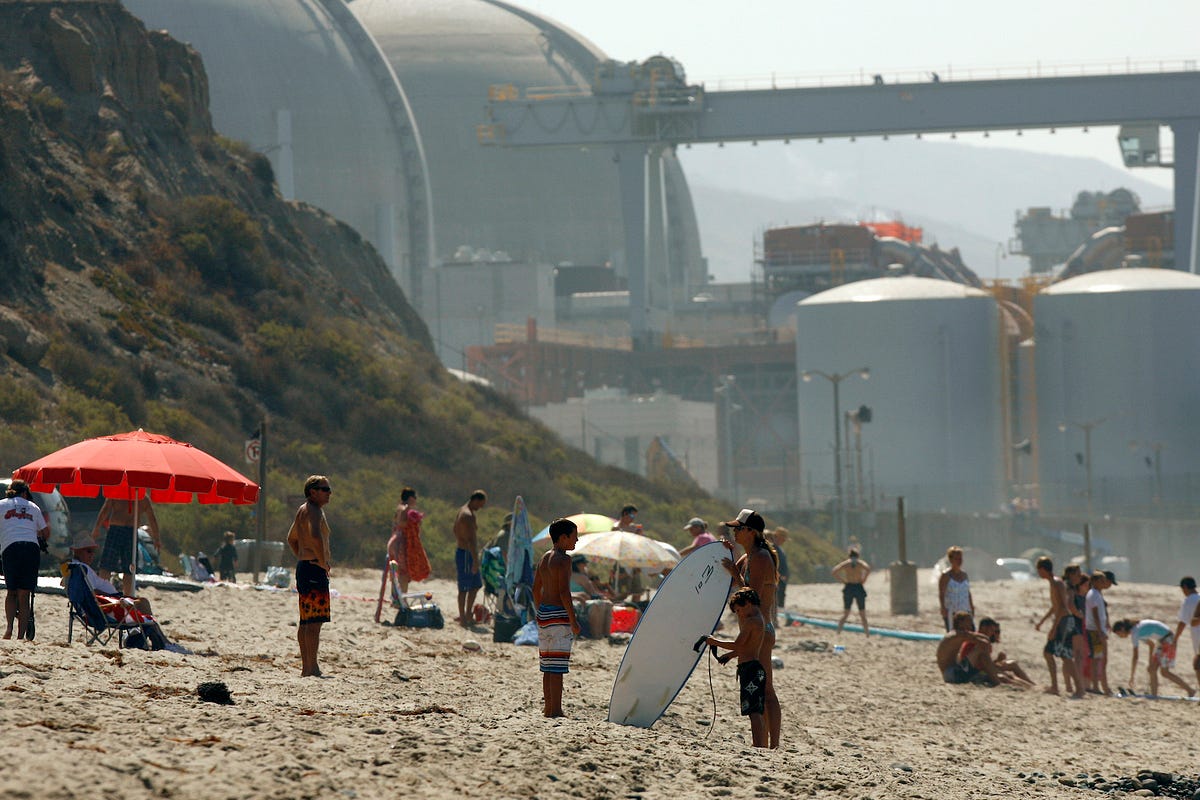
The San Onofre Nuclear Generating Station in California,
shuttered in 2013, is shown here in 2008.


Global energy demand and related carbon emissions both rose again in 2018, according to new figures out this week.

The first answer is the growing global economy, which pushed energy demand up by 2.3% last year, the IEA says. A contributing factor was that more energy was needed for extra heating and cooling in regions hit by unusually severe cold snaps and heatwaves. These were at least partly driven by our shifting climate. All of that drove increases in generation from coal and natural gas, both of which spew greenhouse gases that warm the planet.


08 March, 2019

Coalition loses the plot as window closes on fantasy coal plans

Giles Parkison.
Craig Kelly hasn’t been very noisy of late – too preoccupied, it seems, on filling his Facebook page with some of the biggest nonsense you will find anywhere about climate hoaxes, renewables and batteries.

This week, however, he couldn’t help himself, when it was revealed that a consortium comprising a couple of two-bit companies from western Sydney and the Cayman Islands and a Chinese backer had agreed to explore a plan to build some new coal-fired generators in the Hunter Valley.

Never mind that this could never happen – the proposed site is too close to a hospital and homes, and it has not even filed a DA, yet alone considered a business plan or a market opportunity.


Read the RenewEconomy story by Giles Parkinson - “Coalition loses the plot as window closes on fantasy coal plans.”

12 February, 2019

Don’t blame renewables for blackouts, energy experts say

A new Grattan Institute report says fears that rising levels of renewables will cause blackouts are misplaced, and by trying to fix the wrong problem we may risk more blackouts.
The power problem doesn't lay with coal or renewables as
 much as the poles and wires, the Grattan Institute said.
The report Keep Calm and Carry On said the conversation on reliable power had been wrongly focused on coal against renewables to keep the lights on instead of correcting problems with network reliability and how to create incentives for more investment in new generation.


Read the story from The Sydney Morning Herald by Cole Latimer - “Don’t blame renewables for blackouts, energy experts say.”

20 December, 2018

The Truth About These Climate Change Numbers

It’s often argued that climate change is not a technological or engineering problem, it is a political problem. And it’s true. We have all the technology we need to power the world with renewables and stave off the worst of climate chaos. What we lack is the political will to take the kind of moonshot-scale action necessary to accomplish it.


An image of a type often used to
illustrate climate change stories.
But climate change is also a numbers problem. Every ton of carbon that we dump into the atmosphere stays there for hundreds of years, warming the atmosphere and reshaping the future climate. As the recent IPCC report pointed out, to avoid the worst of climate chaos, the world needs to reduce carbon emissions to zero by 2050. Accomplishing that would require not just a remaking of our energy system, but profound changes in agriculture, the design of cities and transportation systems. It is possible to imagine how a revolution like this might happen, but it’s even easier to imagine how it would not.


Read the story from Rolling Stone by Jeff Goodell - “The Truth About These Climate Change Numbers.”

23 October, 2018

Coal’s days are numbered, top government adviser says

The federal government's top energy adviser Kerry Schott says the plunging cost of renewables will force Australia's remaining coal plants to close even earlier than planned, as mining giant BHP renewed calls for a price on carbon to urgently slash national emissions.
Respected energy chief Kerry Schott.CREDIT:
The Morrison government's failure to produce an emissions reduction plan for the electricity sector and general inaction on climate change have been credited with helping to drive a massive negative swing in the Wentworth byelection, which is expected to cost it the seat and force it into minority government.

The nation's energy ministers are due to meet in Sydney on Friday to discuss the Morrison government's bid to lower prices and improve reliability. Efforts to cut greenhouse gas emitted by electricity generators are not on the agenda.


Read the story from The Age - “Coal’s days are numbered, top government adviser says.”

07 September, 2018

Coal does not have an economic future in Australia

Renewables are stealing the march over coal in Australia, and the international outlook is for lower coal demand. Today the international Coal Transitions project released its findings, based on global coal scenarios and detailed case studies by teams in China, India, South Africa, Australia, Poland and Germany.
The closure of the Hazelwood mine has
lessons for the future of coal in Australia.
Our research on Australian coal transition – based on contributions by researchers at the Australian National University and the University of Melbourne – looks into the prospects for coal use in Australia and for exports, and the experiences with local transition in the case of the Hazelwood power station closure.


Read the report from The Conversation by Frank Jotzo and Salim Mazouz - “Coal does not have an economic future in Australia.”

30 August, 2018

Angus Taylor signals further taxpayer investment in existing coal and gas

The new energy minister, Angus Taylor, says he’s not a sceptic about climate science, just the economics of green schemes, and he’s declared renewables are “in my blood” and have an important role in the energy system.
 'I am not sceptical about climate science': Angus Taylor.
But while overtly backing solar and hydro, but not wind – a technology he’s long opposed – Taylor has also signalled he wants to encourage new investment extending the life of existing coal and gas plants, and upgrading ageing facilities, with an objective of boosting supply.

In his first major speech in his new portfolio, Taylor has recommitted the government to pursuing heavy-handed interventions in the energy market cooked up in the last days of the Turnbull government, including “last resort” divestiture powers to break up power companies if they engage in price gouging.


Read the story from The Guardian by Katharine Murphy - “Angus Taylor signals further taxpayer investment in existing coal and gas.”

Renewables forecast to halve wholesale energy prices over four years

While the Morrison government has identified lowering power prices as a key early priority, a new analysis says wholesale prices will almost halve over the next four years because of the technology many Coalition conservatives oppose – renewables.
 A solar farm in Port Augusta. Extra capacity commissioned after
 the closure of large coal-powered generators in South Australia
 and Victoria is bringing down wholesale energy prices.
The latest renewable energy index compiled by Green Energy Markets confirms analysis by the Energy Security Board that wholesale electricity prices are on the way down because of an addition of 7,200 megawatts of extra large-scale supply from renewable energy


Read the story by Katharine Murphy from The Guardian - “Renewables forecast to halve wholesale energy prices over four years.”

17 July, 2018

Renewables will replace ageing coal plants at lowest cost, Aemo says

Australia’s energy market operator says the future of power generation in Australia will be renewables with storage, and gas, with those technologies able to replace the power currently supplied by coal generators at least cost.
Some 30% of coal power plants will be decommissioned in the next
20 years and it will be cheaper to replace them with renewables than
with new coal plants, Aemo says.
 
A new forecast by the Australian Energy Market Operator (Aemo) notes 30% of Australia’s coal generators will approach the end of their technical life over the next two decades, and it says it is important to avoid premature departures if the looming transition in the national energy market is to be orderly.

But while some in the Turnbull government have been campaigning to bolt new coal-fired power into the system, backed with government subsidy or underwriting, Aemo is clear about where the future lies, and it is not with coal.


Read Katharine Murphy’s story from The Guardian - “Renewables will replace ageing coal plants at lowest cost, Aemo says.”

27 March, 2018

Shepparton council set to go solar, as PV farm plans remain in limbo

The regional Victorian city of Greater Shepparton is set to install solar across a number of its local government assets, as part of a broader effort to shift to renewables and cut its energy costs.

Solar panels on Shepparton High School.
A council meeting last week revealed that the $225,500 contract for solar installation on various council buildings had been awarded to Melbourne-based company, True Value Solar.

Cr Bruce Giovanetti said that with electricity costs set to climb even higher, the rollout was “hopefully” just stage one of a more comprehensive shift to solar by council.

‘‘It’s great to see council is taking a proactive approach to ensuring we can reduce energy consumption costs as much as we can,’’ he said.

The move by the council follows last month’s news that four planning applications for solar farms in Greater Shepparton had been called in by the Minister for Planning to determine whether permits could be granted.


Read Sophie Vorath’s story from One Step Off the Grid - “Shepparton council set to go solar, as PV farm plans remain in limbo.”

13 March, 2018

Australia can avoid Germany's renewable energy mistakes

Australia's increasing focus on demand response and energy efficiency is setting the country up to bypass the mistakes made by the world leader in renewables, says a German energy expert.
Australia can avoid German's renewable energy mistakes.
"Australia can learn from Germany's mistakes of the last few years," the deputy chairman of the German Business Initiative for Energy Efficiency, the nation's peak energy efficiency body, Christoph von Spesshardt said.

"I can see similarities between the situation in Australia now and Germany 10 years ago," he told Fairfax Media.


Read Cole Latimer’s story from The Sydney Morning Herald - “Australia can avoid Germany's renewable energy mistakes.”

GE hopes giant grid batteries can save the planet (and its fortunes)

The engineering firm hopes a storage system can smooth electricity supply on a grid powered by renewables—and let it capitalize on a fast-growing market.
GE's "Reservoir" battery system.
GE announced a new system called Reservoir—a large battery attached to the grid to store spare electricity from renewables. When the sun doesn’t shine and wind doesn’t blow, it dumps electrons into the grid to meet demand. It uses discharging smarts to extend its working life, and it’s modular, so it can be adapted to fit small or large gigs.


Read the MIT Technology Review story - “GE hopes giant grid batteries can save the planet (and its fortunes).”

18 October, 2017

The PM's plan will deliver more expensive, dirtier power

The problem with our energy politics is, they have not caught up with energy economics.The price of renewables is plummeting and the investors are rushing. But our discourse remains stuck around clean energy targets being "too expensive”.

Liddell power station in Musewellbrook
did not perform last  February.
The new reality is that the cost of building new renewable energy is far cheaper than the cost of building new coal-fired power plants. If left to the market, no new coal-power station would be built again in Australia. Gas prices, as predicted, have gone through the roof – so that is no longer a cheaper option, either.

Rather than use the falling cost of renewable energy as an opportunity to roll out renewable energy and reduce our energy pollution more rapidly, in the topsy-turvy world of Australian policy debate it is being used as an explanation for why we should prop up uneconomic and unnecessary coal- and gas-fired power stations.

And while renewables are cheaper, energy infrastructure is very-long-term investment. This is where the renewable energy target has worked, by enabling long-term power purchase agreements to underpin investment. And it's how a clean energy target or similar scheme could also work into the future.


Read Ben Quist’s story in The Sydney Morning Herald - “The PM's plan will deliver more expensive, dirtier power.”

17 October, 2017

Tony Abbott launches warning shot on climate policy

Tony Abbott has fired a telling shot across Malcolm Turnbull's bow, warning that any energy package agreed to in cabinet must also pass a party room wary of anything approaching a clean energy target or other subsidy scheme for renewables.

Warning shot on energy: former prime minister Tony Abbott,
 pictured with then-assistant treasurer Josh Frydenberg
at Parliament House in March 2015.
It came as the Turnbull government received more bad news in the fortnightly Newspoll series, prompting Mr Abbott to declare a future return to the leadership was possible but would occur only if he was drafted by colleagues, which he described as "almost impossible to imagine”.

Signalling that Coalition MPs will be no rubber stamp on energy, the dumped former prime minister said the backbench deserved "plenty of chance to digest" the formula.

Mr Abbott's blunt message sets the stage for another showdown over a policy area that has divided moderates and conservatives within the Coalition for a decade, and become a constant cipher for simmering leadership rivalries.


Read Mark Kenny’s story in today’s Melbourne Age - “Tony Abbott launches warning shot on climate policy.”

15 September, 2017

No country for coal gen – Below 2°C and regulatory risk for US coal power owners

Coal’s market share in the US power mix is being diminished at an unprecedented rate due to fierce competition from cheap gas and renewables. 


Around 30 GW of coal capacity has been retired over the last three years, with coal generation declining by 13% over the same period. 

The economics of US coal power could not be starker: new coal capacity is not remotely competitive, while in the next few years it will be the exception rather than the rule for the operating cost of existing coal to be lower than the levelized cost of new gas and renewables.


08 September, 2017

The true cost of keeping the Liddell power plant open

For a long time, Australian governments have believed that the private sector should run the electricity sector. And successive governments have used market instruments to incentivise reducing emissions, by supporting renewables, discouraging coal use, or both.

The Liddell power station in the Hunter Valley near Newcastle.
Now things seem inside out: uncertainty about energy policy mechanisms is pervasive, and the federal government is attempting to broker a deal for the ageing Liddell coal plant to stay open past its planned decommissioning date. It’s possible the plan will require government payments – amounting to a carbon subsidy.

Fear of supply shortages and an appetite for coal have combined with an inability to resolve the political side of energy and climate policy.


Read the piece on The Conversation - “The true cost of keeping the Liddell power plant open.”

24 August, 2017

Energy supply, not cost, behind government's rush to renewables

There are some impressive numbers in the Andrews government's renewable energy target, which aims to boost the state's non-fossil fuel fired energy supply from more than 10 per cent today to 40 per cent by 2025.

Victorian Energy and Environment
Minister Lily D'Ambrosio. 

But the savings to consumers brought on by this leap to renewables isn't one of them.

The scheme will save the average household just $29 a year on power, modelling by Ernst & Young predicts.

It's enough to pay for a nice bottle of wine, but most would be forgiven for not breaking out the bubbly at the news.


Read the analysis by Adam Carey in today’s Melbourne Age - “Energy supply, not cost, behind government's rush to renewables.”.”

15 August, 2017

FactCheck Q&A: is coal still cheaper than renewables as an energy source?

One of the biggest debates underway in Australia (and around the world) is about electricity, and how it should be generated. One of the major pressure points is prices.

Yallourn Power Station in the Latrobe Valley, Victoria.
During an episode of Q&A, audience member James Newbold said renewable energy is “now cheaper than coal and other fossil fuels”. Senator Matt Canavan (then-Resources Minister) disagreed, saying: “I don’t accept that renewables are, at the moment, cheaper than coal.”

Let’s look at the numbers.