Showing posts with label falling. Show all posts

28 July, 2019

Europe’s heat wave is about to bake the Arctic

On Friday, more temperature records are falling in Europe as the historic heat wave that brought the hottest weather ever recorded in Paris, London, the United Kingdom, Belgium, the Netherlands and Germany shifts northward. In a few days, the weather system responsible for the heat wave will stretch all the way across the top of the globe.

European land surface temperatures Thursday as sensed via satellite.
It’s what this system, characterized by a strong area of high pressure aloft — often referred to as a heat dome — will do to the Arctic that has some scientists increasingly concerned.


Read the story from The Washington Post by Andrew Freedman - “Europe’s heat wave is about to bake the Arctic.”

02 April, 2019

New figures show we’re using more energy and still pumping out more emissions — so why aren’t we moving the dial?

This comes as no surprise. The analysis from the International Energy Agency is in line with other preliminary reports from other organizations. But it raises an awkward question: if renewables are growing and the prices of solar, wind, and batteries are falling, why is the world’s climate pollution still going up?
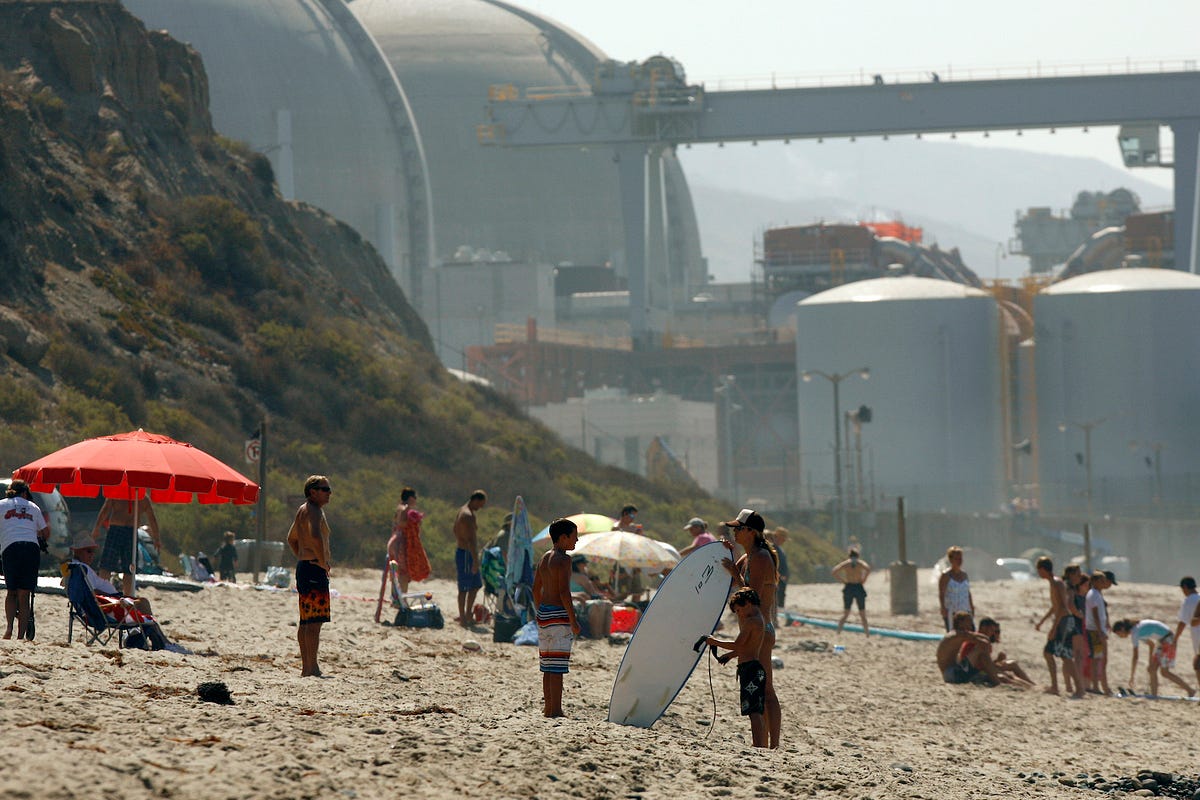
The San Onofre Nuclear Generating Station in California,
shuttered in 2013, is shown here in 2008.


Global energy demand and related carbon emissions both rose again in 2018, according to new figures out this week.

The first answer is the growing global economy, which pushed energy demand up by 2.3% last year, the IEA says. A contributing factor was that more energy was needed for extra heating and cooling in regions hit by unusually severe cold snaps and heatwaves. These were at least partly driven by our shifting climate. All of that drove increases in generation from coal and natural gas, both of which spew greenhouse gases that warm the planet.


28 April, 2018

Shorebirds, the World’s Greatest Travelers, Face Extinction

A worldwide catastrophe is underway among an extraordinary group of birds — the marathon migrants we know as shorebirds. Numbers of some species are falling so quickly that many biologists fear an imminent planet-wide wave of extinctions.
A common snipe caught in an illegal net. Thousands of shorebirds
 like this one are entangled this way along the coast of China.
These declines represent the No. 1 conservation crisis facing birds in the world today. Climate change, coastal development, the destruction of wetlands and hunting are all culprits. And because these birds depend for their survival, as we do, on the shorelines of oceans, estuaries, rivers, lakes, lagoons and marshes, their declines point to a systemic crisis that demands our attention, for our own good.

No doubt you’ve seen some of these birds while on vacation at the beach, skittering back and forth along the cusp of waves as they peck with their long beaks for tiny sand flies or the eggs of horseshoe crabs. They can seem comic in their frenetic exertions, tiny Charlie Chaplins in bird suits.

But these birds are remarkable in ways that defy not only belief but scientific understanding: They are, by far, the planet’s most extraordinary global travelers. Worldwide, about 70 shorebird species travel from the top of the world to its very bottom and back each year. The smallest weigh barely an ounce. Each species has its own story, but in every case these annual migrations are among nature’s most epic dramas.


Read the opinion piece from The New York Times - “Shorebirds, the World’s Greatest Travelers, Face Extinction.”

01 April, 2018

Falling renewable costs 'chilling' for fossil fuels

The rapidly falling cost of renewable energy and batteries is "chilling" for the future of the fossil fuels sector, raising doubts about the viability of new coal power stations.
The combination of batteries and wind farms
is providing more power flexibility.
A Bloomberg New Energy Finance report has found the price of renewables has fallen by almost a fifth over the last year, with wind and solar generators becoming cheaper than both coal and gas-fired power stations.

Elena Giannakopoulou, head of energy economics at BNEF, said the rapidly falling cost of renewable generation and battery power is changing the game for the electricity sector.

"The conclusions are chilling for the fossil fuel sector," she said.


Read Cole Latimer’s story from The Sydney Morning Herald - “Falling renewable costs 'chilling' for fossil fuels.”