Showing posts with label catastrophe. Show all posts

02 February, 2020

The Most We Can Do

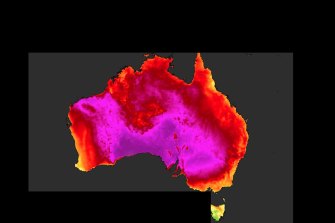
The crisis is not imminent. The crisis is here. The recent infernos in Australia, the storms and floods in Brazil, Madagascar, Spain and the US, the economic collapse in Somalia, caused in part by a devastating cycle of droughts and floods, are not, or not only, a vision of the future. They are signs of a current and escalating catastrophe.
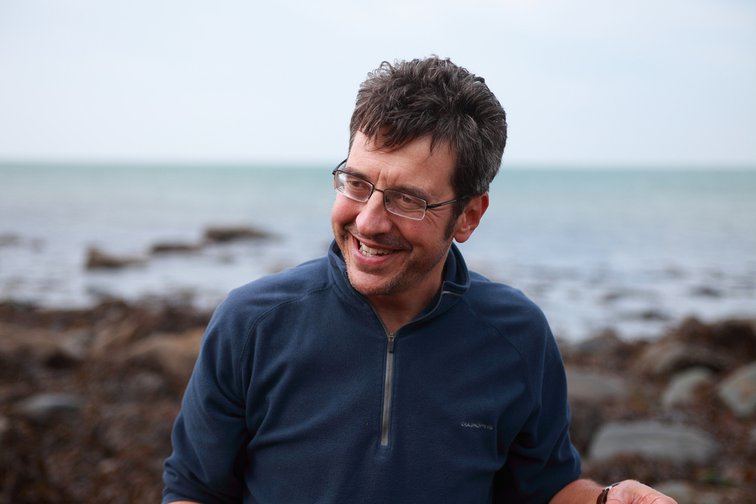
Campaigner and journalist George Monbiot
George Monbiot.
This is why several governments and parliaments, the UK Parliament among them, have declared a climate emergency. But no one in government acts as if it is real. They operate within the old world of incremental planning for a disaster that has yet to arrive. 
Nowhere is this clearer than in the reports of the Committee on Climate Change (CCC), the official body that began with such hope and promise of holding the government to account, but that has now abandoned scientific realities in favour of political priorities.

From George Monbiot - “The Most We Can Do.”

29 January, 2020

‘Dire outlook': Researchers call for urgent Australian climate action

Eighty leading researchers have called on Australia's governments to "acknowledge the gravity of the threat posed by climate change" and cut greenhouse gases "to safeguard against catastrophe”.

Scientists say the role of 'exceptional heat and dryness' can't be ignored as factors contributing to the bushfire crisis - and nor can the need to reduce carbon emissions here and abroad.
Scientists say the role of 'exceptional heat and dryness'
can't be ignored as factors contributing to the bushfire
 crisis - and nor can the need to reduce carbon emissions here and abroad.
An open letter, signed by present and recent Australian Research Council laureates, said while many factors contributed to the bushfire crisis, "the role of exceptional heat and dryness cannot be ignored”.

"Temperatures nearly everywhere on Earth have been rising for decades, a clear result of the build-up of greenhouse gases in the atmosphere from fossil fuel use and other human activities," it said.

Bushfires have burnt through about 12 million hectares across Australia this season, or about 1.5 times the size of Tasmania. The unprecedented scale of the fires came as the country recorded its hottest and driest year in 2019, the Bureau of Meteorology said earlier this month.


Read the story from The Sydney Morning Herald by Peter Hannam - “‘Dire outlook': Researchers call for urgent Australian climate action.”

28 April, 2018

Shorebirds, the World’s Greatest Travelers, Face Extinction

A worldwide catastrophe is underway among an extraordinary group of birds — the marathon migrants we know as shorebirds. Numbers of some species are falling so quickly that many biologists fear an imminent planet-wide wave of extinctions.
A common snipe caught in an illegal net. Thousands of shorebirds
 like this one are entangled this way along the coast of China.
These declines represent the No. 1 conservation crisis facing birds in the world today. Climate change, coastal development, the destruction of wetlands and hunting are all culprits. And because these birds depend for their survival, as we do, on the shorelines of oceans, estuaries, rivers, lakes, lagoons and marshes, their declines point to a systemic crisis that demands our attention, for our own good.

No doubt you’ve seen some of these birds while on vacation at the beach, skittering back and forth along the cusp of waves as they peck with their long beaks for tiny sand flies or the eggs of horseshoe crabs. They can seem comic in their frenetic exertions, tiny Charlie Chaplins in bird suits.

But these birds are remarkable in ways that defy not only belief but scientific understanding: They are, by far, the planet’s most extraordinary global travelers. Worldwide, about 70 shorebird species travel from the top of the world to its very bottom and back each year. The smallest weigh barely an ounce. Each species has its own story, but in every case these annual migrations are among nature’s most epic dramas.


Read the opinion piece from The New York Times - “Shorebirds, the World’s Greatest Travelers, Face Extinction.”

26 March, 2017

Out of the ashes

It took a lot of fossil fuels to forge
our industrial world.Now they
have almost gone. Could we do it
again without them?
Imagine that the world as we know it ends tomorrow. There’s a global catastrophe: a pandemic virus, an asteroid strike, or perhaps a nuclear holocaust. The vast majority of the human race perishes. Our civilisation collapses. The post-apocalyptic survivors find themselves in a devastated world of decaying, deserted cities and roving gangs of bandits looting and taking by force.

Bad as things sound, that’s not the end for humanity. We bounce back. Sooner or later, peace and order emerge again, just as they have time and again through history. Stable communities take shape. They begin the agonising process of rebuilding their technological base from scratch. But here’s the question: how far could such a society rebuild? Is there any chance, for instance, that a post-apocalyptic society could reboot a technological civilisation?

Let’s make the basis of this thought experiment a little more specific. Today, we have already consumed the most easily drainable crude oil and, particularly in Britain, much of the shallowest, most readily mined deposits of coal. Fossil fuels are central to the organisation of modern industrial society, just as they were central to its development. Those, by the way, are distinct roles: even if we could somehow do without fossil fuels now (which we can’t, quite), it’s a different question whether we could have got to where we are without ever having had them.


Read the Aeon piece by a UK Space Agency research fellow at the University of Leicester, Lewis Dartnell - ”Out of the ashes.”

05 June, 2016

Waiting for catastrophe means we are too late: Ian Dunlop


Ian Dunlop.
(Ian Dunlop was formerly an international oil, gas and coal industry executive, chair of the Australian Coal Association and CEO of the Australian Institute of Company Directors. He is a member of the Club of Rome)

Why is nobody in authority talking about the issues which are really defining the future of this country? Politicians and corporations create much sound and fury around tax reform, industrial relations and, ad nauseam, the election – all important but essentially second-order issues. Beyond the Australian goldfish bowl, the greatest structural change in human history is rapidly unfolding bringing unprecedented risks and opportunities. Yet our leaders are oblivious, intent upon minimising our opportunities and maximising our risks.

In the 1970s, the combined effect of population growth and consumption began to exceed the capacity of planetary ecosystems to meet human demands. To the point where today we need the annual biophysical capacity of 1.6 planets to survive. This unsustainable pressure is now hitting global limits which we can no longer circumvent, manifesting itself in two immediate pressure points.

First, increasing energy costs. Economic growth and wealth created since the Industrial Revolution totally depended on the availability of cheap energy in the shape of fossil fuels, first coal, then oil, then gas. But cheap fossil fuels have dried up. Their cost has increased steadily as we used up the "low-hanging fruit" and now rely on more expensive sources such as deepwater oil, tar sands, shale and coal seam fracking.

Read what he has to say in this comment piece in the Melbourne Age - “Climate change: waiting for catastrophe means we will be too late to act.”

26 September, 2015

Mistaking the poison for the cure - Samuel Alexander


(Unrestrained growth, along with a burgeoning population, is the root cause of climate change and here research fellow with the Melbourne Sustainable Society Institute at the University of Melbourne, Samuel Alexander, wonders if the poison has not been confused with cure)

O

n the surface, the Sustainable Development Goals, soon to be confirmed by the United Nations, seem noble and progressive. They seek to free the human race from the tyranny of poverty and hunger while creating sustainable and resilient societies.

But look beneath the surface of this pleasant rhetoric and one comes face to face with a far more ominous vision of development: a vision that is fundamentally compromised by corporate interests and ultimately doomed to failure, if not catastrophe.

04 January, 2015

A catastrophe we can do something about - climate change


“The good news is that, unlike with most of the disasters here, we have a chance to do something about climate change now”.

That is the observation about climate change from a story published today in the Melbourne Age.

The story, taken from The Telegraph in London and headed: “Top seven ways the world will end” discusses seven possible catastrophes that could make life n earth rather difficult, or even end civilization.

The seventh point “Climate catastrophe” says:

“Almost no serious scientist now doubts that human carbon emissions are having an effect on the planet's climate. The latest report by the Intergovernmental Panel on Climate Change suggested that containing temperature rises to below 2 degrees Celsius above the pre-industrial average is now unlikely, and that we face a future three or four degrees warmer than today.

This will not literally be the end of the world – but humanity will need all the resources at its disposal to cope with such a dramatic shift. Unfortunately, the effects of climate change will really start to kick in just at the point when the human population is expected to peak – at about nine billion by the middle of this century. Millions of people, mostly poor, face losing their homes to sea-level rises (by up to a metre or more by 2100) and shifting weather patterns may disrupt agriculture dramatically.

Probability: It is now almost certain that CO2 levels will keep rising to 600 parts per billion and beyond. It is equally certain that the climate will respond accordingly.

Result: Catastrophic in some places, less so in others (including northern Europe, where temperature rises will be moderated by the Atlantic). The good news is that, unlike with most of the disasters here, we have a chance to do something about climate change now”.

24 August, 2014

'We are now making the least-worst choices' - Spratt


Concluding his 2013 piece “Is Climate Change Already Dangerous” David Spatt said: “We are now in a world of making the least-worst choices”.

The on-line editor of Climate Code Red and co-author of a book by the same name, Spratt says there is no simple answer to what the world is presently experiencing.

“There is no simple answer, and we do not yet know all the questions in detail, let alone all of the answers. Nobody ever does at the beginning of an emergency response. That’s what makes it an emergency,” he writes.

“But we do now know, with clear evidence that climate change is already “dangerous”, that we are heading towards a “catastrophe”, that we are in an emergency and, yes, we do face “…an unavoidably radical future.

“And we do know from past experience that once societies are in emergency mode, they are capable of facing up to and solving seemingly impossible problems.”, he says.

28 May, 2014

Oxfam concerned about crisis arising from conflict and unseasonal rains


Food security is not something most Australians have to worry about too much, but Oxfam is encouraging us to move it the centre of our thinking.

The Oxfam website present carries a story headed: “South Sudan warning: respond to humanitarian crisis now or face catastrophe” in which it attributes the impending difficulties to unseasonal rains and conflict.

Conflict always worsens any difficulty, but it is the former, the unseasonal rains, and the resultant food insecurity that further aggravates the trouble faced by the Sudanese people.

16 May, 2014

Advice from Chomsky which we should all listen to


Noam Chomsky.
When Noam Chomsky speaks, we should all listen.

Writing his piece entitled” “On the Edge” he said: “When I hear the phrase ‘on the edge,’ the irresistible image is the proverbial lemmings marching resolutely to the cliff.”

Chomsky writes: “For the first time in history, human are now poised to destroy prospects for decent existence, and much of life. The rate of species destruction today is at about the level of 65 million years ago, when a major catastrophe, probably a huge asteroid, ended the age of dinosaurs, opening the way for mammals to proliferate.

“The difference is that today we are the asteroid, and way will very likely be opened to beetle and bacteria when we have done our work,” Chomsky wrote.

08 August, 2013

New energy rush is simply' snake oil'


Energy and our profligate use of it is the essence of the difficulties that have compounded to become climate change.

Richard heinbeg's new
 book, "Snake Oil".
Suddenly, those who capitalize on that want, have uncovered new technologies that have allowed them to drill horizontally into earth rock structures and then unleash gas and oil hidden there for millennia using hydraulic fracturing.

These developments have resulted in a new “rush” as those who see the potential scurry to raise the needed cash assemble the needed equipment and extract this newfound energy.

Promises and predictions surround this new “rush”, but the hollowness of those claims is explored by Richard Heinberg in his new book, “Snake Oil: How fracking’s false promise of plenty imperils our future”.

Writing at the beginning of his new book, Heinberg writes:

“Finally, and probably most importantly, this book is directed toward anyone who cares about the fate of our planet. The only realistic to avert catastrophic climate change is to dramatically and quickly reduce our consumption of fossil fuels. That project will pose economic and technical challenges. But politics may present the biggest obstacle of all.”

Heinberg slices through the hype and glib statements of those who believe in a promote fracking, illustrating, through undeniable facts, that the promises are really simply too good to believe.

He explains how the promised increases are little more than that and give us nothing more than temporarily increased production and ultimately do nought to ease our energy limitations.

Delving into the complexities of Energy Returned on Energy Investment (EROEI) and Heinberg ask his readers to consider the two equally true statements:


Hydrocarbons are so abundant that, if we burn a substantial portion of them, we risk a climate catastrophe beyond imagining.
 

There aren’t enough economically accessible, high-quality hydrocarbons to maintain economic growth for much longer.
 

Richard Heinberg.
He writes: “Here is a public relations nightmare: how to convey these seemingly contradictory messages to people without confusing he bejesus out of them. How can concepts like ‘energy return on energy invested’ to an audience that barely understands what energy is?  How can millions of half-somnolent television addicts be guided in understanding ‘fugitive methane emissions,’ ‘energy density’ and a dozen other essential terms and concepts?”

Heiberg says the answer lies in what he describes as “literally humanity’s project of the century.”

“It is an enormous challenge, but it is not optional.”

“We either break the addiction, or we suffer the consequences – which would impact not just on ourselves, but future generations as well,” he writes.

We face a choice, he says, jobs and economic growth on one hand, or climate protection on the other.

Heinberg’s book - “Snake Oil: How fracking’s false promise of plenty imperils our future” is worth reading.