Showing posts with label US. Show all posts

02 February, 2020

The Most We Can Do

The crisis is not imminent. The crisis is here. The recent infernos in Australia, the storms and floods in Brazil, Madagascar, Spain and the US, the economic collapse in Somalia, caused in part by a devastating cycle of droughts and floods, are not, or not only, a vision of the future. They are signs of a current and escalating catastrophe.

Campaigner and journalist George Monbiot
George Monbiot.
This is why several governments and parliaments, the UK Parliament among them, have declared a climate emergency. But no one in government acts as if it is real. They operate within the old world of incremental planning for a disaster that has yet to arrive. 
Nowhere is this clearer than in the reports of the Committee on Climate Change (CCC), the official body that began with such hope and promise of holding the government to account, but that has now abandoned scientific realities in favour of political priorities.

From George Monbiot - “The Most We Can Do.”

24 March, 2019

‘Unprecedented’ US flood season will imperil 200m people, experts warn

The severe flooding in the American midwest is set to only be a prelude to “unprecedented” levels of flooding across the US in the coming months that will imperil 200 million people, federal government scientists have warned.
A team enters a flooded house to pull out several cats
 during flooding of the Missouri river near Glenwood,
Iowa, on 18 March. 
Nearly two-thirds of the lower 48 states will have a heightened risk of flooding until May, according to the National Oceanic and Atmospheric Administration (Noaa) forecast.

Communities living near the Mississippi river, which has received rain and snow levels up to 200% above normal, the lower Ohio river basin, the Tennessee river basin and the Great Lakes are at the greatest risk, Noaa said on Thursday. Vast swaths of the rest of the country may also get mild or moderate flooding, including most of eastern US and parts of California and Nevada.


Read the story from The Guardian by Oliver Milman - “‘Unprecedented’ US flood season will imperil 200m people, experts warn.”

02 February, 2019

US polar vortex: killer cold snap to give way to historic warm-up after brutal weather leaves 21 dead and millions stranded

A killer polar vortex gripping parts of the US is set to ease up and give way to a dramatic, never-before-seen warm-up.
Brutal U.S. cold leaves 21 dead and yet temperatures are to soar within days.
Brutal winds sent the mercury plummeting to -34C in the Midwest, which has been struck by a historic deep freeze, but temperatures are expected to soar by up to 80 degrees within days.

Meteorologists said past record-cold waves have never dissipated so quickly as they predicted that the region would be seeing “spring-like” temperatures by the week’s end.

Temperatures in Chicago have been at near-record lows. Amid the freezing conditions, the city reportedly experienced “frost quakes” with residents reporting loud booms.


21 April, 2018

Super funds shy on backing climate change votes

Super funds remain reluctant to back shareholder motions calling for more transparency from Australian companies on climate change risks, despite supporting similar proposals targeting companies in the US, research suggests.
Australian funds backed a motion targeting Occidental
Petroleum, but many declined to support votes against local companies.
And the research, produced by NGO Market Forces, argues that super funds are also lagging on their own standards of transparency, with many making only limited disclosures about how they voted at company meetings - and some not revealing this information at all.

Market Forces examined the proxy voting records of Australia's 50 biggest super funds to track how they voted on 53 climate change-related shareholder resolutions at company AGMs in Australia and the US.

Such resolutions, which are common in the US and have become more frequently used in Australia, often call on companies to disclose more information about how climate change may impact their operations, and the steps they are taking to respond to its risks. Company boards usually recommend shareholders vote against the resolutions.


Read the story by Ruth Williams from The Age - “Super funds shy on backing climate change votes.”

21 March, 2018

Who’s to blame when driverless cars have an accident?

The news that an Uber self-driving vehicle has killed a pedestrian in the US has made headlines around the world.
Autonomous vehicles are information-rich platforms
thanks to the range of sensors on board that track,
monitor and measure everything.
It’s a reminder that the era of self-driving cars is fast approaching. Decades of research into advanced sensors, mapping, navigation and control methods have now come to fruition and autonomous cars are starting to hit the roads in pilot trials.

But partial or full autonomy raises the question of who is to blame in the case of an accident involving a self-driving car? In conventional (human-driven) cars, the answer is simple: the driver is responsible because they are in control. When it comes to autonomous vehicles, it isn’t so clear cut.


(We managed to resolve the legal intricacies surrounding the activities, and accidents, involving millions privately owned, individually driven cars and so a self-driving vehicle should not be too complex, just different - Robert McLean)

17 February, 2018

For Tesla's Elon Musk, one quest is proving trickier than he expected

Thirty kilometres outside the western US city of Reno, Nevada, where packs of wild mustangs roam free through the parched landscape, Tesla Gigafactory 1 sprawls near Interstate 80. It's a destination for engineers from all over the world, to which any Reno hotel clerk can give you precise, can't-miss-it directions.
Drive units for the Model X and Model S.
The Gigafactory, whose construction began in June 2014, is not only outrageously large but also on its way to becoming the biggest manufacturing plant on earth. Now 30 per cent complete, its square footage already equals about 35 Costco stores, and a small city of construction workers, machinery and storage containers has sprung up around it.

Perhaps the only thing as impressive as its size is its cloak of secrecy, which seems of a piece with Tesla's increasing tendency toward stealth, opacity and even paranoia. When I visited last September, a guard at the gate gave militaristic instructions on where to go. Turning to my driver, he said severely: "When you complete the drop-off, you are not to get out of the car. Under any circumstances. Turn around and leave. Immediately.”


Read Jon Gertner’s story in The Age - “For Tesla's Elon Musk, one quest is proving trickier than he expected.

12 January, 2018

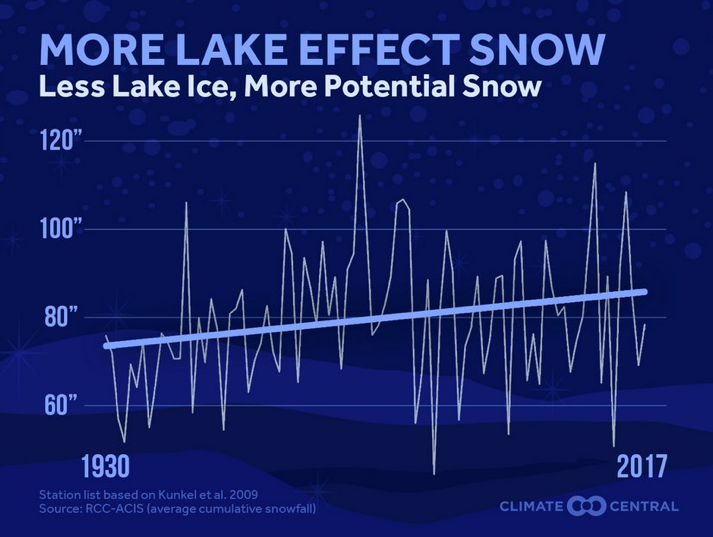
A ‘perfect storm’: extreme winter weather, bitter cold, and climate change

World-renowned climate scientist Dr. Michael Mann explains why the bitter cold and snowy conditions gripping the US are “an example of precisely the sort of extreme winter weather we expect because of climate change.”
iew image on Twitter

The US East Coast is experiencing an “old-fashioned” winter, with plenty of cold weather and some heavy snowfall in certain places. Listening to climate contrarians like President Donald Trump, you might think this constitutes the death knell for concern over human-caused climate change.
Yet, what we were witnessing play out is in fact very much consistent with our expectations of the response of weather dynamics to human-caused climate change.


12 December, 2017

Global warming will weaken wind power, study predicts

Wind farms are key to tackling climate change but warming will significantly cut the power of the wind across northern mid-latitudes, including the US, the UK and the Mediterranean, according to new research. However, some places, including eastern Australia, will see winds pick up.
 In central US, the power of the wind could fall by nearly a fifth. 
The research is the first global study to project the impact of temperature rises on wind energy and found big changes by the end of the century in many of the places hosting large numbers of turbines.

Wind farms have grown more than fivefold in the last decade and plunging costs have made them a key way of reducing carbon emissions from fossil fuel burning. But in the central US, for example, the power of the wind could fall by nearly a fifth.

“We found some substantial changes in wind energy,” said Kristopher Karnauskas at the University of Colorado Boulder, US. “But it does not mean we should not invest in wind power.” It does mean such changes need to be taken into account in planning future wind farms, he said, and also in assessing how much wind farms overall can cut global emissions.


Read The Guardian story by Damian Carrington - “Global warming will weaken wind power, study predicts.”

13 July, 2017

Carbon car push should surprise nobody

It should have come as no shock that rules on carbon emissions for new cars sold in this country are on the way.
Proposals for mandatory fuel emissions standards
have raised concerns among auto businesses.
While there have been loud headlines about an alarming "carbon tax", the truth is that standards, in one form or another, have been some time coming, and Australia is no trailblazer.

Eighty per cent of the world's car market – including the US, Canada, Europe and the UK – is already subject to carbon dioxide emissions standards, while Australia has no such rules at all.

So it can be little surprise that our cars are less efficient and worse polluters than many other countries.


Read Nick Toscano’s story on the Melbourne Age -  “Carbon car push should surprise nobody.

12 December, 2015

Australia belatedly joins the 'coalition of ambition' in Paris


Australia has belatedly joined a “coalition of ambition” in the Paris climate talks – a loose grouping of more than 100 developed and developing countries including the US, EU, Canada and Brazil – aimed at countering a push by China, India and Saudi Arabia to water down aspects of the climate pact as negotiations run overtime.

Tony de Brum, foreign minister of the tiny Marshall Islands, and a founder of the new alliance, insisted Australia had not yet joined, and Australia was not represented at a press conference to announce new members – which also include Brazil, Switzerland, Iceland, the Philippines, the Seychelles, Luxembourg and Canada.

04 July, 2015

US to triple renewable energy by 2030


T

he US will triple its renewable energy capacity in less than 15 years. Yes, you read that right. Triple renewables by 2030.

That’s just one of several headline takeaways on a Tuesday of big announcements from Brazil, China, and the US – three of the world’s top greenhouse gas emitters – with major implications for the UN climate talks in Paris later this year.

First, China released its long-awaited commitments for the Paris talks – known as its intended nationally determined contribution (INDC).

Meanwhile, back in DC, US President Barack Obama met with Brazilian President Dilma Rousseff to discuss strategies for fighting climate change, with a statement following announcing a new joint commitment from the two nations.

Read The Climate Reality Project story - “Brazil, China, and the US step up on triple Tuesday”.

01 April, 2015

Leaders meet and create history


L

ast November, President Obama stood in the Great Hall of the People in Beijing alongside Chinese President Xi Jinpingand made history.

The leaders of the world’s two largest economiesand two biggest emitters of greenhouse gasessurprised the global community by jointly announcing their plans to combat one of the biggest threats facing the world this century: Climate change.

Brian Deese -"We're taking action and
the world is joining us".
China, for the first time, committed to a specific date for “peaking” their emissionsand showed how they would get there by also pledging to build more zero-carbon energy generation than they currently have in coal power.
President Obama announced that the United States would build on the historic progress we’ve already made to cut carbon pollution and protect public health by reducing emissions 26–28 percent below 2005 levels by 2025.

Today, the United States followed through on that joint announcement by officially submitting our targetor intended nationally determined contribution, in the jargon of the international climate negotiationsto the UNFCCC.