Showing posts with label world. Show all posts

31 March, 2020

Coronavirus is a wake-up call: our war with the environment is leading to pandemics

The COVID-19 pandemic sweeping across the world is a crisis of our own making.
Coronavirus is a wake-up call: our war with the environment is ...
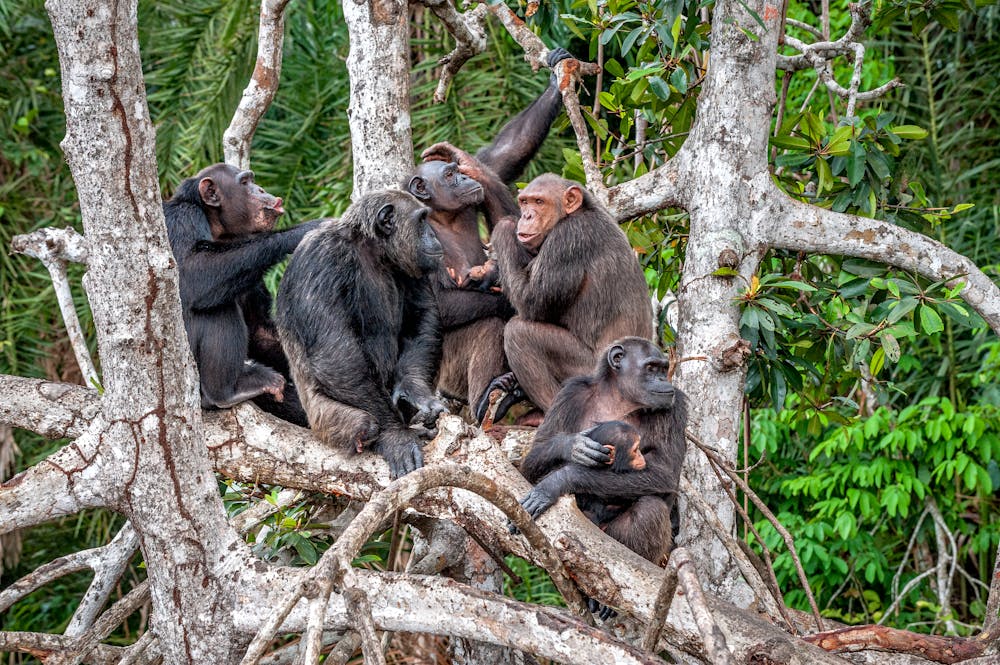
Land use changes forced chimpanzees and bats near human food resources.
That’s the message from infectious disease and environmental health experts, and from those in planetary health – an emerging field connecting human health, civilisation and the natural systems on which they depend.
They might sound unrelated, but the COVID-19 crisis and the climate and biodiversity crises are deeply connected. 
Each arises from our seeming unwillingness to respect the interdependence between ourselves, other animal species and the natural world more generally.

11 January, 2020

The truth about Australia's fires — arsonists aren't responsible for many this season

The world has been shocked by the scenes of devastation as the unprecedented destruction of Australia's horror bushfire season rages on.
A helicopter travelling over burning bushland.
A firefighting helicopter tackling a bushfire
in Victoria's East Gippsland region.
And, one big question has appeared in the headlines of late, here and internationally: how much is arson to blame?
While firebugs remain a legitimate and serious threat, they're responsible for about 1 per cent of the more than 5.2 million hectares that have been burned in NSW this season.
It's a similar story in other states.

24 November, 2019

Where Are the Ring-Leaders of the Manufactured Climategate Scandal Now?

Ten years ago, leading climate scientists at the University of East Anglia had a mass of email correspondence stolen from their computers and broadcast around the world, in what became known as ‘Climategate’.
I don't believe in global warming
Climate science deniers pounced on the leaked emails as supposed proof that scientists were manipulating data and creating panic about climate change out of nothing.
The email release was deliberately timed to sow doubt ahead of the United Nations climate summit in Copenhagen, which ended in disappointment when countries failed to come to an agreement on curbing emissions. Saudi Arabia’s lead climate negotiator at the talks even claimed that the correspondence showed there was “no relationship whatsoever between human activities and climate change”.
Multiple inquiries were conducted and no evidence of scientific malpractice was found — though the scientists in question received some criticism for not being completely transparent around their data and methodologies.

Read the DeSmog Blog story by Richard Collett White - “Where Are the Ring-Leaders of the Manufactured Climategate Scandal Now?

08 August, 2019

IPCC climate change report calls for urgent overhaul of food production, land management

We must urgently revolutionise what we eat, how we grow it and the way we use land if the world is to combat dangerous climate change, according to today's Intergovernmental Panel on Climate Change (IPCC) report.
Hectares of cleared, burnt out forest.
Changes to land management, deforestation and
food production are necessary to combat climate change.
Transforming to clean energy, clean transport and industry alone will not cut global emissions enough to avoid dangerous warming beyond 1.5 degrees Celsius, the report authors warn.
Today's IPCC Special Report: Climate Change and Land builds on last year's dire warning from the panel on the consequences of 1.5C and 2C warming, which we're currently on track to reach by 2040 and the 2060s respectively.
"The stability of food supply is projected to decrease as the magnitude and frequency of extreme weather events that disrupt food chains increases," today's report authors state.

19 May, 2019

Rupert Murdoch Says Climate Change Should Be Approached With Great Skepticism

Rupert Murdoch is chairman and CEO of News Corporation, one of the world’s largest media conglomerates, which includes Fox News and The Wall Street Journal. Since launching The Australian newspaper 50 years ago he has also become one of the richest people in the world. In a wide-ranging interview aired Sunday in Australia to mark this 50-year anniversary, Murdoch reflected candidly on climate change, saying he thought it should be approached with great skepticism.
Rupert Murdoch.
“At the moment the north pole is melting but the south pole is getting bigger,” he said. “Things are happening. How much of it are we doing, with emissions and so on? As far as Australia goes? Nothing in the overall picture.”

While Antarctica has been losing ice more slowly than the Arctic, and the geopolitical implications are less salient, studies show that parts of the massive continent’s ice sheet have entered irreversible decline and that melting is likely to accelerate.


Read the Think Progress story by Ari Phillips - “Rupert Murdoch Says Climate Change Should Be Approached With Great Skepticism."

05 March, 2019

‘Tsunami of investment': Bankers say lack of policy not slowing renewables boom

The fifth-largest bank in the world says Australia’s lack of an energy policy is not stopping “a wall of investment” into Australian renewable energy sector despite industry claims of slowing interest.
The energy industry says a lack of stable government
policy is forcing them to reconsider investments but
major banks say money is pouring in globally into the
Australian renewables space.
The energy sector has said the inability of multiple federal governments to craft a long-lasting energy policy, as demonstrated by the collapse of the government's National Energy Guarantee policy, has put a handbrake on investment in new power generation in the country.


Read the story from The Age by Cole Latimer - “‘Tsunami of investment': Bankers say lack of policy not slowing renewables boom.”

28 February, 2019

NASA Happily Reports the Earth is Greener, With More Trees Than 20 Years Ago–and It’s Thanks to China, India

The world is literally a greener place than it was 20 years ago, and the data from NASA satellites has revealed a counterintuitive source for much of this new foliage: China and India.


This surprising new study shows that the two emerging countries with the world’s biggest populations are leading the improvement in greening on land. The effect stems mainly from ambitious tree planting programs in China and intensive agriculture in both countries. In 2017 alone, India broke its own world record for the most trees planted after volunteers gathered to plant 66 million saplings in just 12 hours.

The greening phenomenon was first detected by researchers using satellite data in the mid-1990s, but they did not know whether human activity was one of its chief, direct causes.


17 December, 2018

UN climate accord 'inadequate' and lacks urgency, experts warn.

The world has been put on notice that its best efforts so far will fail to halt the devastation of climate change, as countries came to a partial agreement at UN talks that failed to match up to the challenges faced.
The two-week-long conference left questions about
reducing greenhouse gas emissions unanswered. 
Leading figures in climate science and economics said much more must be done, and quickly, to stave off the prospect of dangerous levels of global warming.

Nicholas Stern, the former World Bank chief economist and author of a seminal review of the economics of climate change, said: “It is clear that the progress we are making is inadequate, given the scale and urgency of the risks we face. The latest figures show carbon dioxide emissions are still rising. A much more attractive, clean and efficient path for economic development and poverty reduction is in our hands.”


Read the story from The Guardian by Fiona Harvey in Katowice - “UN climate accord 'inadequate' and lacks urgency, experts warn.”

20 November, 2018

IAG says climate change could make world ‘uninsurable’: Financial Review

The insurance industry will be unable to operate effectively if the current trajectory of climate change proves accurate, Insurance Australia Group (IAG) Executive Jacki Johnson told the Financial Review.
Climate change will make the world uninsurable.
Johnson’s comments come after the UN Environment’s Finance Initiative (UNEP FI) announced a partnership with a group of 16 large, global insurers and reinsurers (of which IAG is included), to develop a new generation of risk assessment tools that enable the risk transfer industry to better understand the impacts of climate change on their business.

She adds that a failure to reduce greenhouse emissions could result in a world that is “pretty much uninsurable”, an outcome that would hit poorer regions hardest.

In Australia, Johnson says a temperature rise of over three degrees would inflict higher levels of extreme weather events such as cyclones and flooding to Queensland, while a rise of more than four degrees would render insurers unable to provide protection in certain areas of the world.


13 November, 2018

World has no capacity to absorb new fossil fuel plants, warns IEA

The world has so many existing fossil fuel projects that it cannot afford to build any more polluting infrastructure without busting international climate change goals, the global energy watchdog has warned.
Smoke billows from the coal-based Badarpur power
station in New Delhi. The IEA said India had
taken backward steps on cutting fossil fuel subsidies.
The International Energy Agency said almost all of the world’s carbon budget up to 2040 – the amount that can be emitted without causing dangerous warming – would be eaten up by today’s power stations, vehicles and industrial facilities.

Fatih Birol, the executive director of the Paris-based group, told the Guardian: “We have no room to build anything that emits CO2 emissions.”

The economist said to limit temperature rises to 2C, let alone the 1.5C as scientists recommend, either all new energy projects would have to be low carbon, which was unlikely, or existing infrastructure would need to be cleaned up.


Read the story from The Guardian by Adam Vaughan - “World has no capacity to absorb new fossil fuel plants, warns IEA.”

04 November, 2018

Stop biodiversity loss or we could face our own extinction, warns UN

The world must thrash out a new deal for nature in the next two years or humanity could be the first species to document our own extinction, warns the United Nation’s biodiversity chief.
 Deforestation in Indonesian to make way for a palm oil concession. 
Ahead of a key international conference to discuss the collapse of ecosystems, Cristiana Pașca Palmer said people in all countries need to put pressure on their governments to draw up ambitious global targets by 2020 to protect the insects, birds, plants and mammals that are vital for global food production, clean water and carbon sequestration.

“The loss of biodiversity is a silent killer,” she told the Guardian. “It’s different from climate change, where people feel the impact in everyday life. With biodiversity, it is not so clear but by the time you feel what is happening, it may be too late.”


Read the story from The Guardian by Jonathon Watts - “Stop biodiversity loss or we could face our own extinction, warns UN.”

30 October, 2018

90% of world's children are breathing toxic air, WHO study finds

Poisonous air is having a devastating impact on billions of children around the world, damaging their intelligence and leading to hundreds of thousands of deaths, according to a report from the World Health Organization.
Children cover their face from air pollution in New Delhi, India. 
The study found that more than 90% of the world’s young people – 1.8 billion children – are breathing toxic air, storing up a public health time bomb for the next generation.

The WHO said medical experts in almost every field of children’s health are uncovering new evidence of the scale of the crisis in both rich and poor countries – from low birth weight to poor neurodevelopment, asthma to heart disease.


Read the story from The Guardian by Matthew Taylor - “90% of world's children are breathing toxic air, WHO study finds.”

28 October, 2018

The end of the oceans

In June this year, scientists from the University of Tasmania and the University of Technology Sydney published research showing that over the past decade the biomass of large fish in Australian waters has declined by more than a third. The results may have jarred with government claims of Australian fisheries being among the most sustainable in the world, but they closely matched official figures showing a 32 per cent decline in Australian fishery catches in the same period. The declines were sharpest in species targeted for fishing and areas in which fishing is permitted, but even populations of species not exploited by fishing declined across the same period.
Vanitas of the Anthropocene. Plastic waste and the remains of
 coastal wildlife, Swansea Bay, Wales. Series by Jasmine Färling
The notion that a third of large fish in Australian waters disappeared in just 10 years should be of profound concern to all. The health of marine food webs depends upon healthy populations of the predator species that regulate populations of smaller species; declines in their numbers are likely to lead to hastening disruption of ocean ecosystems.


Read the essay by James Bradley from The Monthly  - “The end of the oceans.”

08 October, 2018

New UN Climate Report Dims Hope For Averting Catastrophic Global Warming

The world is rapidly running out of time to scale back greenhouse gas emissions, dimming hopes of keeping global warming within 1.5 degrees Celsius (2.7 degrees Fahrenheit) above pre-industrial levels, beyond which catastrophic planetary changes are forecast.
Lovelyn Cesar, 22, carries her one year old baby Matthew
 as she cross a flooded street in a suburb of Manila after
 two historic storms battered the Philippines. 
That assessment comes from a sobering new report issued by the Intergovernmental Panel on Climate Change, or IPCCthe leading United Nations consortium of researchers studying the speed and scope of human-caused temperature rise.

“This is one of the most important reports ever produced by the IPCC, and certainly one of the most needed,” Hoesung Lee, the chair of the body, said at a press conference in South Korea on Monday. “Climate change is already affecting people, livelihood and ecosystems all around the world.”


Read the HuffPost story by Alexander C. Kaufman and Chris D’Angelo - “New UN Climate Report Dims Hope For Averting Catastrophic Global Warming.”

02 June, 2018

Say hello to Justin Trudeau, the world's newest oil executive

In case anyone wondered, this is how the world ends: with the cutest, progressivest, boybandiest leader in the world going fully in the tank for the oil industry.
‘Trudeau is banking on the fact that his liberal charm will soothe things over.’ 
Justin Trudeau’s government announced on Tuesday that it would nationalize the Kinder Morgan pipeline running from the tar sands of Alberta to the tidewater of British Columbia. It will fork over at least $4.5bn in Canadian taxpayers’ money for the right to own a 60-year-old pipe that springs leaks regularly, and for the right to push through a second pipeline on the same route – a proposal that has provoked strong opposition.


Read the story by Bill McKibben from The Guardian - “Say hello to Justin Trudeau, the world's newest oil executive.”

23 April, 2018

World’s newest great ape threatened by Chinese dam

Last November scientists made a jaw-dropping announcement: they’d discovered a new great ape hiding in plain sight, only the eighth inhabiting our planet. 
A new species of great ape – the Tapanuli
orangutan – is down to just 800 individuals. 
The Tapanuli orangutan survives in northern Sumatra and it is already the most endangered great ape in the world; researchers estimate less than 800 individuals survive. But the discovery hasn’t stopped a Chinese state-run company, Sinohydro, from moving ahead with clearing forest for a large dam project smack in the middle of the orangutan population. According to several orangutan experts, Sinohyrdo’s dam represents an immediate and existential threat to the Tapanuli orangutan. 

“Building the dam means chopping the orangutan population in half,” Erik Meijaard, the director of Borneo Futures and one of the experts to describe Pongo tapanuliensis, said. “You end up with two smaller populations, and these will have much reduced chances of survival, because a small population is more likely to go extinct than a large one.”


Read the story by Jeremy Hance fromThe Guardian - “World’s newest great ape threatened by Chinese dam.”

Warning we must step up fight against climate change... meet Kirsten Dunlop, head of Climate-KIC

Tackling 'vested interests' and undertaking a complete societal transformation is needed to combat the ravages of climate change and put the world on track for a low-carbon future.
The head of Climate-KIC, Kirsten Dunlop.
The head of Climate-KIC (Knowledge and Innovation Community), Kirsten Dunlop, says the scale of the challenge requires a global effort never seen before in human history, which will require deep transformation, regulation and convincing capital markets to invest in new technologies.

"In terms of self-transformation, we've rarely done that as a species and we've never had to do it at a planetary level. To get on track, we're going to have to do the really difficult stuff which is going to run foul of every vested interest we have out there," she says.

Climate-KIC is the EU's largest public-private partnership, tasked with addressing climate change through innovation by achieving deep decarbonisation across cities, while tackling land use, agriculture and industrial manufacturing, and securing finance.


11 April, 2018

‘Concerning': Marine heatwaves increasing, especially near Australia

Marine heatwaves are increasing in their frequency and duration at an accelerating rate in many parts of the world, especially around Australia, a team of international scientists has found.
Warm waters may be welcomed by beachgoers but
the impacts beneath the waves are not so good.
The number of oceanic heatwave days a year has increased by 54 per cent in the past century globally, the researchers determined, using data of sea-surface temperatures from long-established sites and satellites.

“We have seen an increasing trend in the frequency and duration [of marine heatwaves], and that trend has accelerated in the past 30 years or so," said Lisa Alexander, associate professor at University of NSW's Climate Change Research Centre, and an author of the paper published in Nature Communications on Wednesday.


Read Peter Hannam’s story from The Age - “‘Concerning': Marine heatwaves increasing, especially near Australia.”

07 April, 2018

Nestlé Makes Billions Bottling Water It Pays Nearly Nothing For

In rural Mecosta County, Mich., sits a near-windowless facility with a footprint about the size of Buckingham Palace. It’s just one of Nestlé’s roughly 100 bottled water factories in 34 countries around the world.
ILLUSTRATION: SILJA GÖTZ FOR BLOOMBERG BUSINESSWEEK

Inside, workers wear hairnets, hard hats, goggles, gloves, and earplugs. Ten production lines snake through the space, funneling local spring water into 8-ounce to 2.5-gallon containers; most of the lines run 24/7, each pumping out 500 to 1,200 bottles per minute. About 60 percent of the supply comes from Mecosta’s springs and arrives at the factory via a 12-mile pipeline. The rest is trucked in from neighboring Osceola County, about 40 miles north. “Daily, we’re looking at 3.5 million bottles potentially,” says Dave Sommer, the plant’s 41-year-old manager, shouting above the din.

Silos holding 125 tons of plastic resin pellets provide the raw material for the bottles. They’re molded into shape at temperatures reaching 400F before being filled, capped, inspected, labeled, and laser-printed with the location, day, and minute they were produced—a process that takes less than 25 seconds. Next, the bottles are bundled, shrink-wrapped onto pallets, and picked up by a fleet of 25 forklifts that ferry them to the plant’s warehouse or loading docks. As many as 175 trucks arrive every day to transport the water to retail locations in the Midwest. “We want more people to drink water, keep hydrated,” Sommer says. “It would be nice if it were my water, but we just want them to drink water.”

Read the Bloomberg Businessweek story By Caroline Winter - “Nestlé Makes Billions Bottling Water It Pays Nearly Nothing For.”