Showing posts with label heatwaves. Show all posts

04 January, 2020

Hot and bothered: heat affects all of us, but older people face the highest health risks.

Australian summer temperatures have risen by 1.66 over the past 20 years. In the past century we’ve seen a significant increase in the number, intensity and duration of heatwaves during our summers. 
Image result for Hot and bothered: heat affects all of us, but older people face the highest health risk
Older people’s bodies can’t regulate their temperature as well as younger people’s.
Heat is the natural hazard associated with the highest mortality in Australia. When heatwaves occur, the death toll routinely reaches into the hundreds. For example, the 2009 heatwave across southeast Australia resulted in close to 500 deaths. 
Heat is more likely to endanger the health of people with pre-existing conditions, people who are socially isolated, and people who have limited access to air conditioning. These are often older members of the community.

Read the story form The Conversation by a physician and cardiologist from the Canberra Hospital, who is also a Clinical Senior Lecturer at the Australian National University, Arnagretta Hunter -  “Hot and bothered: heat affects all of us, but older people face the highest health risks.

28 July, 2019

Extreme weather has damaged nearly half Australia's marine ecosystems since 2011

 Extreme climate events such as heatwaves, floods and drought damaged 45% of the marine ecosystems along Australia’s coast in a seven-year period, CSIRO research shows.
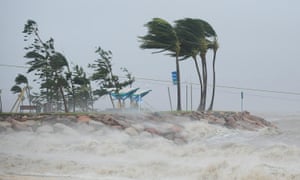
Cyclone Yasi
Strong winds from cyclone Yasi hit Townsville in 2011.
Storms, heatwaves and coral bleaching have devastated
Australian coasts in the past decade.
More than 8,000km of Australia’s coast was affected by extreme climate events from 2011 to 2017, and in some cases they caused irreversible changes to marine habitats.

The study collated all the published research by leading scientists, who have examined the effects of marine heatwaves, heavy rainfall from tropical storms, cyclones and droughts on coral, kelp, mangrove and seagrass communities.

Read the story from The Guardian by Lisa Cox - “Extreme weather has damaged nearly half Australia's marine ecosystems since 2011.” 

26 July, 2019

Our cities need more trees, but some commonly planted ones won’t survive climate change

We need trees in our lives. This past summer, Adelaide experienced the hottest temperature ever recorded in an Australian state capital, hitting 46.6 degrees on January 24. Trees beautify otherwise grey cities and cool our suburbs during heatwaves. But different species have different levels of tolerance of heat, lack of water and other threats posed by climate change. 

Australian cities could lose some of their most common trees to climate change.
In a newly published study, we investigated likely climate change impacts on 176 of the most common tree species planted across Australian cities. Our analysis showed more than 70% of these species will experience harsher climatic conditions across Australian cities by 2070. Some of the most commonly planted trees are unlikely to survive these conditions.


10 July, 2019

UK’s lack of plans to protect people from climate crisis ‘shocking’, say advisers

The government’s own advisers have declared themselves shocked that the UK has no proper plans for protecting people from heatwaves, flash flooding and other impacts of the climate crisis.
 Flooding in York.
The Committee on Climate Change said the UK’s climate crisis preparations were being run like Dad’s Army and left the population at real risk, adding that funding for programmes to tackle problems resulting from global heating had been cut.

The CCC’s annual progress reports, published on Wednesday, also found that just one of the 25 emissions-cutting policies it said were vital in 2018 had been delivered in full. Lord Deben, who chairs the committee, said ministers could be sued in court if the failure to act continued.

Read the story from The Guardian by Damian Carrington - “UK’s lack of plans to protect people from climate crisis ‘shocking’, say advisers.”

10 March, 2019

‘Whole thing is unravelling': climate change reshaping Australia's forests

Australia’s forests are being reshaped by climate change as droughts, heatwaves, rising temperatures and bushfires drive ecosystems towards collapse, ecologists have told Guardian Australia. Trees are dying, canopies are getting thinner and the rate that plants produce seeds is falling. Ecologists have long predicted that climate change would have major consequences for Australia’s forests. Now they believe those impacts are unfolding.
Researchers have found that big eucalypts grow slower
as temperatures rise thanks to climate change. 
“The whole thing is unravelling,” says Prof David Bowman, who studies the impacts of climate change and fire on trees at the University of Tasmania. “Most people have no idea that it’s even happening. The system is trying to tell you that if you don’t pay attention then the whole thing will implode. We have to get a grip on climate change.”

Read the story from The Guardian by Graham Readfearn - “‘Whole thing is unravelling': climate change reshaping Australia's forests.”


(Listen to the “Climate Conversations” featuring Professor David Bowman).

02 March, 2019

How do we save ageing Australians from the heat? Greening our cities is a good start

Heatwaves have killed more Australians than road accidents, fires, floods and all other natural disasters combined. Although recent research shows extreme cold is a worry in some parts of Australia, our hottest summer on record points to more heat-related deaths to come. The record heatwaves have highlighted the damaging effects of heat stress. Understandably, it’s becoming a major public health challenge.
A shade tree makes a big difference to the comfort of this couple.
The risk of extreme heat events and the adverse impacts on older people has been extensively discussed in research. Remarkably, very little attention has been paid to the role of urban greenery in reducing heat stress for seniors.

Older people are particularly at risk of heat stress. Pre-existing medical conditions and limited mobility increase their vulnerability. Deaths of older people increase during extreme heat events.


29 January, 2019

‘Out of control': Businesses fear heatwave havoc will continue

The country's small business council is calling for a round table to discuss power security and extreme heat as business owners report heatwaves are costing them thousands.
Michael Taylor of Taylored Mechanics, Bacchus Marsh
says he has no choice but to shut up shop in a heat wave.
"What we have now is the issue that these extremes are just going on for so long. The outages are a big issue, but there's also the occupational health and safety issue: if the temperature is too high, you're going to send your staff home," Peter Strong, head of the Council of Small Business Organisations of Australia, said.


Read the story from The Age by Emma Koehn - “‘Out of control': Businesses fear heatwave havoc will continue.”

15 December, 2018

Age of extremes.

Droughtheatwavesbushfires and intense rain. Summer has barely started, but spring brought more than enough extreme weather to go on with.
Early indications: firefighters working to control a bushfire at
Deepwater in Central Queensland last month. At one point,
140 fires were burning around the state.
Spring is a time when southern cold fronts and warm northern air often battle it out all over the country. This makes for changeable and sometimes unpredictable weather, with the southern states topping 40°C one day but barely reaching 18°C the next.

As summer approaches, warmer — and in the tropics, more humid and wetter — conditions become the norm, and they usually fall within a more predictable envelope of variability. Extreme events occur when that envelope is pushed. And while a couple of extreme events in a season is fairly standard, a greater number of extreme events is starting to become the norm.

Read the story Inside Story by Sarah Perkins-Kirkpatrick - “Age of extremes.


(Sarah Perkins-Kirkpatrick is featured on “Climate Conversations”)

14 October, 2018

Intense frequent and long heatwaves caused by human activity

It’s boiling outside. You can’t remember the last time it was this hot. It feels like the sun is sucking every morsel of water out of your body. Hopes of a short respite in a delicious ice cream fade fast when you realize how quickly it will melt. 
Dr Sarah Perkins-Kirkpatrick.

You’re in the middle of a heatwave. 

Heatwaves, measured as prolonged periods of excessive heat, are a complex type of extreme temperature event. These events occur naturally (albeit rarely) as part of our climate, and are driven by a delicate balance of the right weather patterns, local soil moisture conditions, and larger-scale climate variability patterns.

Unfortunately, they’ve increased in their intensity, frequency and duration over many regions of the globe since at least the middle of the 20th Century.

Read the story taken from the blog “SarahinScience” by climate scientist Sarah Perkins-Kirkpatrick - “Intense frequent and long heatwaves caused by human activity.”


(Dr Sarah Perkins-Kirkpatrick is from the University of New South Wales and will be interviewed soon on the podcast “Climate Conversations” - Robert McLean)

23 September, 2018

Heatwaves linked to an increase in Australian suicide rates

Heatwaves and high temperatures can have a dramatic impact on people’s physical health. We only have to look at the increases in emergency department admissions during recent heatwaves to know that.
A spike in suicides linked to spikes in heat.
But not many people realise that high variations in temperatures can also impact our mental health.

For my PhD thesis I studied the socio-environmental drivers of suicide rates in Australia from 1986 to 2005. I found that sudden spikes in average temperatures can be attributed as a risk factor for suicide in some cities.


Read the story from The Conversation by a Researcher from the Queensland University of Technology, Xin Qi - “Heatwaves linked to an increase in Australian suicide rates.”

23 July, 2018

Recent Australian droughts may be the worst in 800 years

Australia is a continent defined by extremes, and recent decades have seen some extraordinary climate events. But droughts, floods, heatwaves, and fires have battered Australia for millennia. Are recent extreme events really worse than those in the past?
Places such as Berri were affected by Millennium
Drought, caused by low cool-season rain.
New materials and techniques are now being
used to observe drought causes and water
patterns in Australia’s history to help the future.
In a recent paper, we reconstructed 800 years of seasonal rainfall patterns across the Australian continent. Our new records show that parts of Northern Australia are wetter than ever before, and that major droughts of the late 20th and early 21st centuries in southern Australia are likely without precedent over the past 400 years.

This new knowledge gives us a clearer understanding of how droughts and flooding rains may be changing in the context of a rapidly warming world.


Read the story from The Conversation - “Recent Australian droughts may be the worst in 800 years.”

30 May, 2018

Why blowing the 1.5C global warming goal will leave poor tropical nations sweating most of all

Almost all of us are going to be worse off as climate change takes hold, whether through heatwaves, changing rainfall patterns, sea level rise, or damage to ecosystems. But it’s the world’s poorest people who will suffer the biggest disruptions to their local climate, as our new study, published in Geophysical Research Letters today, explains.
Poor tropical nations are likely to feel the
effects of climate change most acutely.
The Paris Agreement aims to keep global warming well below 2 above pre-industrial levels, and ideally no more than 1.5. Meeting the more ambitious 1.5 target will be extremely challenging, given that we have already had more than 1 of global warming so far, and global greenhouse emissions are still rising.


23 May, 2018

Costly backup power saved east coast from blackouts, AEMO reports say

The east coast of Australia avoided a blackout last summer because companies cut their power usage at critical times, with the operator of the electricity network now calling for more control over the way large companies use power during future heatwaves.
A heatwave pushed the electricity network to its limits,
with blackout only avoided by triggering the RERT.
Two reports released by the Australian Energy Market Operator on Wednesday show the regulator believes there would have been blackouts last summer in South Australia and Victoria but was saved by triggering backup power mechanism called the Reliability and Emergency Reserve Trader (RERT).


Read Cole Latimer’s story from The Age - “Costly backup power saved east coast from blackouts, AEMO reports say.”

11 April, 2018

‘Concerning': Marine heatwaves increasing, especially near Australia

Marine heatwaves are increasing in their frequency and duration at an accelerating rate in many parts of the world, especially around Australia, a team of international scientists has found.
Warm waters may be welcomed by beachgoers but
the impacts beneath the waves are not so good.
The number of oceanic heatwave days a year has increased by 54 per cent in the past century globally, the researchers determined, using data of sea-surface temperatures from long-established sites and satellites.

“We have seen an increasing trend in the frequency and duration [of marine heatwaves], and that trend has accelerated in the past 30 years or so," said Lisa Alexander, associate professor at University of NSW's Climate Change Research Centre, and an author of the paper published in Nature Communications on Wednesday.


Read Peter Hannam’s story from The Age - “‘Concerning': Marine heatwaves increasing, especially near Australia.”

12 February, 2018

Heatwaves send temperatures soaring in many parts of Australia, but what are they?

Heatwaves are Australia's deadliest natural disaster. They have killed more people than bushfires, cyclones and floods put together.
Because Earth is a sphere, there is proportionally more energy near the equator.
The Bureau of Meteorology defines them as "three days or more of high maximum and minimum temperatures that is unusual for that location”.

During the extreme heatwave that hit south east Australia in 2009, 374 people died in Victoria and evidence exists for up to 500 heatwave-related deaths all together.

Events like 2009 are rare — the last comparable event in south east Australia occurred in 1939.
But it doesn't have to be a once in a generation event to put people at risk.

So what are heatwaves exactly, and why do they happen?


10 February, 2018

Health Check: how can extreme heat lead to death?

Our climate is becoming hotter. This is our reality. Extreme heat is already responsible for hundreds of deaths every year. It’s a big environmental killer, and deaths from heatwaves in Australian cities are expected to double in the next 40 years.
Our climate is going to get warmer, and we
need to protect ourselves from heat-related illness. 
Those most at risk are the elderly, people with chronic illness, those living in socioeconomic disadvantage, outdoor workers, and athletes who play their sport in brutally high temperatures. But extreme heat can affect anyone at any age.

So, what happens in our body during times of extreme heat? And how can it lead to fatal consequences?

Read the piece on The Conversation by the Emeritus Professor of Medicine from the University of Adelaide, David Shearman -  “Health Check: how can extreme heat lead to death?

21 January, 2018

Australia’s severe heat is affecting the sperm of the bird population: study

Recent heatwaves and temperature increases are severely impacting bird fertility, according to an Australian-led study.
A pair of Zebra Finches in the Australian heat.
For the avian population, functional and competent sperm is critical for reproduction, and this study led by Macquarie University shows the recent heat is having a devastating impact on the sperm quality of the common zebra finch (Taeniopygia guttata).

The zebra finch is commonly found throughout mainland Australia and is considered a very environmentally adaptable bird, capable of breeding in both hot and cool climates. 

The researchers periodically sampled male zebra finches, exposing them to high temperatures from three to 14 consecutive days.


Read the story by Kamin Gock from today’s Melbourne Age - “Australia’s severe heat is affecting the sperm of the bird population: study.”

18 January, 2018

Australia’s ‘deadliest natural hazard’: what’s your heatwave plan

Heatwaves are Australia’s deadliest natural hazard, but a recent survey has found that many vulnerable people do not have plans to cope with extreme heat.
Australians need better planning to cope with extreme heat.
Working with the Bushfire and Natural Hazards Cooperative Research Centre and the Bureau of Meteorology, my colleagues and I surveyed 250 residents and 60 business managers in Western Sydney and the NSW North Coast.

We found that 45% of those at risk – including the elderly, ill and very young – did not proactively respond to heatwave warnings as they did not think it necessary or did not know what to do.


Read the piece on The Conversation by an Adjunct Fellow from Macquarie University,  Andrew Gissing, and a Risk Scientist from the Risk Frontiers Natural Hazards Research Centre at Macquarie University, Lucinda Coates - “Australia’s ‘deadliest natural hazard’: what’s your heatwave plan?”

30 December, 2017

2017 brought another year of weather extremes as drought and heat took its toll

Australia is set to finish one of its hottest years on record, leaving fire authorities pinning their hopes a La Nina in the Pacific will bring soaking rains before heatwaves build through the summer.
Cooling off was a popular pastime for many in Victoria and NSW from spring onwards. 
Sydney is on track to post its fourth warmest December on record, according to Weatherzone. For the year, the city's mean, maximum and minimum temperatures will be in the top five warmest on records going back to 1858, the Bureau of Meteorology said.

Read Peter Hannam’s story in today’s Melbourne Age - “2017 brought another year of weather extremes as drought and heat took its toll.”

02 December, 2017

El Niño and La Niña – por que no los dos?! (Actually, that would be very bad)

It would be pretty remarkable if you weren’t somehow affected by the Queensland floods in 2011, the Great Ocean Road Christmas bushfires in 2015, or even the heatwaves leading up to Black Saturday in 2009 that killed 173 people in Victoria.
When floods occur, is it always La Nina to blame?
Nope. The tricky part is that no two El Niño or
La Niña events are exactly the same.
But have you ever taken a step back to think about what’s really going on with the weather in times like this? We don’t have bushfires and floods all the time, so something was obviously happening to cause such a drastic change in weather.

You’d be correct in saying that something more was at play here. In fact, it’s called ENSO – the El Niño- Southern Oscillation – the changing surface ocean temperature patterns in the Pacific Ocean. When the central and eastern equatorial Pacific is warmer than normal, it is called El Niño, “the little boy” in Spanish; conversely, when it is cooler than normal, it is called La Niña, or “the little girl.”

These two children are responsible for changes in our weather patterns every two to seven years. They make tweaks in the Pacific Ocean temperatures, wind and clouds that have enormous effects on the rest of us.