Showing posts with label rising temperatures. Show all posts

01 February, 2020

Empty nets and tropical fish in Tasmania as climate change hits Southern Ocean

Rising temperatures and climate change have been blamed for the failure of stocks of some of the most popular eating fish in Australia’s Southern Ocean to recover from declines despite more than a decade of protection.
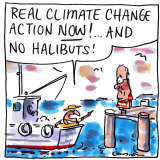
Illustration: Matt Golding
The troubling findings come as new modelling from the CSIRO shows further temperature rises already “locked in by past emissions” could see fish stocks fall by another 20 per cent within the next two decades.

Read the story from The Age by Royce Millar and Chris Veldago - “Empty nets and tropical fish in Tasmania as climate change hits Southern Ocean.”

28 April, 2019

Climate Change Has Already Made Poor Countries Poorer and Rich Countries Richer

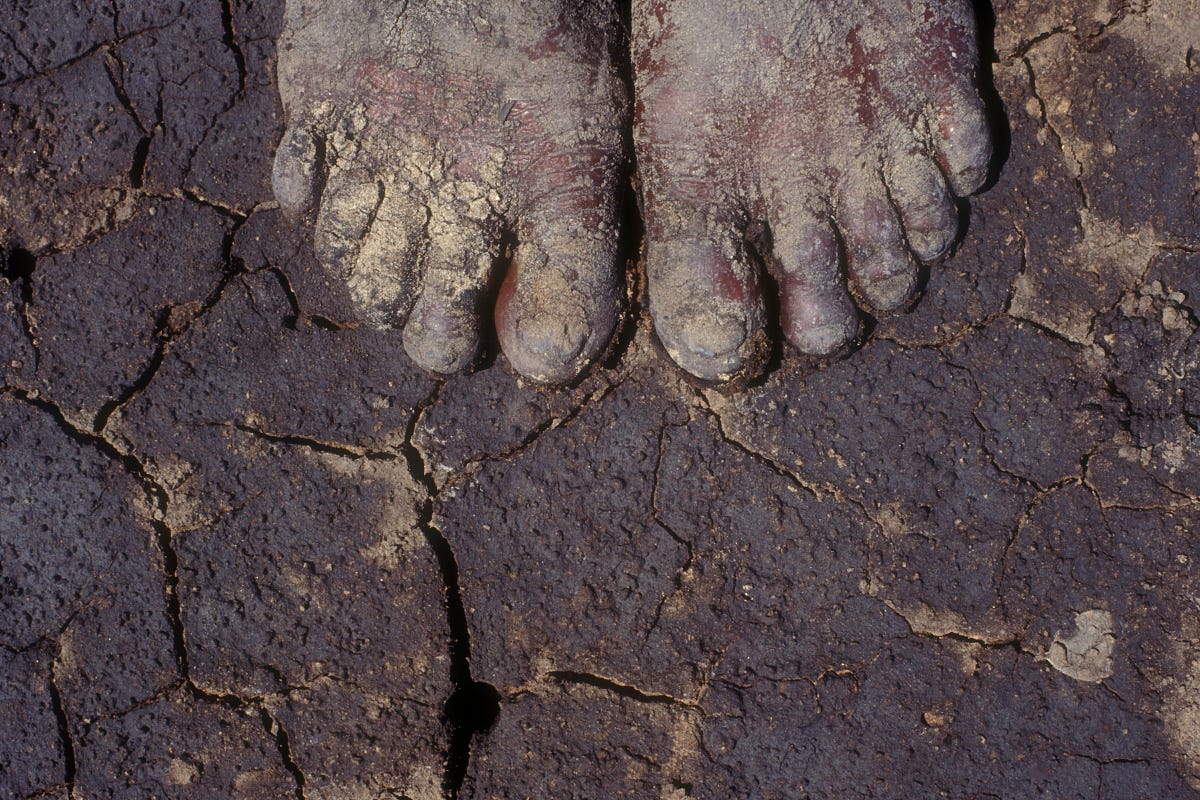
From 1961 to 2010, rising temperatures cut the per-person gross domestic product of the world’s poorest countries by 17% to 31%, according to a study published today in the Proceedings of the National Academy of Sciences. That, in turn, widened the gap in economic output between poor and rich nations by 25% more than it would have been “in a world without global warming,” slowing an otherwise positive shift toward shrinking inequality over that half-century.


Numerous studies have predicted that poor nations will suffer the greatest devastation from climate change. (See “Hotter days will drive global inequality.”) A new analysis finds it’s already been happening for decades.

All of that has happened with only around a 1 °C rise in global temperatures, but far worse changes are in store. The planet could warm by 1.5 °C as early as 2030, and by more than 4 °C by the end of the century, according to the United Nations climate panel.


Read the story from MIT Technology Review by James Temple - “Climate Change Has Already Made Poor Countries Poorer and Rich Countries Richer.”

10 March, 2019

‘Whole thing is unravelling': climate change reshaping Australia's forests

Australia’s forests are being reshaped by climate change as droughts, heatwaves, rising temperatures and bushfires drive ecosystems towards collapse, ecologists have told Guardian Australia. Trees are dying, canopies are getting thinner and the rate that plants produce seeds is falling. Ecologists have long predicted that climate change would have major consequences for Australia’s forests. Now they believe those impacts are unfolding.
Researchers have found that big eucalypts grow slower
as temperatures rise thanks to climate change. 
“The whole thing is unravelling,” says Prof David Bowman, who studies the impacts of climate change and fire on trees at the University of Tasmania. “Most people have no idea that it’s even happening. The system is trying to tell you that if you don’t pay attention then the whole thing will implode. We have to get a grip on climate change.”

Read the story from The Guardian by Graham Readfearn - “‘Whole thing is unravelling': climate change reshaping Australia's forests.”


(Listen to the “Climate Conversations” featuring Professor David Bowman).

30 November, 2018

Mental health added to impact of climate change as global damage grows

Rising temperatures are leading to increased levels of stress, worsening anxiety and depression, and even suicide in the most extreme cases in Australia.
Climate change is already hitting the world's poor
and by 2030 it will contribute to 250,000
additional deaths annually, new research has found.
CREDIT:
Scientists have identified for the first time an association between mean annual maximum temperatures pushed higher by climate change and suicides for both males and females across states and territories, according to a paper published by The Medical Journal of Australia on Thursday.


Read the story from The Age by Peter Hannam - “Mental health added to impact of climate change as global damage grows.”

16 October, 2018

‘Heat shock': Bad news for beer industry lurks.

The world's beer industry could be particularly susceptible to the impacts of climate change as rising temperatures including "heat shocks" reduce barley yields worldwide, international researchers estimate.
It's not quite last drinks but a warmer world is
not likely to be good for the beer industry - among
many others.
CREDIT:
A second Australian favourite may also be at risk, with a visiting US professor saying beef consumption will also have to drop if efforts to restrain global temperatures are to succeed.


Read the story from The Age by Peter Hannam - “‘Heat shock': Bad news for beer industry lurks.

03 July, 2017

Trump’s environment chief pushes effort to question climate change science

Washington: The Trump administration is debating whether to launch a government-wide effort to question the science of climate change, an effort that critics say is an attempt to undermine the long-established consensus that human activity is fuelling the Earth's rising temperatures.

 America's Environmental Protection
Agency (EPA)
administrator Scott Pruitt,
continues to question climate change.
The move, driven by Environmental Protection Agency (EPA) administrator Scott Pruitt, has sparked a debate among top Trump administration officials over whether to pursue such a strategy.

A senior White House official, who asked for anonymity because no final decision has been made, said that while Pruitt has expressed interest in the idea, "there are no formal plans within the administration to do anything about it at this time”.

Pruitt first publicly raised the idea of setting up a "red team-blue team" effort to conduct exercises to test the idea that human activity is the main driver of recent climate change in an interview with Breitbart in early June.


Read the story by Brady Dennis in today”s Melbourne Age - “Trump’s environment chief pushes effort to question climate change science.”

28 January, 2017

Changing climate has stalled Australian wheat yields: study

The distribution of the annual change in wheat yield
potential from 1990 to 2015. Each dot represents 
one of the 50 weather stations used in the study. 
Australia’s wheat yields more than trebled during the first 90 years of the 20th century but have stalled since 1990. In research published today in Global Change Biology, we show that rising temperatures and reduced rainfall, in line with global climate change, are responsible for the shortfall.

This is a major concern for wheat farmers, the Australian economy and global food security as the climate continues to change. The wheat industry is typically worth more than A$5 billion per year – Australia’s most valuable crop. Globally, food production needs to increase by at least 60% by 2050, and Australia is one of the world’s biggest wheat exporters.

There is some good news, though. So far, despite poorer conditions for growing wheat, farmers have managed to improve farming practices and at least stabilise yields. The question is how long they can continue to do so.

Read what a trio of CSIRO thinkers have to say on The Conversation - “Changing climate has stalled Australian wheat yields: study.”

13 October, 2015

NATO adds its voice to calls for climate action in Paris


F

aced with the mounting security threat of climate change, senior representatives from NATO states are adding their voice to the growing call for action ahead of the UN climate talks in Paris this December.

In a resolution set to be approved by the NATO Parliamentary Assembly today, 250 senior members of parliament from member states warn that climate change is a significant security threat and “its bite is already being felt.”

French Parliamentarian Philippe Vitel and the NATO Parliamentary Assembly’s special rapporteur of the Science and Technology Committee said:

“If the world wants to stop irreversible damage to the planet, all governments must agree in Paris to clear, fair and ambitious targets to reduce emissions … The security of alliance members is at stake, climate change is increasing the risk of violent conflict by exacerbating known sources of conflict, like poverty and economic shocks. The time to act is now.”

Climate risks represent “threat multipliers,” as rising temperatures and changing rainfall patterns increase competition for food and water supplies, change migration patterns and refugee flows and threaten public health.