Showing posts with label reduce emissions. Show all posts

04 April, 2020

Report maps out ways to reach climate targets and regenerate economy

Australia still has a chance to use existing technologies to tackle climate change and maintain living standards while creating new jobs, an exhaustive new study has found, but only if individuals, businesses and government act quickly to reduce emissions from every sector of the economy.
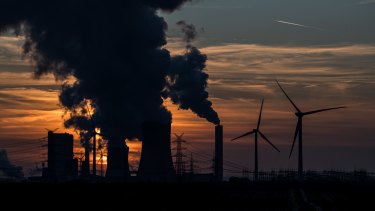
Australia can meet its international climate change commitments and create jobs during the recovery phase from the coronavirus recessions, according to a new report from ClimateWorks.
Australia can meet its international climate change commitments and create
jobs during the recovery phase from the coronavirus recessions, according
to a new report from ClimateWorks.
The report by ClimateWorks, called Decarbonising Futures, maps out in detail how Australia could go about achieving emissions reductions required across industry sectors to limit global warming to below 2 degrees, or to the more ambitious 1.5 degree target under the Paris climate agreement.
"If we get this right, we can meet Australia's international climate change commitments, create jobs in sustainable industries, and set ourselves up for a smoother and speedier shift to a zero-emissions economy," said Anna Skarbek, the chief executive of ClimateWorks, a policy advisory body housed in Monash University.
She said the coronavirus pandemic has made the need for immediate "all-in" action even more urgent as governments spend the coming weeks and months planning how they will stimulate their economies as the crisis passes.

Read the story from The Age by Nike O’Malley and Mike Foley - “Report maps out ways to reach climate targets and regenerate economy.”

14 February, 2020

Councils making strides towards net zero.

Australia’s councils have been given a ‘green’ star for their efforts to reduce emissions, with a report finding that all local governments assessed in the report are taking steps to cut emissions.
Australia's councils have been given a
'green star' for their efforts in reducing emissions.
 The latest Net Zero Momentum Tracker report assesses the emissions-reductions commitments and activities of Australia’s 57 largest local governments.
 Prepared by ClimateWorks with the Monash Sustainability Development Institute, the local government report is part of a series focusing on major sectors of the Australian economy as part of the Net Zero Momentum Tracker initiative.
 The Tracker is designed to bring together and evaluate climate action commitments in order to help local governments build momentum towards net zero emissions. 

 Read the story from the Local Government Report - “Councils making strides towards net zero.

20 November, 2019

Australia needs policy to deal with health effects of climate change, Chris Bowen says

Australia needs to develop policies and structures to prepare for the health impacts of climate change because we have not moved quickly enough – domestically or internationally – to reduce emissions and mitigate the risk, Labor’s health spokesman, Chris Bowen, believes.
Chris Bowen
Labor’s health spokesman, Chris Bowen,
wants Australia to develop a policy to deal
 with the health effects of climate change.
Bowen will use a lecture at Sydney University on Wednesday night to argue a health response to climate change would not be necessary if there was a robust international policy response to emissions. “But the world, and Australia, has failed to act with appropriate seriousness and haste, and so we will need specific policies to deal with the health impacts of climate change,” he will say.
A copy of the lecture shows Bowen will point to estimates that by 2030, 250,000 people around the world will die each year as a direct result of a warming planet.
But what was often missing from the public debate in Australia “is an understanding that severe climate change, of the type the globe is currently on track to experience, isn’t just about the frequency and severity of weather events”.
Read the story from The Guardian by Katharine Murphy - “Australia needs policy to deal with health effects of climate change, Chris Bowen says.” 

18 October, 2018

Electric driverless cars get tick of approval from adviser

Driverless, electric cars will cut congestion by 90 per cent, reduce emissions and inject $15 billion into the economy, Infrastructure Victoria has found.
The Tesla - setting the standard for electric cars.
Melbourne is tipped to have driverless taxis in two to seven years.

Victoria should welcome the new technology, the state's lead infrastructure adviser says.

The high-tech cars would be much cheaper to run, according to a report the authority released on Thursday.


Read the story by Timna Jacks from The Age - “Electric driverless cars get tick of approval from adviser.”

24 September, 2018

Opera House goes carbon neutral five years ahead of schedule

The Sydney Opera House was notoriously behind schedule on most things during the 14 years it took to build but on Monday it will be five years ahead of schedule when it meets its target to reduce emissions and become carbon neutral.
The Opera House goes green, Monday night at 6pm.
This move puts it up there with New York's Empire State building and Paris's Eiffel Tower as global  architectural icons which are actively working to become world symbols of energy efficiency, its Environmental Sustainability Manager Emma Bombonato said.


Read the story from The Age  by Helen Pitt - “Opera House goes carbon neutral five years ahead of schedule.”

15 January, 2017

Dutch public trains now powered entirely by wind

Netherlands public transport trains to be
running entirely on wind power in 2017.
As of the beginning of 2017, all public transport trains in the Netherlands are being powered entirely by renewable energy sources, namely wind power.

Dutch railway company NS has announced all of its fleet of electric trains now run on 100 per cent renewable wind power.

In 2015, Dutch railway companies, of which NS is the largest, collaborated with energy company, Eneco, to reduce emissions.

Read the ClimateAction story - “Dutch public trains now powered entirely by wind.”

06 December, 2016

Electricity Networks Australia and CSIRO outlines route to zero-emissions electricity by 2050

An inability for state and federal governments to nut out a coherent and stable energy policy threatens Australia's ability to reduce emissions, the chief energy economist with the CSIRO has warned.

Paul Graham made the comments when launching the Electricity Network Transformation Roadmap (ENTF), a strategy document that was a joint venture with utilities body Energy Networks Australia.

The roadmap sets out scenarios for the electricity generation sector until 2050, when it is planning a zero-net emissions systems.

Mr Graham said the country's electricity system was experiencing change on an unprecedented scale and an estimated $100 billion in investment was needed to eventually achieve that.

It is estimated that by 2050 millions of customer-owned generators will supply between 30 and 50 per cent of Australia's energy needs.

13 October, 2015

NATO adds its voice to calls for climate action in Paris


F

aced with the mounting security threat of climate change, senior representatives from NATO states are adding their voice to the growing call for action ahead of the UN climate talks in Paris this December.

In a resolution set to be approved by the NATO Parliamentary Assembly today, 250 senior members of parliament from member states warn that climate change is a significant security threat and “its bite is already being felt.”

French Parliamentarian Philippe Vitel and the NATO Parliamentary Assembly’s special rapporteur of the Science and Technology Committee said:

“If the world wants to stop irreversible damage to the planet, all governments must agree in Paris to clear, fair and ambitious targets to reduce emissions … The security of alliance members is at stake, climate change is increasing the risk of violent conflict by exacerbating known sources of conflict, like poverty and economic shocks. The time to act is now.”

Climate risks represent “threat multipliers,” as rising temperatures and changing rainfall patterns increase competition for food and water supplies, change migration patterns and refugee flows and threaten public health.

11 August, 2015

Government expected announce 26 per cent cut in carbon emissions


T

he Federal Government will announce today it plans to cut carbon emissions by at least 26 per cent of 2005 levels by 2030.

Australia is currently aiming to reduce emissions by 5 per cent by 2020, based on the level of emissions in 2000.

But the Coalition has not set out a plan for beyond 2020, despite previously flagging it would do so mid-year.