Showing posts with label mitigate. Show all posts

08 February, 2020

Zero climate credibility

The regular articles in the Shepparton News featuring interviews with community leaders about their views on climate change have in the main been informative and interesting, but the latest one on February 4 which features National Party MP Damian Drum cannot go unanswered.
I do wonder if the views expressed in the article are actually Mr Drum’s because they seem to come straight from the Coalition songbook.
Damian Drum.
Let us look a little more closely at the article in question.
The headline screams ‘‘Australia leads way on climate change’’.
Nothing could be further from the truth, in fact a recent report from the 2020 Climate Change Performance Index handed down late last year ranked Australia as the worst-performing country on climate change policy.
Moving onto the article itself.
His response to question 1: ‘‘What is your position on global warming and climate change?’’ is little more than dogwhistling to his supporters. article
He is saying there might be a link between human activity and climate change only insofar as the climate is changing anyway and he then gives credibility to the handful of ‘‘so-called’’ scientists who say other factors are at play. ‘‘I also accept that there are many scientists who believe that there are other factors at play in our changing climate in addition to human activity.’’
This response is straight out of the climate deniers’ playbook and is rejected overwhelmingly by the vast majority of the scientific community.
Question 2 is ‘‘are we doing enough to mitigate the impact of climate change in the region?’’
I have debunked the notion that Australia is leading the way among all other countries in the world earlier in this article.
His figures that we are leading the way in rooftop solar may be accurate but Australia is doing well in this area because of State Government incentives and individuals doing their bit, not because of Federal Government policy (or lack of). In fact, the Federal Government has time and time again tried to destroy initiatives in this area like the renewable energy target.
Question 3 is about the role of business and community leaders in advocating for more action.
Below is a quote from the article.
‘‘Our electricity and gas costs, both at a domestic and commercial/industrial level, have already risen significantly as we transition away from fossil fuels towards renewable energy. We need to be mindful that it is often the poorest families in our communities who often live in the least energy-efficient homes.’’
Here Mr Drum is effectively blaming the transition from fossil fuels to renewables for high power prices whereas the reality is renewables are keeping power prices from rising exponentially.
Mr Drum goes on to say it is up to community and business leaders to advocate for the truth to find its way into mainstream media.
This, coming from a member of a Coalition government who continually pedal lies about climate change?
If it wasn’t so serious would be laughable.
A cavalcade of government ministers, including our Pentecostal PM, have gone on mainstream media month after month to push the lie that our carbon emissions are falling and we will meet our (inadequate) Paris targets ‘‘in a canter’’ despite the government’s own departments figures showing our emissions are rising, and we have to cheat by using clever accounting methods to meet those Paris targets by using so-called ‘‘Kyoto credits’’.

Ern Meharry writes on the Shepparton News - “Zero climate credibility.”

15 December, 2019

UN COP25 summit ends with anger with global warming's 'window of escape' getting harder

Major economies have resisted calls for bolder commitments as a UN summit in Madrid has limped towards a delayed conclusion, dimming hopes that nations would act in time to mitigate the impacts of climate change.
A woman holds up a sign with a picture of a bird in a crowd of protesters.
More than 100 activists lined up outside the venue to promote their message.
World leaders have been tasked with setting new emissions reduction benchmarks at COP25 in Madrid — the 25th meeting of the Conference of the Parties to the United Nations Convention on Climate Change — but many nations slammed Chile, presiding over the talks, for drafting a summit text that they said risked throwing the 2015 Paris Agreement to tackle global warming into reverse.
The Paris Agreement came into force in November 2016 and calls on signatories to drastically reduce emissions to a limit global temperature rise to no more than 1.5 degrees Celsius before 2100. 

20 November, 2019

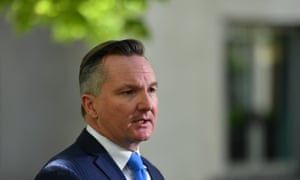
Australia needs policy to deal with health effects of climate change, Chris Bowen says

Australia needs to develop policies and structures to prepare for the health impacts of climate change because we have not moved quickly enough – domestically or internationally – to reduce emissions and mitigate the risk, Labor’s health spokesman, Chris Bowen, believes.
Chris Bowen
Labor’s health spokesman, Chris Bowen,
wants Australia to develop a policy to deal
 with the health effects of climate change.
Bowen will use a lecture at Sydney University on Wednesday night to argue a health response to climate change would not be necessary if there was a robust international policy response to emissions. “But the world, and Australia, has failed to act with appropriate seriousness and haste, and so we will need specific policies to deal with the health impacts of climate change,” he will say.
A copy of the lecture shows Bowen will point to estimates that by 2030, 250,000 people around the world will die each year as a direct result of a warming planet.
But what was often missing from the public debate in Australia “is an understanding that severe climate change, of the type the globe is currently on track to experience, isn’t just about the frequency and severity of weather events”.
Read the story from The Guardian by Katharine Murphy - “Australia needs policy to deal with health effects of climate change, Chris Bowen says.” 

28 October, 2018

Melbourne Launch of Repower Health

More than 60 people meet in the central city FAD Gallery last night (October 27) for the Melbourne launch of Repower Health.

National Director of
Repower Health, Alex Bhatal.
Initiated by Healthy Futures, Repower Health is about encouraging health institutions, from small GP surgeries to large hospitals, to understand and embrace renewable energy, such as solar power to help mitigate the health-damaging advance of climate change.

Repower Health’s vision is for an Australian health sector powered by clean, healthy energy. 

It’s presently mapping existing solar-powered clinics, services and hospitals and so at the Melbourne launch asked those attending to reach out to clinic owners and health service administrators and convince them to get more services running on renewable energy.

Immediate past president of the Medical Association for the Prevention of War, Dr Margaret Beavis, was the MC for the evening, introducing and array of speakers who left no doubt in minds of those attending about the need for clinics, services and hospitals to embrace, and use, renewable energy.

Among those she introduced was the director of Repower Health, Alex Bhatal, who has published and presented on climate displacement at UN forums and is active in the global climate justice movement.


Healthy Futures is an organisation of health professionals, students and community members taking action to address climate change and related threats to health.

"Climate Conversations" was at the launch.


26 October, 2018

Morrison government to establish $5 billion future fund for drought resilience

The government will pour $3.9 billion into a new fund to mitigate the devastating impacts of drought, in a major pitch to struggling regional communities that Prime Minister Scott Morrison says is "putting money aside for non-rainy days”.
Prime Minister Scott Morrison and Deputy
Prime Minister Michael McCormack. 
CREDIT:
The Drought Future Fund – to be announced on Friday – will provide grants totalling up to $100 million a year from 2020 onwards by drawing on the investment earnings from the initial capital injection.

The pool is projected to grow to $5 billion within a decade, and will be managed by the Future Fund board of guardians, which is led by former Howard government treasurer Peter Costello.

In a statement ahead of the national drought summit in Canberra on Friday, Mr Morrison said the government would finance key water infrastructure and drought resilience projects as the fund swells into a substantial reserve to deploy during spells of dry weather.


Read the story from The Age by Fergus Hunter - “Morrison government to establish $5 billion future fund for drought resilience.”

13 October, 2017

The Agriculture of hope: climate farmer of north America

A new and growing movement is inspiring farmers to produce food in a manner that can mitigate and even help reverse global warming. We call this “climate farming, the agriculture of hope.”


At the core of this movement is the understanding that soil health and climate stability are closely linked. The condition of one impacts the other. In the atmosphere, carbon exists as carbon dioxide (CO2), a greenhouse gas warming the planet. But in plants, carbon forms a sugary liquid (like maple sap) that is exuded through the roots and gobbled up by microscopic critters at the foundation of what soil scientist Dr. Elaine Ingham calls the “Soil Food Web.” This infusion of carbon and the microbial activity it supports gives structure to soil, improves the nutrient density of food, and, perhaps most importantly, increases soil’s capacity to hold water.

Working to put more carbon into the soil, the climate farmer is thereby enhancing the productivity of soil while contributing to the long- term welfare of the planet. Regenerative farmer Jesse McDougall, of Studio Hill Farm in Shaftsbury, Vermont, shares, “Carbon is the world’s best fertilizer. Our goal in farming is to pass on to the next generation land that is outrageously fertile.”


Read the permaculture magazine story - “The Agriculture of hope: climate farmer of north America.”

15 April, 2015

Fortunately, climate activists have a 'loud voice' on their side


N

aomi Klein has a loud voice and fortunately it is on the side of those eager to do what they can to mitigate the causes of climate change.

A review of her latest book - “This Changes Everything: Capitalism vs the Climate” – appears on The Treehugger website.

The review begins, “Naomi Klein's latest book is about more than just science. She explores the extractivist mentality and historic decisions that have led us to where we now find ourselves, living in a totally unsustainable way.

“The core message of Naomi Klein’s newest book rings loud and clear from its opening pages: It’s time for a mass movement of regular people to declare a climate crisis. We have waited long enough for politicians, corporations, and large environmental organizations (a.k.a. “Big Green) to negotiate behind closed doors in token attempts to save our planet, but those traditional power-wielders have failed us.”

13 September, 2013

Skeptics continue to argue, although the science is indisputable and the evidence convincing


Floods in Boulder, Colorado,
are further evidence that
our climate is changing.
Science has illustrated repeatedly, and conclusively, that humanity is headed for catastrophic climate change.

Yet the conversation about whether or not climate change is real continues unabated and if the election of a conservative government is any marker of concern, then most Australians align themselves with the skeptics.

Sitting here writing this, I can hear the television news in the background reporting on devastating floods in Colorado, U.S., in which 24cms of rain fell in just three days in Boulder, a city that normally receives only four cm of rain for all of September.

Climate change skeptics continue to hold their position, despite this overwhelming evidence that equates precisely with what the climatologists have been predicting.

With the world careering towards climate catastrophe, the Tony Abbott-led Australian Government rushes with enthusiasm to deconstruct whatever positive moves the former Labor Government had put in place to mitigate climate change.

Just today (September 13) the Melbourne Age reported that coalition MP, Dennis Jensen, who is a vocal climate science skeptic, has called on Prime Minister-elect, Tony Abbott, to appoint him as science minister.

In the midst of all this Rolling Stone magazine reports in a story headed: “Global warming is very real” that scientists continue to fight deniers with irrefutable evidence that the planet is headed for catastrophe.

25 March, 2013

Short human time-frames and climate change are an ill-fit


The relatively short human time-frame is grossly inadequate to make much sense of complications associated with climate change.


Atmospheric waves
 and climate change.
An example of that appears near the end of a story headed: “Weather Extremes: Atmospheric Waves and Climate Change” published online by theenergycollective.

Discussing disturbing weather events around the world and the implication of atmospheric waves the story concludes: “……. the 32-year period studied in the project provides a good indication of the mechanism involved, yet is too short for definitive conclusions.”

Should 32 years be “too short for definitive conclusions”, it will most certainly take an athletic thinker to understand, react to and modify their behaviour to mitigate the causes of climate change.

09 December, 2012

Climate change can be abated if we work fewer hours


A Melbourne Age story on Saturday predicted climate change would see global temperatures increase by five or six degrees this century and then on Sunday ideas for abatement were discussed.

What was published on Saturday was without argument, as was that on Sunday, but the latter piece was simply scary, for lurking in the background was was a mess of unintended consequences.

On Saturday reporters Ben Cubby, Tom Arup, Adam Morton and Nicky Phillips drew on wide scientific knowledge and research to illustrate that climate change would bring profound difficulties for humanity as this century unfolded in a story headed “Five degrees and hotter?”

The following day, Sunday, December 9, that same quartet of writers asked “Can science save us?” and the proceeded to discuss a variety of scenarios, some massively expensive, complex and requiring time we simple don’t have, but missed the obvious – living a more restrained life and thereby reducing hugely the need and demand for energy and a using less of our already severely deleted finite resources.

Reaching the point where the world needs vastly less fossil-fuelled energy and far fewer of our finite resources can be done at no financial cost and existing infrastructure will continue to operate effectively.

It is us; humanity as a whole, who must take a step forward and understand that it is us who have the capacity to live in a way to ensure the stability of earth’s climate, in turn ensuring it will remain habitable for humans.

Living a more restrained life, working fewer hours each day, travelling less, bonding with our neighbours, building resilience in our neighbourhoods, consuming less energy and consuming less of everything, demands a psychological leap; a leap we must take or the privations we face; privations that exceed our comprehension if climate change is allowed to continue unabated.

A Four-Hour Work Day is inadequate to truly mitigate that present atmospheric challenges, but as recent history has shown (carbon dioxide emissions were measurably down during the 2008-9 Global Financial Crisis) when the world has a restricted budget, we spend less and so consume less and so a dramatically shorter working day would be a truly positive step in climate change abatement.

The challenge for the developed world is for it to willingly surrender the energy and resource intensive lifestyle it presently enjoys and beyond that willingly redistribute the world’s finances to give all an equality, fairness and happiness that has never existed in a broad sense.

Last year’s annual National Climate Change Adaptation Research Facility (NCCARF) heard (at least in poster form) about the idea for a Four-Hour Work Day and the idea is still relevant, even more so now.

A blog discussing the idea can be found at http://fewerhours.blogspot.com.au/?view=classic.

Various alternatives to mitigating climate change have been proposed, but most, even those revolving around renewable energy sources, seem to be about “business as usual”.

That is entirely an inappropriate approach as it an attempt to address the issue form the wrong point of view – trying to preserve what exists when what exists is exactly what brought down the trouble humanity is wrestling with.

We need to restructure what exists and put the wellbeing a people ahead of profit and in doing that understanding that people have much more to contribute to society as people, rather than simply being “screw tighteners”, from which others to profit.