Showing posts with label agriculture. Show all posts

05 March, 2020

How hundreds of small ‘Gardens of Eden’ guard against total deforestation in Ethiopia

Ethiopia’s northern highlands were once covered by trees. But over the past century, development and exponential population growth have all but wiped out the region’s forests, transforming the landscape into an expanse of brown fields, given over to cattle grazing and agriculture. 
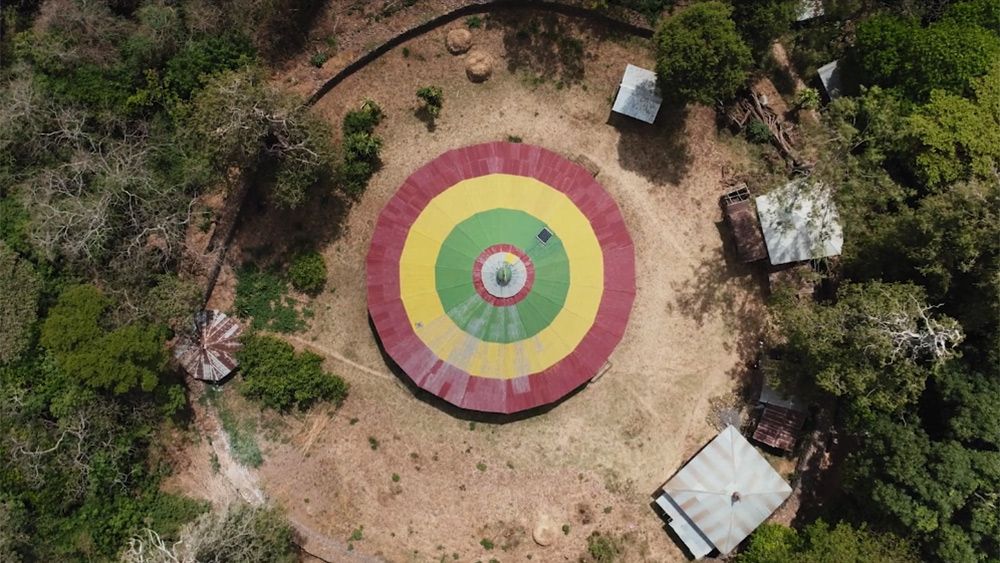
Image result for How hundreds of small ‘Gardens of Eden’ guard against total deforestation in Ethiopia
The small gardens of Ethiopia guard against deforestation.
However, an aerial view of the region reveals small pockets of green with round buildings in the middle, dotting the barren expanses. 

Born of the centuries-old belief of the Ethiopian Orthodox Tewahedo Church that churches should be surrounded by forests so as to resemble the Garden of Eden, these sites have become valuable sanctuaries of biodiversity amid the extreme pressures of population growth.


01 September, 2019

Faunal extinction is a huge part of the climate emergency

A normal week, another loss of koala habitat for new housing estates, of forest to provide jobs in the logging industry, of land clearance for gas development and agriculture. The litany of destruction is relentless. Australian governments march on with progress with billions of dollars for infrastructure to make the growing population more mobile, urban expansion. But there are much greater financial priorities.
A dead koala was found crushed in its own habitat in Victoria's Acheron Valle in 2017. Picture: Friends of the Earth
A dead koala was found crushed in its own
habitat in Victoria's Acheron Valle in 2017.
Australia is participating in a worldwide biodiversity crisis, and the koala is a public face of this; the canary in the deteriorating mine of life. Thousands of species are threatened or have become extinct. The climate emergency is the main cause, but there are many others which emanate from economic growth and its consumption of natural resources. 

Read the story from The Canberra Times by David Shearman - “Faunal extinction is a huge part of the climate emergency.” 

25 August, 2019

Farming Our Way Out of the Climate Crisis

Early tomorrow (this story was published August 7), the Intergovernmental Panel on Climate Change (IPCC) will release a new report that highlights the importance of land use and agriculture in climate change.
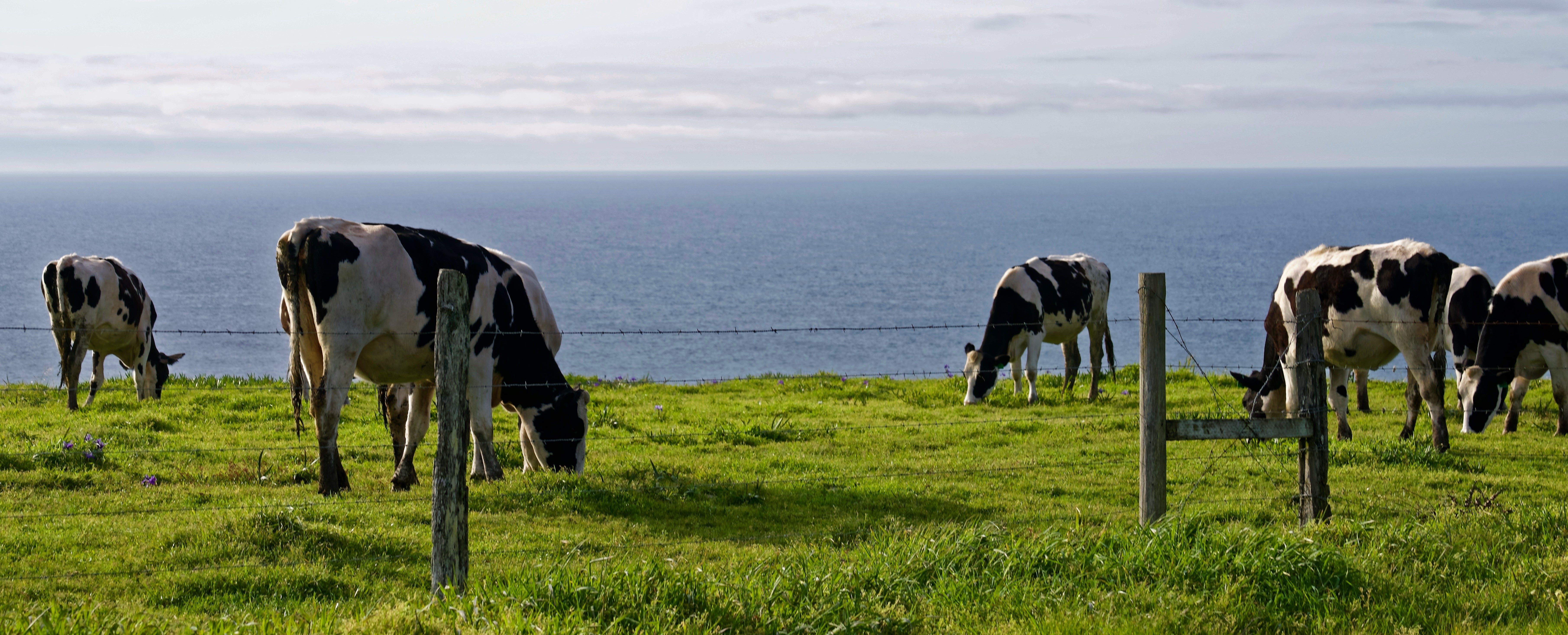
California cows, Marin County. 
Good! It’s a crucial area for us to focus on, and it’s often neglected.

I’ve been working on this topic, on and off, since the 1990s, and have been bewildered why it doesn’t get more attention. For some reason, when we think of greenhouse gas emissions, we envision factories, cars, and smokestacks — not farm fields, plantations, and cattle ranches. But, it turns out, land use and agriculture are among the biggest contributors to climate change — and can be among the biggest climate solutions.

So it’s great to see more attention paid to land use and agriculture, and its central role in addressing the climate crisis. At Project Drawdown, we have stressed this point since the beginning, and we are happy to see others talk about it too.


Read the story from Medium by Jonathan Foley - “Farming Our Way Out of the Climate Crisis.”

30 April, 2019

From Apples to Popcorn, Climate Change Is Altering the Foods America Grows

The impact may not yet be obvious in grocery stores and greenmarkets, but behind the organic apples and bags of rice and cans of cherry pie filling are hundreds of thousands of farmers, plant breeders and others in agriculture who are scrambling to keep up with climate change.
Montmorency tart cherries waiting to be harvested
 in Leelanau County in northern Michigan.
Drop a pin anywhere on a map of the United States and you’ll find disruption in the fields. Warmer temperatures are extending growing seasons in some areas and sending a host of new pests into others. Some fields are parched with drought, others so flooded that they swallow tractors.

Decades-long patterns of frost, heat and rain — never entirely predictable but once reliable enough — have broken down. In regions where the term climate change still meets with skepticism, some simply call the weather extreme or erratic. But most agree that something unusual is happening.


Read the story from The New York Times by Kim Severson - “From Apples to Popcorn, Climate Change Is Altering the Foods America Grows.”

02 April, 2019

National farmers group praises Labor plan to cut agriculture emissions

The nation's peak farming group has backed a Labor plan to curb greenhouse gas pollution from agriculture but described a pledged crackdown on mass land-clearing as “worrying".
Methane from cows are the biggest contributor to
agriculture's contribution to global warming.
A future Shorten government would reduce land sector emissions by expanding a voluntary scheme that financially rewards farmers who plant trees, retain vegetation or reduce carbon pollution through other means. It would also exempt the farm sector from having to meet firm carbon reduction targets.


Read the story from The Age by Nicole Hasham - “National farmers group praises Labor plan to cut agriculture emissions.”

24 March, 2019

How Japan became the world leader in floating solar power

How do you increase your solar energy output when you need all your land for agriculture and for housing? Answer: take to the water. That’s just what they are doing in Japan.

The world’s first floating solar plant was built in Japan, in Aichi Prefecture in central Honshu. The country’s many inland lakes and reservoirs are now home to 73 of the world's 100 largest floating solar plants and account for half of those plants’ 246 megawatts of solar capacity.


Read the World Economic Forum story by Douglas Broom - “How Japan became the world leader in floating solar power.”

13 February, 2019

Bill and Melinda Gates Unveil Big Plan for the Environment

In their annual letter, Gates and his wife Melinda hone in on what he says are the “five grand challenges” to combating climate change and global warming: agriculture, buildings, electricity, manufacturing, and transportation. Bill Gates wrote that Breakthrough Energy Ventures, the $1 billion fund he’s a partner in, will be using the “five challenges” as a guide for all future investments they make, which will focus on where emissions come from.
Bill Gates - five grand challenges.
“It’s important that people know that electricity, it’s only a quarter of the emissions,” Gates said in a promo video for the letter. “Things like cement, steel, meat—there’s a lot of other activities that are generating 75 percent of it.


Reads the story from the The Daily Beast by Molly C. Enking - “Bill and Melinda Gates Unveil Big Plan for the Environment.”

02 January, 2019

Farmers, Don't Count on Technology to Protect Agriculture from Climate Change

Of all the U.S. industries threatened by climate change, agriculture—and the broader food system it supports—is especially vulnerable to unchecked global warming, the new National Climate Assessment released by 13 federal agencies warns. 
Technology is helping farmers use seeds, fertilizer
and irrigation with greater precision, but the new
U.S. climate report warns that science and technology
advances won't be enough on their own to protect
agriculture from climate change.
Amid the report's grim projections for agriculture, the authors make an especially notable prediction: Advances in science and technology, like precision irrigation, drought-resistant crops and targeted fertilizer treatments, will only go so far toward helping farmers and ranchers cope with increasingly erratic weather.

The effects of climate change on American farms and ranches will likely outpace technological fixes within decades, even with the present pace of agricultural innovation, the report says.


Read the Inside Climate News story by Georgina Gustin - “Farmers, Don't Count on Technology to Protect Agriculture from Climate Change.”

01 May, 2018

Prime agricultural land loss or booming future energy? That's the solar planning conundrum for Victoria

Residents near Shepparton are concerned that farmland the Victorian Government has invested in under the Murray-Darling Basin Plan will be lost to agriculture as the state undergoes a solar farm boom.
Victorian farmers are concerned about the lack of
 solar planning laws on prime agricultural land.
Four applications for solar farms in the Greater Shepparton region that could produce up to 243 megawatts of electricity have been proposed for Tatura, Tallygaroopna, Lemnos and Congupna, and have been 'called in' by the Victorian planning minister.

The projects, worth a total of nearly $300 million, are now being investigated by a planning panel with a view that their decision will form the basis for new planning policy in the state.

Critics say there has been no thought put to where the solar farms are being placed and how much prime agricultural land is being lost, and while there is suitable, more arid land available close by.


10 April, 2018

Changing Face of Agriculture and Food System into the 21st Century

Professor Mark Howden will later this month discuss the “Changing Face of Agriculture and Food System into the 21st Century”.

His presentation on Thursday, April 26 will address aspects of this nexus being faced by the changing demands on our food production systems into the 21st century.


The free public lecture is part of the Faculty of Veterinary and Agricultural Sciences' 2018 Dean's Lecture Series and more details can be found from the University of Melbourne website.

22 February, 2018

Sustainable agriculture provides a lifeline to Mali’s women

Agriculture is often a key route out of poverty for many in developing countries, especially among women.
Sustainable agriculture a bonus for
women in developing countries.
 
And in the West African country of Mali, it is estimated that women make up half of all those involved in agriculture. However, UN Women reports that climate change is threatening to undo the progress made in building stronger rural communities and ending hunger in the country.

The UN entity, formed seven years ago, has been implementing a new programme called AgriFed, designed to combat the negative impacts of climate change on women.

21 February, 2018

CEFC launches first large-scale farm deal to cut emissions in agriculture

As we wait for the Coalition to come up with a workable energy policy through its new National Energy Guarantee, there are growing calls for more work to be done to cut Australia's emissions in other sectors like transport and agriculture.
The Clean Energy Finance Corporation has announced its
first equity investment in the agricultural sector. 
The government's green investment bank, the Clean Energy Finance Corporation, is announcing its first equity investment in the agricultural sector.

It's teaming up with Macquarie Group and the CSIRO on a new project to cut farming emissions, with the aim of establishing new efficiency standards for agriculture.


Listen to the Radio National Breakfast interview with Hamish McDonald - “CEFC launches first large-scale farm deal to cut emissions in agriculture.”

18 December, 2017

Approaches to Food and Farming Sustainability

In principle, a truly sustainable agriculture system would be able continue indefinitely into the future without degrading its resource base. Since we humanity have already done a huge amount of damage to the world’s farmlands and soils, we need more than just sustainable agriculture, we need to create a regenerative farming system that builds soils, fixes carbon, and increases bioproductivity and diversity.

If we apply our ecological understanding of the carrying capacity and evolutionary dynamics of ecosystems, to the question what would a sustainable or regenerative agriculture system look like, we would pay attention to its resource base and how it is regenerate through natural cycles and closed loops. What is the resource base of an agricultural system?


Read Daniel Christian Wahl’s Medium story - “Approaches to Food and Farming Sustainability.”

13 October, 2017

The Agriculture of hope: climate farmer of north America

A new and growing movement is inspiring farmers to produce food in a manner that can mitigate and even help reverse global warming. We call this “climate farming, the agriculture of hope.”


At the core of this movement is the understanding that soil health and climate stability are closely linked. The condition of one impacts the other. In the atmosphere, carbon exists as carbon dioxide (CO2), a greenhouse gas warming the planet. But in plants, carbon forms a sugary liquid (like maple sap) that is exuded through the roots and gobbled up by microscopic critters at the foundation of what soil scientist Dr. Elaine Ingham calls the “Soil Food Web.” This infusion of carbon and the microbial activity it supports gives structure to soil, improves the nutrient density of food, and, perhaps most importantly, increases soil’s capacity to hold water.

Working to put more carbon into the soil, the climate farmer is thereby enhancing the productivity of soil while contributing to the long- term welfare of the planet. Regenerative farmer Jesse McDougall, of Studio Hill Farm in Shaftsbury, Vermont, shares, “Carbon is the world’s best fertilizer. Our goal in farming is to pass on to the next generation land that is outrageously fertile.”


Read the permaculture magazine story - “The Agriculture of hope: climate farmer of north America.”

08 October, 2017

The Anthropocene: Has human impact changed Earth forever?

Despite our early existence compared to Earth’s age (humans have only been around for 200.000 years, whereas the planet emerged 4.6 billion years ago), the mark we are leaving on our world is already pretty obvious.

We’ve started by chopping down trees in order to clear the land for agriculture. Then we’ve settled permanently and created the first civilisations, that is to say, the first cities. We have also managed to develop complex technologies and learned how to use external sources of energy, including fossil fuels, with consequences we would soon find out.
And it was over the last two centuries which cover the Industrial Revolution (18th century) and “The Great Acceleration” onset around the 1950’s that the global effects of human activities have become clearly noticeable.

Humanity has brought about such a planetary change that Paul Crutzen, a Dutch Nobel laureate chemist, could no longer agree that he was living in the Holocene the current geological epoch which began around 10.000 years ago. So back in 2000, he and a colleague, Eugene Stoermer, decided to coin what they considered to be the new geological epoch we were entering as the Anthropocene the age of man.


21 December, 2016

Directors and Climate Change – Time for Leadership


‘Without rapid carbon emission reductions far greater than Paris commitments, the planet will become ungovernable’

Company boards need to seriously consider the
impact and complications of climate change. 
Any balanced assessment of the climate science and evidence accepts that climate change is driven primarily by human carbon emissions from fossil fuel combustion, agriculture and land clearing, superimposed on natural climate variability, and that it is happening faster and more extensively than previously anticipated.

In this context, scientists have long been concerned about the extreme "tipping point" risks of the climate system; non-linear positive feedbacks which trigger rapid, irreversible and catastrophic change.

These feedbacks are now kicking in. For example, Arctic weather conditions are becoming increasingly unstable as jetstream fluctuations warm the region 20°C or more above normal levels; sea ice is at an all-time low with increasing evidence of methane emissions from melting permafrost. Greenland and Antarctic ice sheets are melting at worst-case rates, with the potential for several metre sea level rise this century. The Antarctic Larsen ice sheet and Pine Island glacier are showing signs of major breakup as a result of warming Southern Ocean waters, a process which is probably now irreversible. Coral reefs around the world, not least the Great Barrier Reef, are dying off as a result of record high sea temperatures. Major terrestrial carbon sinks are showing signs of becoming carbon emitters. And much more.

Read the Australian Institute of Company Directors story - “Directors and Climate Change – Time for Leadership.”

14 August, 2016

AGU explores links between earth sciences and health

AGU boss, Christine McEntee.
The American Geophysical Union yesterday launched a new scientific journal to explore the links between earth sciences and health.

Called GeoHealth, the new open-access peer-reviewed periodical will span fields from agriculture to geology, ecology, atmospheric science and climate change and their impacts on human well-being. The journal will also include reviews and policy discussions.

"The impetus is the growing output of research in this area of geohealth," said Christine McEntee, executive director and CEO of AGU, a 62,000-member-strong organization of earth scientists. She noted that there has been a 46 percent increase in scientific publications dealing with health and earth sciences between 2010 and 2015.

"We want to bridge the human health community that does research in this area with the earth sciences community," McEntee added.

Read the ClimateWire story - “AGU launches journal to study health and earth sciences.”

23 May, 2016

Working without pay, but delivering and reflecting biodiversity

Bees - working without pay, but
delivering and reflecting biodiversity.
Bees make a priceless contribution to agriculture and are a bellwether for environmental health, working without pay while both delivering and reflecting biodiversity.

"A world without pollinators would be a world without food diversity - and in the long run, without food security," FAO Director-General José Graziano da Silva said today during a visit to Slovenia that ending at the national beekeepers' festival.

Slovenia, a promotor of declaring May 20 the World Bee Day, has sought assistance from FAO in this endeavour and has already received its support and that of 53 countries at the last Regional Conference of Europe. The next steps include the technical committees of FAO and the FAO Conference in 2017. It would be one of the first concrete actions after the important agreement on Sustainable Development Goals and the Climate Change Agreement and in line to achieve the Goals of Agenda 2030, stated Graziano da Silva.

Read the Food and Agricultural Organization of the United Nations story - “Bees are bellwethers for the healthy agricultural ecosystems they help create.”

30 March, 2016

Farmers poised to help us meet climate challenge

Australia’s agricultural lands help to feed about 60 million people worldwide, and also support tens of thousands of farmers as well as rural communities and industries.

But a growing global population with a growing appetite is placing increasing demands on our agricultural land. At the same time, the climate is warming and in many places getting drier too.

Agriculture, and particularly livestock, is currently a major contributor to greenhouse gas emissions. But new markets and incentives could make storing carbon or producing energy from land more profitable than farming, and turn our agricultural land into a carbon sink.

Read the piece from The Conversation by a Principal Research Scientist with Environmental-economic integration at the CSIRO, Brett Anthony Bryan - “Farming in 2050: storing carbon could help meet Australia’s climate goals.”

20 March, 2016

Native Americans first U.S.population to be relocated because of climate change

Parts of coastal Louisiana are being swallowed by
rising seas resulting from climate change.
The sacred land in coastal Louisiana that a small community of Native Americans has called home for more than a century has been all but swallowed by the rising sea, leaving residents with little dry ground and a fear they will lose their heritage.

Now a $48 million federal grant will allow the band of Biloxi-Chitimacha-Choctaw Indians of Isle de Jean Charles to move away from their vanishing home. The funding for the relocation will make the tribe one of the first—and so far the largest—populations in the United States to be resettled because of climate change.

The money, from the U.S. Department of Housing and Urban Development (HUD), is part of a program designed to make communities more disaster-resistant. For the Biloxi-Chitimacha-Choctaw Indians, that means moving their whole community north to higher ground when a suitable site is identified in the next several years.

The slice of land that has supported the Biloxi-Chitimacha-Choctaw Indians through trapping fishing, and agriculture for 170 years is rapidly being swallowed by the Gulf of Mexico.

Read the Inside Climate News story - “Native American Tribe Gets Federal Funds to Flee Rising Seas.”