Showing posts with label bees. Show all posts

25 April, 2020

Bugged: Earth's land insects are disappearing

Washington: The world's ants, bees, butterflies, grasshoppers, fireflies and other land-dwelling insects have been suffering population drops of about 9 per cent per decade but freshwater bugs such as dragonflies and mosquitoes have been rallying, researchers say in a new study.
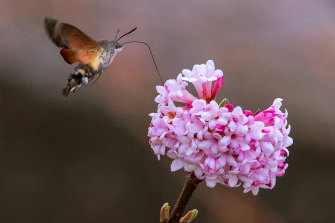
An insect flies next to a flower in Erfurt, Germany.
The findings, based on 166 sets of data covering 1676 sites in 41 countries dating as far back as 1925, provided a nuanced assessment for insects, the most ubiquitous and diverse animals on the planet.
Insects such as mosquitoes - which live in the water as larvae - as well as midges, mayflies, water beetles and caddisflies that spend at least part of their lives in freshwater were found to have experienced a population increase of about 11 per cent per decade.
Freshwater covers only about 2.5 per cent of the Earth's surface, so the vast majority of insects live on land.
Read the story from The Age  by Will Dunham - “Bugged: Earth's land insects are disappearing.”

24 December, 2018

Bees 'starving' in South Australia as erratic weather takes heavy toll on hives, honey yields

Bees are suffering from starvation and hives have died following erratic weather patterns in South Australia that have been blamed for an 80 per cent drop in honey yield.
Apiarists are reporting lower-than-average bee numbers.
Hot spells followed by cold and wet periods throughout spring and early summer has resulted in some plants flowering haphazardly, or not at all, leaving many bees without enough food.

Hackham apiarist Bill Hawkes has been removing hives and bee swarms on behalf of the State Government and councils for 45 years.

In an average year he will remove 20 to 30 a week, but this year he said he had been lucky to get three jobs a week, with a lot of them for European wasps.


01 May, 2018

EU ban on neonicotinoids triggers call for a similar ban in Australia to protect bees

European Union countries have voted to ban the outdoor use of insecticides known as neonicotinoids because of the harm they can do to bees, but there is no sign of a similar ban in Australia.
Scientists in Europe fear bumble bees are being killed
 by pesticides known as neonicotinoids and a vote
last week will see them banned in six months' time.
The EU ban covers the use of three active substances: imidacloprid developed by Bayer CropScience, clothianidin developed by Takeda Chemical Industries and Bayer CropScience, as well as Syngenta's thiamethoxam.


23 May, 2016

Working without pay, but delivering and reflecting biodiversity

Bees - working without pay, but
delivering and reflecting biodiversity.
Bees make a priceless contribution to agriculture and are a bellwether for environmental health, working without pay while both delivering and reflecting biodiversity.

"A world without pollinators would be a world without food diversity - and in the long run, without food security," FAO Director-General José Graziano da Silva said today during a visit to Slovenia that ending at the national beekeepers' festival.

Slovenia, a promotor of declaring May 20 the World Bee Day, has sought assistance from FAO in this endeavour and has already received its support and that of 53 countries at the last Regional Conference of Europe. The next steps include the technical committees of FAO and the FAO Conference in 2017. It would be one of the first concrete actions after the important agreement on Sustainable Development Goals and the Climate Change Agreement and in line to achieve the Goals of Agenda 2030, stated Graziano da Silva.

Read the Food and Agricultural Organization of the United Nations story - “Bees are bellwethers for the healthy agricultural ecosystems they help create.”

12 July, 2015

Albert Einstein quote about bees coming to fruition


A

lbert Einstein was famous for his exploits in science and along with that he made many other comments that continue to echo around the world.

One was about bees and here is a version (many exist) of what he said:
 
“If the bee disappeared off the surface of the globe then man would only have four years of life left. No more bees, no more pollination, no more plants, no more animals, no more man”.


And now today’s scientists are echoing his view, this time in response to changes being wrought by climate change with report from the Guardian.

Climate change caused by emissions from cars, factories and power plants is squeezing the habitats suitable for bumblebees to live in across Europe and North America, scientists have discovered.

As temperatures have risen over the past 110 years, the bees are being killed off by increased heat in their southern habitats. But to the surprise of researchers, they are failing to move north to cooler climes, unlike other species.

The finding matters because of the vital job the bees do as pollinators for wild flowers and other plants. Scientists consider the bees to be a “keystone species” crucial to the health of the ecological communities they are part of. If they disappear there will be knock on effects for a wide range of other species.