Showing posts with label European Union. Show all posts

29 November, 2019

Australia to fight Europe on climate demands in free-trade deal

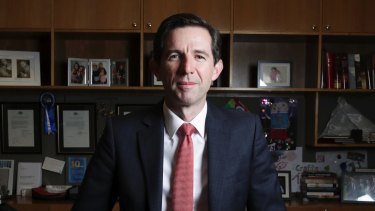
Trade Minister Simon Birmingham has described France's push to force Australia to adopt climate change targets in a planned trade deal with European Union as "unprecedented", declaring he will only accept terms that are in the best interests of the nation.
Trade Minister Simon Birmingham says Australia won't capitulate on Europe demands.
Trade Minister Simon Birmingham says Australia
won't capitulate on Europe demands.
Senator Birmingham wants to clinch a free-trade agreement (FTA) with the EU by the end of next year, followed by Britain in early 2021, after Parliament this week ticked off on deals with Indonesia, Hong Kong and Peru.


Read the story from The Sydney Morning Herald by Anthony Galloway - “Australia to fight Europe on climate demands in free-trade deal.”

11 July, 2019

The Myth of a Fossil Fuel Phase-Out

BRUSSELS — How the world uses energy is a hot topic for a warming planet, and fears of pollution and resource strain have produced a virtual arms race of energy-efficiency strategies. From the European Union to China, economies are vowing to reduce their energy intensity with the help of technological innovations and legislative changes.
Rumaila natural gas powerstation, north of the southern Iraqi port of Basra. 
Yet, despite these promises, consumer demand for energy is forecast by the International Energy Agency to rise until at least 2040. With the world’s energy needs growing, how can policymakers guarantee supply?

To put it bluntly, the world has nothing to worry about when it comes to reserves. After 40 years of fearing energy shortages, we have entered an era of abundance. We need to guard against false narratives, not scarce resources.

The culprit of this storyline is the Club of Rome, a global think-tank that, in the 1970s, spurred energy anxiety with its absurd prophecies derived from questionable models. As devoted followers of Thomas Malthus and Paul Ehrlich, the club argued that bad things come from exponential growth, and good things from linear growth. This idea fueled the prediction that the world would run out of oil by 2000.


Read the Medium story by Samuele Furfari - “The Myth of a Fossil Fuel Phase-Out.”

23 February, 2019

Swedish student leader wins EU pledge to spend billions on climate

BRUSSELS, Feb 21 (Reuters) - The European Union should spend hundreds of billions of euros combating climate change during the next decade, its chief executive said on Thursday, responding to a Swedish teen who has inspired a global movement of children against global warming.
Teenage Greta Thunberg said she and hundreds of thousands
like her were skipping school each week to focus politicians'
minds on a 2020 deadline for countries to step up planned emissions cuts.
In a speech alongside 16-year-old Greta Thunberg in Brussels, European Commission President Jean-Claude Juncker also criticised U.S. President Donald Trump for suggesting climate change was "invented" and “ideological".

"In the next financial period from 2021 to 2027, every fourth euro spent within the EU budget will go towards action to mitigate climate change," Juncker said of his proposal for the EU budget, which is typically 1 percent of the bloc's economic output, or 1 trillion euros ($1.13 trillion) over seven years.

"Mr. Trump and his friends believe that climate change is something that has just been invented and its an ideological concept, but ... something dangerous is already underway," Juncker said.

Thunberg was in Brussels to join a seventh week of demonstrations by Belgian children skipping school to protest against global warming.


Read the Reuters story by Clare Roth  - “Swedish student leader wins EU pledge to spend billions on climate.”

29 October, 2018

Germany Is Planning Free Public Transit to Fight Air Pollution

Germany is a global leader in wind and solar power, but air pollution throughout the country has gotten so bad that the European Union just threatened the country with massive fines if the life-threatening situation wasn’t rapidly addressed, according to the Independent.
Germany wants to help clean up the atmosphere through free public transport.
Rather than fight the decree, the German government announced earlier this week a bold new plan to clean up the atmosphere: free public transit.

In a letter to the European Commission, government ministers laid out their plan.


Read the story from Global Citizen by Joe McCarthy - “Germany Is Planning Free Public Transit to Fight Air Pollution.”

09 July, 2018

Forget Trump: Europe plans to push for more ambition on climate

Trump or no Trump, the European Union is set to spur businesses to do more to meet the Paris climate accord goals.
President Donald Trump speaks during a rally at the
 Four Seasons Arena at Montana ExpoPark, Thursday,
July 5, 2018, in Great Falls, Mont.
Taking a long view and encouraging companies to front-load actions to cap future costs will be among the thrusts of the climate push for the bloc's executive suites.

In its longer-term strategy to be presented in November to achieve targets set under the Paris accord, the European Commission is considering options ranging from lowering greenhouse-gas discharges by 80 per cent by 2050 compared with 1990 levels to net-zero emissions by mid-century.

"Having a 2050 perspective helps people accept more ambitious paths," Mauro Petriccione, the director general for climate at the EU's regulatory arm, said in an interview in Brussels.


Read the story by Ewa Krukowska from The Age - “Forget Trump: Europe plans to push for more ambition on climate.”

23 June, 2018

Burning Wood as Renewable Energy Threatens Europe’s Climate Goals

The European Union declared this week that it could make deeper greenhouse gas cuts than it has already pledged under the Paris climate agreement. But its scientific advisors are warning that the EU's new renewable energy policy fails to fully account for the climate impacts of burning wood for fuel.
A ranger explains to a group of landowners how maintaining
old-growth forest in the Dürrenstein Wilderness area
 helps Austria meet its climate targets by sequestering carbon. 
By counting forest biomass, such as wood pellets used in power plants, as carbon-neutral, the new rules could make it impossible for Europe to achieve its climate goals, the European Academy of Sciences Advisory Council (EASAC) wrote in a strongly worded statement. 

The council said the renewable energy policy's treatment of biomass is "simplistic and misleading" and could actually add to Europe's greenhouse gas emissions over the next 20 to 30 years.


Read the story by Bob Berwyn from Inside Climate News - “Burning Wood as Renewable Energy Threatens Europe’s Climate Goals.”

30 May, 2018

EU to ban plastic straws and cotton buds in effort to cut pollution

Brussels: The European Union has proposed banning single use plastic products like cotton buds, straws, stirs and balloon sticks when alternatives are available in an attempt to reduce litter on  beaches and ocean beds.
Plastic straws are on the EU's environmental hit list.
The European Commission said its proposal would seek to cut marine litter in half for the 10 most prominent items and avoid environmental damage estimated at over $250 billion over the next dozen years.

EU Vice-President Frans Timmermans said that plastic cutlery would not be banned completely, but steps would be taken to have them made of sustainable materials when possible.


01 May, 2018

EU ban on neonicotinoids triggers call for a similar ban in Australia to protect bees

European Union countries have voted to ban the outdoor use of insecticides known as neonicotinoids because of the harm they can do to bees, but there is no sign of a similar ban in Australia.
Scientists in Europe fear bumble bees are being killed
 by pesticides known as neonicotinoids and a vote
last week will see them banned in six months' time.
The EU ban covers the use of three active substances: imidacloprid developed by Bayer CropScience, clothianidin developed by Takeda Chemical Industries and Bayer CropScience, as well as Syngenta's thiamethoxam.


18 January, 2018

Microwaves in EU countries emit as much carbon dioxide as 7 million cars, study reveals

Microwaves across the European Union emit as much carbon dioxide as nearly 7 million cars, according to a new study. 
Comparing microwaves to cars is like
comparing ‘apples and oranges’, critics say.
 
Researchers at the University of Manchester carried out the first ever comprehensive research into the environmental impacts of microwaves, considering their whole life cycle, from “cradle to grave”. 

They found that the machines are responsible for 7.7 million tonnes of carbon dioxide equivalent per year in the EU, which is the same as the annual emissions of 6.8 million cars. 


09 July, 2017

G20 leaders reaffirm support for climate change action and stand against United States.

World powers have lined up against US President Donald Trump on climate change, reaffirming their support for international efforts to fight global warming.

US President Donald Trump is
on the the outer G20 summit.
The final statement of the Group of 20 summit in Hamburg, Germany, underlined that the other countries and the European Union supported the Paris climate agreement rejected by Mr Trump.

They called the deal to reduce greenhouse gases "irreversible" and vowed to implement it quickly and without exception.

The other countries, from European powers such as Germany to emerging ones such as China and energy producers such as Saudi Arabia, merely "took note" of the US position, which was boxed off in a separate paragraph.


05 June, 2017

GV environment leader disappointed, but not surprised by US climate decision

by Rhiannon Tuffield (Shepparton News)
The United States, along with such countries as Australia, will dramatically fall behind if climate change continues to be deferred, according to Goulburn Valley environmentalist, John Pettigrew.

as a leader who has repeatedly denied the pansies of climate change, American President Donald Trump’s announcement last week the US would with draw from the Paris Climate Agreement was hardly a surprise for Mr Pettigrew.
John Pettigrew - disappointed, but not surprised
by Donald Trump's Paris climate decision.
Despite his concern, the Goulburn Valley Environment Group president said the move would actually be a positive one for other countries, particularly China and the European Union.

Although he agreed the Paris agreement was important, he believed it was only symbolic, illustrated by the multitude of countries which had not yet met agreed targets, including Australia.

Scientifically, the Paris Agreement was never likely to deliver the immediate drastic changes researcher said the planet needed to avoid danger climate change, but it was a start to set a clear path for future emissions reductions.
“I’m disappointed (the US) pulled out, but I’m not convinced it’s going to make a lot of difference,” Mr Pettigrew said.

“There’s one argument that says it might prove to be a bigger incentive for other countries to do a bit more,  because there will be positives for countries who do move early and adapt.”

Mr Pettigrew said countries such as France and China would become the biggest winners of the Trump decision and would most likely lead the way in areas of technology and manufacturing in renewable energy.

But he would see Australia falling behind as a result of the Federal Government’s slow movement on climate change.

“The opportunities for Australia are enormous, but  the unfortunately the current thinking of our Federal Government is not moving us in that direction,” he said.

“What’s in place federally is not enough to meet the targets, out is not anywhere near securing a safe climate in the future.

“These impacts will come down to economics more than anything else, and I think if we lag behind in the research and development of these renewables, we’ll end up having to purchase them from China instead.”

04 June, 2017

EU to bypass Trump administration after Paris climate agreement pullout

The European Union has rejected Donald Trump’s offer to renegotiate the Paris climate agreement and pledged instead to bypass Washington to work with US business leaders and state governors to implement the historic accord’s commitments.
Chinese premier Li Keqiang (right) with European
commission president Jean-Claude Juncker. Both
 spoke of a commitment to tackling global warming. 
Less than 24 hours after the US president announced his decision to withdraw from the 2015 agreement and strike a new, less ambitious deal with the rest of the world, Brussels declared its outright refusal to engage in such talks.

EU officials will instead cut out the White House to deal directly with the US states and major corporations, many of whom have already pledged to live by the terms forged in Paris.

In Britain, Theresa May faced criticism for not signing up to a joint declaration by Germany, France and Italy in opposition to the US move. A Downing Street source defended the prime minister, pointing out that other countries including Japan and Canada had not signed up to the letter either.


18 May, 2017

Fossil fuel lobby could be forced to declare interests at UN talks

A push from developing countries to force fossil fuel lobbyists taking part in UN climate talks to declare their conflicts of interest has won a significant battle against resistance from the world’s biggest economies including the European Union, US and Australia.
A Shell oil refinery. Ecuador and Venezuela wants groups
 that represent companies such as Shell, ExxonMobil,
BP and BHP to declare their conflicts of interest.
The UN framework convention on climate change (UNFCCC) has agreed to enhance “openness and transparency” for outside parties and will accept submissions from any stakeholder – which could be any person or group affected by climate change or climate change policy – on how it could do so.

“The result was pretty good – understanding that the world’s largest economic powers were adamantly opposed to anything to do with integrity or conflict of interest at all,” said Jesse Bragg from Corporate Accountability International, which has been running a campaign on the issue.


Read Michael Slezak’s story on The Guardian - “Fossil fuel lobby could be forced to declare interests at UN talks.”

18 December, 2016

Australia leads way in fossil fuel divestment

Bill McKibben - Australia leads the
way in the divestment process.
It looks as though 2016 will go down as the year that Western democracies were torn open to reveal the growing disconnect between citizens and governments. A year when many felt trust in government had fallen so low that it was better to try to burn it all down than continue on our current course.

Next month, Donald Trump will become the president of my country. Britain is destined to leave the European Union. In Australia, the political malaise is so strong that no prime minister has made it through a full term in almost 10 years. But even as the major parties scramble to find a popular face to put on their unpopular policies, many voters are abandoning them for the empty promises and scapegoating of far-right populism.

Read Bill McKibben’s story in The Saturday Paper - “Australia leads way in fossil fuel divestment.”

19 October, 2016

The world just took another huge step forward on fighting climate change

Last week, we learned that the Paris climate agreement will go into effect in November after the European Union formally joined the accord, tipping it past the threshold needed to become a reality.

Now this week brings another major foray in international climate diplomacy, as close to 200 countries adopted an amendment to the 1987 Montreal Protocol to phase down the use of hydrofluorocarbons, or HFCs, which are super-polluting, powerful greenhouse gases.

“The prospects for the future of our planet are bright,” U.S. Environmental Protection Agency Administrator Gina McCarthy said in a statement about the deal. McCarthy led a U.S. delegation to Kigali, Rwanda, where the deal was struck early Saturday after negotiations that ran through the night.

Read Chris Mooney’s story in The Washington Post - “The world just took another huge step forward on fighting climate change.”

01 July, 2016

Brexit could leave the European Union struggling with its climate targets

Natalie Latter.
Britain has been a consistently progressive driver of climate policy in the European Union. Given the EU’s significance in international climate change negotiations, Britain’s vote to leave the union has implications both for EU policy and for the global Paris climate agreement struck last year.

The UK has been crucial to EU climate change policy in ways that have evolved over time. Britain’s strong domestic emissions reductions have made more ambitious EU burden-sharing targets possible. This in turn gave credibility to the idea of Europe as a global leader on climate ambition – something that has become a cherished part of many European citizens' self-identity. Britain has also been a crucial bridge between the United States and Europe in the United Nations' climate negotiation process.

Yet the EU’s climate policy ambition has arguably already declined over the past decade as it has struggled with a rising tide of resistance from more recalcitrant member states, chiefly Poland but also including, at various times, Italy, Hungary and Romania. Assuming that the EU manages to stave off any further disintegration, these voices will likely grow louder.

Read the piece by a PhD Scholar from the University of Western Australia,  Natalie Latter, on The Conversation -  “Brexit could leave the European Union struggling with its climate targets.”

27 June, 2016

Fears for climate policies after Brexit outcome

The UK voted 52 percent to 48 percent to leave the European Union in a historic referendum.

Prime Minister David Cameron has resigned in the wake of the vote and markets reacted immediately, as the pound fell to its lowest level against the dollar in 30 years.

Many climate and energy experts, including Christiana Figures, had been outspoken about the potential danger for EU and UK climate policy if the UK were to leave.

Without the UK involved, it is unlikely that the EU would revise up its current 40 percent emissions reduction target, experts say. The “leave” vote and change in government also raises uncertainty about domestic policies. Craig Bennett, head of Friends of the Earth, said the leave vote was a “red alert” for the environment.

26 June, 2016

Vote to leave EU may have profound climate implications

Former Mayor of London Boris Johnson lead the
charge to have England leave the European  Union,
a 'divorce' that may have profound implications
for  climate change agreements and action.
Britain's surprising vote to leave the European Union in a national referendum on Thursday sent a shock through global financial markets, and there is similar concern that the move will have profound implications for climate policy as well.

Clean energy investments, carbon markets and the Paris climate agreement weren't a major part of the calculus when Britons went to the polls, but now environmentalists fear Britain's contribution to global climate action may be compromised, with negative ramifications for global warming.

"It leaves me shocked, disappointed and extremely concerned about the future of environmental protections in the UK," James Thornton, the chief executive of ClientEarth, a non-profit environmental law organization with offices in London, Brussels and Warsaw, said in a statement. "Many of the laws which my organization uses to ensure that nature and health are protected in Britain were drawn up with the UK's agreement in Brussels. Now as the UK prepares to go it alone, we have no idea which laws will be retained."

The UK's former energy and climate change secretary Edward Davey went further, quoting the Bible in a tweet.

Read the Inside Climate News story - “Brexit Sparks Worry About Fate of Global Climate Action.”

25 January, 2016

Australia had what the world needs, but in a moment of climate madness, we ditched it

Lawmakers who oppose taking action to lower greenhouse gas emissions by putting a price on carbon often argue that doing so would hurt businesses and consumers. But the energy policies adopted by some American states and Canadian provinces demonstrate that those arguments are simply unfounded.

Around the world, nearly 40 nations, including the 28-member European Union, and many smaller jurisdictions are engaged in some form of carbon pricing. In this hemisphere, British Columbia, Quebec, California and nine Northeastern states have raised the cost of burning fossil fuels without damaging the economy. Alberta, Canada’s biggest oil and gas producer, and Ontario have said they will adopt similar policies.

Read The New York Times story - “Proof That a Price on Carbon Works.”

14 December, 2015

Business clamouring for global carbon tax - Peter Burdon


Peter Burdon.
Among the various interests at the Paris climate talks, it is arguably the voice of business that has emerged most clearly.

Many business leaders are now saying that if the world is intent on reducing greenhouse gas emissions, there must be a worldwide price on carbon and a framework for linking the 55 schemes that exist in areas such as China, the European Union, and California.

Momentum has been building since May, when six of Europe’s largest oil and gas companies, including Royal Dutch Shell and BP, issued a letter calling for global carbon pricing system. That month, leaders from 59 international companies also signed a statement calling for carbon pricing to feature in the Paris agreement.

Read the piece by senior lecturer, Adelaide Law School, University of Adelaide, Peter Burdon, on The Conversation - “Why is the business world suddenly clamouring for a global carbon tax?”