Showing posts with label countries. Show all posts

16 January, 2020

Might the bushfire crisis be the turning point on climate politics Australian needs?

Countries have long periods in which policies change little, and only by increments.
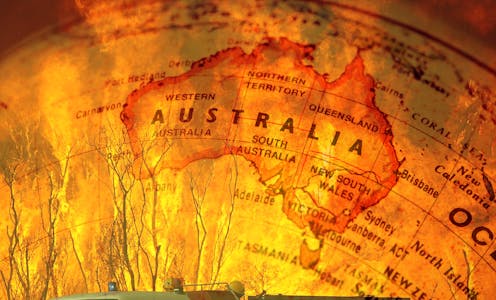
Image result for Might the bushfire crisis be the turning point on climate politics Australian needs?
The bushfire crisis is big enough to change the
government’s emissions policy, but it swill need more.
Occasionally there are turning points, when previously intractable policy problems are suddenly resolved, recasting policy for the long term.
Many are asking whether this summer’s environmental catastrophe might be such a turning point – a Port Arthur moment or Australia’s Sandy Hook, Chernobyl or Pearl Harbour.
The short answer is: it is too soon to tell, but the early signals from the federal government are not good.
Crises can provide a window for big policy changes. In such times, the normal political constraints are relaxed, although not for long.

Read the story from The Conversation by the Chief Executive Officer with the Grattan Institute, John Daley, and a Senior Associate with the Grattan Institute, Emily Millane -  “Might the bushfire crisis be the turning point on climate politics Australian needs?” 

29 June, 2019

Entrepreneur seizes business opportunity in China recycling ban

China's decision to stop importing much of the world's used plastic spelt disaster for countries around the globe. But Melbourne-based Chinese entrepreneur Harry Wang saw it as a business opportunity.
Harry Wang with a wall of plastics ready for recycling at his Advanced Circular Polymers plant in Somerton.
Harry Wang with a wall of plastics ready for recycling
at his Advanced Circular Polymers plant in Somerton.
Mr Wang has since invested $20 million on that idea and after several years of research and development, his new business - Advanced Circular Polymers - is open in Melbourne's outer north.

Read the story from The Age by Debbie Cuthbertson - “Entrepreneur seizes business opportunity in China recycling ban.”

30 May, 2019

Matt Canavan shrugs off Australia’s greenhouse gas emissions increase

The resources minister Matt Canavan has shrugged off Australia’s trend of rising emissions, saying the industry responsible for the growth is gas, and Australian gas exports reduce carbon emissions in other countries.
Australia’s greenhouse gas emissions rose again in 2018, according
to the national inventory report to the UN Framework Convention on
Climate Change. 
After a government report to the United Nations showed Australia’s greenhouse gas emissions continued to rise in 2018, Canavan told Sky News people needed to take a “balanced viewpoint” when assessing the trend.

“A lot of people comment on the fact that carbon emissions have gone up in Australia in the last couple of years, and they have, but that’s almost principally due to the construction or bringing online of LNG export terminals,” Canavan said on Wednesday.


Read the story from The Guardian by Lisa Cox and Katherine Murphy - “Matt Canavan shrugs off Australia’s greenhouse gas emissions increase.”

(Queenslanders, historically, object to advice from "outsiders", particularly those from southern states, well I object to the advice from this Queenslander who says we should take a "balanced view". He is simply, scientifically, wrong - Robert McLean

17 December, 2018

UN climate accord 'inadequate' and lacks urgency, experts warn.

The world has been put on notice that its best efforts so far will fail to halt the devastation of climate change, as countries came to a partial agreement at UN talks that failed to match up to the challenges faced.
The two-week-long conference left questions about
reducing greenhouse gas emissions unanswered. 
Leading figures in climate science and economics said much more must be done, and quickly, to stave off the prospect of dangerous levels of global warming.

Nicholas Stern, the former World Bank chief economist and author of a seminal review of the economics of climate change, said: “It is clear that the progress we are making is inadequate, given the scale and urgency of the risks we face. The latest figures show carbon dioxide emissions are still rising. A much more attractive, clean and efficient path for economic development and poverty reduction is in our hands.”


Read the story from The Guardian by Fiona Harvey in Katowice - “UN climate accord 'inadequate' and lacks urgency, experts warn.”

31 May, 2018

‘Green’ and 'blue' bonds tipped to boom, HSBC head says

HSBC Australia’s banking chief says sustainable financing is going to grow rapidly as companies and countries look for new ways to fund their environmental and conservation projects.
New financial tools are being developed to support a
boom in green and sustainable projects like renewable energy.
"From humble beginnings, the green bond space has grown exponentially. The other really interesting development is the creation of the green loan market," Hamish Kelly, HSBC Australia’s managing director and head of global banking, told Fairfax Media.


Read the story by Cole Latimer from today’s Age - “‘Green’ and 'blue' bonds tipped to boom, HSBC head says.”

05 May, 2018

Is Buying Renewables Anti-American?

COUNTRIES AROUND THE world are embracing renewable energy like solar and wind power and switching from coal to natural gas. But as they plan to invest billions of dollars in such infrastructure projects, they might also have to pick a side.

With the U.S. betting heavily on natural gas and China tightening its grip on the manufacturing of solar panels, choosing one technology over the other might risk alienating – or could end up currying favor with – one superpower or the other.

In short, new solar facilities – while friendly to the global environment – could one day become seen as the anti-American choice.


Read the U.S. News and World Report story - “Is Buying Renewables Anti-American?

01 May, 2018

EU ban on neonicotinoids triggers call for a similar ban in Australia to protect bees

European Union countries have voted to ban the outdoor use of insecticides known as neonicotinoids because of the harm they can do to bees, but there is no sign of a similar ban in Australia.
Scientists in Europe fear bumble bees are being killed
 by pesticides known as neonicotinoids and a vote
last week will see them banned in six months' time.
The EU ban covers the use of three active substances: imidacloprid developed by Bayer CropScience, clothianidin developed by Takeda Chemical Industries and Bayer CropScience, as well as Syngenta's thiamethoxam.


20 March, 2018

Climate change soon to cause mass movement, World Bank warns

Climate change will result in a massive movement of people inside countries and across borders, creating “hotspots” where tens of millions pour into already crowded slums, according to the World Bank.
Lalmonirhat in Bangladesh was flooded last year. It is one
of the areas likely to be hard-hit by climate change,
leading to high levels of migration. 
More than 140 million people in just three regions of the developing world are likely to migrate within their native countries between now and 2050, the first report on the subject has found.

The World Bank examined three regions, which between them account for 55% of the developing world’s population. In sub-Saharan Africa, 86 million are expected to be internally displaced over the period; in south Asia, about 40 million; and in Latin America, 17 million.


Read Fiona Harvey’s story from The Guardian - “Climate change soon to cause mass movement, World Bank warns.”

(Australia’s present border concerns will be trivial compared to what the country faces when the predicted impacts of climate change evolve into reality, which will be within a decade or so - Robert McLean

03 March, 2018

Mark Diesendorf dispels nuclear/renewable energy myths

Nuclear energy and renewable energy are the principal competitors for low-carbon electricity in many countries. As renewable energy technologies have grown in volume and investment, and become much cheaper, nuclear proponents and deniers of climate science have become deniers of renewable energy.

Associate Professor
Dr Mark Diesendorf.
The strategies and tactics of renewable energy deniers are very similar to those of climate science deniers. To create uncertainty about the ability of renewable energy to power an industrial society, they bombard decision-makers and the media with negative myths about renewable energy and positive myths about nuclear energy, attempting to turn these myths into conventional wisdom. In responding to the climate crisis, few countries have the economic resources to expand investment substantially in both nuclear and renewable energy. This is demonstrated in 2016 by the UK government, which is offering huge long-term subsidies to nuclear while severely cutting existing short-term subsidies to renewable energy.

This article, a sequel to one busting the myth that we need base-load power stations such as nuclear or coal, examines critically some of the other myths about nuclear energy and renewable energy. It offers a resource for those who wish to question these myths. The myths discussed here have been drawn from comments by nuclear proponents and renewable energy opponents in the media, articles, blogs and on-line comments.

Read the energypost story by Mark Diesendorf - “Renewable energy versus nuclear: dispelling the myths.”


(Associate professor, Dr Mark Diesendorf, was brought to the Goulburn Valley by Slap Tomorrow to talk about renewable energy and some 150 people gathered at Mooroopna’s Westbank about three years ago to hear him then say with confidence that Australia, and the world, could abandon fossil fuels completely and embrace a combination of renewable sources - Robert McLean)

22 February, 2018

Sustainable agriculture provides a lifeline to Mali’s women

Agriculture is often a key route out of poverty for many in developing countries, especially among women.
Sustainable agriculture a bonus for
women in developing countries.
 
And in the West African country of Mali, it is estimated that women make up half of all those involved in agriculture. However, UN Women reports that climate change is threatening to undo the progress made in building stronger rural communities and ending hunger in the country.

The UN entity, formed seven years ago, has been implementing a new programme called AgriFed, designed to combat the negative impacts of climate change on women.

23 January, 2018

Future shocks: 10 emerging risks that threaten our world

It rocked the global economy and threatened to destroy the financial systems that we rely on. Ten years on, some countries are still picking up the pieces.


According to The World Economic Forum’s Global Risks
Report 2018 these are the worlds biggest risks. 
In the wake of the 2008 financial crisis, we asked ourselves one question over and over again: why didn’t we see it coming?

The World Economic Forum’s Global Risks Report 2018 says that, in our increasingly complex and interconnected world, this type of shock may become more likely.


Read Alex Gray’s story from the World Economic Forum -“Future shocks: 10 emerging risks that threaten our world.”

26 December, 2017

White Christmases are growing less common in southern Canada.

At this time of year, many folks dream of a white Christmas. But as the climate warms, that dream may come true less often … even in Canada, one of the snowiest countries in the world.
Child in snow
It is becoming increasingly difficult to enjoy a white Christmas in Southern Canada.
There, a white Christmas is defined as having at least two centimeters of snow on the ground on Christmas morning.

Phillips: “Years ago, you didn’t even talk about whether you’re going to have a white Christmas because it was a sure thing. Now, it’s not so sure.”

David Phillips is senior climatologist with Environment and Climate Change Canada. He studied 60 years of data and found that in many parts of Canada, especially southern cities such as Montreal, the chance of a white Christmas is declining.


Read Diana Madson’s Yale Climate Connections story - “White Christmases are growing less common in southern Canada.

03 November, 2017

‘Critical turning point' as more nations hit peak carbon emissions: think-tank

The number of countries in which greenhouse gases has peaked continues to rise, representing a "critical turning point" in the task of curbing climate change, according to a report by the World Resources Institute.

While offering a "silver lining", the rate of national peaking won't be fast enough to prevent emissions reaching a zenith before 2030, assuming countries implement their Paris climate pledges, the Washington D.C.-based think-tank said.

Any backsliding by China and the US, the two biggest emitters accounting for more than a third of the total, would also "significantly compromise" the peak projections, it said.

Most of the early peakers were former Eastern Bloc nations, whose heavy industry sectors hammered in the run-up to the 1991 collapse of the Soviet Union. Germany, France and the United Kingdom, though, had also seen their greenhouse gas pollution top out by that year.


Read Peter Hannam’s story in today’s Melbourne Age - “‘Critical turning point' as more nations hit peak carbon emissions: think-tank.”

02 March, 2015

Info-graphic points to climate change survival


One Million Women has produced a graphic that provides some understanding about which countries are best placed to survive climate change.

It notes, however, the irony of how those countries most likely to survive the changing climate are the large CO2 emitting countries with over-consumption problems.

“However,” it says, “remember when examining this fine info graphic that each country is ranked only in comparison to other countries that may be doing less, but this does not mean that better ranked countries are necessarily shining beacons of light in the climate change fight.”