Showing posts with label survive. Show all posts

04 April, 2020

A major scorecard gives the health of Australia’s environment less than 1 out of 10

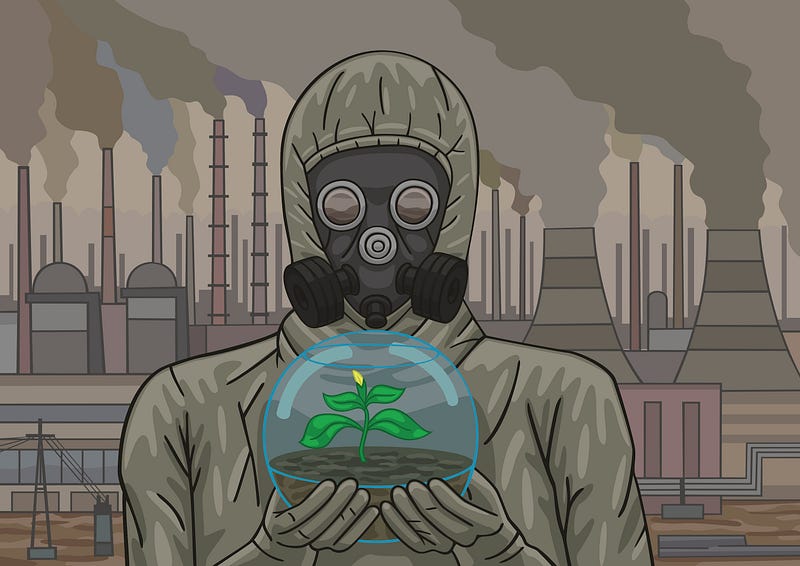
2019 was the year Australians confronted the fact that a healthy environment is more than just a pretty waterfall in a national park; a nice extra we can do without. We do not survive without air to breathe, water to drink, soil to grow food and weather we can cope with.
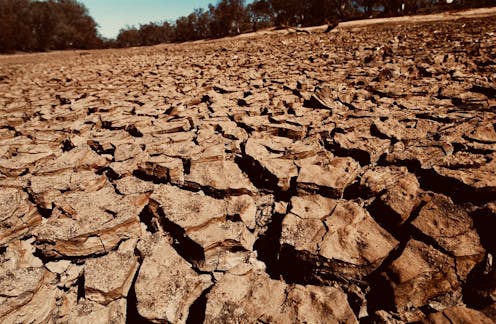
A major scorecard gives the health of Australia's environment less ...
We need immediate action to put Australia's environment on the road to recovery.
Every year, we collate a vast number of measurements on the state of our environment: weather, oceans, fire, water, soils, vegetation, population pressure, and biodiversity. The data is collected in many different ways: by satellites, field stations, surveys and so on. 
We process this data into several indicators of environmental health at both national and regional levels.
The report for 2019, released today, makes for grim reading. It reveals the worst environmental conditions in many decades, perhaps centuries, and confirms the devastating damage global warming and mismanagement are wreaking on our natural resources.
Immediate action is needed to put Australia’s environment on a course to recovery.

30 December, 2018

Climate Change and the Savage Human Future

Long after the last print copy of the King James Bible has disintegrated and the Venus de Milo has gone to powder, the glory of our civilization will survive in misshapen, neon-flecked rocks called plastiglomerate: compounds of sand, shells and molten plastic, forged when discarded wrappers and bottle caps burn in beach campfires. Additional clues about the way we lived will be found in the ubiquity of cesium-137, the synthetic isotope produced by every nuclear detonation, and in the glacial ice (should any glaciers remain) that will register a spike of atmospheric carbon dioxide beginning in the Industrial Revolution. Future anthropologists might not be able to learn everything there is to know about our culture from these geological markers, but they will be a good start.

Image: strelss/iStock/Getty Images Plus
In the beginning, humans tended to view nature as a mortal enemy with wariness, dread and aggression. The closer we were to the other animals, the more threatened we were by their proximity geographical and behavioral. “Wilderness”: from the Old English -ness + wild + deor, “the place of wild beasts.” In the Old and New Testaments, “the wilderness” is a godless, hostile domain, the anti-Eden; Samuel Johnson defined it as “a tract of solitude and savageness”; William Bradford, a founder of Plymouth Colony, reacted to the untrammeled New World with horror, calling it “hideous & desolate … full of wild beasts & wild men.”


Read The New York Times Magazine story by Nathaniel Rich - “Climate Change and the Savage Human Future.”

17 December, 2017

Controversial Abbott-era climate fund will survive climate review: Josh Frydenberg

A controversial Abbott-era fund that uses public money to pay companies to reduce their pollution will survive the federal government's review of Australia's climate policies.
Environment and Energy Minister, Josh Frydenberg.

In an interview with Fairfax Media, Environment and Energy Minister Josh Frydenberg also expressed confidence that future generations would avoid disastrous predicted impacts of climate change, saying technology would drive the transition to decarbonised economies and "get us where we need to be". 


Read Nicole Hasham’s story in today’s Melbourne Age - “Controversial Abbott-era climate fund will survive climate review: Josh Frydenberg.”

03 September, 2017

Tropical Storm Harvey: Fire ants join together to make living raft in floodwaters — and it could happen here

If you needed another reason not to enter floodwaters, this is a good one.

Fire ants survive flooding by combining and
linking together to become a floating life raft.
Fire ants inundated by Tropical Storm Harvey's floodwaters in Texas have latched together to form a living, floating life raft to survive.

And, according to one expert, it could happen in Australia too.

How do they float?

All insects have a water-repellent waxy layer over the surface of their exoskeleton, as well as water-repellent hairs on the surface of their body, said Jonathan Majer, adjunct professor at Curtin University and the University of Western Australia.

Professor Majer, who has studied ants for almost 50 years, said these hairs "trap" air on the surface of the insect, allowing them to float.


29 September, 2015

Surviving and thriving through climate change demands more than changing light globes


A

ny useful response to climate change is more sweeping and demanding than simply changing your light globes.

According to Wisdom Pills we need a world view if we are to become better world citizens and so, Beneath the Wisteria believes have some real and useful impact on climate change abatement.

In its story - “5 World Views That Need to Be Scrapped For Us To Survive” – Wisdom Pills says: “The idea of a world view has two inherent meanings.

“First, it is a personal view of how the world is or should be, and secondly, it is a view that is shared or consented to by others, not just ourselves. So a world view is both how we personally see the world, but at the same time it is something that is based on consensual reality – there is a social dimension to it. “In fact, most of what we call ‘world views’ are not created by any one person. Rather, a person chooses to adopt a world view that was already supported by others in society. Perhaps this is because he or she feels emotionally inclined to do so, or since it fits comfortably with his/her own existing set of beliefs. Allegiance and support for one political party or ideology is a clear example of this, since the individual chooses a political view that fits in with his own ‘moral’ beliefs and values.”

02 March, 2015

Info-graphic points to climate change survival


One Million Women has produced a graphic that provides some understanding about which countries are best placed to survive climate change.

It notes, however, the irony of how those countries most likely to survive the changing climate are the large CO2 emitting countries with over-consumption problems.

“However,” it says, “remember when examining this fine info graphic that each country is ranked only in comparison to other countries that may be doing less, but this does not mean that better ranked countries are necessarily shining beacons of light in the climate change fight.”

05 May, 2014

The complex conversation about climate change adaptation


The conversation surrounding adaptation to climate change is a complex, almost, as the difficulty itself.

Some exploring adaptation processes are often accused of playing into the hands of the “business as usual” proponents.


The adaptation advocates reply, however, that what they are doing is not supporting “what is”, rather working on preparing us for “what will be”.

An example of that was discussed in the Los Angeles Times in a story headed” “Scientists race to develop farm animals to survive climate change”.

The scientists have been seeking out birds, poultry, able to survive and reproduce in a hotter climate.

The work, apparently genuine in intent, has been claimed by some as nothing more than allowing for the continuation of industrial and mechanized for system.