Showing posts with label policies. Show all posts

16 January, 2020

Might the bushfire crisis be the turning point on climate politics Australian needs?

Countries have long periods in which policies change little, and only by increments.
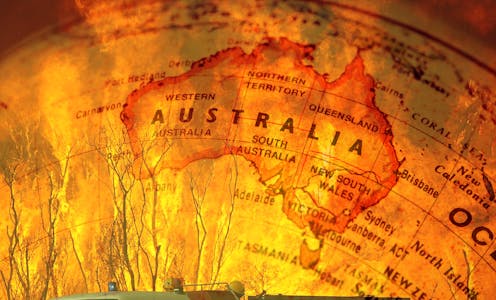
Image result for Might the bushfire crisis be the turning point on climate politics Australian needs?
The bushfire crisis is big enough to change the
government’s emissions policy, but it swill need more.
Occasionally there are turning points, when previously intractable policy problems are suddenly resolved, recasting policy for the long term.
Many are asking whether this summer’s environmental catastrophe might be such a turning point – a Port Arthur moment or Australia’s Sandy Hook, Chernobyl or Pearl Harbour.
The short answer is: it is too soon to tell, but the early signals from the federal government are not good.
Crises can provide a window for big policy changes. In such times, the normal political constraints are relaxed, although not for long.

Read the story from The Conversation by the Chief Executive Officer with the Grattan Institute, John Daley, and a Senior Associate with the Grattan Institute, Emily Millane -  “Might the bushfire crisis be the turning point on climate politics Australian needs?” 

20 February, 2018

Frydenberg, IPA trolling renewables on ABC’s Q&A - again

The Coalition and the powerful right-wing lobby groups that help direct their policies show no signs of backing off in their campaign against renewables – or any other technology, for that matter, that might usher in a cleaner, cheaper and more reliable grid.
Monday night’s Q&A panelists, including federal energy
 minister Josh Frydenberg and, second from right, Simon Breheny,
the director of policy at the Institute of Public Affairs.
Craig Kelly has distinguished himself on EVs, a sweaty George Christensen on Facebook rails against anything Green or anti-coal, and Matt Canavan continues to wage a war on behalf of the coal industry.

On Monday, on ABC’s Q&A program, they were at it again: energy minister Josh Frydenberg and the Institute of Public Affairs teaming up to demonise renewables, and to propose some hopelessly unrealistic solutions to Australia’s energy trilemma.

It cannot go without comment.

Read the RenewEconomy story by Giles Parkinson - “Frydenberg, IPA trolling renewables on ABC’s Q&A - again.”

01 January, 2018

‘We didn't know exactly what we needed to do': The climate change battle in 1994

The Keating government wrestled with the politics and policies of climate change, not least in terms of how Australia might retain its leverage in international forums where its reputation was slipping through 1994.
A Queensland farmer and his dog stand alongside a dried up dam in November 1994.  
It also dawned on Cabinet that the cost for Australia to meet climate change commitments was far higher than those faced by European and North American nations.

Cabinet was advised in September that the commitments in the 1992 United Nations Framework Convention on Climate Change were already proving insufficient to stabilise atmospheric greenhouse gas concentrations "at a level that would prevent dangerous human interference with the climate system".

Further, international pressure was mounting to strengthen those commitments. Yet even within the formula negotiated to recognise its status as an "emissions-intensive" economy, Australia was "only likely to achieve 46 to 53 percent" of its target by 2000.

Read Damien Murphy’s story in today’s Melbourne Age - “‘We didn't know exactly what we needed to do': The climate change battle in 1994.”

21 December, 2017

Turnbull has politicked himself into irrelevance on energy and climate in 2018

As we approach the end of the year, it’s useful to look back and forward. Now is an auspicious time, as two major energy-related reports have been released this week: the federal government’s review of their climate change policies, and a discussion paper from the Australian Energy Market Operator (AEMO) on future energy paths.


The difference between the two is striking. The AEMO paper is practical, direct and realistic. On the other hand, the climate policy review relies essentially on Australia buying lots of international carbon permits to meet our Paris target (and, implicitly, on state governments taking up the challenge their Canberra colleagues have largely abanondoned).

It’s amusing to read a document that plays with numbers in such creative ways. But it is a fairy story, and it’s no way to drive national climate policy.


Read the piece on The Conversation by a Senior Industry Fellow at RMIT -  University, Alan Pears - “Turnbull has politicked himself into irrelevance on energy and climate in 2018.”

30 November, 2017

Smothering charities: the plot to keep critics quiet next election

Can't stand politics?

Organisations like the Australian Conservation Foundation
would be allowed tax deductibility only if they cleaned up oil spills.
The good news is that when the election campaign proper begins, they'll ease off on the abuse and put forward policies. They'll have to.

And those policies will be scrutinised by just about every interest group there is. That's the way it works. They'll rate them, produce scorecards according to how they'll affect things such as education, health, defence, foreign aid and the environment, assessing what's being offered.

Unless the Coalition stops them. And it's minded to.


Read Peter Martin’s comment in today’s Melbourne Age - “Smothering charities: the plot to keep critics quiet next election.”

07 November, 2017

Former Clean Energy finance chief Oliver Yates slams Turnbull government's 'immoral' climate policies

A Liberal Party veteran and former head of the federal government's green bank has unleashed on his party's "immoral" climate change policies, saying they "knowingly and willingly inflict damage on others”.
Liberal party veteran and former head of the federal
government's green bank, Oliver Yates, has declared
the government's climate policies to be "immoral".
Ex-Macquarie banker Oliver Yates, chief executive of the government's $10 billion Clean Energy Finance Corporation until April this year, said far-right members had hijacked the party and that "reform from the outside" may be required – in the form of a rival party that better reflects core Liberal values.

His comments follow a stunt by Victorian Liberal senator Jane Hume at a party fundraiser last Thursday night, in which she presented a mock lump of brown coal to Treasurer Scott Morrison. Mr Yates stood up and loudly objected to the stunt before angrily leaving the $10,000-a-table event at Melbourne venue Glasshouse.

Mr Yates told Fairfax Media that climate change was "not a laughing matter" and the stunt was "flagrantly immoral".


07 October, 2017

Our farmers must rally for climate change action

With no clear action on climate or energy policies, Australian farmers are scratching their heads and wondering how they can drive change.  
Verity Morgan-Schmidt is CEO of Farmers for Climate Action.
The Federal Government is failing to help. They are talking about extending the life of old, polluting coal-fired power stations; more subsidies and taxpayer assistance to the fossil fuel industry; and pressuring states to frack more gas – an industry that directly competes for prime agricultural land. 

They can’t be thinking of our interests. Farmers are the ones already impacted by climate change – look no further than heatwaves and severe rain shortages in parts of the country. We are also dealing with soaring energy costs. 


Read the opinion from The Advocate - “Our farmers must rally for climate change action.”

02 November, 2016

Australia failing climate targets as Paris deal comes into force

Malcolm Turnbull delivers a
speech at Heads of States'
Statements Ceremony of the
COP21 World Climate Change
Conference 2015 in Paris.
A new assessment of the Coalition government’s climate change policies says Australia will fall well short of its “inadequate” Paris climate targets, and will likely increase emissions by nearly as much as it has promised to cut them.

The assessment from Climate Action Tracker says that Australia’s target falls well short of the effort needed to limit warming to below 2°C, let alone the stronger aspirational target of 1.5°C that was included in the Paris Agreement.

“If most other countries followed the Australia approach, global warming would exceed  3°C to 4°C,” the report says.

The Climate Action Tracker report is not the first to highlight Australia’s pathetically inadequate climate policies, nor will it be the last. A slew of reports is expected in coming days and weeks as the Paris Agreement comes into force from Friday and new climate talks begin in Marrakesh in Morocco on Monday.

02 October, 2012

Diamond warns about population difficulties, and other things


"Collapse" by
Jared Diamond. 
Writing on the “Social Action Australia” website, author Jared Diamond pointed to dynamics he called “astonishing, ridiculously contradictory set of public policies”.

The Australian government has a range of policies, Diamond explains, that promote conservation of diminishing freshwater, soil fertility and other declining natural resources, while the Opposition, in what is an antithetical dynamic, pushes for rapid population growth through increased birth rate and immigration.

Jared’s observations about Australia are in a story headed: “Jared Diamond on Australia’s Sustainable Population”.