Showing posts with label government. Show all posts

04 February, 2020

A climate of co-operation is needed on emissions cuts.

There is no single solution to resolve the profound and conflicting pressures posed by climate change and the nation’s energy needs. There are many potential solutions, but they require investment, collaboration and genuine government support.
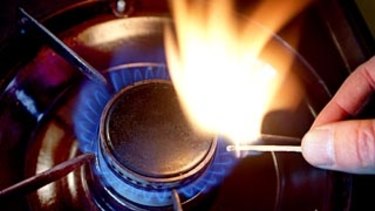
 The Morrison government is demanding Victoria open up more sources of gas before a deal is done.
The Morrison government is demanding Victoria
open up more sources of gas before a deal is done.
Solar, wind, hydro and other renewable energy sources backed by massive battery storage systems will be the future. Coal-fired power stations exist for now, and still provide the bulk of Victoria's power needs, but the infrastructure is ageing and and increasingly unreliable.
While the Morrison government still supports coal, commercial operators and their financiers are no longer prepared to invest in this area. Still, Australia needs to ensure its short-term residential and commercial energy requirements are met as it transitions to a new era in which renewable sources dominate.
To that end, the federal government has horse-traded with NSW, with the state agreeing to supply more gas and secure coal supply to one of its major power stations in return for nearly $1 billion to help upgrade its energy grid and invest in a grab bag of emission-reduction initiatives.

Read the Editorial from The Age - “A climate of co-operation is needed on emissions cuts.

15 January, 2020

The government has been forced to talk about climate change, so it’s taking a subtle – and sinister – approach

The impact of climate change over the past five months across Australia has caused climate change deniers within the media and governments to quickly update their tactics to a new, sinister position.

Protesters hold up placards as activists rally for climate action
Protesters in Sydney hold up placards calling for climate
action in response to the bushfires crisis. Scott Morrison
 has adopted the new go-to response of climate change
 deniers – the need to adapt and ‘improve resilience’. 
Gone are the plans to just keep lying for the next decade that activists such as Greta Thunberg are predicting that the world is going to end in 2030, or to continue to flub and fudge the science – no real warming since 1998, 2005, 2010, 2016! Solar activity! Volcanoes! Greenland!

Now of course the feculent minds of columnists and government MPs will continue to spout these lies – when has reality ever been an impediment to their effluent-driven utterances? But the months of fires across southern Queensland, northern New South Wales, the horrors of Gippsland, the NSW south coast and Kangaroo Island over Christmas and new year, the smoke haze across Sydney and Canberra and now Melbourne, has shifted forwards their timetable of obfuscation.


10 January, 2020

Morrison is now counting the cost of climate denialism

In May last year, in the run-up to the election, the government refused to countenance the economic cost of climate change. Instead, it was parading highly contentious economic modelling by Brian Fisher claiming all manner of financial doom should Labor win the election and enact its emissions reduction policies.

Fisher did not address the economic effects of not acting, and the government did not consider that to be a shortcoming when it was pointed out.

Yet, for more than a decade now we have been warned that the longer you wait to mitigate climate change, the greater the cost.


Read the story from The Financial Review by Phil Coorey - “Morrison is now counting the cost of climate denialism.”

30 December, 2019

Australia’s climate stance is inflicting criminal damage on humanity

The top priority of government is security of the people. Yet on the greatest threat of all, most governments are failing abysmally.
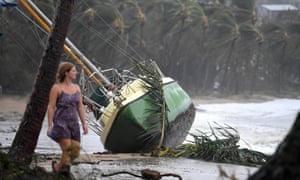
The aftermath of Cyclone Debbie
Australia is the most exposed continent to climate change,
but remains in a state of climate denial and delay.
As the global influence of western democracies wanes with the ascendancy of China, India and other emerging countries, the resulting power struggle is diverting attention from the great issues the world faces, to their symptoms.
The neoliberal market economy, with its unregulated consumption and rapacious short-term outlook, is destroying modern civilisation. The warning signs are obvious, not least burgeoning high-consuming populations, massive biodiversity loss and multiple resource scarcities. Yet rather than reform an unsustainable system, political leaders scramble to prop it up and compound the problem. The result is Brexit, Trump’s Mexican wall, escalating Middle East tension, the US-China trade standoff, a global arms and space race, Amazon deforestation and much more.

Read the story from The Guardian by Ian Dunlop and David Spratt - “Australia’s climate stance is inflicting criminal damage on humanity.”

24 December, 2019

Home affairs warned Australian government of growing climate disaster risk after May election

The government was warned by the Department of Home Affairs after the May election that Australia faced more frequent and severe heatwaves and bushfires, and that livelihoods would be affected without effective action on climate change.
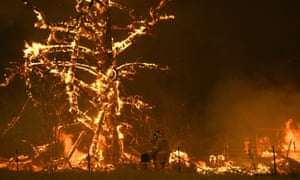
A tree burns during the New South Wales bushfires
Home affairs warned Australian government of “more
frequent and severe heatwaves, bushfires, floods, and cyclones”.
The department’s incoming government brief to the home affairs minister, Peter Dutton, warned of “disasters” exacerbated by climate change.
“The physical effects of climate change, population growth, and urbanisation mean that without effective action more Australians’ livelihoods will be impacted by disasters into the future and the cost of those disasters will continue to grow,” the brief stated.

07 December, 2019

Leading scientists condemn political inaction on climate change as Australia 'literally burns’

Leading scientists have expressed concern about the lack of focus on the climate crisis as bushfires rage across New South Wales and Queensland, saying it should be a “wake-up call” for the government.
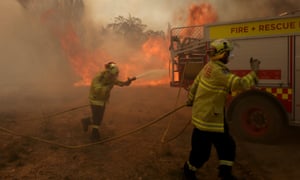
Firefighters battle a bushfire near Braidwood, New South Wales, on Friday.
Firefighters battle a bushfire near Braidwood,
 New South Wales, on Friday. Scientists are
perplexed that as bushfires have intensified on
 Australia’s east coast, political commentary on
climate change has ‘very much died down’.
Climate experts who spoke to Guardian Australia said they were “bewildered” the emergency had grabbed little attention during the final parliamentary sitting week for the year, which was instead taken up by the repeal of medevac laws, a restructure of the public service, and energy minister Angus Taylor’s run-in with the American author Naomi Wolf.
Escalating conditions on Thursday and Friday led to dozens of out-of-control bushfires, including in the NSW’s Hawkesbury region, where a fire at Gospers Mountain merged with two other blazes burning in the lower Hunter on Friday.

18 November, 2019

Sanders’s Climate Ambitions Thrill Supporters. Experts Aren’t Impressed

WASHINGTON — Senator Bernie Sanders’s $16 trillion vision for arresting global warming would put the government in charge of the power sector and promise that, by 2030, the country’s electricity and transportation systems would run entirely on wind, solar, hydropower or geothermal energy, with the fossil fuel industry footing much of the bill much as Mexico was to pay for the border wall.
Climate scientists and energy economists say the plan is technically impractical, politically unfeasible, and possibly ineffective.
Yet the criticism does not appear to bother many of the young voters who will have an important role in selecting a Democratic presidential candidate, and who overwhelmingly place climate change at the top of their priority lists, according to polls.
“He has some really great ideas that may not be passed, but it’s definitely stuff that needs to be brought up,” said Chandler Condon, a 25-year-old supporter who traveled from Denver to Des Moines last week for a climate rally with Mr. Sanders.

Read the story from The New York Times by Lisa Friedman - “Sanders’s Climate Ambitions Thrill Supporters. Experts Aren’t Impressed.”

02 November, 2019

Fracking banned in UK as government makes major U-turn

The government has banned fracking with immediate effect in a watershed moment for environmentalists and community activists.
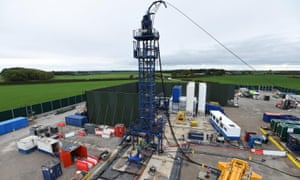
Fracking at Cuadrilla’s site in Lancashire was out on hold after a major earth tremor.
Fracking at Cuadrilla’s site in Lancashire
was out on hold after a major earth tremor
Ministers also warned shale gas companies it would not support future fracking projects, in a crushing blow to companies that had been hoping to capitalise on one of the new frontiers of growth in the fossil fuel industry.
The decision draws a line under years of bitter opposition to the controversial extraction process in a major victory for green groups and local communities.
The decision was taken after a new scientific study warned it was not possible to rule out “unacceptable” consequences for those living near fracking sites.
Read the story from The Guardian by Jillian Ambrose - “Fracking banned in UK as government makes major U-turn."


16 August, 2019

Government’s shift to relax shale gas fracking safeguards condemned

Environmental groups have voiced fears that the government is preparing to row back on fracking regulations after officials said they were considering reviewing earthquake safeguard rules.
Protesters near Cuadrilla’s Preston New Road site,
Lancashire, as the firm began fracking last October.
The limits affecting shale gas fracking are strongly contested by the industry because they bring an immediate halt to fracking if even a minor tremor of 0.5 on the Richter scale is recorded.

Green campaigners raised concerns on Thursday after officials at the Department for Business, Energy and Industrial Strategy said they would consider opening a review of the existing fracking rules, following the outcome of a study by the Oil and Gas Authority, which is looking at data from Cuadrilla’s fracking attempts.

The department announced the shift in a statement about UK shale gas on the same day that the fracking firm Cuadrilla resumed drilling in Lancashire. Cuadrilla had been forced to abandon its first well after repeatedly breaching the earthquake regulations.


Read the story from The Guardian by Energy Correspondent, Jillian Ambrose - ”Government’s shift to relax shale gas fracking safeguards condemned.”

10 July, 2019

Jacinda Ardern's climate change message to local government: 'You're doing your bit, we must do ours’

The Government must do its part in dealing with the challenge of climate change, the Prime Minister told a local government conference in Wellington yesterday.
Image result for jacinda ardern image
Jacinda Ardern - "You're doing your bit, we do ours".
"Many of you have your eye firmly on the challenges and impacts we're all facing as a result of climate change," Jacinda Ardern said. 

"Some of you have had to face those challenges in very recent times. While you're doing your bit, we must do ours.”


Ms Ardern spoke about the Zero Carbon Bill that sets out a 10 per cent reduction target of biological methane emissions by 2030, and aims for a 24-47 per cent reduction by 2050. 


16 June, 2019

India Heat Wave, Soaring Up to 123 Degrees, Has Killed at Least 36

NEW DELHI — One of India’s longest and most intense heat waves in decades, with temperatures reaching 123 degrees, has claimed at least 36 lives since it began in May, and the government has warned that the suffering might continue as the arrival of monsoon rains has been delayed.
Women fetching water from an opening in a
dried-up lake in Chennai, India, on Tuesday.
India’s heat waves have grown particularly intense in the past decade, as climate change has intensified around the world, killing thousands of people and affecting an increasing number of states. This year, the extreme temperatures have struck large parts of northern and central India, with Rajasthan, Madhya Pradesh, Uttar Pradesh and Maharashtra among the worst-hit states.
Anup Kumar Srivastava, an expert at India’s National Disaster Management Authority, said the number of Indian states hit by heat waves had grown to 19 in 2018 from nine in 2015, and was expected to reach 23 this year.

Read the story from The New York Times by Mujib Marshall - “India Heat Wave, Soaring Up to 123 Degrees, Has Killed at Least 36.”

10 June, 2019

Government 'funding fossil fuel-burning plants abroad’

The government has been taken to task by its own MPs for sending billions of pounds overseas to help build power plants that burn fossil fuels while claiming a climate victory on home soil.
Climate activist Greta Thunberg
Climate activist Greta Thunberg said the UK’s ‘active,
current support of new exploitation of fossil fuels’ was ‘absurd’.
The environmental audit committee said the UK is sabotaging its climate credentials by paying out “unacceptably high” fossil fuel subsidies to developing nations, while claiming to lead world in tackling the climate crisis. It called on ministers to stop by 2021 using taxpayer funds to lock poorer nations into a fossil fuel future.
The rebuke is the clearest cross-party criticism of the UK’s fossil fuel subsidies and comes after mounting international criticism in recent months.
Environmental activist Greta Thunberg said in April the UK’s “active, current support of new exploitation of fossil fuels” was “absurd”. The audit committee report found that UK Export Finance (UKEF), which provides lines of credit and insurance to help companies win business overseas, spent £2.6bn in recent years to support the UK’s global energy exports, of which £2.5bn was handed to fossil fuel projects. Only 4% of its funding, or £104m, was used to support renewable energy projects.

Read the story from The Guardian by Jillian Ambrose - “Government 'funding fossil fuel-burning plants abroad’."

08 June, 2019

Australia’s standing in Pacific has plummeted because of our climate change failure.

Scott Morrison flew to the Solomon Islands last weekend to “show our Pacific step-up in action” but this policy will fail if his government doesn’t take meaningful action on climate change. A successful step-up must include stopping our own pollution, defending the sovereignty of our friends in the Pacific and offering a safety net to those who may need it.
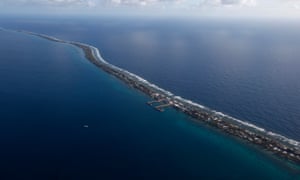
Funafuti, the main island of Tuvalu
‘It is only recently that we have realised our political
de-prioritisation of the Pacific islands and their needs
has advanced China’s entrance to our region.’
Over the past five years Australia’s standing in the Pacific has declined dramatically because of an unwillingness to take strong action on climate change. It’s not as if the Pacific hasn’t been clear. From female fishers to the Fijian prime minister, to remote communities in the Solomon Islands, climate change is a top-order issue. It’s about the very survival of people, nations and cultures. If action isn’t taken, in 40 years there are people in Pacific island states who may have nowhere to go.

Read the opinion piece on The Guardian by Dermot O’Gorman - “Australia’s standing in Pacific has plummeted because of our climate change failure." 

26 May, 2019

Josh Frydenberg: low-emissions future is inevitable and a huge opportunity

Josh Frydenberg says Australia needs to roll out new infrastructure in the coming term of government to support renewable energy zones, and has declared that the “inevitable” transition to low-emissions sources creates an opportunity for the country.

Josh Frydenberg: ‘I don’t see a strong economy as
 mutually exclusive from emissions reduction.’ 
In his first wide-ranging interview since holding his Victorian seat last weekend, where he was subjected to a concerted campaign from the Greens and the climate-focused independent Oliver Yates, Frydenberg told Guardian Australia the Coalition would implement the $3.5bn climate policy it took to the election rather than pursue a reboot.

But echoing the Liberal senator Arthur Sinodinos, who has urged colleagues to use a changing energy market to bolster the Coalition’s environmental credentials and be positive about the increasing share of renewable energy, Frydenberg said emissions reduction and a strong economy were not mutually exclusive propositions.


Read the story from The Guardian by Katharine Murphy - “Josh Frydenberg: low-emissions future is inevitable and a huge opportunity.”

21 May, 2019

Arthur Sinodinos urges Liberals to use renewables to boost environmental credentials

Arthur Sinodinos has warned that the Liberal party should not stand in the way of renewables, suggesting the government should use a changing energy market to bolster its environmental credentials.
Arthur Sinodinos says the Liberals should not make it
seem like voters have to choose between the environment
and the economy.
Anticipating a fresh internal battle over energy policy after the Liberal-National party’s success in Queensland, the Liberal senator suggested the government should recast itself as the best manager of the grid and “take advantage” of the falling cost of renewables to ensure “greater reliability, lower cost and lower greenhouse gas footprint”.

Despite the Coalition returning with a narrow majority in the 46th parliament, former prime minister Tony Abbott lost the blue-ribbon seat of Warringah and there were swings against the Liberal party in inner-city Melbourne and Sydney seats.


Read the story from The Guardian by Paul Karp - “Arthur Sinodinos urges Liberals to use renewables to boost environmental credentials.”

23 April, 2019

Is the Australian Public Service fit-for-purpose to handle existential climate risk?

The first duty of a government is to “protect the people”, their safety and well-being. Nowhere is this duty more important than in addressing climate change, which now constitutes a near-term existential threat to human civilisation. It is an open, and pressing, question whether the Australian Public Service (APS), and particularly the intelligence services, currently have the capacity to properly consider and assess the climate threat to the people of Australia, and to offer sound advice on action to minimise that threat.
Credit: One World House
 Recently, UN Secretary General António Guterres noted that “We face a direct existential threat” from climate change as “we career towards the edge of the abyss”. A recent research paper is typical of concerns which have been expressed by scientists for years, yet ignored by incumbent leaders:

Only a drastic, economy-wide makeover within the next decade, consistent with limiting warming to 1.5°C, would avoid the transition of the Earth System to the Pliocene-like conditions that prevailed 3-3.3 million years ago, when temperatures were ~3°C and sea levels 25 metres higher. Unmitigated scenarios of greenhouse gas emissions produce climates like those of the Eocene, which suggests that we are effectively rewinding the climate clock to approximately 50 million years ago, reversing a multimillion-year cooling trend in less than two centuries.


Read the Climate Code Red by David Spratt and Ian Dunlop - “Is the Australian Public Service fit-for-purpose to handle existential climate risk?

11 March, 2019

Pro-coal Nationals hold electorates most at risk from climate change

Five federal seats where climate change is set to wreak the worst damage are held by Nationals MPs whose party colleagues want the government to finance new carbon-emitting coal plants, new analysis has revealed.
The federal electorates most vulnerable to climate
change are in regional areas far from the coast, analysis
 has found.
Research by the Australian National University, commissioned by the Australian Conservation Foundation, has determined how climate change is likely to affect 4000 locations around Australia including each federal electorate. It shows that winter as Australians know it will virtually disappear by 2050 unless greenhouse gas emissions are radically curbed.

The Morrison government has mounted a campaign in recent weeks to reset voter perceptions of its climate action record ahead of the May federal election. The push includes a surprise backflip on Friday by former prime minister Tony Abbott, who said he no longer believes Australia should quit the Paris climate agreement.


Read the story from The Age by Nicole Hasham - “Pro-coal Nationals hold electorates most at risk from climate change.”

07 March, 2019

Government throws its weight behind offshore wind power expansion

The government will throw its weight behind an expansion in the use of offshore wind power in the hope the renewable energy source will provide a third of the UK’s electricity by 2030.
The government also hopes the deal will cement
Britain’s leading position in the technology.
In a deal between the government and the offshore wind sector, industry players have agreed to invest £250m over the next 11 years in exchange for participation in £557m of state subsidies for renewable energy.

The Department for Business, Energy and Industrial Strategy (BEIS) said the deal could result in the number of jobs in offshore wind tripling to 27,000 by 2030, boosting the economies of coastal communities near major projects.


Read the story from The Guardian by Rob Davies and agencies - “Government throws its weight behind offshore wind power expansion.”

26 February, 2019

The government thinks we’re idiots and is not serious about reducing emissions.

After Scott Morrison’s announcement of his new climate change policy we know two things – the government still thinks we’re idiots, and they are still not serious about reducing emissions.
We don't need this current putrid policy from the government.
I guess we should be grateful that at least the government now realises it needs to look as if it gives a damn about reducing emissions, because for a while they couldn’t even be bothered to do that.

But stuff it. I’m done with giving out prizes for pretence. I’m done with being satisfied with something not even worthy of being called a fourth-best policy. I’m done with the lies.

Do not for one second think this is a policy designed to reduce emissions. It is a political Band-Aid while the actual wound to our economy from its greenhouse gas dependency is open and festering.

It is a fraud, and not even a new one.


Read the story from The Guardian by Greg Jericho - “The government thinks we’re idiots and is not serious about reducing emissions.

25 February, 2019

Scott Morrison pledges $56m for Tasmanian interconnector in climate policy reboot

Scott Morrison has promised to help accelerate the construction of a new interconnector between Tasmania and the mainland, and has signalled the government will back the Snowy 2.0 expansion as part of the Coalition’s climate policy reboot.
Scott Morrison confirmed the Coalition would spend
$56m on a new 1,200MW interconnector for Tasmania. 
The prime minister confirmed on Monday the government would spend $56m in an effort to progress a new 1,200MW interconnector as part of Tasmania’s “battery of the nation” project and he also sent a strong hint he will back Malcolm Turnbull’s pet project, adding 2,000MW of new generation capacity at Snowy Hydro.

The Tasmanian project is a plan to double the state’s renewable energy capacity by developing pumped hydro energy storage, building windfarms and upgrading existing generation assets. Fourteen pumped hydro sites have been earmarked across the state with a combined potential generation capacity of up to 4,800 megawatts.


Read the story from The Guardian by Katharine Murphy - “Scott Morrison pledges $56m for Tasmanian interconnector in climate policy reboot.”