Showing posts with label support. Show all posts

04 February, 2020

A climate of co-operation is needed on emissions cuts.

There is no single solution to resolve the profound and conflicting pressures posed by climate change and the nation’s energy needs. There are many potential solutions, but they require investment, collaboration and genuine government support.
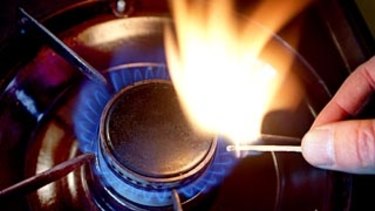
 The Morrison government is demanding Victoria open up more sources of gas before a deal is done.
The Morrison government is demanding Victoria
open up more sources of gas before a deal is done.
Solar, wind, hydro and other renewable energy sources backed by massive battery storage systems will be the future. Coal-fired power stations exist for now, and still provide the bulk of Victoria's power needs, but the infrastructure is ageing and and increasingly unreliable.
While the Morrison government still supports coal, commercial operators and their financiers are no longer prepared to invest in this area. Still, Australia needs to ensure its short-term residential and commercial energy requirements are met as it transitions to a new era in which renewable sources dominate.
To that end, the federal government has horse-traded with NSW, with the state agreeing to supply more gas and secure coal supply to one of its major power stations in return for nearly $1 billion to help upgrade its energy grid and invest in a grab bag of emission-reduction initiatives.

Read the Editorial from The Age - “A climate of co-operation is needed on emissions cuts.

23 April, 2019

Greta Thunberg backs climate general strike to force leaders to act.

Greta Thunberg, the 16-year-old Swedish environmental activist, has given her support for a general strike for the climate, saying the student movement she inspired needs more support from older generations to ensure politicians keep their promises under the Paris agreement.
Greta Thunberg (second from right), with others on the
 panel, the director of the documentary, 'Age of Stupid',
Fiona Armstrong (left), Anna Taylor from Britain's Student
Climate Movement, and Caroline Lucas, an MP from
Britain's Green Party.
Speaking at a public event in London as Extinction Rebellion protests continued in the capital, the initiator of the school strike for climate movement was typically frank about the scale of the problem the world faces and the impact her campaign has made. “People are slowly becoming more aware, but emissions continue to rise. We can’t focus on small things. Basically, nothing has changed,” she said.

At several points, she stressed the need for the protests to spread. “This is not just young people being sick of politicians. It’s an existential crisis,” Thunberg said. “It is something that will affect the future of our civilisation. It’s not just a movement. It’s a crisis and we must take action accordingly.”


Read the story from The Guardian by Jonathon Watts -  “Greta Thunberg backs climate general strike to force leaders to act.”

06 April, 2019

Parents around the world mobilise behind youth climate strikes

Parents and grandparents around the world are mobilising in support of the youth strikes for climate movement that has swept the globe.
 Eve White and her children join climate protests in Tasmania.
Under the banner Parents for the Future, 34 groups from 16 countries on four continents have issued an open letter. It demands urgent action to fight climate change and prevent temperatures rising by more than 1.5C, beyond which scientists say droughts, floods and heatwaves will get significantly worse.

“What our kids are telling us is what science has been telling us for many years – there is no time left,” the letter says. “We now owe it to them to act.”


Read the story from The Guardian by Damian  Carrington - “Parents around the world mobilise behind youth climate strikes.”

29 January, 2019

New coal power stations are polluting - and expensive

The Federal Government refuses to rule out using its Underwriting New Generation Investments program to support the construction of a new coal fired power station or extend the life of an existing coal power station.

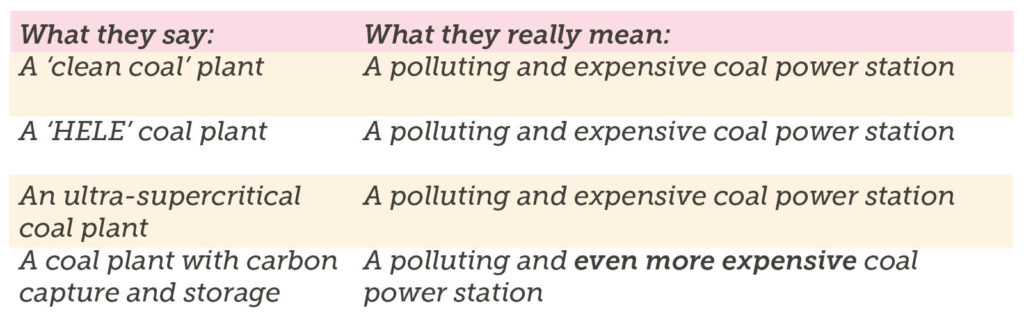
Table showing translations of pro coal jargon

New coal power stations are expensive, take many years to build and are highly polluting. Coal is no match for renewable energy.
To tackle climate change, Australia needs to rapidly phase out the use of coal and gas power and transition to a clean, renewable energy future.

Australia’s fleet of twenty remaining coal power stations is ageing. By 2030, 55% of coal power stations in the National Electricity Market will be over 40 years old. Very old coal power stations become increasingly expensive to operate as maintenance costs increase. These power stations are already breaking down frequently.


Read the story from the Climate Council - “New coal power stations are polluting - and expensive.”

14 July, 2018

Fired up over coal

CANBERRA: Deputy Prime Minister Michael McCormack believes the competition watchdog has given the green light for the Federal Government to support new coal-fired plants.

The Australian Competition and Consumer Commission has recommended the government give financial certainty to new power plants, but didn’t single out any particular technology.

The Nationals leader said the report showed coal was one technology the government should support if it moved to underwrite power generation.
Coal love: Michael McCormack, addressing media
in Verdun, Adelaide, yesterday, has spruiked coal power.
‘‘Coal has to be part of the mix. We’ve got plenty of it, we’re exporting plenty of it, why don’t we use more of it for our domestic power needs?’’ Mr McCormack told Sky News yesterday.

The government insists it is technology neutral and will let the market decide which forms of power generation come into the market.

Mr McCormack said coal created thousands of jobs, while also noting gas and other technologies had to be considered.

The Nationals leader’s support for coal is at odds with Prime Minister Malcolm Turnbull and other senior cabinet ministers who have been careful not to single out any form of power generation.

Resources Minister Matt Canavan, a Queensland Nationals senator, and Coalition backbenchers are continuing to make the case for coal.

Cabinet minister Christopher Pyne said the government could not afford to be ideological.

‘‘The ACCC didn’t suggest the subsidy of a coal-fired power station,’’ Mr Pyne told the Nine Network.

The watchdog’s report claimed power prices could fall by about 25 per cent if all the recommendations were adopted by federal and state governments.

‘‘That can only happen with the government’s policy of not picking winners, but supporting all technological outcomes that put more power into the system,’’ Mr Pyne said.

Finance Minister Mathias Cormann downplayed divisions on energy within the government, insisting the Coalition was united on working to cut power bills.

Labor frontbencher Anthony Albanese said no-one in the business community was interested in new coal-fired power plants.

‘‘This is a fantasy of Tony Abbott and the far right of the Liberal Party,’’ Mr Albanese told the Nine Network.


Story from today’s  Shepparton News - “Fired up over coal.”

04 April, 2018

Tony Abbott-led push on energy policy struggles to find serious numbers to threaten PM

Prime Minister Malcolm Turnbull is spurning a backbench push to ramp up support for coal as critics including Tony Abbott work to force a shift in direction on energy policy but struggle to secure widespread support.
Take my advice, mate: Malcolm Turnbull and local
 Norm Clarke at a community lunch in Brisbane.
The government is confident of sealing an agreement with the states within weeks on its National Energy Guarantee, clearing a key hurdle for national rules that require energy retailers to improve reliability and reduce emissions.

Mr Turnbull’s allies on Tuesday blamed a backbench “ginger group” for trying to undermine the Prime Minister ahead of any agreement, and the government's expected loss of its 30th Newspoll survey next week.

The rebel MPs claim 20 signatures or more for a statement that backs the use of coal for electricity generation and calls for an end to renewable energy subsidies, reviving demands they made in the Coalition party room last year.


08 March, 2018

South Australia’s Iron Duchess mine could be given new life as 90MW pumped hydro plant

The Australian Renewable Energy Agency (ARENA) has today announced its support of a feasibility study to assess the potential to turn a mothballed mine in South Australia into a 90MW pumped hydro energy storage (PHES) plant.
Mothballed mine to become pumped hydro energy storage plant.
On behalf of the Australian Government, ARENA is committing $500,000 to GFG Alliance to begin the first phase of establishing the technical and commercial feasibility of bringing a disused mine site in the South Middleback Ranges, near Whyalla, back to life as a potential PHES power plant.

The $1.7 million project will investigate if the existing mine pit of “Iron Duchess North” could be utilised as a lower reservoir for a PHES plant creating an estimated capacity of 90 MW and 390 MWh of storage.

Pumped hydro works by pumping water uphill between two connected reservoirs when electricity is cheap and abundant, and running water downhill to power turbines when electricity is needed.

01 February, 2018

Big surge in opposition to Adani, new poll reveals.

A growing majority of Australians now oppose the construction of Adani's huge Carmichael coal mine, while environmental groups are ramping up pressure on Bill Shorten and federal Labor to rule out support for the project.
Opponents of the proposed mine dogged candidates
 in last year's Queensland state election.
A poll of 3312 people, conducted by pollsters ReachTEL on January 25 and commissioned by the Stop Adani Alliance, found 65.1 per cent of Australians opposed or strongly opposed Indian mining company Adani building the new coal mine in Queensland.


Read James Massola’s story in today’s  Melbourne Age - “Big surge in opposition to Adani, new poll reveals.

04 January, 2018

Charge of the batteries: Pressure on NSW as Victoria joins line for large-scale battery

Victoria has joined South Australia in lining up a new large-scale battery to support the electricity grid, adding pressure on NSW to follow suit.
A Tesla car charging station is at South Australia's wind
and solar battery plant outside of Jamestown. 
The reliability of the National Electricity Market, a major political and economic issue in 2017, may be tested in coming days as a large heatwave sweeps across southern Australia. The electricity market operator has issued an alert.


Read Peter Hannam’s story in today’s Melbourne Age - “Charge of the batteries: Pressure on NSW as Victoria joins line for large-scale battery.”

24 November, 2017

Josh Frydenberg to come under pressure over renewable energy at ministers' meeting

The Turnbull government has come under pressure at Friday's energy ministers' meeting to modify its energy plan to give greater support for renewable energy and extend its effects beyond 2030.
Minister for Environment and Energy Josh Frydenberg
 and Prime Minister Malcolm Turnbull as they unveiled
the National Energy Guarantee in October.
Shane Rattenbury, the ACT energy minister, sought support from other states to have a vote on key policy principles for the National Energy Guarantee during the COAG gathering in Hobart.

Fairfax Media understands two amendments put forward by Mr Rattenbury and his South Australian counterpart, Tom Koutsantonis, fell one vote short of a majority needed.

The mood inside the meeting was described as "fraught".


Read Peter Hannam’s story in today’s Melbourne Age - “Josh Frydenberg to come under pressure over renewable energy at ministers' meeting.”

22 November, 2017

Josh Frydenberg releases new modelling to back energy guarantee savings claims

The Turnbull government will ramp up pressure on the states and the federal opposition to support its national energy guarantee with new modelling confirming it would generate $120 per year in savings for households from 2020.
Prime Minister Malcolm Turnbull (right) and Energy Minister
Josh Frydenberg are trying to ramp up pressure on the states
to support the national energy guarantee. 
A coalition of 15 business, and environmental groups, as well as the Australian Council of Trade Unions have also backed the call for compromise to deliver the national energy guarantee, citing the need for investment certainty for the electricity sector.

Businesses could realise even larger savings than households under the proposed energy guarantee because of the reduction in wholesale energy prices - which could be 23 percent lower compared to business as usual - according to the new modelling by Frontier Economics that was commissioned by the Energy Security Board. 

The household savings figure of $120 is slightly more than the original figure of $115 suggested when the guarantee was unveiled in October.


Read the story by James Massola in today’s Melbourne Age - “Josh Frydenberg releases new modelling to back energy guarantee savings claims.”

31 October, 2017

The Geoengineering Fallacy

Geoengineering technologies are not yet deployable globally, but support for them is advancing fast, thanks to backing by powerful advocates eager to start experiments. But no silver bullet for climate change exists, and we must not abandon proven methods for the sake of a promise that one will be found.

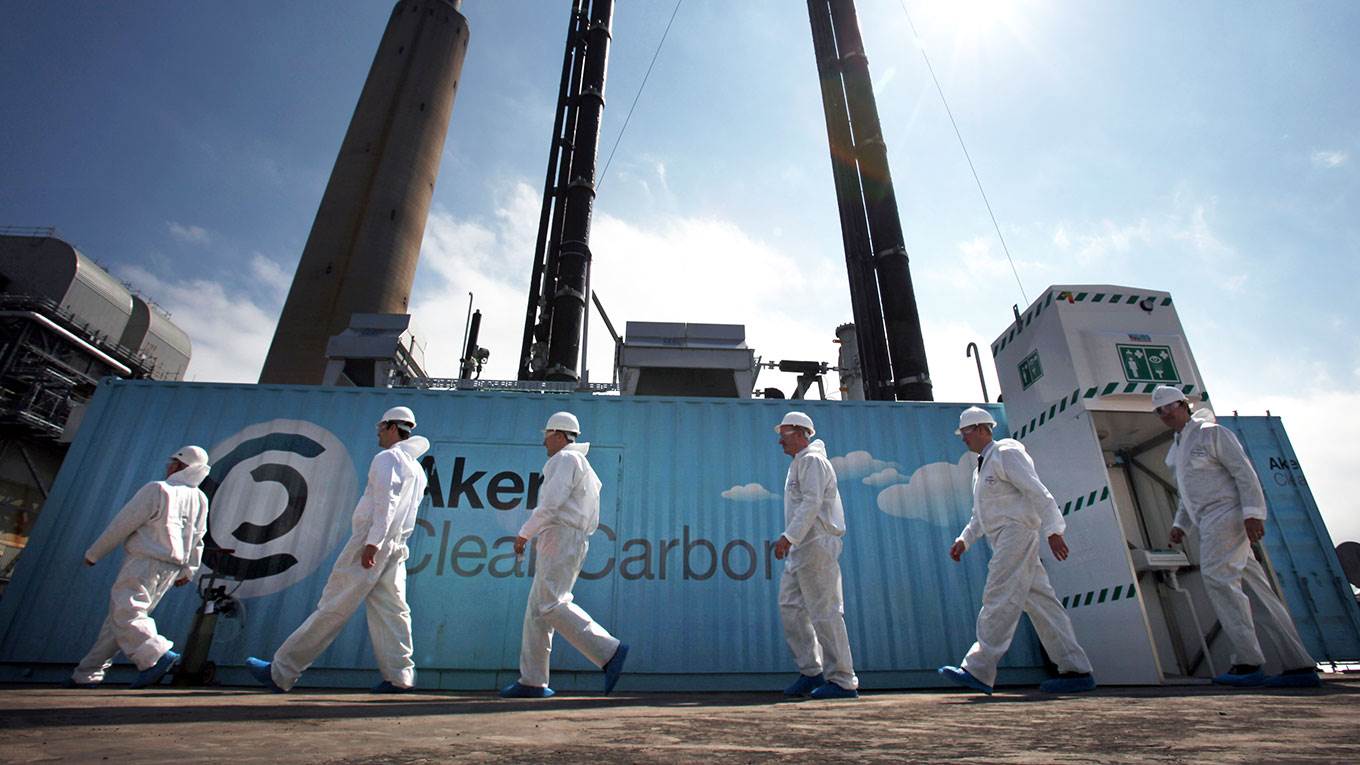
Scientists stand beside a new carbon capture test unit

BERLIN – As the world struggles to rein in emissions of climate-changing gases and limit planetary warming, a new technological silver bullet is gaining supporters. Geoengineering –the large-scale manipulation of the Earth’s natural systems – has been popularized as a means of counteracting the negative effects of climate change.

Proponents of this science feed the illusion that there is a way to engineer an exit from the climate crisis, meet the goals of the 2015 Paris climate agreement, and maintain a consumption-heavy lifestyle.


Read the Project Syndicate story by Barbara Unmüßig - “The Geoengineering Fallacy.”

30 October, 2017

Adani: DFAT facing questions over possible secret requests for foreign cash to fund controversial mine

Key federal crossbenchers have questioned senior government bureaucrats about possible secret approaches to foreign agencies for financial support for Adani's controversial Carmichael coal mine.

Senator Nick Xenophon says "there needs to
 be an open and transparent process" regarding
 the Adani mine.
The questions have been sparked by a Freedom of Information request to the Department of Foreign Affairs and Trade (DFAT) for documents relating to requests for foreign government financing for the controversial multi-billion-dollar mine and rail project.

In response, DFAT asked for more time to respond as the request had "captured several hundred pages of documents”.

Senator Nick Xenophon said he would be demanding clarification from DFAT officials at Senate Estimates today about what representations the Federal Government has made to foreign agencies.


19 October, 2017

Battery storage proponents despondent about future under National Energy Guarantee

Some in the fledgling tech-metals mining and processing industry are dismayed that the Federal Government's new energy policy does not appear to support renewable energy storage such as batteries.
The flow battery, also known as a redox battery, is made
 with vanadium, another tech-metal found in Australia.
Australian Vanadium chief executive Vincent Algar said the National Energy Guarantee (NEG) unfairly pitted the batteries and renewable energy storage sector against fossil fuel electricity producers such as oil and gas.

"With coal and gas considered a dispatchable energy source under the NEG, what incentive will there be to source dispatchable energy from a battery?" he said.

Dispatchable power can be turned on and off and used immediately as needed.

The NEG will mandate that energy retailers need to buy a certain amount of energy from dispatchable sources, which include coal, gas, and pumped hydroelectricity storage.


15 October, 2017

Dumping clean energy target is 'dealbreaker' for Labor's support

Shadow climate change
minister Mark Butler.
The shadow climate change minister Mark Butler says Labor won’t support the Turnbull government’s new energy policy if it dumps the clean energy target recommended by the chief scientist, Alan Finkel.

With the Turnbull government expected to press ahead with its new energy policy this week after consideration by the cabinet and the party room, Butler issued a clear public warning on Sunday that the loss of the clean energy target meant there was no prospect of bipartisan agreement between the major parties.

Butler said Labor had been prepared to keep an open mind on the clean energy target, even though it was not the opposition’s preferred policy option, because the model had been thought through by the chief scientist and endorsed uniformly by stakeholders across the community.

Read Katharine Murphy’s story on The Guardian - “Dumping clean energy target is 'dealbreaker' for Labor's support.”

01 October, 2017

UN climate chief: “Urgent requirement to cut emissions.”

Christiana Figueres.
Mission 2020’s Christiana Figueres says a clean energy policy with bipartisan support could have prevented many difficulties.

The former climate chief at the United Nations, Christiana Figueres, has urged the federal government to stop obsessing about the fate of individual power plants and seize the opportunity to recast its power system in line with the urgent requirement to cut carbon emissions.


26 September, 2017

AGL urged to close Liddell 'clunker' by protesters

AGL has found support for its plan to shut the Liddell power station from a slightly unexpected quarter - protesters outside its Sydney office.

AGL's Liddell power station. 
The mixed group of shareholders, customers and environmentalists presented a petition signed by almost 12,000 people urging the company to close the Hunter Valley plant, ahead of Wednesday's AGM in Melbourne. 

"AGL is Australia's biggest climate polluter and if it is to address climate change then the company needs to get out of coal," Nature Conservation Council campaign director Daisy Barham told Fairfax Media.

"They need to close Liddell, we can't rely on this clunker of a power station to keep the lights on."
The Nature Conservation Council said the estimated $1 billion required to keep Liddell open beyond its scheduled closure in 2022 should be invested in new clean energy generation.


Read Cole Latimer’s story in today’s Melbourne Age - “AGL urged to close Liddell 'clunker' by protesters.”

03 December, 2014

Discerning the diference between progress and vandalism


The quote argues: “When something built by man is wrecked it’s called vandalism, when something nature has created is destroyed, it’s called progress”.

And now a young Western Australian couple have unintentionally found themselves in the midst of that quote.

David Pollock and Frances Jones have devoted themselves to nursing their property in the Murchison Rangelands, seven hours' drive north of Perth, "back to health".

Their story, told on the ABC television series, “Australian Story” prompted an enthusiastic response with undiluted praise for what is happening from people across the world.

Interestingly and ABC news story reporting on response to the story was headlined: “Western Australian pastoralists inundated with messages of support for radical land regeneration experiment”.

The headline itself was beyond criticism rather, it just seemed a little odd that a couple treating marginal land as it should be treated was considered “radical”.

What, however what was truly radical was the so-called progressive treatment given to the land in the first place; a behaviour that resulted in it being badly degraded.

So it was vandalism, brought about undoubtedly by ill-conceived logic that resulted in the land’s degradation and now its value is being restored by was it is real progress.

11 April, 2013

Melbourne firms shapes the look, backs the future


A Melbourne firm the has played a role in helping shape the City of Greater Shepparton has now backed a public forum at which the city’s future will be discussed.

Urban Initiatives has been intimately involved with several major projects throughout Greater Shepparton, including the war memorial, Victoria Park Lake, the Maude St Mall, the re-development of the city’s showgrounds and public spaces at Toolamba, Merrigum and Tatura
The company’s director, Mr Bruce Echberg, said he supported the goals of the forum and decided to back the event with a $200 donation.

The forum, “Slap Tomorrow – A Wake-Up Call” is eager to ignite a conversation within the community about the challenges and opportunities arising from the world’s changing climate and, by implication, that of the Goulburn Valley.

Forum convenor, Mr Robert McLean, was delighted that Mr Echberg, with his working understanding of Shepparton, has a grasp of the changes, and subsequent opportunities, that people in the area will face as the climate changes.

The free forum, featuring Climate Commissioner, Prof Veena Sahajwalla, the chair of the Australian Youth Climate Coalition, Anna Rose, and environmental consultant, Rob Gell, with Victoria’s Sustainability Commissioner, Prof Kate Auty, as the moderator, will be held at Shepparton’s Eastbank auditorium at 7:30pm on June 6.

Urban Initiatives is one of Victoria’s most established and respected specialist landscape architecture and urban design practices.