Showing posts with label Sydney. Show all posts

22 December, 2019

The reality of living with 50℃ temperatures in our major cities.

Australia is hot. But future extreme hot weather will be worse still, with new research predicting that Sydney and Melbourne are on course for 50 summer days by the 2040s if high greenhouse emissions continue. That means that places such as Perth, Adelaide and various regional towns could conceivably hit that mark even sooner.
Image result for The reality of living with 50℃ temperatures in our major cities
Sydney is facing 50℃ summer days by 2040, new research says.
This trend is worrying, but not particularly surprising given the fact that Australia is setting hot weather records at 12 times the pace of cold ones. But it does call for an urgent response.
Most of us are used to hot weather, but temperatures of 50 present unprecedented challenges to our health, work, transport habits, leisure and exercise.

Read the story from The Conversation by an Honorary Senior Fellow from the Australian National University, Liz Hanna -  "The reality of living with 50 temperatures in our major cities.”

13 December, 2019

'Deeply troubling and unsettling': Prime Minister urges calm over bushfires

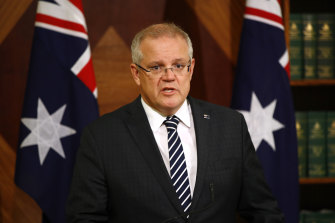
Prime Minister Scott Morrison has acknowledged a horror start to the bushfire season and weeks of smoke haze hovering over Sydney as a "national disaster" and moved to assure people his government is taking climate change seriously.
 Prime Minister Scott Morrison has urged Australians to remain calm after a horror start to the bushfire season.
Prime Minister Scott Morrison has urged Australians to
remain calm after a horror start to the bushfire season.
Mr Morrison said he understood people found the severity of the fires "deeply troubling" and “unsettling".
"We all know this is a national disaster and we knew this was going to be a very tough fire season when we went into this season. We also know that there are many contributing factors that relate to these fires," Mr Morrison said at a press conference in Melbourne on Thursday morning.
"The drought is obviously - and the dryness of the bush is the biggest factor and we all know, as I acknowledged earlier this year in February, that climate change, along with many other factors, contribute to what is occurring today."

Read the story from The Age by Nick Bonyhady - “'Deeply troubling and unsettling': Prime Minister urges calm over bushfires.”

04 December, 2019

NSW bushfires continue path across state, with more homes at risk, smoke danger

Fierce bushfires continue to encroach on homes in NSW, as thick smoke blankets Sydney for the fourth day in a row.
Raging flames in a bushfire setting.
Firefighters at work on the Currowan fire between
Batemans Bay and Ulladulla earlier this week. 
The NSW Rural Fire Service (RFS) said there were 137 fires burning across the state as of 6:15pm.
More than 2,500 firefighters are battling the blazes ahead of worsening conditions expected on Thursday. 
There is severe fire danger predicted for seven areas of the state tomorrow: Greater Sydney, Greater Hunter, Central Ranges, Southern Ranges, Illawarra/Shoalhaven, Monaro Alpine and Far South Coast.

10 October, 2019

‘I'm not allowed to speak to my mum': Climate protesters slapped with 'absurd' bail conditions

Dr Holly Champion, a young full-time piano teacher living in Sydney, had never been in trouble with the law.
A man is arrested by police during an Extinction Rebellion protest
A man is arrested by police during an Extinction
Rebellion protest in central Sydney on Monday.
But after she and other Extinction Rebellion (XR) protesters were arrested on Monday, she was slapped with the kind of bail conditions normally reserved for bikie gangs.
The conditions include staying out of the Sydney CBD and not contacting or "going near" other members of Extinction Rebellion — a loosely defined organisation that has no central membership list, induction ceremony, uniform, ID card or secret handshake.
To join, you just have to say you're a member. In fact, Holly's mum says she's a member too.
"It's just absurd," said Holly, who has a PhD in Opera.
"How do I even know who's a member of Extinction Rebellion?"
"One of my flatmates is loosely involved with XR."


04 October, 2019

Climate change activists plan week of disruptive capital city protests

Police are promising to crack down on protesters ahead of a week of planned disruptive climate change demonstrations in Sydney, Melbourne and Brisbane.
spring rebellion 2019
Extinction Rebellion protesters lie down on Brisbane's
 Queen Street on a weekday morning in June. 
Protest action, known as the Spring Rebellion, is planned for the capital cities next week (October 7-13) – beginning on Monday with a blockade of the Swanston and Flinders intersection in Melbourne’s CBD and a “human tide” marching along the Sydney harbour foreshore.
Protests are also planned for Perth and Adelaide.
The week of action is organised by Extinction Rebellion, a group of climate protesters that has already caused peak-hour chaos in Brisbane several times this year.
Extinction Rebellion was founded in Britain in 2018. Now a global organisation, it wants urgent action to prevent on climate change.
Nonviolent civil disobedience is at the core of its protest action.

15 September, 2019

The Sydney family protesting with Greta Thunberg in NYC

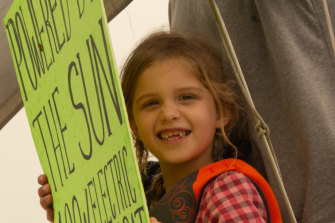
For six-year-old Lila from Sydney, spending a day sailing on New York Harbour as part of a flotilla to welcome climate activist Greta Thunberg was the greatest thrill of her young life.
Lila Hart, 6, on the solar-powered boat in New York Harbour.
Lila was on board a solar-powered boat near the famous Statue of Liberty with her mother and father, Miram Hart and Nick Ward, younger sister Argenta and local children from New York.
“She kept saying ‘this is the best day of my life, the most exciting day of my life, this is what home school really should be like’,” Ms Hart said. “Even when we were on the boat, my husband was teaching science stuff and she was asking a lot of questions about the environment.”
The family has spent the past few weeks in New York, joining Greta and local activists at a protest outside the United Nations and preparing for the Global Climate Strike on Friday.

Read the story from The Age by Caitlin Fitzsimmons - “The Sydney family protesting with Greta Thunberg in NYC.”

01 September, 2019

Water restrictions: how can you avoid being fined and cut your consumption?

Despite a week of rainy days, from Sunday residents in Sydney, the Blue Mountains and Illawarra will be fined $220 for turning on their sprinklers, watering their gardens between 10am and 4pm or leaving their hoses running unattended. For businesses, that fine goes up to $550. While the Sydney region has been under water restrictions since late May, fines for non-compliance will be issued on 1 September onward.

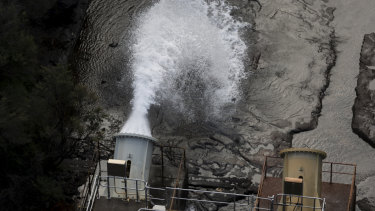
The Cataract Dam, the oldest dam in Sydney’s water supply system, which is currently sitting at just 29% of capacity
The Cataract Dam, the oldest dam in Sydney’s water
 supply system, which is currently sitting at just 29% of capacity.
In Australia, the average household uses 900 litres of drinking water every day – 18 times more than the 50-litre-a-day water rations placed on Cape Town residents when the South African city’s dam levels ran perilously low in 2018, and close to three times the 321-litre daily usage of households in drought-stricken California.

On 22 August, Sydney’s dam water levels dropped below 50% for the first time since 2004 and on 29 August verified water storage levels were still below 50%. If water levels fall below 40%, as a dry weather outlook for spring suggests they may, the city could experience stage two water restrictions for the first time in 15 years. 


Read the story from The Guardian by Emma Joyce - “Water restrictions: how can you avoid being fined and cut your consumption?” 

18 August, 2019

How One Billionaire Could Keep Three Countries Hooked on Coal for Decades

SYDNEY, Australia — The vast, untapped coal reserve in northeastern Australia had for years been the object of desire for the Indian industrial giant Adani.
Image result for How One Billionaire Could Keep Three Countries Hooked on Coal for Decades
The Mundra Thermal Power Station
in Gujarat State on India’s western
coast. Like the nearby port, it is
controlled by the Adani Group.
In June, when the Australian authorities granted the company approval to extract coal from the reserve, they weren’t just rewarding its lobbying and politicking, they were also opening the door for Adani to realize its grand plan for a coal supply chain that stretches across three countries. 
Coal from the Australian operation, known as the Carmichael project, would be transported to India, where the company is building a new power plant for nearly $2 billion to produce electricity. That power would be sold next door in Bangladesh.
Adani’s victory in Australia helped to ensure that coal will remain woven into the economy and lives of those three countries, which together have a quarter of the planet’s population, for years, if not decades. This, despite warnings by scientists that reducing coal burning is key to staving off the most disastrous effects of climate change.

Read the story from The New York Times by Somini Sengujpta, Jacqueline Williams and Aruna Chandrasekhar -  “How One Billionaire Could Keep Three Countries Hooked on Coal for Decades.”

02 August, 2019

‘Quite scary': Rising temperatures threaten Melbourne, Sydney's water security

Sydney and Melbourne face rising threats to their water supplies from climate change as higher temperatures diminish inflows while pushing up demand, according to new research.
Water security for major Australian cities including Melbourne and Sydney is likely to become more of a challenge under climate change, scientists say.
Water security for major Australian cities including Melbourne
and Sydney is likely to become more of a challenge under
climate change, scientists say.
A paper published by Environment Research Letters shows a "substantially" amplified risk for Melbourne's water availability if global temperatures rise 2 degrees above pre-industrial levels rather than the 1.5-degree target set by the Paris climate agreement.

Read the story from The Sydney Morning Herald by Peter Hannam - “‘Quite scary': Rising temperatures threaten Melbourne, Sydney's water security.”

27 June, 2019

Sydney declares a climate emergency – what does that mean in practice?

Late on Monday night, the City of Sydney became the first state capital in Australia to officially declare a climate emergency. With climate change considered a threat to human life, Sydney councillors unanimously supported a motion put forward by Lord Mayor Clover Moore to mobilise city resources to reduce carbon emissions and minimise the impact of future change.
Sydney has become Australia’s first major city to declare a climate emergency. 
The decision sees Sydney join a variety of local and national governments around the world, in a movement that is increasingly gaining momentum. In total, some 658 local governments around the world have made the same declaration, with the UK and Canada committing their national governments to the global movement in just the past two months.

An official declaration of climate emergency puts a government on a “wartime mobilisation” that places climate change at the centre of policy and planning decisions.


Read the story from The Conversation by the Professor of Earth Science and Climate Change, ARC Centre of Excellence for Australian Biodiversity and Heritage, UNSW, Chris Turney - “Sydney declares a climate emergency – what does that mean in practice?

15 March, 2019

Clean-up after wild Sydney storms begins

A massive clean-up of branches and debris is underway in Sydney after severe thunderstorms swept across the city overnight, bringing strong winds, giant hail and heavy rainfall.
Hail wraps this suburban backyard in a blanket of white. P
Volunteers have begun removing branches and clearing storm debris as emergency crews work to restore power to about 8650 homes and businesses across the Illawarra region, Southerland Highlands and Macarthur district.

Very dangerous thunderstorms were detected near Blacktown and Riverstone, the Bureau of Meteorology said on Thursday evening, encouraging people to “bring umbrellas” as the rain is expected to continue for the rest of the week and well into mid next week.

The storms moved east with severe thunderstorms hitting the city and eastern suburbs by nightfall.


Read the story from The New Daily - “Clean-up after wild Sydney storms begins.”

29 December, 2018

Sydney bakes as heatwave sets in, with no end in sight beyond New Year's Eve

Roads are melting, beaches are full to bursting and air conditioners are getting a serious end-of-year workout as residents in Sydney and across the state swelter through heatwave conditions, with no end in sight until 2019.
Swimmers jump off the rocks at Neilson Park to beat the heat.CREDIT:
The "severe" to "extreme" heatwave that settled in Sydney on Thursday is set to continue "for the foreseeable future", the weather bureau warned, even with a possible storm on the way for New Year's Eve.


Read the story from The Sydney Morning Herald by Jenny Noyes - “Sydney bakes as heatwave sets in, with no end in sight beyond New Year's Eve.”

20 December, 2018

Huge hailstones batter parts of Sydney as a severe storm sweeps through

Sydney has again been battered by a summer storm with parts of the city pelted with hail.
Hail almost as big as a tennis ball fell in Prestons.
The Bureau of Meteorology warned of severe thunderstorms and heavy rainfall that could lead to flash flooding, destructive winds and "giant hailstones" on the east coast, stretching from Lismore in the north to Moruya Heads on the south coast.

Residents of Oran Park and Harrington Park in Sydney's west seemed to cop the brunt of the hail, with residents reporting hailstones the size of tennis balls and golf balls.

Suburbs across Sydney looked as though they had been blanketed by snow.


Read the ABC News story by Bellinda Kotominas - “Huge hailstones batter parts of Sydney as a severe storm sweeps through.”

19 December, 2018

Sydney and Melbourne vow to ditch coal power

The cities of Sydney and Melbourne committed themselves to phasing out coal on Thursday, in a move at odds with Australia’s aggressively pro-coal national government.
Sydney has committed to 100% renewable electricity by 2035. 
The country’s two largest cities joined an international coalition of states, regions, cities and businesses who have committed to ending coal power generation.

Australia is the fourth largest coal producer in the world. Its federal government is known for its fierce support for the sector and signalled on Wednesday that it would use taxpayer money to underwrite new coal plants.

Neither city provided a specific end date for coal. Sydney has committed to a 100% renewable supply by 2035.


Read the Climate Home News story by Natalie Sauer - “Sydney and Melbourne vow to ditch coal power.”

09 March, 2018

Canberra opens public purse for private fast-rail project's plan

A consortium that said it would privately fund a fast rail line from Melbourne to Sydney will get a share of $20 million in public funding from the Turnbull government.
A 2016 image from Consolidated Land and Rail Australia (CLARA),
the company planning a fast rail link between Melbourne and
Sydney. It will be given millions of dollars in public money by t
he Turnbull government to write the business case for its
 first stage, to Shepparton.
Consolidated Land and Rail Australia, or CLARA, is a private company that claims it can build two inland cities in Victoria and a further six in New South Wales that are linked by high-speed rail lines between Melbourne, Sydney and Canberra.

Their rail line would, CLARA's plans say, be paid for by the company taking options to buy land in regional areas at a low price. The land would then be sold at a far higher price once a rail line was built nearby.

The “uplift” in land value would provide billions of dollars in profit, CLARA's directors say.

Read the story by Clay Lucas in The Sydney Morning Herald - “Canberra opens public purse for private fast-rail project's plan.”

(Many argue that projects such as this are only possible through Public Private Partnerships (PPP), but immediately private profit at public expense becomes integral to the equation, it is without fail the public who are sacrificed, especially when the profit margin is to be sustained/maintained.

The State Government doesn’t appear to be onboard with what is proposed, and as it is the final leg of the Shepparton to Melbourne trip - from Craigieburn to the city - that can be excruciatingly slow, it will not be until decisions are made about that last 30 or so kilometres, a decision that needs the stamp of the State Government, that we can seriously talk about creating any sort of fast train into the city - Robert McLean)

08 January, 2018

NSW heatwave: Sydney swelters again with fire bans in place and crews on standby

It is another scorching day for Sydney, tipping over 40 degrees Celsius in the west, but it will not reach the withering heights that made it the hottest city in the world yesterday.


It is forecast to reach 33C in Sydney city today and by 2:00pm the gauge hovered 2 degrees below the predicted high.

Richmond, in the north-western outskirts, reached 41.9C at 1:50pm.

On Sunday, a reading of 47.3C was recorded in Penrith by the late afternoon, making it the hottest temperature recorded in Sydney since 1939. It was also the hottest city on Earth.


Sydney heatwave expected to shatter weather record set before federation

Sydney is on track for its hottest summer, a record that has stood since before federation.
Coogee Beach in Sydney, which is forecast to reach 38C on
Tuesday, with the city’s west tipped to hit 40C in the afternoon.
If Sydneysiders are subjected to one more day above 35C, the ninth this summer, it will equal the record set in 1896. The city has already set a new record for hot nights, with the mercury staying above 24C four times, two more than the summer of 2010.

Sydney is forecast to reach 38C on Tuesday, while the city’s west is expected to hit 40C in the afternoon.


Read the Australian Associated Press story on The Guardian - “Sydney is on track for its hottest summer, a record that has stood since before federation.

If Sydneysiders are subjected to one more day above 35C, the ninth this summer, it will equal the record set in 1896. The city has already set a new record for hot nights, with the mercury staying above 24C four times, two more than the summer of 2010.

Sydney is forecast to reach 38C on Tuesday, while the city’s west is expected to hit 40C in the afternoon.

Read the Australian Associated Press story on The Guardian - “Sydney heatwave expected to shatter weather record set before federation.”

20 December, 2017

Australia Post installs huge 2.1MW rooftop solar array in Sydney

Australia Post has announced its latest commercial solar investment, this time with a massive installation of more than 2MW of rooftop PV on its Sydney parcel facility in Chullora.
Australia Post has completed a 2.1MW rooftop solar installation
 at the Sydney Parcel Facility in Chullora, a project spanning
 over 11,000 square meters.
The 2.1MW project – one of the biggest single rooftop arrays in the country – was completed last month, and is expected to go live by the end of the year, when it will start saving Australia Post more than $800,000 a year in energy costs.

The $3 million project notches up the organisation’s 49th solar-equipped site, which will soon generate a combined total of 5,000MWh (5GWh) of renewable electricity a year.

Australia Post Group Chief Financial Officer, Janelle Hopkins, said on Monday that the solar panels would directly power the country’s busiest parcel sorting centre.


Read The One step Off The Grid story by Sophie Vorrath - “Australia Post installs huge 2.1MW rooftop solar array in Sydney.”

14 November, 2017

Australia’s lush street trees face grave threat if emissions keep rising, research finds

Much-loved leafy streets and shady parks in Sydney and Melbourne are in jeopardy, according to new research that found climate change severely threatens the health of more than one-third of tree species in Australia's cities.

Australia's much-loved street trees could fall victim to rising emissions. 
The federally funded study of 1.5 million trees in 29 council areas across Australia found that higher temperatures and urban heat means new tree species may be introduced, existing trees must be given special care and some trees may disappear in certain locations.

More than four in 10 houses in Australia's capital cities have a street tree.

Trees can greatly affect people's experience of a city - providing shade, places for recreation and a sense of place and heritage. They also cool the city, capture rain, slow stormwater and provide habitat for birds and other animals.


Read the story by Nicole Hasham in the Melbourne Age - “Australia’s lush street trees face grave threat if emissions keep rising, research finds.”