Showing posts with label profound. Show all posts

04 February, 2020

A climate of co-operation is needed on emissions cuts.

There is no single solution to resolve the profound and conflicting pressures posed by climate change and the nation’s energy needs. There are many potential solutions, but they require investment, collaboration and genuine government support.
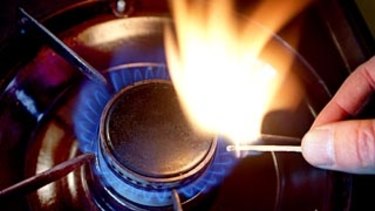
 The Morrison government is demanding Victoria open up more sources of gas before a deal is done.
The Morrison government is demanding Victoria
open up more sources of gas before a deal is done.
Solar, wind, hydro and other renewable energy sources backed by massive battery storage systems will be the future. Coal-fired power stations exist for now, and still provide the bulk of Victoria's power needs, but the infrastructure is ageing and and increasingly unreliable.
While the Morrison government still supports coal, commercial operators and their financiers are no longer prepared to invest in this area. Still, Australia needs to ensure its short-term residential and commercial energy requirements are met as it transitions to a new era in which renewable sources dominate.
To that end, the federal government has horse-traded with NSW, with the state agreeing to supply more gas and secure coal supply to one of its major power stations in return for nearly $1 billion to help upgrade its energy grid and invest in a grab bag of emission-reduction initiatives.

Read the Editorial from The Age - “A climate of co-operation is needed on emissions cuts.

29 November, 2017

Climate energy appeasement does not work

The current chaos around climate and energy policy brings to mind George Santayana’s caution that: “Those who cannot remember the past are condemned to repeat it”. That is exactly what we are witnessing, albeit with far more profound implications even than the advent of the Second World War.

In November 1936, Winston Churchill, concerned at the dangers posed by the Third Reich, warned the House of Commons about the refusal of the British establishment to face up to reality:

“They go on in strange paradox, decided only to be undecided, resolved to be irresolute, adamant for drift, solid for fluidity, all-powerful to be impotent……Owing to past neglect, in the face of the plainest warnings, we have now entered upon a period of great danger …..  The era of procrastination, of half-measures, of soothing and baffling expedients, of delays, is coming to a close.  In it’s place we are entering a period of consequences….. We cannot avoid this period, we are in it now …..”

Prime Minister Neville Chamberlain was not to be diverted from the appeasement path, returning from Munich in September 1938 waving his “peace in our time” paper signed with Hitler.  The rest is history; the war started a year later.


Read the RenewEconomy story by Ian Dunlop - “Climate energy appeasement does not work.”

26 November, 2017

Disasters and mental health in rural and remote areas

Mental health problems cause profound suffering and are worthy of attention for that reason alone. But despite policy and service reform, such problems remain as common, expensive and disabling as they were a decade ago.
Vulnerable people and places are worst affected by weather-related
disasters, especially those most reliant on the land.
 
Bad mental health erodes financial and personal resources, and undermines resilience and adaptive capacity in affected families, workplaces and communities. So it’s vital to foresee threats that might compromise mental health.

Climate change is one such threat. Our world faces potentially catastrophic warming and we have limited capacity to adapt to rapid or extreme climatic changes. As the world’s most variable climate, our continent is the canary in the mine. We have a need and an obligation to invest in understanding and responding effectively to this threat.


Read the piece on The Conversation by the Professor of Psychiatric Epidemiology and Associate Dean Research, University of Canberra, Helen Louise Berry - “Disasters and mental health in rural and remote areas.”