Showing posts with label reason. Show all posts

02 June, 2019

Communities around Australia are taking clean energy into their own hands, the Indi win built on that

The rural electorate of Indi will make history next week when Independent Dr Helen Haines is officially elected to replace fellow independent Cathy McGowan. Part of the reason she won was a climate platform founded on energy democracy.
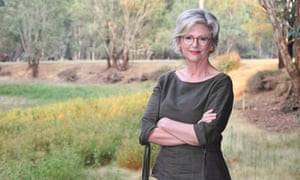
The independent candidate for Indi, Helen Haines
Independent Helen Haines who officially won
Indi this week after Cathy McGowan retired.
Indi is a regional electorate in Victoria. It stretches all the way from the peri urban fringes of Melbourne to the Murray River. It is an electorate of mountains, valleys and plains. Until Cathy McGowan won in 2013, Indi had been a safe Liberal seat, delivering some of the largest margins in the country for conservative members.
Back to back independents have never been elected in Australian history. Popular independent MPs, like Tony Windsor or Rob Oakeshott have both seen their seats revert back to the Coalition.
There is a good reason for that. Once elected, independent members are popular, but most are elected on a protest vote from the former sitting member. It is very hard to run as an independent and win against a popular or at least “not-unpopular” major party candidate.

04 January, 2019

Parenting the Climate Change Generation

Earlier this month during Art Basel Miami Beach, at a cocktail party held just inches above Biscayne Bay, an art collector was describing the ordeal of his year of house hunting. He was one half of a well-off, middle-aged gay couple raising two children and hoping to find a place calmer than New York for their kids’ adolescence and their own semi-retirement. Their first choice, he said, was Montecito, the richest part of Santa Barbara County, but then the broker who’d been helping them there died in last December’s mudslides. They decided they couldn’t go back. They looked at a few houses in Malibu “but they all burned down.” In the end, they chose Miami. “You know climate change is coming for South Florida, too, right?” someone asked. “At least it’ll be slow,” the collector replied, clearly having thought about it. With a hurricane, you get at least a few days’ warning, he said, and with sea-level rise, years. “Then, it’ll just be like Venice.”

Climate change isn’t a reason to not have kids. Kids are a reason to fight it.

As recently as a few years ago, this was not the way the wealthy tended to talk about the dilemmas of child-rearing. As much as Americans may have feared the wrath of global warming, we assumed that most of us would be spared its most brutal impacts, by the prophylaxis of our collective wealth, and that the very richest among us might be able to shield themselves entirely. But that’s changing. The Kardashians may have hired private firefighters to fend off this fall’s Woolsey fire, as the rest of the state relied on conscripted convicts earning as little as a dollar a day, but millions around the country watched the same family evacuate via Instagram Story, too.

Read the story by David Wallace-Wells from The New York Magazine - “Parenting the Climate Change Generation.”

09 December, 2017

In a Warming California, a Future of More Fire

“This is looking like the type of year that might occur more often in the future,” said A. Park Williams, a climate scientist at the Lamont-Doherty Earth Observatory in Palisades, N.Y.


Severe wildfire seasons like the one that has devastated California this fall may occur more frequently because of climate change, scientists say.

A Warming California, a Future of More Fire.
The reason is an expected impact of climate change in California: increasing year-to-year variability in temperature and precipitation that will create greater contrast between drought years and wet years. And that can lead to much greater fire risk.

That contrast has occurred this decade in the state, where years of drought were followed last winter by very wet weather that led to a bumper crop of grasses and other vegetation.


Read the story by Henry Fountain in The New York Times - “In a Warming California, a Future of More Fire.”

26 November, 2017

Disasters and mental health in rural and remote areas

Mental health problems cause profound suffering and are worthy of attention for that reason alone. But despite policy and service reform, such problems remain as common, expensive and disabling as they were a decade ago.
Vulnerable people and places are worst affected by weather-related
disasters, especially those most reliant on the land.
 
Bad mental health erodes financial and personal resources, and undermines resilience and adaptive capacity in affected families, workplaces and communities. So it’s vital to foresee threats that might compromise mental health.

Climate change is one such threat. Our world faces potentially catastrophic warming and we have limited capacity to adapt to rapid or extreme climatic changes. As the world’s most variable climate, our continent is the canary in the mine. We have a need and an obligation to invest in understanding and responding effectively to this threat.


Read the piece on The Conversation by the Professor of Psychiatric Epidemiology and Associate Dean Research, University of Canberra, Helen Louise Berry - “Disasters and mental health in rural and remote areas.”

05 June, 2017

Scientists Uncover the True Cost of a Loaf of Bread

Bread has recently been labeled a bad guy, with millions of people opting to ditch the dough and eat a gluten-free diet to stay trim and healthy. But it turns out there's another reason to steer clear of bread: it's having a massive impact on the environment.
Bread is not as innocent as it seems.
Scientists in the UK have worked out the greenhouse gas emissions produced by making a standard loaf of bread, pinpointing the emissions hotspots in the process. With GHG emissions equivalent to about half a kilo (1.3 pounds) of carbon dioxide per loaf, bread accounts for half a percent of the UK's total emissions. That may not seem like a lot, but considering that the nation's entire agriculture industry accounts for 10 percent of total emissions, it's clear that bread, as a single food product, has a pretty huge impact.

The good news is there's now a clear target to reduce the impact: Nearly half of the emissions (0.589kg, or 13.7oz) come from fertilizer used to grow the wheat. Writing in Nature Plants, Peter Horton and his colleagues from the University of Sheffield analyzed the whole manufacturing process, from planting the seed to putting the bread on the shelf. They found the bulk of the greenhouse gases come from the farm.


Read Lucy Goodchild van Hilten’s story on Ecowatch - “Scientists Uncover the True Cost of a Loaf of Bread.”