Showing posts with label impact. Show all posts

15 January, 2020

The government has been forced to talk about climate change, so it’s taking a subtle – and sinister – approach

The impact of climate change over the past five months across Australia has caused climate change deniers within the media and governments to quickly update their tactics to a new, sinister position.
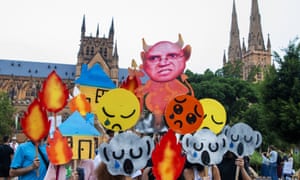
Protesters hold up placards as activists rally for climate action
Protesters in Sydney hold up placards calling for climate
action in response to the bushfires crisis. Scott Morrison
 has adopted the new go-to response of climate change
 deniers – the need to adapt and ‘improve resilience’. 
Gone are the plans to just keep lying for the next decade that activists such as Greta Thunberg are predicting that the world is going to end in 2030, or to continue to flub and fudge the science – no real warming since 1998, 2005, 2010, 2016! Solar activity! Volcanoes! Greenland!

Now of course the feculent minds of columnists and government MPs will continue to spout these lies – when has reality ever been an impediment to their effluent-driven utterances? But the months of fires across southern Queensland, northern New South Wales, the horrors of Gippsland, the NSW south coast and Kangaroo Island over Christmas and new year, the smoke haze across Sydney and Canberra and now Melbourne, has shifted forwards their timetable of obfuscation.


24 November, 2019

Pall of smoke a grim reminder of climate change risks

The pall of smoke obscuring Sydney is a grim reminder that the impact of climate change is pervasive and all-too real.
The burning of fossil fuels, deforestation and increased agricultural production did not cause the bushfires or the protracted drought affecting Australia. But they have caused global warming which has, in turn, exacerbated the scale and intensity of these calamities.
Even people who have ignored the issue are getting an inkling that climate change is not just a political debate but something that will affect their daily lives. The hazy skies are a warning that it will change the great Australian summer.
The start of the hot weather each year will no longer be an invitation to happy days at the beach. It will instead be the harbinger of weeks and months when the skies are leaden with smoke, the sun looks like a glaring searchlight and the air smells worse than in Shenzhen or Lagos.

Read the Editorial from The Sydney Morning Herald - “Pall of smoke a grim reminder of climate change risks.”


26 August, 2019

Regional ‘Climate Guides’ to inform on-farm risk management

Climate variability is one of the biggest challenges in agriculture. One season too dry; the next too wet. From frost to heatwaves, each extreme has its own risk. While it is impossible to control the weather, a better understanding of climate risk can help primary producers minimise its potential to impact on their business. 
The Climate Guides are being prepared in consultation
 with local stakeholder across the 56 Australia’s Natural
Resource Management regions.
A new series of region-specific Climate Guides are being developed to give producers the information they need to understand their environmental assets and reduce business risk.
The guides are being developed by the Bureau of Meteorology and CSIRO in collaboration with local stakeholders around the country. They will provide information on the local climate and its variability for each of the 56 Natural Resource Management regions across Australia. 
Each guide will give primary producers and regional communities facts about the likelihood, severity and duration of key weather variables that affect the resilience of their businesses and communities. 

Read the story from the Climate Kelpie Blog - “Regional ‘Climate Guides’ to inform on-farm risk management.”

25 August, 2019

California looks to Australia for ways to manage its groundwater after worst-ever drought

In the powerhouse food bowl of California, the impact of its most recent drought — which finally ended in 2017 after eight gruelling years — continues to be felt across the sunshine state.

San Luis Dam, Los Banos, California’s fifth-largest reservoir, only about 10% full
San Luis Dam is California's fifth-largest reservoir
but fell to less than 10 per cent capacity during the drought.
Farmers, experts and lawmakers are working to find more sustainable ways to droughtproof farms and address the vexed issue of water allocation.

And it turns out many farmers and water experts in California are looking to Australia for answers as they face up to the biggest water reforms in the history of the US.

When California's worst drought in history ended in 2017, it cost the country $US3.8 billion ($AU5.6 billion) and exposed deep flaws in its water management processes.


30 April, 2019

From Apples to Popcorn, Climate Change Is Altering the Foods America Grows

The impact may not yet be obvious in grocery stores and greenmarkets, but behind the organic apples and bags of rice and cans of cherry pie filling are hundreds of thousands of farmers, plant breeders and others in agriculture who are scrambling to keep up with climate change.
Montmorency tart cherries waiting to be harvested
 in Leelanau County in northern Michigan.
Drop a pin anywhere on a map of the United States and you’ll find disruption in the fields. Warmer temperatures are extending growing seasons in some areas and sending a host of new pests into others. Some fields are parched with drought, others so flooded that they swallow tractors.

Decades-long patterns of frost, heat and rain — never entirely predictable but once reliable enough — have broken down. In regions where the term climate change still meets with skepticism, some simply call the weather extreme or erratic. But most agree that something unusual is happening.


Read the story from The New York Times by Kim Severson - “From Apples to Popcorn, Climate Change Is Altering the Foods America Grows.”

19 April, 2019

Key economist cited in climate row lends weight to Labor's policy

The key economist cited in the election row on climate change has doused fears of a major blow to growth from deeper cuts to greenhouse gas emissions, saying the impact would be a "small fraction" of the economy by 2030.
Bill Shorten's use of international carbon permits has been backed.
Australian National University Professor Warwick McKibbin said federal government policy to reduce carbon emissions would subtract about 0.4 per cent from the economy by 2030 under the two main targets being put to voters.


Read the story from The Age by David Crowe - “Key economist cited in climate row lends weight to Labor's policy.”

17 January, 2019

Glaciers Are Retreating. Millions Rely on Their Water

On a summer day in the mountains high above Almarty, Kasakhstan’s large city, the Tuyuksu glacier is melting like mad, Rivulets of water streaming down the glacier’s thin leading edge.
Glaciers are retreating and millions rely on them for water.
As she has for nearly two decades, Maria Shahgedanova, a glaciologist at the University of Reading in England has come to check on the Tuyuksu. One of the longest studies glaciers anywhere, the Tuyuksu helps gauge the impact of climate change on the world’s ice.

With colleagues from the Kazakhstan Institute of Geography, Dr. Shahgedanova has made the slow trip from Almarty, 15 miles to the north and nearly two miles below, lumbering up a steep, rutted mountain road in a giant Russian utility vehicle.


Read the story from The New York Times by Henry Fountain and Ben C. Soloman - “Glaciers Are Retreating. Millions Rely on Their Water.”

22 December, 2018

Hot and Indigestible Carbon Dioxide

Last July, the concentration of CO2 in the atmosphere was 408 ppm. In the last 400 million years, a CO2 concentration 300 ppm was considered high. Therefore the high concentration of CO2 we are experiencing now was never reached in the last half billion year. This increase will for sure have an impact on how plants will be growing in the next decades.
History of the Earth atmospheric CO2 concentration.
Plants are actually happy to have more CO2 available in the atmosphere, more CO2 means more food. CO2 is the basic components of plants and it is actually the base for all biological molecules. Through photosynthesis, plants are able to catch the carbon from the CO2 and put it into chains of carbon also known as carbohydrates or sugar.

The rise of CO2 is expected to increase the rate of photosynthesis and therefore improve global vegetation growth. This greening of the Earth could potentially mitigate climate change by taking carbon out of the atmosphere and store it into trees. Various models have predicted the Earth to become more green in cold areas especially in high mountainous regions. However, even if CO2 is more abundant for plants to grow, water scarcity and soil nutrient deficiency can limit plant growth.


Read the Medium story by Thaûn Sarzynski - “Hot and Indigestible Carbon Dioxide.”

20 September, 2018

Drought conditions in Australia spread north as Indonesia feels the bite of the big dry

The drought in Australia is having an impact on its neighbours, with 5 million people in Indonesia suffering from an extended dry season.
Rice farmer Ampir said the dry season had lasted twice as long as usual.
Hot, dry air intensified by drought conditions in Australia has circulated north, contributing to water shortages in 4,000 Indonesian villages.

Pak Siswanto, the director of climatology at Indonesia's Meteorological, Climatological and Geophysical Agency, said the weather conditions in Indonesia followed on from what was happening in its larger southern neighbour.

"The dry season in Indonesia is actually forced by the wind circulation coming from Australian continent," he said.

"When we have dry air and less moisture circulated from Australia toward Indonesia, it modulates the dry season in Indonesia.”


31 May, 2018

Christmas Island facing economic collapse as mine expansion rejected to save red crabs

The community of Christmas Island could face an economic collapse after a proposal to expand the island's phosphate mine was knocked back over fears of the impact to the island's wildlife, including its world-famous red crabs.
Red crabs make their way along a Christmas Island Road
 during their annual migration from the rainforest to the ocean to mate
.
Phosphate Resources Limited has been mining on the Indian Ocean Territory for more than 100 years, but claims it needs to clear more crown land to access new deposits in order for the operations to remain viable.

Under the expansion, the company wanted to clear an additional 6.83 hectares of land to undertake exploration drilling to determine the extent of more phosphate resources, in what has been described as a pristine area of the island.


Flood-hit sugarcane farmers brace for huge losses as prices slump

Cane growers around Ingham are struggling under the dual burden of plummeting sugar prices and the ongoing impact of the disastrous March floods.
The Herbert River cut off the towns of Ingham, Halifax
and Lucinda for several days during the March flood event.
Two separate flood peaks hit the Herbert River sugar cane district, ripping up thousands of hectares of farmland and causing $15 million in local infrastructure damage alone.

At the same time, a global glut exacerbated by sugar subsidies paid by the Pakistan and Indian governments, led to sugar prices crashing.

At a current 2018 price of around $380 per tonne, worldwide sugar prices are below the cost of production.


Read the story by Tom Major from ABC News - “Flood-hit sugarcane farmers brace for huge losses as prices slump.”

24 March, 2018

Sustainable shopping: if you really, truly need a new phone, buy one with replaceable parts

Almost 90% of Australians own a smartphone, and almost 40% of us are expected to update our phone in the coming year.
Before taking that tempting upgrade, ask yourself if it’s really necessary.
The most sustainable mobile phone is actually the phone you already own! This is because manufacturing a phone has far more environmental impact than using it.

The circuit board, display and battery are primarily responsible for your phone’s environmental impacts. These contain valuable minerals such as cobalt, gold, silver, palladium and tin. Huge amounts of ore, processing and energy are required to yield small amounts of these materials.


Read the piece on The Conversation by a Senior Lecturer in Industrial Design from the UNSW, Miles Park -  “Sustainable shopping: if you really, truly need a new phone, buy one with replaceable parts.”

16 March, 2018

If business leaders want to regain our trust, they must act on climate risk

Business leaders seem astonished that community trust in their activities is at an all-time low, trending toward the bottom of the barrel inhabited by politicians. To the corporate leader dedicated to the capitalist, market economy success story of the last 50 years, that attitude is no doubt incomprehensible and downright ungrateful.
 ‘Already one of the world’s largest carbon polluters when
 exports are included, Australia is complicit in destroying the
 conditions which make human life possible’
But it is hardly surprising given continuing scandals and declining ethics across the corporate and banking worlds, driven by the pernicious impact of short-termism, rising inequality and undue political influence; in large part the outcome of the oxymoron of “pay-for-performance” remuneration. So how is trust regained? The need for stronger leadership, ethics, greater transparency, open communications and improved culture feature prominently in current responses.

But a far more fundamental requirement is ignored, namely that business must lead on really critical issues, particularly the point raised long ago by economist Kenneth Boulding: “Anyone who considers economic growth can continue indefinitely in a finite system is either a madman or an economist”. The constraints Boulding anticipated have now arrived, as burgeoning population and economic growth crash into global biophysical limits which cannot be circumvented.


Read the piece from The Guardian by Ian Dunlop  - “If business leaders want to regain our trust, they must act on climate risk.”

14 March, 2018

Companies 'failing' to deal with climate change risk

Too many big Australian companies are failing to reveal plans for tackling climate change or to explain how climate change may impact their businesses, according to new research.

Ruth Williams - Australian companies failing
to reveal plans for tackling climate change.
The report, to be released Wednesday by climate NGO Market Forces, is based on public information from 73 big listed companies operating in sectors considered high-risk on climate change.

It found that 84 per cent of the companies had not released a plan to reduce their greenhouse gas emissions, 60 per cent did not have an emissions reduction target, and less than half had identified climate change as a material business risk.

Market Forces is now calling for the disclosure of climate change-related risks to be made mandatory for companies, saying too many were failing to adhere to voluntary standards.


Read the story by Ruth Williams from The Age - “Companies 'failing' to deal with climate change risk.”

18 January, 2018

Exclusive: Elevated CO2 Levels Directly Affect Human Cognition, New Harvard Study Shows

In a landmark public health finding, a new study from the Harvard School of Public Health finds that carbon dioxide (CO2) has a direct and negative impact on human cognition and decision-making. These impacts have been observed at CO2 levels that most Americansand their childrenare routinely exposed to today inside classrooms, offices, homes, planes, and cars.


Carbon dioxide levels are inevitably higher indoors than the baseline set by the outdoor air used for ventilation, a baseline that is rising at an accelerating rate thanks to human activity, especially the burning of fossil fuels. So this seminal research has equally great importance for climate policy, providing an entirely new public health impetus for keeping global CO2 levels as low as possible.


09 December, 2017

In a Warming California, a Future of More Fire

“This is looking like the type of year that might occur more often in the future,” said A. Park Williams, a climate scientist at the Lamont-Doherty Earth Observatory in Palisades, N.Y.


Severe wildfire seasons like the one that has devastated California this fall may occur more frequently because of climate change, scientists say.

A Warming California, a Future of More Fire.
The reason is an expected impact of climate change in California: increasing year-to-year variability in temperature and precipitation that will create greater contrast between drought years and wet years. And that can lead to much greater fire risk.

That contrast has occurred this decade in the state, where years of drought were followed last winter by very wet weather that led to a bumper crop of grasses and other vegetation.


Read the story by Henry Fountain in The New York Times - “In a Warming California, a Future of More Fire.”

08 September, 2017

Hurricane Irma: a practically impossible storm

HURRICANE HARVEY, WHICH killed 60 people and may end up costing $150 billion, parked over Houston and dumped four feet of rain. The water overwhelmed the sprawling city’s flood control systems. Meteorologists and atmospheric scientists used up their superlatives describing the storm’s size and impact.
Traffic in the Florida Keys before Hurricane Irma
 hits near Homestead, Florida, on September 6, 2017.
They should have saved some.

Hurricane Irma has become the most powerful Atlantic hurricane on record, category 5 on the Saffir-Simpson scale—over 800 miles wide, roughly the size of Texas, sustained winds of over 185 miles per hour for more than 24 hours, gusts over 200 mph—and it has made landfall in the Caribbean. Irma’s storm track, the predicted line of its travel, projects its eye gliding north of the islands of Hispaniola and Cuba starting Thursday, zooming up Florida to Miami late Sunday, and then reaching Georgia and South Carolina the next day.

All hurricanes have a theoretical maximum intensity, a thermodynamic limit on how fast their winds can blow given ocean temperature and atmospheric temperature. Few hurricanes ever actually reach that limit. But as Irma grew and developed, it came very, very close. If Harvey was a perfect storm, Irma is an almost impossible one. “Irma is anomalous,” says Jim Kossin, an atmospheric scientist with the National Oceanic and Atmospheric Administration’s National Centers for Environmental Information. “This is a record-breaker. Unprecedented. Catastrophic.”


Read the Wired story - “Hurricane Irma: a practically impossible storm.”

16 August, 2017

Left in the dark

A Mooroopna business leader is worried about the future of competitive industries in regional Victoria after he experienced a large spike in his power bills.

Gouge Linen owner Rob Priestly said after going onto a new electricity contract for his business he realised the delivered cost of power on his bills had risen by between 70 to 80 per cent from two years ago.
Victorian Nationals leader Peter Walsh
says he hears everyday from businesses
complaining about spikes in power 
prices.
Although the price rise does not threaten the sustainability of his business, which employs 150 people in Mooroopna, he expressed concern about similar rises could hit other large producers.

‘‘Everybody in our industry is in the same boat,’’ Mr Priestly.

‘‘I’m more worried about the impact on the broader community and on food manufacturing.’’

He said unlike his business, which did not face international competition, food manufacturers had to compete against foreign competitors which did not have large costs for power.

He would like to see the Victorian Government introduce policies to ease costs to make it easier for bigger businesses to compete in the global marketplace. It was a call echoed by Victorian Nationals leader Peter Walsh who had heard stories of big businesses hit with large power bill increases almost every day.

‘‘The prices have really spiked in the last six months,’’ Mr Walsh said.

‘‘Once there was speculation about the closure of Hazelwood there was a spike and once it closed it went higher again.’’

He listed dairy facilities, Kagome, SPC and farmers who use large cooling facilities and even hospitals would be the types of businesses hit with larger power bills.

‘‘Victoria has gone from a net exporter to a net importer of power,’’ he said.

He took aim at the State Government for much of the increases, and said we needed more than an increase in renewable energy to stay competitive.

‘‘There needs to be a serious investigation as to how Victoria brings in the next generation of baseload power generation,’’ he said.

Although he believed renewable energy had a place in the state, he was adamant coal fired power stations were still very important.

But he warned under current conditions, including a commitment for a state-based renewable energy target, energy companies would be reluctant to invest in baseload power generation.

‘‘Our manufacturing sector has developed with cheap power, our policy setting have to change,’’ he said.


This story  - “Left in the dark” - written by Barclay White was published in today’s Shepparton News.

19 March, 2016

'Hacking' your carbon footprint

Measuring your carbon footprint (by Jen Luxton).
Many of the actions we take in our daily lives contribute to global warming. When we start a car, we’ve made a decision to change the Earth’s climate. This is also true when we eat lunch, book a flight, do the laundry, turn on the television, or flush the toilet. But the fossil fuels we consume tend to be hidden from our immediate experience, making them easy to take for granted.

Over the past few years I’ve been working to systematically reduce my impact. I didn’t set out to save the world; my reductions are a billion times too small for that. Instead, I’m motivated to avoid harming others, human and nonhuman, and it has become clear that burning fossil fuel does, in fact, harm others. I was also curious to see what life without all the fossil fuel would be like. It turns out that I like it better.

17 December, 2015

Before and after pictures of the spreading, bitiing drought


Drought is spreading across southern and eastern Australia, affecting more of Queensland than ever previously recorded. Use these before and after images to see the impact.

Check out the before and after pictures here - “Before and after: How the drought is biting in regional Australia.”