Showing posts with label drought. Show all posts

25 April, 2020

There are 10 catastrophic threats facing humans right now, and coronavirus is only one of them

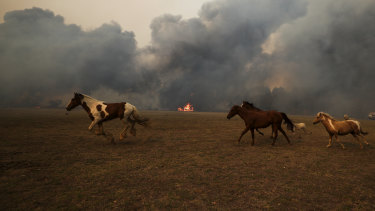
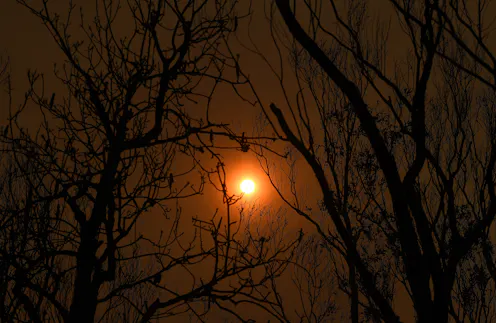
Four months in, this year has already been a remarkable showcase for existential and catastrophic risk. A severe drought, devastating bushfires, hazardous smoke, towns running dry – these events all demonstrate the consequences of human-induced climate change. 
There are 10 catastrophic threats facing humans right now, and ...

While the above may seem like isolated threats, they are parts of a larger puzzle of which the pieces are all interconnected. A report titled Surviving and Thriving in the 21st Century, published today by the Commission for the Human Future, has isolated ten potentially catastrophic threats to human survival. 
Not prioritised over one another, these risks are:
  1. decline of natural resources, particularly water
  2. collapse of ecosystems and loss of biodiversity
  3. human population growth beyond Earth’s carrying capacity
  4. global warming and human-induced climate change
  5. chemical pollution of the Earth system, including the atmosphere and oceans
  6. rising food insecurity and failing nutritional quality
  7. nuclear weapons and other weapons of mass destruction
  8. pandemics of new and untreatable disease
  9. the advent of powerful, uncontrolled new technology 
  10. national and global failure to understand and act preventatively on these risks.

06 April, 2020

Coronavirus and degrowth

This is proving a remarkable year for all the worst reasons. First, we experienced Black Summer, the most severe season of fires in Australia’s history. (The 173 fatalities of the Black Saturday Australian bushfires on 7 February 2009 retains the record for most deaths).
Degrowth

Then Australia experienced floods: on one hand, a mercy after the drought and snuffing out the fires, but; on the other hand, it brought its own human and social destruction, pollution and despair. This happened at the same time as the record-breaking three months of severe winter flooding in the United Kingdom.
Meanwhile, the Antarctic endured an ‘unprecedented heat wave’. Brewing, simultaneously, was the public health and economic crisis of Covid-19, or coronavirus.
Read the story from Ecologist by Anitra Nelson and Vincent Leigey - “Coronavirus and degrowth."

13 February, 2020

Indian Ocean Dipole linked to global warming in new research by Australian scientists

One of the big drivers of drought in Australia, the Indian Ocean Dipole, is trending towards a more drought-causing positive state due to climate change, according to new research.
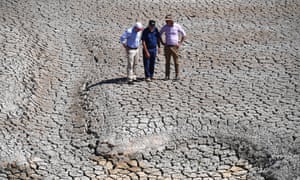
Cracked earth in drought conditions.
Extreme positive Indian Ocean Dipole events have
 been strongly linked to drought in Australia.
Professor Nerilie Abram from the ANU Research School of Earth Sciences said the changes were occurring in the Indian Ocean Dipole's (IOD) behaviour. 
"That is going to increase the risk that we will have these very dry and hot years and those are the years where we precondition our landscape to burn," she said.
The 2019 drought occurred at a time where the Indian Ocean Dipole was at a record positive level. 
Extreme positive IOD events have been strongly linked to drought in Australia.

16 January, 2020

Coalition’s axing of funding to climate change adaptation body condemned

The Coalition’s decision to axe funding to a climate change adaptation research body in 2017 has left Australia “not well-positioned” to deal with fires, the “silent killer” of drought and other global heating impacts, its director has said.
Scott Morrison
PM Scott Morrison - NCCARF was
 axed while he was treasurer.
Jean Palutikof, the director of the National Climate Change Adaptation Research Facility (NCCARF), told Guardian Australia the decision to discontinue funding in 2017 – when Scott Morrison was treasurer – had hollowed out the research community and “the capacity to take action on climate change is smaller than it was decade ago”.
Palutikof made the comments as Scott Morrison and the science minister, Karen Andrews, attempt to shift debate from the link between climate change and bushfires to strategies for “adaptation and resilience”.
The research facility at Griffith University was established in 2008 under the Rudd government and continued under the Abbott government with $9m over three years in the 2014 budget.

Read the story from The Guardian by Paul Karp - “Coalition’s axing of funding to climate change adaptation body condemned.”

29 December, 2019

Farmers count cost of fires, but hopes new vintage not up in smoke

This summer's savage bushfire season has burnt out over 1000 hectares of Australia's vineyards, killed hundreds of livestock and destroyed thousands of kilometres of farm fences, adding more stress and heartache for agricultural industries already battling years of drought.
Fire approaches a horse paddock at Orangeville, north of Picton in NSW, earlier this month.
Fire approaches a horse paddock at Orangeville,
north of Picton in NSW, earlier this month.
South Australia’s Adelaide Hills wine region lost about half its annual crop in fires last week, valued at $100 million, or more than 1000 hectares of vineyards.
But in hopeful signs for next year's vintages, wine growers in South Australia and NSW say the fires may have come too early for ripening fruit to be tainted by smoke flavours.

Read the story from The Age by Mike Foley - “Farmers count cost of fires, but hopes new vintage not up in smoke.”

10 November, 2019

Labor has to shame the Coalition into action on climate change

This week was a pretty big one for climate change, the drought and the ALP, and they were all somewhat intertwined.
‘Anthony Albanese has rightly set off on this path –
his speech in Perth made climate change a key issue.
But it will need more than just a few speeches.’
On Wednesday an article published in the journal BioScience, co-signed by 11,000 scientists, warned “clearly and unequivocally that planet Earth is facing a climate emergency”.
The authors noted that, despite 40 years of solid scientific research pointing to the dangers of climate change, “greenhouse gas emissions are still rapidly rising, with increasingly damaging effects on the Earth’s climate”, and that “an immense increase of scale in endeavours to conserve our biosphere is needed to avoid untold suffering due to the climate crisis.”

Read the story from The Guardian by Greg Jericho - “Labor has to shame the Coalition into action on climate change.”

19 October, 2019

Scott Morrison says drought the Coalition's 'first call' – but makes no mention of climate

Scott Morrison has indicated the federal government might be prepared to commit extra relief funding to drought-stricken communities, reaffirming the drought is the government’s top priority.
Scott Morrison
The prime minister, Scott Morrison, told the Liberal
party federal council the drought is ‘the rock I’m
going to put in the jar first’.
In a triumphal speech to the Liberal party’s federal council in Canberra on Saturday, Morrison again said the drought was “the most pressing and biggest call on our budget”.
“It is the first cab off the rank, the first thing we sit together and say, ‘Once we have done everything we can in this area, then we can consider other priorities’.
“It is the biggest call on the budget because it is the most pressing, the rock I’m going to put in the jar first. It is the first call because that is what is needed in our rural and regional communities. They know we cannot make it rain and they know we cannot make it like it was before the drought.”


06 October, 2019

Water resources minister 'totally' accepts drought linked to climate change

The drought and water resources minister, David Littleproud, has acknowledged he “totally” accepts that worsening droughts are linked to climate change, as he signalled more taxpayer support for regional communities was coming as Australia’s big dry “escalates”.
Littleproud, who stumbled last month by first telling Guardian Australia he did not know if climate change was manmade, then later clarifying he had always accepted the science on the role humans play in the climate changing, told the ABC on Sunday he understood the link between global warming and drought because “I live it”.
David Littleproud, Josh Frydenberg and orchard owner Dino Rizzato
David Littleproud says he understands the link between
 climate change and drought because ‘I live it’.
The minister said the government had a responsibility to deal with climate change by facing up “to try and reduce our emissions”. But he said adaptation was now the main game. “This drought in my electorate alone has been going for eight years”.
Read the story from The Guardian by Katharine Murphhy - “Water resources minister 'totally' accepts drought linked to climate change.”


(Acknowledgement of climate change is easy, acknowledging that humans are actually causing the climate to change is going to be the truly difficult step for Minster Littleproud and his “jobs and growth” rhetoric burdened government counterparts. Even more difficult for Minister Littlepround and his coalition cohort its going to be effective action to mitigate the impacts of this quickly unfolding climate crisis - Robert McLean)

10 September, 2019

Australian natural disasters minister David Littleproud: 'I don't know if climate change is manmade'

Australia’s minister responsible for drought and natural disasters, David Littleproud, has said that he doesn’t “know if climate change is manmade”.

“I don’t know if climate change is man-made”: David Littleproud, minister for water resources, drought, natural disaster and emergency management, says he is unsure about causes of climate crisis..
David Littleproud, the federal minister for water resources, drought,
 natural disaster and emergency management, says he is unsure
about the causes of the climate crisis.
Clarifying earlier comments that the question is “irrelevant” when considering the Coalition government’s response to intensifying bushfires, he told Guardian Australia he was unsure about the causes of the climate crisis but wanted to give the country the tools to adapt.

The remarks by the minister for water resources, drought, natural disaster and emergency management are likely to anger political opponents, including the Greens who have targeted Littleproud and fellow members of the National party for refusing to acknowledge a link between human-induced climate change and bushfires.

Littleproud’s position was supported by the Nationals deputy leader, Bridget McKenzie, the minister for resources and northern Australia, Matt Canavan, and the environment minister, Sussan Ley, all of who denied knowledge of or downplayed the link.


28 July, 2019

Extreme weather has damaged nearly half Australia's marine ecosystems since 2011

 Extreme climate events such as heatwaves, floods and drought damaged 45% of the marine ecosystems along Australia’s coast in a seven-year period, CSIRO research shows.
Cyclone Yasi
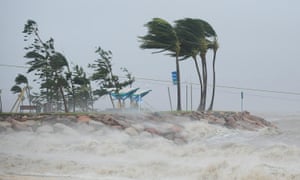
Strong winds from cyclone Yasi hit Townsville in 2011.
Storms, heatwaves and coral bleaching have devastated
Australian coasts in the past decade.
More than 8,000km of Australia’s coast was affected by extreme climate events from 2011 to 2017, and in some cases they caused irreversible changes to marine habitats.

The study collated all the published research by leading scientists, who have examined the effects of marine heatwaves, heavy rainfall from tropical storms, cyclones and droughts on coral, kelp, mangrove and seagrass communities.

Read the story from The Guardian by Lisa Cox - “Extreme weather has damaged nearly half Australia's marine ecosystems since 2011.” 

02 April, 2019

Budgeting for drought

Farming is a risky business. Seasonal conditions are always variable – ranging from drought back to normal and then onto above average rainfall, as well as floods and cyclones. Added to this, commodity prices are volatile.
The current crippling drought hitting eastern
Australia is reducing agricultural output.
The current crippling drought hitting eastern Australia is reducing agricultural output and incomes, as well as causing distress to many rural families across the country. And it could get worse – with climate change likely to increase both the frequency and severity of future droughts.

Most people voluntarily commit to farming if the anticipated returns in the good times balance the low or negative returns during adverse conditions. The majority of farmers and their families prepare for and adjust to the ups and downs of farming – and this includes drought.

But can the same be said for government?

Reed the Pursuit story by Professor John Freebairn from the University of Melbourne

06 February, 2019

David Wallace-Wells on climate: ‘People should be scared – I'm scared’

 David Wallace-Wells: ‘I am motivated by fear.’ 
David Wallace-Wells’s apocalyptic depiction of a world made uninhabitable by climate chaos caused an outcry when it was published in New York magazine in 2017. Based on the worst-case scenarios foreseen by science, his article portrayed a world of drought, plague and famine, in which acidified oceans drown coastal homelands, dormant diseases are released from ancient ice, conflicts surge, economies collapse, human cognitive abilities decline and heat stress becomes more intolerable in New York City than in present-day Bahrain. Critics called this irresponsibly alarmist. Supporters said it was a long-overdue antidote to climate complacency. Whatever your view, it was among the best-read climate articles in US history. Now he is back with a book-length follow-up.


Read the story from The Guardian by Jonathan Watts - “David Wallace-Wells on climate: ‘People should be scared – I'm scared’.”

25 January, 2019

Drought takes its toll claiming one of Queensland's largest free-range pig farms

The drought has crushed a free-range pork producer's dream of ethically farming heritage pigs, forcing her to shut up shop and dispose of more than 500 breeding and speciality pigs.
Julia and Shane Powell with their final load of
pork products ahead of their closing down sale.
Julia Powell's farm, Backfatters, in Queensland's North Burnett region, has become yet another victim of the drought as grain prices are driven through the roof.

"The drought has finally got us," Ms Powell said.

"Even though our sales are strong we've got to make some money off the enterprise and living off nothing doesn't work.”

Julia and Shane Powell's farm produced and sold up to a tonne of bacon, ham and sausages each week.


Read the ABC News story by Sarah Jane Bell and Jennifer Nichols - “Drought takes its toll claiming one of Queensland's largest free-range pig farms.

05 January, 2019

Yes, the chaotic the 2018 weather in Europe is linked to climate change

Europe was one continent that experienced abnormal weather during 2018. After a couple months of extremely cold weather, heat and drought through spring and summer meant temperatures were well above average in much of the northern and western areas.
A road in Villalier, France, destroyed by the flood.
Between May and July, Scandinavia had the driest and warmest period on record.

The highest temperatures ever were recorded in the Arctic Circle. In Helsinki-Vantaa Finland, figures how record long runs of warm temperatures. There were 25 consecutive days of heat above 25ºC.


15 December, 2018

Age of extremes.

Droughtheatwavesbushfires and intense rain. Summer has barely started, but spring brought more than enough extreme weather to go on with.
Early indications: firefighters working to control a bushfire at
Deepwater in Central Queensland last month. At one point,
140 fires were burning around the state.
Spring is a time when southern cold fronts and warm northern air often battle it out all over the country. This makes for changeable and sometimes unpredictable weather, with the southern states topping 40°C one day but barely reaching 18°C the next.

As summer approaches, warmer — and in the tropics, more humid and wetter — conditions become the norm, and they usually fall within a more predictable envelope of variability. Extreme events occur when that envelope is pushed. And while a couple of extreme events in a season is fairly standard, a greater number of extreme events is starting to become the norm.

Read the story Inside Story by Sarah Perkins-Kirkpatrick - “Age of extremes.


(Sarah Perkins-Kirkpatrick is featured on “Climate Conversations”)

26 October, 2018

Morrison government to establish $5 billion future fund for drought resilience

The government will pour $3.9 billion into a new fund to mitigate the devastating impacts of drought, in a major pitch to struggling regional communities that Prime Minister Scott Morrison says is "putting money aside for non-rainy days”.
Prime Minister Scott Morrison and Deputy
Prime Minister Michael McCormack. 
CREDIT:
The Drought Future Fund – to be announced on Friday – will provide grants totalling up to $100 million a year from 2020 onwards by drawing on the investment earnings from the initial capital injection.

The pool is projected to grow to $5 billion within a decade, and will be managed by the Future Fund board of guardians, which is led by former Howard government treasurer Peter Costello.

In a statement ahead of the national drought summit in Canberra on Friday, Mr Morrison said the government would finance key water infrastructure and drought resilience projects as the fund swells into a substantial reserve to deploy during spells of dry weather.


Read the story from The Age by Fergus Hunter - “Morrison government to establish $5 billion future fund for drought resilience.”

23 October, 2018

How do extreme weather events impact agricultural production?

In summer 2018, Europe experienced a record-breaking heat wave and drought, leading to widespread harvest failures and risks of bankruptcy for farmers. 


At the same time, south-east Australia suffers from one of its most severe droughts on record, threatening the livelihoods of grain farmers and livestock managers. 

Climate extreme events, such as droughts, heat waves, cold spells or heavy precipitation events, are projected to increase under climate change in many regions worldwide. 

Understanding the effect of such events on crop yields is crucial to predict the response of agricultural production to climate extremes and inform adaptation processes. 

This talk examines the effect of temperature and precipitation extremes on the yields of four major crops — maize, rice, soybeans, and wheat, using a global, high-resolution yield dataset and global, gridded data on past weather conditions and climate extremes. 

By applying a range of novel statistical methods, this presentation investigates the complex interactions between changes in climate conditions during the growing season and yield fluctuations, and identifies most influential climate factors for predicting crop yield anomalies.


Register for the Australia-German Energy College seminar, which you can either personally attend the Wednesday, November 7, event or join the webinar.

13 October, 2018

How climate change policy helps farmers

Drought is ravaging the land. Large swaths of eastern Australia are experiencing some of the worst seasons on record. Frosts have wiped out large areas of crops in Western Australia, southern New South Wales and Victoria. Hail has beaten crops into the ground in Queensland.
Tony Windsor.
The government is scrambling to be seen to be doing something meaningful for farmers, particularly in Queensland where traditional National voters are looking to desert in favour of minor parties, such as One Nation and Katter’s Australian Party. In some coastal seats in the state, Labor is also doing well. Hence the scene is set for the champion of the short-term, former agriculture minister Barnaby Joyce, to weave his web of utterances that join the drought, energy and climate scepticism into an electoral defence.

At the same time, the climate change debate proceeds at a crawl without any meaningful policy regarding the risk of increased drought and other weather events. This week a report, released by the Intergovernmental Panel on Climate Change (IPCC), declared that in order to keep warming within a relatively safe 1.5 degrees Celsius, global emissions will need to be cut by 45 per cent by 2030. Coal power will need to be phased out by 2050. The world has just 12 years, according to the IPCC, to avoid a climate change catastrophe. The deputy prime minister, Michael McCormack, rejected the IPCC’s call for transition from coal, saying “some sort of report” won’t stop Australia using up its coal resources. Renewable energy, and the opportunities it offers regional Australia, is still being used as a political pawn.


Read the story by Tony Windsor from The Saturday Paper - “How climate change policy helps farmers.”

03 October, 2018

The new normal? How climate change is making droughts worse

The hardest part of drought is the retreat. Communities withdraw into their shell. Workers leave town as they lose jobs and often housing, animals are sent away, class sizes drop, activity shrinks, dust drifts in through every crack in the house. It’s slow, which is why it messes with your head, creeping forward until something snaps and what begins as confusion reaches consensus.
Australian Prime Minister Scott Morrison holds up a photo
from February 2016 of what sheep and cattle graziers Stephen
 and Annabel Tully's property used to look like. 
When Scott Morrison became prime minister in August, nearly seven years after the Queensland dry began, he announced drought was his first priority. He headed up Quilpie way, in the south-west of the state, and stood with farmers as he was asked pointed and persistent questions about climate change.

“Whether it is climate change or it is not,” Morrison said, “is completely irrelevant to everybody here.”

For people suffering from lack of income, both in town and farm, drought is awful and relentless as each day dawns an overwhelming blue. Often communities get so focussed on surviving from day to day, it is difficult to see a bigger picture. While the consequences of drought for regional communities don’t change, the conversations about it are changing, centring more and more on best management in a changing climate. What if this is the new normal?


Read the story from The Guardian - “The new normal? How climate change is making droughts worse.”

20 September, 2018

Drought conditions in Australia spread north as Indonesia feels the bite of the big dry

The drought in Australia is having an impact on its neighbours, with 5 million people in Indonesia suffering from an extended dry season.
Rice farmer Ampir said the dry season had lasted twice as long as usual.
Hot, dry air intensified by drought conditions in Australia has circulated north, contributing to water shortages in 4,000 Indonesian villages.

Pak Siswanto, the director of climatology at Indonesia's Meteorological, Climatological and Geophysical Agency, said the weather conditions in Indonesia followed on from what was happening in its larger southern neighbour.

"The dry season in Indonesia is actually forced by the wind circulation coming from Australian continent," he said.

"When we have dry air and less moisture circulated from Australia toward Indonesia, it modulates the dry season in Indonesia.”