Showing posts with label catastrophic. Show all posts

25 April, 2020

There are 10 catastrophic threats facing humans right now, and coronavirus is only one of them

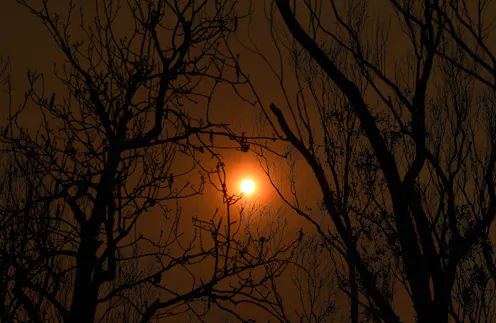
Four months in, this year has already been a remarkable showcase for existential and catastrophic risk. A severe drought, devastating bushfires, hazardous smoke, towns running dry – these events all demonstrate the consequences of human-induced climate change. 
There are 10 catastrophic threats facing humans right now, and ...

While the above may seem like isolated threats, they are parts of a larger puzzle of which the pieces are all interconnected. A report titled Surviving and Thriving in the 21st Century, published today by the Commission for the Human Future, has isolated ten potentially catastrophic threats to human survival. 
Not prioritised over one another, these risks are:
  1. decline of natural resources, particularly water
  2. collapse of ecosystems and loss of biodiversity
  3. human population growth beyond Earth’s carrying capacity
  4. global warming and human-induced climate change
  5. chemical pollution of the Earth system, including the atmosphere and oceans
  6. rising food insecurity and failing nutritional quality
  7. nuclear weapons and other weapons of mass destruction
  8. pandemics of new and untreatable disease
  9. the advent of powerful, uncontrolled new technology 
  10. national and global failure to understand and act preventatively on these risks.

24 April, 2020

COVID-19 climate lessons

Pandemics and climate disruption are catastrophic, and potentially existential, risks.

Breakthrough - National Centre for Climate Restoration - WikipediaClimate disruption now manifests as an emergency because the climate system is close to tipping points that could drive it to a “point of no return”, where further warming would become self-sustaining. 

Existential threats require a particular approach to risk management.

The COVID-19 pandemic provides an opportunity to understand the world’s preparedness for such a risk, and how and why the world’s response, by and large, was grossly inadequate.


This failure has important lessons for the preparedness of human society to respond to the much greater threat posed by human-induced climate disruption.

There are also important, positive lessons in the pandemic response about the capacity of society to move quickly into emergency mode.

Read the Breakthrough discussion paper by David Spratt and Alia Armistead - “COVID-19 climate lessons”.

29 November, 2018

Queensland bushfires continue to burn as residents start returning home

Gracemere residents are returning home after fire conditions classed as catastrophic on Wednesday resulted in a rapid evacuation of the town, south of Rockhampton, while residents south of Mackay are describing their own fire emergency as like seeing "the door to hell".
Thousands of residents were forced to leave Gracemere on Wednesday.
About 50 residents at Campwin Beach, on the Queensland coast south of Mackay, were forced to leave their homes at 2:00am today to seek shelter on other parts of the beach as a blaze threatened their homes.

Sarina Beach resident Vicky Crichton said she was woken by authorities telling her to evacuate her home.


24 November, 2018

Is Labor's energy plan really a wrecking ball for industry?

If electricity ever stops flowing to the Tomago aluminium smelter, the results could be catastrophic. Molten metal in potlines would start to solidify. If enough equipment was ruined, the future of the entire plant would be at risk. Jobs may be lost, a community plunged into crisis.
Opposition Leader Bill Shorten, with Victorian state
 Energy Minister Lily D'Ambrosio, out selling his energy
policy in Brunswick on Friday.
CREDIT:
Where better for Energy Minister Angus Taylor to head as Labor launched its energy policy on Thursday? Clad in a high-vis vest at the plant near Newcastle, he declared Labor's plan to transition to renewables a veritable death knell for Australia’s manufacturers. Electricity prices would lurch upwards. The lights would go out.

"If we want to keep heavy industry going in this country, if we want to keep the aluminium smelters going, the steel mills, the abattoirs ... if we want to keep these industries alive and well and competitive in this country, we’ve got to have low-cost affordable reliable sources of power,” Mr Taylor said.


17 November, 2018

Seven Ways Climate Change Will Hit California in the Next Decade

The fires burning in Northern and Southern California right now are catastrophic and heartbreaking. The entire city of Paradise is devastated. Malibu is in flames. An eerie smoke rests over the Bay Area, leaving an ominous orange light and thick air through which kids are walking to school in masks. The scariest thing of all may be that due to the ever-worsening trend of climate change, this is fast becoming the new normal. While fearmongering is rarely helpful, in this case our biggest worries may become a reality.
The eerie reality of climate change.
The fact that the EPA, our government’s foremost legislative body responsible for stemming the tide of impending environmental catastrophes, was recently run by Scott Pruitt, a man who made it his mission in a past lobbying career to essentially dismantle its very foundations, should frighten every American. (Fun fact: while his former position is still officially unfilled, it’s being quasi-filled by Andrew Wheeler, an under-the-radar man with a gobble similar to Mitch McConnell’s who’s quietly and incrementally advancing the interests of the fossil-fuel industry.)

While Californians are pushing back on the White House’s sins against good ol’ Mother Nature, the sobering, unholy facts still remain: our seas are rising; our air is warming; and our flora and fauna are disappearing. The damage has been done—we’re now in crisis-management mode.


Read the story from Medium by Matt Charnock - “Seven Ways Climate Change Will Hit California in the Next Decade."

14 October, 2018

How Capitalism Torched the Planet and Left it a Smoking Fascist Greenhouse

Sometimes, after I write scary essays, I encourage you to not learn them. This one’s totally different. It’s going to be brutal, scary, jarring, and alarming. But in case you actually need to perceive the longer term, then learn away.


It strikes me that the planet’s destiny is now in all probability sealed. We have just a decade in which to control climate change — or goodbye, an unknown stage of catastrophic, inescapable, runaway warming is inevitable — based on the UN. The actuality is: we’re in all probability not going to make it. It’s extremely doubtful at this juncture that humanity goes to win the battle in opposition to local weather change.

Yet that’s for a really surprising — but completely predictable — purpose: the sudden explosion in international fascism — which is what capitalism all the time melts down into. If, when, Brazil elects a neo-fascist who plans to raze and unload the Amazon — the world’s lungs — then how do you suppose the battle in opposition to warming will likely be received? It will likely be set again by a long time — a long time…we don’t have. America’s latest Supreme Court justice, a tremendous fellow accused of serial rape, is already hanging down environmental legal guidelines — in his first few days in workplace — however he will likely be on the bench for all times…beside a President who hasn’t simply decimated the EPA, however stacked it with…the type of delusional, strutting Americans who assume international warming is a hoax. The world is about by again by a long time…it doesn’t have. Do you see my level but? Let me make it razor sharp.


27 March, 2018

Bombshell: Land, Ocean Carbon Sinks Are Weakening, Making Climate Action More Urgent

We are destroying nature’s ability to help us stave off catastrophic climate change. That’s the bombshell conclusion of an under-reported 2014 study, “The declining uptake rate of atmospheric CO2 by land and ocean sinks,” as coauthor Dr. Josep (Pep) Canadell recently explained to me.
One of the huge craters recently found in Sibera.
"They are probably caused by methane released
as permafrost thawed".
Based on actual observations and measurements, the world’s top carbon-cycle experts have determined that the land and ocean are becoming steadily less effective at removing excess carbon dioxide from the atmosphere. This makes it more urgent for us to start cutting carbon pollution ASAP, since it will become progressively harder and harder for us to do so effectively in the coming decades.


21 January, 2018

As climate risks increase, will geoengineering become a safer alternative?

With fires, storms, record-breaking temperatures and changes in the natural environment, there is growing evidence that our earth’s systems are becoming increasingly unstable. This has potentially catastrophic consequences.
New technologies may one day pull the greenhouse
gases from the atmosphere. But at what cost?
Public debate often places climate risks in the context of "this century" or "by 2100". But scientists are increasingly highlighting the risks of devastating and irreversible impacts in just 20 or 30 years. This is within our lifetimes, and certainly within our children’s.

These risks include:

Loss of nearly all corals, which support 25% of all ocean life (as documented in the recent film Chasing Coral)

Collapsing ice sheets, which will raise sea-levels, devastating coastal cities and low-lying countries

Warming oceans, which energize storms (to category 6 and higher), with damage that includes breaches of coastal nuclear reactors

Warming of the planet, caused by the greenhouse effect, is the primary stressor of many of these environmental challenges. Carbon dioxide and other pollutants present further complications, such as increasing ocean acidification.


17 June, 2017

Eat Less Meat: A Small Change with a Big Impact

A diet not including meat, or even less meat, can help the world avoid catastrophic climate change.

The industrial farming of meat is energy intensive, but animal itself is a major contributor to the worsening of climate change trough through the emission of methane gas through constant belching.


Read the Civil Eats picture/story - “Eat Less Meat: A Small Change with a Big Impact.”

03 June, 2017

It's way past time to speak truth to climate arguments this stupid

For precious decades experts have explained, over and over, that the science of climate change is incontrovertible, the consequences of blindly sticking with fossil fuels catastrophic and the costs of inaction far higher than switching to a low-emissions economy.

‘To make the ridiculous case that abandoning Paris
 was good for the US economy, Trump didn’t just
have to ignore science, but also the pleading
of the US business community.’ 
But these facts had no impact on the sceptics, who cling to a worldview where they find “alternative facts”, where fossil fuel power is the only path to prosperity and mounting environmental and economic evidence to the contrary is some kind of dastardly leftwing plot.

For Tony Abbott’s economic adviser Maurice Newman, global warming was a “hook” used by the United Nations to impose a new world order in opposition to “capitalism and freedom”. To Donald Trump it is a “hoax” propagated by the Chinese to undermine the US while the rest of the world rolls around laughing.

The only skerrick of positive news from sceptics’ greatest victory yet – the US president’s decision to withdraw from the Paris climate accord – is that it seems to have galvanised politicians, scientists, business leaders and economists who have grown weary from all these years talking to the hand.


Read Lenore Taylor’s story on The Guardian -  “It's way past time to speak truth to climate arguments this stupid.

17 April, 2017

Scientists Say Only 10 Years Left to Save the Planet

The planet, as we know it, has been given a deadline: 10 years. According to the International Institute for Applied Systems Analysis, if humans don't reduce greenhouse gas emissions drastically and maintain carbon sinks, like forests, then the results will be catastrophic for the climate. But they've developed a model that they believe could do the trick.
Cassie Kelly writes about
 having just a decade left to
save our planet.
The study, published in the journal Nature Communications, outlines a plan that could simultaneously account for carbon uptake by plants and carbon release by anthropogenic (human-induced) activities.

"The study shows that the combined energy and land-use system should deliver zero net anthropogenic emissions well before 2040 in order to assure the attainability of a 1.5°C target by 2100," said Michael Obersteiner, coauthor and IIASA director.


Read Cassie Kelly's EcoWatch story - “Scientists Say Only 10 Years Left to Save the Planet.”

05 April, 2017

How the Insurance Industry Is Dealing With Climate Change

When it comes to the calculating the likelihood of catastrophic weather, one group has an obvious and immediate financial stake in the game: the insurance industry. And in recent years, the industry researchers who attempt to determine the annual odds of catastrophic weather-related disasters—including floods and wind storms—say they’re seeing something new.
Climate change means more frequent wind
storms, increasing the level of risk taken
on by insurance firms.
“Our business depends on us being neutral. We simply try to make the best possible assessment of risk today, with no vested interest,” says Robert Muir-Wood, the chief scientist of Risk Management Solutions (RMS), a company that creates software models to allow insurance companies to calculate risk. “In the past, when making these assessments, we looked to history. But in fact, we’ve now realized that that’s no longer a safe assumption—we can see, with certain phenomena in certain parts of the world, that the activity today is not simply the average of history.”


Read the story on the Smithsonian by Joseph Stromberg - “How the Insurance Industry Is Dealing With Climate Change.”

11 January, 2017

Old floods show Brisbane’s next big wet might be closer than we think

The swollen Brisbane River
 consumed large parts of the city.
Six years ago, a catastrophic flood unfolded in the Lockyer Valley in southeast Queensland. The floodwaters then spread on January 11 2011 across the Brisbane River floodplains, inundating the Brisbane CBD and inner suburbs, and bringing the state’s capital to a standstill.

The January floods came in the wake of other devastating floods that had hit Queensland towns and cities in December 2010, affecting an area bigger than France and Germany combined. Thirty-three people died in the 2010/2011 floods; three remain missing.

Our research, based on palaeological flood records, suggests floods of the size of January 2011 may be more common than we think. When the next one occurs is a matter of when, not if. So what can we do to plan better?

Read the story The Conversation by an Associate Professor in Fluvial Geomorphology at The University of Queensland, Jacky Croke - “Old floods show Brisbane’s next big wet might be closer than we think.”

06 October, 2016

Hurricane Matthew: dozens dead in Dominican Republic, Haiti as Cuba's oldest town flattened

A woman cries amid the rubble of her home,
 destroyed by Hurricane Matthew in Baracoa, Cuba.
Les cayes, Haiti Hurricane Matthew twisted toward the Bahamas and Florida's east coast on Wednesday after killing at least 26 people and damaging a majority of homes in Haiti's south, and flattening Cuba's oldest town, Baracoa.

The powerful Category 3 hurricane, the fiercest Caribbean storm in nearly a decade, whipped Cuba and Haiti with 230 kph winds and torrential rains on Tuesday, pummelling towns and destroying livestock, crops and homes.

In the United States, more than 1.5 million people were urged to evacuate the south-eastern coast and Florida Governor Rick Scott warned residents to prepare for a possible direct hit that could be catastrophic.

Hundreds of thousands of people had been evacuated from the path of Matthew, which caused severe flooding and killed four people in the Dominican Republic as well as at least 22 in Haiti. The two countries share the island of Hispaniola.

03 May, 2015

Trench fighting about climate change itself is over, but the battle about response continues


by Robert McLean

T

rench fighting about the existence, the reality of climate change is over however, we are still in the trenches fighting about how we respond to this ever-worsening dilemma.

Any worthwhile attempt to avoid catastrophic climate change/global warming (or “climate ruin” as one pundit has suggested) hinges on an at least 80 per cent cut in the world’s greenhouse gas emissions.

Suggestions put forward to date, as honourable in intent as they are worthy of applause, are really little more than nibbling at the edges.

That 80 per cent cut, as dramatic as it might seem, is really just the beginning for the global aim should be zero emissions leading to the negative position before the end of this century.

It is argued that within five days of America entering World War Two, the country’s auto industry had swapped from producing consumer goods to military hardware.

That is a clear indication that with a sense of purpose and will we are able to engage with, undertake and make massive and significant changes to core human pursuits – any practical and worthwhile response to climate change will only be of any consequence if similar to what happened in the lead up to WWII.

Corporations effectively rule the world today – elected governments are theoretically in charge, but it is the corporations through their countless think-tanks and armies of lobbyists who actually pull the strings.

Arrival at an 80 per cent reduction of global GHG emissions will demand a war-like response, but being such a distant memory and so something about which most are unfamiliar, that it is impracticable and largely unachievable.

Like it or not, we are locked into what will be a struggle for human survival (that sounds dramatic, but until we are prepared to say it, from our leaders down will anything of any consequence happen) then we will continue to muddle along until we arrive at a catastrophic bifurcation in our lifestyles demanding action.

The tragedy is that as of today we (humans) have the capacity to make significant and meaningful changes to how we live and what we prioritize and in blindly charging forward, the time when we will need those resources is becoming inevitably closer and so we should be applying those reserves now and not expending them to such an extent that they will be rare, expensive and so hard, in not impossible to apply.

Writing on what is a wonderful autumn day, something being experienced by many of my Goulburn Valley counterparts it is difficult, if not impossible to suggest to people that rather dire times are ahead when a changing climate system is going to disrupt everything with which we are familiar.

Meanwhile, The Guardian reports that failure by the world leaders in Paris this year to reach a deal to cut carbon emissions would be catastrophic.

Its story - “Extreme weather and rising seas are already global threats. This will only intensify” – discusses the importance of the Paris meeting and the general nonchalant approach most people have to that crucial moment.

31 March, 2015

Denial could lead to massive and catastrophic recession


D

enial of climate change could lead to a massive catastrophic recession in Florida.

In discussing the U.S. state, ClimateProgress reports that there is at least $1.4 trillion in property within 660 feet of the U.S. coast.

Florida continues to deny the very existence of climate change and yet astrophysicist Neil deGrasse Tyson reminds us that, “The good thing about science is that it’s true whether or not you believe in it.”

ClimateProgress reports: “And what science told us in the last 12 months about likely sea level rise has been shocking. It’s the kind of news that should have stopped coastal development cold.”

The story - “Florida’s Climate Denial Could Cause Catastrophic Recession” – says, “A January study found that global sea level-rise since 1990 has been speeding up even faster than we knew.”

03 December, 2014

'Too many countries are ignoring the human catastrophe of climate change' - Hanna


“Too many countries are ignoring the human catastrophe of climate change,” according to Dr Liz Hanna.

The Climate and Health Alliance president and Australian National University heat researcher has said both the World Meteorological Organisation (WMO) and Australia Bureau of Meteorology data have every years painted a more distressing picture of advancing climate change.

In a report released today headed: “Climate disruption is underway: Australia's obstruction on policy putting lives at risk” she said the WMO series of “weather reports from the future” point to catastrophic weather events in 2050.

She warned that despite that looking catastrophic situation, inaction appeared to be the preferred option.

22 October, 2014

Emission cuts will be 'too little, too late' - it's time for a war-footing


Professor Jim Skea.
The analogy of a “war footing” is frequently used to explain how the world needs to respond to climate change.

However, quite the reverse is happening with ideological debates taking us deeper into an abyss to make it increasingly difficult, if not impossible, to see the earth return to a state in which humans, and other species, can prosper.

Humanity appears addicted to the prevailing carbon intensive way of life that is simply worsening emissions every month and edging us closer to catastrophic climate change.

Some claim that proposed changes are bold and will keep us below the agreed two degree pre-industrial limit (at even less than one degree, the world’s climate is changing faster than ever anticipated), but in fact they a wholly inadequate and in reality timid.

One who agrees with that is the vice-chair of the Intergovernmental Panel on Climate Change, Professor Jim Skea, who is quoted in a Climate Progress story headed: “IPCC Official Says Europe’s Planned 2030 Emission Cuts Would Be ‘Too Little Too Late’”.

07 April, 2013

Nicholas Stern warns of catastrophic climate change


Nicholas Stern.
A five degree increase in global temperatures is becoming increasingly likely according to the British former chief economist for the World Bank, Nicholas Stern.
 

A five degree increase in global temperatures is becoming increasingly likely according to the British former chief economist for the World Bank, Nicholas Stern.
 
Stern, who wrote a 2006 study on climate change, said on Tuesday, April 2, that the world could be headed toward warming even more catastrophic than expected but he voiced hope for political action.
 
He said that without changes to emission trends, the planet had roughly a 50 percent chance that temperatures would soar to five degrees Celsius (nine degrees Fahrenheit) above pre-industrial averages this century.
 
"We haven't been above five degrees Centigrade on this planet for about 30 million years. So you can see that this is radical change way outside human experience," Stern said in an address at the International Monetary Fund.
 
The economist was quoted in an international news story headed: “Economist warns of 'radical' climate change, millions at risk”.