Showing posts with label fires. Show all posts

28 January, 2020

The Australia fires portend a future of climate apartheid

It will be a long hot summer in Australia. Fires of almost biblical proportions have swept across the country, devastating land, property and wildlife. More than 30 people have been killed, a billion animals have died, and more than 3,000 homes have been burned down. The cost of the bushfires has been estimated at $2bn and could climb even further.
Rural Fire Service (RFS) volunteers and NSW Fire and Rescue officers fight a bushfire encroaching on properties near Termeil, Australia on December, 3, 2019 [AAP image via Reuters/Dean Lewins]
Rural Fire Service (RFS) volunteers and NSW Fire and Rescue
 officers fight a bushfire encroaching on properties near Termeil,
 Australia on December, 3, 2019
Although heavy rain and lower temperatures this month have helped put out some fires, the threat of the blaze coming back is still imminent
Meanwhile, Australian Prime Minister Scott Morrison's response to this environmental catastrophe has been to refuse to expand measures to combat climate change. In December, as the death toll was climbing and Australian fire brigades struggled to control the fires, the prime minister left the country for a holiday in Hawaii.
His attitude and actions illustrate quite well just how the wealthy and their political allies plan to rule our burning planet.

Read the story from Al Jazeera by David A. Love - “The Australia fires portend a future of climate apartheid.”

24 August, 2019

What Satellite Imagery Tells Us About the Amazon Rain Forest Fires

Scientists studying satellite image data from the fires in the Amazon rain forest said that most of the fires are burning on agricultural land where the forest had already been cleared.

Most of the fires were likely set by farmers preparing the land for next year’s planting, a common agricultural practice, said the scientists from the University of Maryland.

Satellite images like the one below show smoke plumes from fires emanating from agricultural areas.


We’d Better Retreat from the Coasts While We Still Can, Scientists Urge Amid Climate Crisis

As many as 1 billion people are expected to be forced out of their homes by the droughts, floods, fires and famines associated with runaway climate change over the next 30 years — and they all have to go somewhere. This massive global exodus can go one of two ways: either it will be a chaotic mess that punishes the world's poor, or it can be a path to a fairer, more sustainable world.

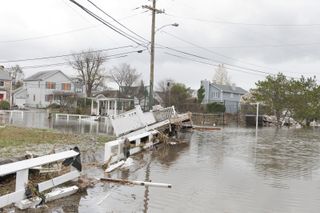
flooded streets after hurricane sandy
Flooded streets after Hurricane Sandy show the
damage that can occur in vulnerable coastal areas.
 We should plan for the inevitable and strategically
retreat from such vulnerable coastal communities
 now, scientists argue in a new paper.
In a new policy paper, published today (Aug. 22) in the journal Science, a trio of environmental scientists argue that the only way to avoid the first scenario  is to start planning now for the inevitable "retreat" from coastal cities. 

"Faced with global warming, rising sea levels, and the climate-related extremes they intensify, the question is no longer whether some communities will retreat — moving people and assets out of harm’s way — but why, where, when, and how they will retreat," the authors of the paper wrote.


Read the story from LiveScience by Brandon Specktor - “We’d Better Retreat from the Coasts While We Still Can, Scientists Urge Amid Climate Crisis.”

02 March, 2019

How do we save ageing Australians from the heat? Greening our cities is a good start

Heatwaves have killed more Australians than road accidents, fires, floods and all other natural disasters combined. Although recent research shows extreme cold is a worry in some parts of Australia, our hottest summer on record points to more heat-related deaths to come. The record heatwaves have highlighted the damaging effects of heat stress. Understandably, it’s becoming a major public health challenge.
A shade tree makes a big difference to the comfort of this couple.
The risk of extreme heat events and the adverse impacts on older people has been extensively discussed in research. Remarkably, very little attention has been paid to the role of urban greenery in reducing heat stress for seniors.

Older people are particularly at risk of heat stress. Pre-existing medical conditions and limited mobility increase their vulnerability. Deaths of older people increase during extreme heat events.


04 January, 2019

Climate Costs in 2018: Top 10 Disasters Cost $85 Billion

With 2018 having just drawn to a close, some organizations have begun to tally the staggering climate-related costs of a year featuring severe drought, heat, fires, floods and storms around the world. Ten of the biggest disasters cost at least $85 billion in total damages, according to a recent report by the United Kingdom-based organization Christian Aid.
Ten of the biggest climate disasters cost at least 
$85 billion in total damages, according to 
a recent report by the United Kingdom-based 
organization Christian Aid.
The report, “Counting the Cost: A Year of Climate Breakdown,” looked into events including catastrophic flooding in Kerala, India to devastating wildfires in California, extreme weather events exacerbated by a warming climate. Christian Aid, which works to eradicate global poverty, identifies the top 10 climate-related disasters of 2018 costing more than a billion dollars each. Hurricanes Florence and Michael and the California wildfires in November topped the list, marking yet another expensive year of extreme weather for the United States.

“The year has once again featured extremes of weather made worse by human-induced climate change, with major consequences, costs, and human suffering,” said Dr. Kevin Trenberth, senior scientist at the National Center for Atmospheric Research.


Read the Climate Liability News story by Dana Drugmand  - “Climate Costs in 2018: Top 10 Disasters Cost $85 Billion.”

23 July, 2018

Recent Australian droughts may be the worst in 800 years

Australia is a continent defined by extremes, and recent decades have seen some extraordinary climate events. But droughts, floods, heatwaves, and fires have battered Australia for millennia. Are recent extreme events really worse than those in the past?
Places such as Berri were affected by Millennium
Drought, caused by low cool-season rain.
New materials and techniques are now being
used to observe drought causes and water
patterns in Australia’s history to help the future.
In a recent paper, we reconstructed 800 years of seasonal rainfall patterns across the Australian continent. Our new records show that parts of Northern Australia are wetter than ever before, and that major droughts of the late 20th and early 21st centuries in southern Australia are likely without precedent over the past 400 years.

This new knowledge gives us a clearer understanding of how droughts and flooding rains may be changing in the context of a rapidly warming world.


Read the story from The Conversation - “Recent Australian droughts may be the worst in 800 years.”

21 January, 2018

As climate risks increase, will geoengineering become a safer alternative?

With fires, storms, record-breaking temperatures and changes in the natural environment, there is growing evidence that our earth’s systems are becoming increasingly unstable. This has potentially catastrophic consequences.
New technologies may one day pull the greenhouse
gases from the atmosphere. But at what cost?
Public debate often places climate risks in the context of "this century" or "by 2100". But scientists are increasingly highlighting the risks of devastating and irreversible impacts in just 20 or 30 years. This is within our lifetimes, and certainly within our children’s.

These risks include:

Loss of nearly all corals, which support 25% of all ocean life (as documented in the recent film Chasing Coral)

Collapsing ice sheets, which will raise sea-levels, devastating coastal cities and low-lying countries

Warming oceans, which energize storms (to category 6 and higher), with damage that includes breaches of coastal nuclear reactors

Warming of the planet, caused by the greenhouse effect, is the primary stressor of many of these environmental challenges. Carbon dioxide and other pollutants present further complications, such as increasing ocean acidification.


04 January, 2018

Severe heat alert

Firefighters will be on high alert this weekend, after the Bureau of Meteorology issued a severe fire warning that could place much of Victoria at risk.

Maximum temperatures are forecast to exceed 40°C across much of the state on Saturday, with fresh winds also expected ahead of an approaching front.

CFA District 22 operations officer Travis Harris said the forecast weather conditions were the perfect brewing ground for fires.
Fire ready: Firefighters will be on high alert this weekend
with strong winds and low humidity forecast.
Mr Harris said conditions would be favourable today and tomorrow, but the fire danger on Saturday would mean crews would be on high alert.

The CFA will put control centres in place on Saturday, in addition to extra resources and people, in the event of an incident.

‘‘It’s all factored around the weather so the high temperatures, combined with the strong winds and low humidity will increase the dangers if a fire was to start,’’ Mr Harris said.

Northern parts of the state will be most impacted, with the northern country and north central to receive severe warnings, and warnings for the Wimmera and Mallee areas to be set to extreme.

Lighting any fires is illegal on high fire danger rating days, and even activities such as mowing grass and working machinery can spark a blaze.

Mr Harris said fires could occur anywhere at any time, but asked those on rural properties to be even more vigilant.

“We hope that everyone is on their best behaviour, so we can have bad fire weather, but if nothing happens that will be fantastic; if one starts, there’s an increased risk that a fire could take hold,’’ he said.

“We just ask people to be extra vigilant and to put off any tasks that are high risk.

‘‘At this stage, we have no expectation for what Saturday may bring, we’re still monitoring the forecast and keeping an eye on it.’’


Rhiannon Tuffield writes in the Shepparton News - “Severe heat alert.”

18 September, 2017

Enough tiptoeing around. Let’s make this clear: coal kills people

Coal kills people. This isn’t even slightly scientifically controversial.

‘How can journalists and editors report on the politics
of coal on one page and bushfires around Sydney in
September on another without making the connection?’
From the mines to the trains to the climate disruption; from black lung to asthma, heat stress to hunger, fires to floods: coal is killing people in Australia and around the world right now.

Yet we are once again having what passes for political debate about extending the life of coal-fired power stations and, extraordinarily, building new ones. The conversation is completely disconnected from the fact that two-thirds of Bangladesh was reported to be underwater, record-breaking hurricanes were battering the US, and wildfires were roaring in both the northern and southern hemispheres at the same time.

Read Tom Hollo’s comment in The Guardian - “Enough tiptoeing around. Let’s make this clear: coal kills people.”

23 December, 2014

What will cause people to finally think: 'Gee, the climate is changing'


Like ‘grist’ writer, David Roberts, I too wonder what will finally cause people to say “Gee, the climate is changing”.

Will it be droughts, floods, fires, unprecedented storms, rising sea levels, food shortages or noticeable disruption to our usually benign temperatures?

Roberts punts on rising seas levels as it will affect directly the lives of millions and that in turn will impact of the lives of millions more.

He discusses his ideas in a story headed: “Could flooding finally wake Americans up to the climate crisis?

26 October, 2013

Some are responding, while the Federal Government just walks away


Institutions, both State and Federal, are preparing to engage with difficulties arising from climate change and although our Federal Government claims recognition of the science, it appears to be doing little.

The Victorian Country Fire Authority
 believes fires such as those experienced
in New South Wales will become
more common in Australia.
Actually, it is doing something – it is walking away from confrontation with the reality.

It is one thing to acknowledge something, quite another to actually face it, particularly when “facing it” threatens the superstructure of ideologies upon which your life has been assembled.

The mantra of most every government in the world, of whatever stripe, is growth, but the adaptation to and mitigation of climate change hinges on the abandonment of those values; principles upon which the modern Western world urgently depend.

We must reshape those values, concentrating our efforts and energies on ensuring that our neighbourhoods, communities, towns and cities will sufficiently resilient and resourceful enough to endure the complications of the next few decades in which our changed atmosphere will produce weather quite different from what we are accustomed to and the resources upon which we depend will begin to disappear.

The Victorian Country Fire Authority has acknowledged the emerging difficulties associated with climate change and a story in today’s Melbourne Age headed: “Climate change means more severe fires: CFA” discusses its preparations.

Another story in yesterday’s Age headed: “Climate change raising fire risk” discusses the probability of increasing extreme fire risk.

It seems most people acknowledge human induced climate change, but there is, obviously, a vast gulf between saying “Yes, it is happening” and “Yes, let’s limit our wants, reduce our energy demands and give the world a chance to recover from 300 years of human assault”.

A world in which we build resilience will be dramatically different from one which is driven by the mantra of growth.