Showing posts with label storms. Show all posts

24 August, 2019

How climate change threatens public health

From prolonged droughts to dangerous sun exposures, the weather affects human health in numerous ways, and climate change has already ratcheted environmental health threats up a notch. Disease-carrying bugs have expanded their range, hotter heat waves last longer, and storms have gotten more extreme.
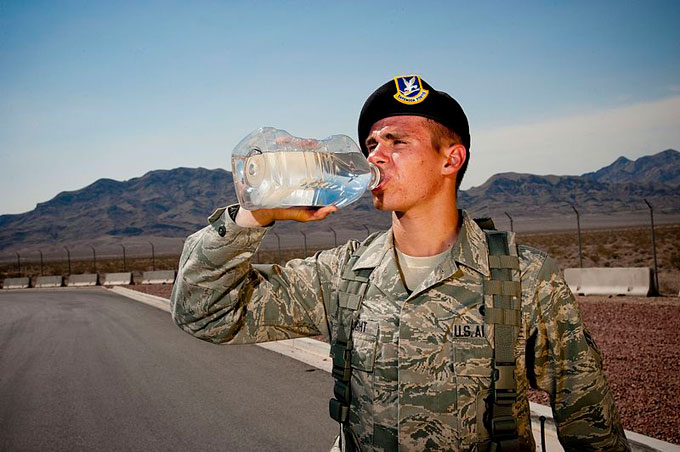
Airman
A 2013 heatwave caused near-record temperatures
at Nellis Air Force Base in Nevada, forcing those
 stationed there to hydrate frequently to avoid
heat-related injuries such as heat stroke. 
“Climate change is impacting our communities, in our backyards, right now,” says Amir Sapkota, a professor at the Maryland Institute for Applied Environmental Health.
Citing health threats posed by climate change, more than 70 major medical groups in the U.S. released a call to action in June 2019 declaring climate change “a true public health emergency.”
Jonathan Patz, M.D., MPH, director of the Global Health Institute at the University of Wisconsin, is an expert on climate change and public health. His view: “It’s so important that people recognize that climate change is about our health. There are so many pathways through which climate impacts our health.”

Read the story from Yale Climate Connections by Samatha Harrington - “How climate change threatens public health.” 

03 March, 2019

The Uninhabitable Earth by David Wallace-Wells review – our terrifying future

You already know it’s bad. You already know the weather has gone weird, the ice caps are melting, the insects are disappearing from the Earth. You already know that your children, and your children’s children, if they are reckless or brave enough to reproduce, face a vista of rising seas, vanishing coastal cities, storms, wildfires, biblical floods. As someone who reads the news and is sensitive to the general mood of the times, you have a general sense of what we’re looking at. But do you truly understand the scale of the tribulations we face? David Wallace-Wells, author of the distressingly titled The Uninhabitable Earth, is here to tell you that you do not. “It is,” as he puts it in the book’s first line, “worse, much worse, than you think.”
Burning issue … Eagle Creek ablaze near Beacon Rock golf
course in North Bonneville, Washington, in September 2017.
The book expands on a viral article, also titled The Uninhabitable Earth, which Wallace-Wells published in New York in the summer of 2017, and which frightened the life out of everyone who read it. Writing at length, he is even more remorseless in his delineation of what the not nearly distant enough future probably holds for us. The book’s longest section, entitled Elements of Chaos, is composed of 12 short and brutal chapters, each of which foretells a specific dimension of our forecast doom, and whose titles alone – Heat Death; Dying Oceans; Unbreathable Air; Plagues of Warming – are enough to induce an honest-to-God panic attack.

Wallace-Wells identifies a tendency, even among those of us who think we are already sufficiently terrified of the future, to be strangely complacent about the figures. Yes, we know that climate change will cause sea level rises of between four to eight feet before the end of this century, but then again what’s a few feet if you happen to live a couple of miles inland? “That so many feel already acclimated to the prospect of a near-future world with dramatically higher oceans,” he writes, “should be as dispiriting and disconcerting as if we’d already come to accept the inevitability of extended nuclear war – because that is the scale of devastation the rising oceans will bring.”


Read the book review from The Guardian by Mark O’Connell - “The Uninhabitable Earth by David Wallace-Wells review – our terrifying future.”

02 February, 2019

Climate change a burning issue (again) in voters' minds

This piece of backroom intelligence shouldn’t come as a surprise, given the summer we are all still enduring. Record high temperatures, the hottest January on record; storms; floods in some places, droughts in others; mass fish kills in ailing rivers.
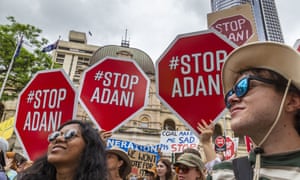
Adani protest
 ‘Climate change is not only a hot-button issue on its
own terms. Some of the research suggests it has
also become a proxy for political dysfunction.’ 
Climate change is back as a vote-changing issue – top of mind for many Australian voters. Private polling conducted for the environment movement and for the major parties suggests community concern about climate change is currently sitting at levels not seen since the federal election cycle in 2007.
If you can remember the events of 2007, you’ll recall that John Howard was forced into a significant about-face on the issue. Within sight of the election that swept Kevin Rudd into power, Howard signed the Liberal party up to emissions trading, a “world’s best-practice” cap and trade scheme, and declared Australia must prepare for a “low-carbon future”.


Read the story from The Guardian by Katharine Murphy - “Climate change a burning issue (again) in voters' minds.”

01 February, 2019

Dozens evacuated in Queensland floods as Townsville declared a disaster zone.

The Queensland coastal city of Townsville is in emergency shutdown after storms and a monsoon trough dumped extraordinary amounts of rain in the region, causing major rivers to reach peak flood levels.
Floodwaters at a home in Bluewater pushed a shipping container on its side. 
Premier Annastacia Palaszczuk gave police evacuation powers and declared the area a disaster zone, announcing the closure of all schools and child care centres on Friday.

“We’ve had cyclones, bushfires, and now these one-in-100-year extreme flood events,’’ a government spokesman said.

“It went from a normal north Queensland wet season into something extraordinary.”
Record rainfall in recent days is set to continue as police warn isolated areas around Townsville “could get falls of up to 400 millimetres a day”.


23 February, 2018

Climate change prompts idea for new cyclone classification

Increasingly powerful cyclones driven by climate change may require a new classification for the storms, category 6.

Cyclone Winston which hit Fiji in 2016 had winds exceeding 230km/h which was the highest margin of a category 5 cyclone, Climate Change Minister James Shaw told Radio NZ.

The Pacific Climate Change Conference is underway in Wellington, attended by politicians, scientists and policymakers.


Read the story from The New Zealand Herald - “Climate change prompts idea for new cyclone classification.”

21 January, 2018

As climate risks increase, will geoengineering become a safer alternative?

With fires, storms, record-breaking temperatures and changes in the natural environment, there is growing evidence that our earth’s systems are becoming increasingly unstable. This has potentially catastrophic consequences.
New technologies may one day pull the greenhouse
gases from the atmosphere. But at what cost?
Public debate often places climate risks in the context of "this century" or "by 2100". But scientists are increasingly highlighting the risks of devastating and irreversible impacts in just 20 or 30 years. This is within our lifetimes, and certainly within our children’s.

These risks include:

Loss of nearly all corals, which support 25% of all ocean life (as documented in the recent film Chasing Coral)

Collapsing ice sheets, which will raise sea-levels, devastating coastal cities and low-lying countries

Warming oceans, which energize storms (to category 6 and higher), with damage that includes breaches of coastal nuclear reactors

Warming of the planet, caused by the greenhouse effect, is the primary stressor of many of these environmental challenges. Carbon dioxide and other pollutants present further complications, such as increasing ocean acidification.


06 December, 2017

Don’t go in the water, Environment Protection Authority warns

Don't go swimming at Melbourne's beaches today – it could make you sick.
It's best to keep out of the water at Melbourne's beaches. 
That's the message from the authorities, who are urging people to steer well clear of every Port Phillip beach as the bacteria-filled runoff from the weekend's storms pours into the bay.

Indeed it may not be safe to swim tomorrow or right through the weekend.

The Environment Protection Authority is doing water-quality testing on Tuesday, which will determine how bad things are in the bay and how long people should avoid the water.


Read Liam Mannix’s story in today’s Melbourne Age - “Don’t go in the water, Environment Protection Authority warns.”

05 December, 2017

Melbourne weather: Storm shouldn't have been called a '10/10' says Craig Lapsley

The weather bureau has been criticised in the wake of this weekend's storms, with Victoria's emergency chief saying it has to revise the way it describes extreme events.
Emergency Management Commissioner Craig
 Lapsley at the State Control Centre on Sunday. 
Emergency Management Commissioner Craig Lapsley said on Monday the Bureau of Meteorology should not have forecast the storm as a ’10'.

"I'm not saying the bureau has got it wrong, but '10 out of 10' ... was overused," Mr Lapsley told ABC radio.

"I think that set a bar that was right up there.”

The bureau has defended its forecast but said the language used would be reviewed when the weather event was over.


Read Chloe Booker’s story in today’s Melbourne Age - “Melbourne weather: Storm shouldn't have been called a '10/10' says Craig Lapsley."

22 October, 2017

There’s Only One Way to Avoid Climate Catastrophe: ‘De-growing’ our Economy

You can almost feel the planet writhing. This summer brought some of the biggest, most destructive storms in recorded history: Harvey laid waste to huge swathes of Texas; Irma left Barbuda virtually uninhabitable; Maria ravaged Dominica and plunged Puerto Rico into darkness. The images we see in the media are almost too violent to comprehend. And these are the storms that made the news; many others did not. Monsoon flooding in India, Bangladesh and Nepal killed 1,200 people and left millions homeless, but Western media paid little attention: it’s too much suffering to take in at once.

What’s most disturbing about this litany of pain is that it’s only going to get worse. A recent paper in the journal Nature estimates that our chances of keeping global warming below the danger threshold of 2 degrees is now vanishingly small: only about 5 per cent. It’s more likely that we’re headed for around 3.2 degrees of warming, and possibly as much as 4.9 degrees. If scientists are clear about anything, it’s that this level of climate change will be nothing short of catastrophic. Indeed, there’s a good chance that it would render large-scale civilization impossible.


13 September, 2017

The Great Flood - Chris Hedges

How many times will we rebuild Florida’s cities, Houston, coastal New Jersey, New Orleans and other population centers ravaged by storms lethally intensified by global warming? At what point, surveying the devastation and knowing more is inevitable, will we walk away, leaving behind vast coastal dead zones? Will we retreat even further into magical thinking to cope with the fury we have unleashed from the natural world? Or will we respond rationally and radically alter our relationship to this earth that gives us life?

"People walk down a flooded street as they evacuate their homes
after the area was inundated with flooding from Hurricane Harvey
 on August 28, 2017 in Houston, Texas." 
Civilizations over the past 6,000 years have unfailingly squandered their futures through acts of colossal stupidity and hubris. We are probably not an exception. The physical ruins of these empires, including the Mesopotamian, Roman, Mayan and Indus, litter the earth. They elevated, during acute distress, inept and corrupt leaders who channeled anger, fear and dwindling resources into self-defeating wars and vast building projects. The ruling oligarchs, driven by greed and hedonism, retreated into privileged compounds—the Forbidden City, Versailles—and hoarded wealth as their populations endured mounting misery and poverty. The worse it got, the more the people lied to themselves and the more they wanted to be lied to. Reality was too painful to confront. They retreated into what anthropologists call “crisis cults,” which promised the return of the lost world through magical beliefs.

“The most significant characteristic of modern civilization is the sacrifice of the future for the present,” philosopher and psychologist William James wrote, “and all the power of science has been prostituted to this purpose.”


Read the Common Dreams story by Chris Hedges - “The Great Flood.”.”

05 April, 2017

Severe storms, floods and your health fact sheet

Doctors for the Environment Australia has developed this fact sheet to detail the adverse effects of floods and storms on our health and simple measures for avoidance and treatment.

Such extreme weather events are becoming more frequent with climate change and are demanding and costly to health services and communities.


Read the Doctors for the Environment story - “Severe storms, floods and your health fact sheet.”

02 May, 2016

Gusty winds, waves and wild weather to hit Melbourne

Melbourne to be battered by strong, gusty winds
and monster wave as will weather rolls in.
Thought Sunday's storms were rough? Well there could be worse to come - and soon - with the SES predicting chaos on Tuesday with winds of 100km/h and seas topping seven metres.

Wild storms on Sunday caused widespread blackouts across the state, and left about 36,000 homes without power, but they're merely a foretaste of what's to come.

Strong, gusty winds are tipped to batter Melbourne on Tuesday afternoon, shortly before a forceful cold front hits the metropolitan area at about 4pm.

Read Darren Gray’s story in the Melbourne Age - “Storms, monster waves on the way as wild weather rolls in.”

27 February, 2015

"Surf's down' could be the clarion call from climate change


Surfers are known for their extreme passions exhibited in pursuit of the perfect wave.

Climate change could end
 the "perfect wave".
Climate change will put even greater demands on those passions as The Sydney Morning Herald reports that our rapidly changing global climate will likely affect prime surfing spots worldwide.

It says: “In California, the forecasts for Monterey Bay's famed big swells, while far from certain, are also far from good.”

The story; “Surf's down: Climate change may flatten famed surfing waves” reports that one major source for California's surfing waves are open-ocean storms that send wave-generating swells toward the California coast.

“By 2100,” the story reports, “these storms could shift, sending their swells on a course parallel to the coast rather than toward it. This change, coupled with dramatic sea-level rise, could eradicate today's surfing spots.”

23 December, 2014

What will cause people to finally think: 'Gee, the climate is changing'


Like ‘grist’ writer, David Roberts, I too wonder what will finally cause people to say “Gee, the climate is changing”.

Will it be droughts, floods, fires, unprecedented storms, rising sea levels, food shortages or noticeable disruption to our usually benign temperatures?

Roberts punts on rising seas levels as it will affect directly the lives of millions and that in turn will impact of the lives of millions more.

He discusses his ideas in a story headed: “Could flooding finally wake Americans up to the climate crisis?”

08 December, 2014

Warnings ignored, but storms and damage can’t be


The warnings have been almost ignored, but the realities can’t be.

Storms continue to roll in over Sydney.
Sydneysiders can vouch for the ferocity of the storms, storms that are now into a record-setting seventh day.

Suggestions, backed by impeccable science, have warned of such storms being a product of climate change, but many, including our Prime Minister, Tony Abbott, seem to ignore the facts and cling to observations such as “freak”, “unusual” or even “seasonal”.

The unrelenting reality of the storms prompts such headlines from the ABC as: “NSW storms: Extra volunteers drafted in as seventh straight day of wild weather sets new record”.

Further, the ABC story reports: “As forecasters warn more wild weather could hit eastern New South Wales this week, SES crews from the Hunter, Illawarra and Bathurst regions have joined recovery efforts in Sydney's north and west.”

20 June, 2013

World Bank commits billions to combatting climate change


The World Bank is beginning to commit billions of dollars to flood prevention, water management and other projects to help major Asian cities avoid the expected impact of climate change, a dramatic example of how short the horizon has become to alleviate the effects of global warming.
 

A story in the Washington Post - “Climate change threatens trouble in the near future, World Bank says” – told its readers about the unfolding challenges of climate change.

It discussed the “hot spots” that will bear the brunt of the impact as sea levels rise, tropical storms become more violent, and rainfall becomes both more sporadic and — in the rainy season — more intense.

The story said the bank was now focusing much of its planning in some countries on how to build infrastructure and re-engineer cities to better withstand environmental stress.

02 March, 2013

Gathering Beneath the Wisteria is good for our health


Those of us who gather each month Beneath the Wisteria in Shepparton are playing our part in the broader betterment of humanity’s health.

The implications of that are explained in an account about health and how the taking of action about climate change is implicated is spelt out in a report, “Our Uncashed Dividend”.

The report, subtitled: “The health benefits of climate action”, is the work of The Climate and Health Alliance and the Climate Institute.

Early in the introduction the report says: “Climate change is already contributing to increasing public health problems: injuries and deaths associated with more extreme weather events such as fires, storms and droughts; worsening of chronic illnesses; the spread of infectious diseases; deteriorating water and food quality and availability; declining air quality; and the displacement of populations—all will impact on human health and well-being”.

Conversations about mitigating climate change frequently, rather always, become distracted and derailed by concerns about economic implications, but many of the present carbon abatement proposals have been costed and shown to be economically advantageous, and good for our health.

The final paragraph of the report’s conclusion says: “Finally, given both the tremendous health risks of a more hostile Australian climate and the potential benefits of action, a national health and climate change plan is needed. Such a plan could help communities, businesses and government better prepare for climate change, take advantage of the opportunities provided by low-carbon initiatives, and take actions that cut emissions and promote better human health”.

10 February, 2013

'Storm of the century' every few months


“Storms of the century” seem to be happening now every few months.

The latest, “Nemo”, has engulfed major parts of America’s north-east coast, disabling infrastructure, disrupting the lives of millions and denting a sweeping sector of the U.S. economy.

Storms or unusual ferocity ripple across various parts of the world, those of us in south-eastern Australia have experienced an exceedingly dry period and now are pondering possible beginning of another drought.

And yet the debate about whether or not climate change is a contributing factor and to what degree it is worsening these “storms of the century” continue with a regularity matched only by the arrival of fierce storms.

However and importantly, our scientists are attributing the exacerbation of those events to climate change and the America’s Huffington Post reports that in a story headed: “Climate Change And The Blizzard: Nor'easters More Fierce With Global Warming,Scientists Say”.

08 December, 2012

Living in a world some five degrees hotter


The urgency that is climate change was given a fresh emphasis today in the Melbourne Age with a piece entitled “Five degrees hotter?”.

Reporters Adam Morton, Ben Cubby, Tom Arup and Nicky Phillips combined their skills to research and compile information, and write a story about how Australia will look by the end of the century with a five degree increase in global temperatures.

They said the Australia will be significantly different, but remarkably similar.
Rainfall will be down, temperatures will be up , droughts and storms will be more frequent and the tropics will have moved further south.

10 November, 2012

Climate change to be more severe than predicted


US National Centre for
Atmospheric Research (NCAR).
Climate change is likely to be more severe than predicted according to the US National Centre for Atmospheric Research (NCAR).

Writing in a story headed: “Climate change 'likely to be more severe than some models predict’”, environment reporter for the Guardian newspaper, Fiona Harvey, noted that a new study found that greater temperature rises than earlier anticipated were now likely.

The story said that fiercer storms, floods, droughts and sea level rises would occur around the world sooner than expected.