Showing posts with label Queensland. Show all posts

23 March, 2020

North Queensland needs a new link to unlock massive wind and solar resource

Queensland needs around 15 gigawatts (GW) of wind and about 8GW of utility solar plus rooftop solar to go 100% renewable and be self-sufficient.
Image result for North Queensland needs a new link to unlock massive wind and solar resource

Queensland has around 39GW of wind resource and about 45GW of  solar resources. Both the quality and the quantity resource are in the north of the State with “North Queensland Renewable Hub” having enough resource by itself to run the State. The resource in the South of the State is not enough to provide a high level of renewable power to Queensland.
Before the last election, the Queensland Government had a  “Powering North Queensland” plan, but nothing much has come of it.
The Australian Energy Market Operator, in developing the Integrated System Plan, did not see the need for the North Queensland resource despite the fact that not only is it generally of higher quality but also the wind is negatively correlated with wind in other  States.

Read the story from RenewEconomy by David Leitch - “North Queensland needs a new link to unlock massive wind and solar resource."

08 February, 2020

Private investors won't touch new Coalition-backed coal plant, Labor says

The federal Labor opposition says private investors will not touch “with a barge pole” the Morrison government’s plan to support a coal-fired power plant in Queensland. 
Smoke from a power station
The Morrison government says it will spend up to $6m in grants
 for two new Queensland electricity generation projects, including
 a coal-fired power plant at Collinsville.
The government says it will spend up to $6m in grants for two new Queensland electricity generation projects, including a coal-fired power plant, as part of a bid to lower power prices.
About $2m has been set aside for a pre-feasibility study on a 1.5GW hydro-electric plant to be developed as part of the planned Urannah water scheme, while up to $4m will support a feasibility study for a 1GW “high efficiency, low emissions” coal plant at Collinsville.
“We are supporting two promising new generation projects to deliver the reliable, affordable power that the north Queensland economy needs to grow and thrive,” the deputy prime minister, Michael McCormack, said.


(This is absolutely the wrong thing to do. The science tells us clearly and unequivocally, that Australia should be playing a leading role in helping the world break its addiction to fossil fuels. We should be setting an example by switching, just as quickly as we can, to a system that depends entirely upon renewable energy, primarily solar, wind and where feasible, hydro - Robert McLean)

28 January, 2020

Heatwave to bring 45C days to NSW and Victoria with torrential rain for Queensland

Bushfires could flare back up across NSW and Victoria with an extreme heatwave expected for parts of both states on Friday, while a slow-moving low-pressure system is pushing torrential rain across Queensland.
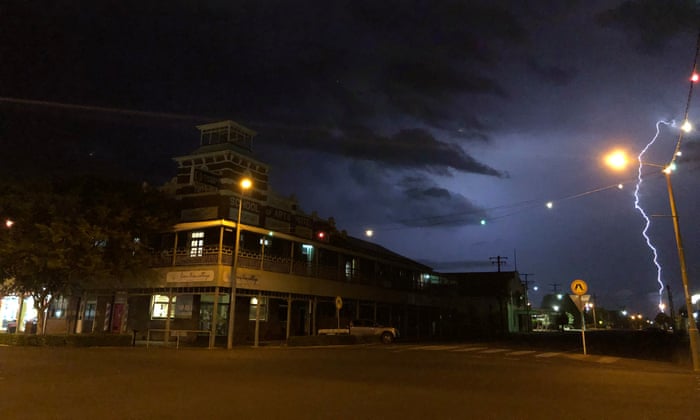
Lightning in Roma, Queensland, heralds the arrival of
the rain in mid-January. Parts of the state’s north
 have had half a metre of rain since.
In NSW “it looks like fire danger is ramping up as we head into the weekend and Saturday will be the peak day,” according to the Bureau of Meteorology’s David Wilke.
Friday would be the peak day in Victoria, bringing high humidity, hotter conditions and winds picking up, senior forecaster Richard Carlyon said.
Temperatures were expected to increase from Wednesday in NSW, rising to the low 40s on the south coast on Saturday and 41C to 43C in the Australian Capital Territory. Western Sydney could experience temperatures of up to 45C.

Read the story from The Guardian by Else Kennedy - “Heatwave to bring 45C days to NSW and Victoria with torrential rain for Queensland.” 

22 January, 2020

Great Barrier Reef group severs ties with Greyhound over Adani contract

A Great Barrier Reef conservation organisation has ended its partnership with bus company Greyhound just hours after Guardian Australia revealed the company’s contract at the controversial Adani coal project in Queensland.
Citizens of the Great Barrier Reef has ended its partnership with Greyhound Australia after the company was revealed to have a contract at the controversial Adani Carmichael coalmine.
Citizens of the Great Barrier Reef has ended its
partnership with Greyhound Australia after the
company was revealed to have a contract at the
controversial Adani Carmichael coalmine.
Citizens of the Great Barrier Reef Foundation held an emergency board meeting at 8am today, where its chairman Alex de Waal, who is the chief executive of Greyhound Australia, resigned.
Guardian Australia revealed that Greyhound had written to all its staff on 6 January, alerting them to the contract to transport workers constructing the Adani mine’s railway that will move the coal from the Galilee Basin to Adani’s Abbott Point coal port.

Read the story from The Guardian by Graham Readfearn - “Great Barrier Reef group severs ties with Greyhound over Adani contract.”

13 December, 2019

Australia’s bushfires have emitted 250m tonnes of CO2, almost half of country's annual emissions

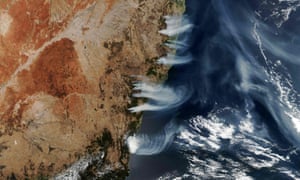
Bushfires in New South Wales and Queensland have emitted a massive pulse of CO2 into the atmosphere since August that is equivalent to almost half of Australia’s annual greenhouse gas emissions, Guardian Australia can reveal.
Analysis shows the NSW fires have emitted about 195m tonnes of CO2 since 1 August, with Queensland’s fires adding 55m tonnes.
The NSW fires emitted about 195m tonnes of CO2
since 1 August, with Queensland’s bushfires adding
55m tonnes, almost half of Australia’s annual emissions.
Analysis by Nasa shows the NSW fires have emitted about 195m tonnes of CO2 since 1 August, with Queensland’s fires adding a further 55m tonnes over the same period.
In 2018, Australia’s entire greenhouse gas footprint was 532m tonnes of carbon dioxide equivalent.

11 December, 2019

New coalmines in Queensland don’t help existing communities, they hurt them

This week in Queensland, Anthony Albanese has been devastating in exposing the lies, hypocrisy and absurdity of the National party’s election “promise” to build a new coal-fired power station. 
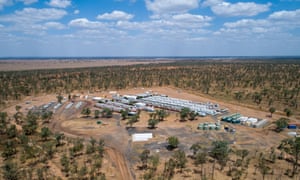
Overhead view of mine site and land clearing in campsite
The consequence of interstate competition to
attract new coalmines is that taxpayers and
the world’s climate pays a high price.
That even the idea of building such a power station hasn’t demolished the economic environmental and political credibility of the Morrison government tells you a lot about what is wrong in Australian politics today.
But how do we square the circle on the broader coal debate? Internationally, the debate between those who think it’s time we talked about fossil fuel supply (think Adani, the Keystone XL pipeline or the Canadian oil sands) and those who want to keep the focus on fossil fuel demand (think talk of targets, trajectories and closing down coal power stations) has been brewing for some time.
But there’s no need to fight. Alfred Marshall was the economist who invented what we now think of as supply and demand curves. He was once asked whether it was supply or demand that determined price – his response was that it was like asking if it was the upper or lower blade of the scissors that did the cutting.

Read the story from The Guardian by Richard Denniss - “New coalmines in Queensland don’t help existing communities, they hurt them.” 

06 October, 2019

Can recycled water be the 'next frontier' for towns running out of drinking water?

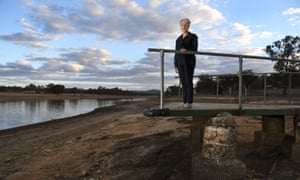
Tracy Dobie on a marooned jetty
Southern Downs regional council mayor
Tracy Dobie on a marooned jetty at
the near-empty Storm King dam near
Stanthorpe in regional Queensland.

Right now, country towns in New South Wales and Queensland are heading for that fateful “day zero” where the supplies of drinking water end and the desperate contingency plans begin.
Pipelines are one solution and daily truck arrivals are another.
But unlike about 35 cities around the world, one thing none of those towns will be able to draw on will be drinking water recycled from local wastewater.
That option, used in parts of the United States since the 1960s, has been off the table thanks, say some water industry experts, to poor planning, politicisation and the legacy of a 2006 referendum in the rural Queensland town of Toowoomba.

Read the story from The Guardian by Graham Readfearn - “Can recycled water be the 'next frontier' for towns running out of drinking water?”

14 September, 2019

Temperatures 10C above average forecast as 130 bushfires continue to burn

Firefighters in New South Wales and Queensland are gearing up for a week of unseasonably warm weather as they continue to battle blazes across the two states.

A firefighter tackles a blaze at Canungra in Queensland
A firefighter tackles a blaze at Canungra in Queensland.
 On Friday, there were still 70 fires burning in Queensland
and 45 south of the border in NSW.
And the former head of NSW’s urban fire service says early Australian bushfire seasons are here to stay, as he urges the federal government to step in as resources and firefighting assets stretch beyond current capacity.
Greg Mullins served as commissioner of Fire and Rescue NSW from 2004 until his retirement in 2017 and currently sits on the Climate Council, a national climate change communications body.

With NSW bushfires making an early mark in 2019 – including the destruction of nine homes over the past week in the state’s north – Mullins says authorities should prepare for more of the same in coming years.

He says the entire Australian strategy of tackling bushfires – sharing firefighting resources between states as the risk moves from northern states in spring to southern states in summer – is under threat.


Read the story from The Guardian by Josh Taylor - “Temperatures 10C above average forecast as 130 bushfires continue to burn." 

21 June, 2019

Queensland farmer spends $800,000 carting water as drought ravages key salad-bowl regions

A horror summer season has seen fruit and vegetable growers in Queensland go to extraordinary lengths to grow crops.
Tim Carnell inspects his produce in the packing shed.
Tomato and capsicum farmer Tim Carnell has 
spent $800,000 carting water for his crops. 
Currently 65.2 per cent of the state is drought-declared, which includes some of the state's key horticultural areas. 
Farmers in the Granite Belt have told the ABC this drought is their "worst in living memory". 
The region produces up to $350 million of fruit and vegetables every year, but this year that has been at risk with the area running out of water.
It forced one farmer, Tim Carnell, to spend more than $800,000 carting water to ensure he got a crop of tomatoes and capsicums. 

Read the ABC News story from the Queensland Country Hour - “Queensland farmer spends $800,000 carting water as drought ravages key salad-bowl regions.”

30 May, 2019

Resources Minister backs new coal plant as Labor reconsiders climate policy.

A new coal-fired power station is back on the federal government's agenda in the wake of its election victory, with ministers supporting a major project in Queensland despite calls from environmentalists to accelerate the shift to renewable energy.
Senator Matt Canavan said "a lot of people make
 comments about the coal market and they have
no bloody idea about the coal market".
Resources Minister Matt Canavan is backing the new power station proposal and pointing to the Coalition's strong vote in his home state of Queensland to warn off critics from southern states who want to halt the project.


Read the story from The Age by David Crowe - “Resources Minister backs new coal plant as Labor reconsiders climate policy.”

27 May, 2019

Adani is an environmental health risk we can't afford

No matter what you think of the merits of digging a massive new coal mine in the centre of Queensland, there’s one thing we must not forget about Adani’s proposed Carmichael coal mine in the election wash-up. It is a high-risk project proposed by a company which has failed to follow the law on numerous occasions and they have never been subjected to a proper background check for their Queensland approvals.
Labor's political opponents seized on the
 Adani issue throughout the campaign.
As reported on Friday, CFMMEU Queensland construction division state secretary Michael Ravbar has warned   Premier Annastacia Palaszczuk that Queenslanders “risk being taken for a ride by a shonky multinational with a chequered corporate history”. His concerns are well-founded.


Read the opinion piece from The Age by Arianne Wilkinson - “Adani is an environmental health risk we can't afford.”

16 April, 2019

Adani confident Labor will honour environmental approvals for its coal mine

The head of Adani Australia has said he does not believe a Shorten government poses a risk to the company's proposed Carmichael coal mine in central Queensland.


Adani's Carmichael coal mine site in central Queensland in December 2018.
"I think [Federal Labor] has been crystal clear that if they are to form government they won't be in the habit of creating sovereign risk by ripping up the existing approvals," Adani Australia CEO Lucas Dow told 7.30.
He said he was pleased by recent assurances given by Opposition Leader Bill Shorten and his Treasury spokesman Chris Bowen.


Read the story from ABC News by Peter McCutcheon - “Adani confident Labor will honour environmental approvals for its coal mine,”

12 March, 2019

Scott Morrison slaps down Barnaby Joyce on coal in damaging Coalition split on energy

Prime Minister Scott Morrison is facing a damaging Coalition split on energy and a bitter Nationals row on leadership after he pushed back at demands to help fund a new coal-fired power plant in Queensland, widening a policy gulf inside the government just two months out from the election.
Barnaby Joyce with Prime Minister Scott Morrison.
Moderate Liberals ridiculed their Nationals colleagues as unworkable and economically illiterate, with one, Brisbane MP Trevor Evans, describing proponents as “a very small and lonely minority whistling Dixie on this”.

Mr Morrison sparked concerns among the junior Coalition partner by countering calls for government help for the power project, putting him at odds with former Nationals leader Barnaby Joyce in a new test for the "marriage" of the two parties.


16 February, 2019

Coalition at odds with states over energy savings measure

Tensions between the Commonwealth and the states over national energy policy have reignited after Queensland accused the Morrison government of dumping a measure considered critical to lowering household power bills.
Energy Minister Angus Taylor and Prime Minister Scott Morrison.CREDIT:
However federal Energy Minister Angus Taylor rejects the claims, which relate to a measure making it easier for consumers to check which electricity retailer is offering the cheapest deal.


Read the story from The Age by Nicole Hasham and Shane Wright - “Coalition at odds with states over energy savings measure.”

01 February, 2019

Dozens evacuated in Queensland floods as Townsville declared a disaster zone.

The Queensland coastal city of Townsville is in emergency shutdown after storms and a monsoon trough dumped extraordinary amounts of rain in the region, causing major rivers to reach peak flood levels.
Floodwaters at a home in Bluewater pushed a shipping container on its side. 
Premier Annastacia Palaszczuk gave police evacuation powers and declared the area a disaster zone, announcing the closure of all schools and child care centres on Friday.

“We’ve had cyclones, bushfires, and now these one-in-100-year extreme flood events,’’ a government spokesman said.

“It went from a normal north Queensland wet season into something extraordinary.”
Record rainfall in recent days is set to continue as police warn isolated areas around Townsville “could get falls of up to 400 millimetres a day”.


22 December, 2018

More severe storms predicted for southern Queensland with large hail, wild winds

More severe thunderstorms are forecast for parts of Queensland this afternoon, with the possibility of damaging winds and large hail stones from the Gold Coast to the Wide Bay region.
Storm clouds over Redcliffe, north of Brisbane, on Friday afternoon.
The Bureau of Meteorology (BOM) issued a severe thunderstorm warning at 2:00pm, for damaging winds, heavy rain and large hailstones later this afternoon for people in parts of Central Highlands and Coalfields, central-west and south-east coast districts.

It said the most significant threat for damaging winds, heavy rainfall that may lead to flash flooding and large hailstones was for the Gold Coast, Scenic Rim and Southern Border Ranges areas.


20 December, 2018

Heatwave set to blaze across Queensland for next few days

Scorching weather has been predicted over the next four days in Queensland, with temperatures set to soar over 40 degrees Celsius in the state's western interior.


The Bureau of Meteorology (BOM) has predicted north-west and central-west Queensland will see temperatures of up to 43C, while the south-west of the state will reach close to 50C.

BOM meteorologist Nicholas Shera said forecasters were expecting low to severe heatwave conditions, with some extreme heatwave conditions in areas of north-west Queensland, the central-west, and especially in the south-west.

At 3:00pm on Wednesday, temperatures reached 42C in Longreach, 44C in Mount Isa and 48C in Birdsville.


Read the ABC News story by Aneeta Bhole and staff - “Heatwave set to blaze across Queensland for next few days.”

14 December, 2018

Special Climate Statement 67—an extreme heatwave on the tropical Queensland coast

A heatwave affected the north tropical and central coasts of Queensland from 24 November 2018. Numerous locations reported their highest daily maximum temperature on record for November, or for any month, with some locations breaking their previous record by a large margin.

A deep low to the east of southern New South Wales directed a warm and dry westerly airflow across Queensland, enabling several days of well above average maximum and minimum temperatures. Extreme heatwave conditions were observed in an area from Lockhart River to Shoalwater Bay on the Capricornia coast, extending to adjacent inland districts. Strong westerly winds, high temperatures and low humidity brought elevated fire danger.


02 December, 2018

Queensland fires could see heat, dry lightning and potential tropical cyclone add to state's problems

Authorities say Sunday will be a day of vigilance for fire-ravaged parts of Queensland, amid the threat of blazes caused by lightning and the possibility of a tropical cyclone brewing in the northern Coral Sea.

As 110 fires continue to burn around the state, the Bureau of Meteorology (BOM) warned it could be three or four days before relief arrives, with no significant rain on the horizon in central Queensland.

But thunderstorms without rain are a very real possibility, which could mean an increased chance of fires started by dry lightning.


13 October, 2018

How climate change policy helps farmers

Drought is ravaging the land. Large swaths of eastern Australia are experiencing some of the worst seasons on record. Frosts have wiped out large areas of crops in Western Australia, southern New South Wales and Victoria. Hail has beaten crops into the ground in Queensland.
Tony Windsor.
The government is scrambling to be seen to be doing something meaningful for farmers, particularly in Queensland where traditional National voters are looking to desert in favour of minor parties, such as One Nation and Katter’s Australian Party. In some coastal seats in the state, Labor is also doing well. Hence the scene is set for the champion of the short-term, former agriculture minister Barnaby Joyce, to weave his web of utterances that join the drought, energy and climate scepticism into an electoral defence.

At the same time, the climate change debate proceeds at a crawl without any meaningful policy regarding the risk of increased drought and other weather events. This week a report, released by the Intergovernmental Panel on Climate Change (IPCC), declared that in order to keep warming within a relatively safe 1.5 degrees Celsius, global emissions will need to be cut by 45 per cent by 2030. Coal power will need to be phased out by 2050. The world has just 12 years, according to the IPCC, to avoid a climate change catastrophe. The deputy prime minister, Michael McCormack, rejected the IPCC’s call for transition from coal, saying “some sort of report” won’t stop Australia using up its coal resources. Renewable energy, and the opportunities it offers regional Australia, is still being used as a political pawn.


Read the story by Tony Windsor from The Saturday Paper - “How climate change policy helps farmers.”