Showing posts with label devastating. Show all posts

11 December, 2019

New coalmines in Queensland don’t help existing communities, they hurt them

This week in Queensland, Anthony Albanese has been devastating in exposing the lies, hypocrisy and absurdity of the National party’s election “promise” to build a new coal-fired power station. 
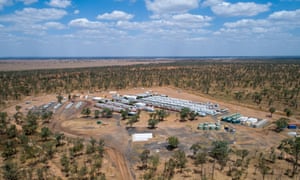
Overhead view of mine site and land clearing in campsite
The consequence of interstate competition to
attract new coalmines is that taxpayers and
the world’s climate pays a high price.
That even the idea of building such a power station hasn’t demolished the economic environmental and political credibility of the Morrison government tells you a lot about what is wrong in Australian politics today.
But how do we square the circle on the broader coal debate? Internationally, the debate between those who think it’s time we talked about fossil fuel supply (think Adani, the Keystone XL pipeline or the Canadian oil sands) and those who want to keep the focus on fossil fuel demand (think talk of targets, trajectories and closing down coal power stations) has been brewing for some time.
But there’s no need to fight. Alfred Marshall was the economist who invented what we now think of as supply and demand curves. He was once asked whether it was supply or demand that determined price – his response was that it was like asking if it was the upper or lower blade of the scissors that did the cutting.

Read the story from The Guardian by Richard Denniss - “New coalmines in Queensland don’t help existing communities, they hurt them.” 

19 September, 2019

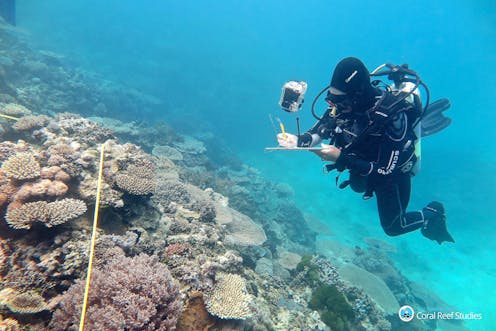
‘This situation brings me to despair’: two reef scientists share their climate grief

As I write this, much of inland eastern Australia is enduring what is likely to be the worst drought ever recorded. Bushfires are devastating parts of New South Wales and southern Queensland, tearing through rainforest that should not be dry enough to burn. Major towns will probably soon run out of water. The condition of the vital Murray-Darling river system is dire.

Image result for ‘This situation brings me to despair’: two reef scientists share their climate grief
A researcher completing bleaching surveys in the
southern Great Barrier Reef after a major bleaching event. 
Some federal government MPs have responded by questioning whether these events are linked to anthropogenic, or man-made, climate change. Others deny the science outright. Now we have a politically motivated Senate inquiry into water quality on the Great Barrier Reef.

This situation brings me to despair. For the past 45 years I have researched and managed coral reef water quality in Australia and overseas. Now 72, I see that much of my work, and that of my colleagues, has not led to a bright future for coral reefs. In decades to come they will probably still contain some corals, but ecologically speaking they will not be growing, or even functioning.


21 October, 2018

Florida Republicans confronted with climate change as midterms loom

Caught between recovering from a devastating, unprecedented hurricane and an ongoing algae crisis, Florida Republicans are increasingly facing pressure to address climate change from constituents as election day draws near — but many have found themselves floundering on the issue.
REP. CARLOS CURBELO, R-FLA., SPEAKS
WITH REPORTERS AS HE LEAVES SPEAKER
 RYAN'S OFFICE ON THURSDAY, JUNE 21, 2018,
AS HOUSE GOP LEADERSHIP TRIES TO FIND
 A PATH TO PASS IMMIGRATION LEGISLATION.
Pressure to discuss climate change has accelerated in the aftermath of Hurricane Michael, which has killed at least 21 people so far in Northwest Florida and reduced some areas in the Panhandle to rubble. Amid an election cycle that has largely centered environmental crises, all eyes are increasingly on Florida Republicans, many of whom have a lengthy history of downplaying climate change and its risks.

But when asked about the relationship between warming ocean waters and an uptick in deadly and historic hurricanes, several Republicans have tried to deflect the issue.


Read the story by E.A.Cruden from ThinkProgress - “Florida Republicans confronted with climate change as midterms loom.”

10 January, 2018

Weather disasters cost the US a record $390 billion in 2017

Washington: Hurricanes Harvey, Irma and Maria combined with devastating Western wildfires and other natural catastrophes to make 2017 the most expensive year on record for disasters, the National Oceanic and Atmospheric Administration reported on Monday.
Firefighter Ryan Spencer battles a wildfire as it burns
along a hillside toward homes in La Conchita, California in December. 
The disasters caused $US306 billion ($390 billion) in total damage in 2017, with 16 separate events that caused more than $1 billion in damage each. The bulk of the damage, at $265 billion, came from hurricanes in particular.


Read Chris Mooney’s story in today’s Melbourne Age - “Weather disasters cost the US a record $390 billion in 2017.”

07 June, 2017

A climate chain reaction: Major Greenland melting could devastate crops in Africa

As melting Greenland glaciers continue to pour ice into the Arctic Ocean, we have more than the rising seas to worry about, scientists say. A new study suggests that if it gets large enough, the influx of freshwater from the melting ice sheet could disrupt the flow of a major ocean current system, which in turn could dry out Africa’s Sahel, a narrow region of land stretching from Mauritania in the west to Sudan in the east.
A NASA photo shows the Heimdal Glacier in
southern Greenland, captured Oct. 13, 2015. 
The consequence could be devastating agricultural losses as the area’s climate shifts. And in the most severe scenarios, tens of millions of people could be forced to migrate from the area.

“The implications, when expressed in terms of vulnerability of the population in the region are really dramatic and bring home just how sensitive livelihoods are in this region to climatic change,” said Christopher Taylor, a meteorologist at the Center for Ecology and Hydrology in the United Kingdom and an expert on the West African climate, who was not involved with the new research.

Read Chelsea Harvey’s story on The Washington Post - “A climate chain reaction: Major Greenland melting could devastate crops in Africa.”

24 November, 2016

Trump to scrap NASA climate research in crackdown on ‘politicized science’


‘….the elimination of Earth sciences would be “a major setback if not devastating’ – Kevin Trenbarth

Donald Trump - he intends to
 strip NASA of its climate
change funding in a crackdown
on 'politicized science'.
Donald Trump is poised to eliminate all climate change research conducted by NASA as part of a crackdown on “politicized science”, his senior adviser on issues relating to the space agency has said.

NASA’s Earth science division is set to be stripped of funding in favor of exploration of deep space, with the president-elect having set a goal during the campaign to explore the entire solar system by the end of the century.

This would mean the elimination of Nasa’s world-renowned research into temperature, ice, clouds and other climate phenomena. Nasa’s network of satellites provide a wealth of information on climate change, with the Earth science division’s budget set to grow to $2bn next year. By comparison, space exploration has been scaled back somewhat, with a proposed budget of $2.8bn in 2017.

Bob Walker, a senior Trump campaign adviser, said there was no need for Nasa to do what he has previously described as “politically correct environmental monitoring”.

Read Oliver Milman’s story on The Guardian - “Trump to scrap NASA climate research in crackdown on ‘politicized science’.”

05 March, 2016

Farmers struggle to preserve land left exposed after bushfires

Valuable South Australian
farmland stripped bare after
recent devastating fires.
A huge expanse of normally productive farming land in South Australia's mid north now looks more like a desert after a bushfire tore through 85,000 hectares last November, killing two people.

"We're pretty well looking at 55,000 hectares at least of bare land which is something we haven't seen for a long time," Mary-Anne Young from Primary Industries and Regions SA (PIRSA), said.

"In a drought there may be a paddock here and a paddock there or every second paddock, but in this situation all of the land has been exposed and it's all drifting."

23 January, 2015

Profit, in the modern sense, and the sustenance of human life are incompatible


Profit and a regard for sustaining earth’s suitability for humans are incompatibly, particularly if profit is considered in contemporary terms.

Reporting on Davos 2015, The Guardian says: “It’s not possible to listen to petroleum industry executives defending their reckless extraction of oil without feeling that we are living in an age of madness.”

A private conversation under the Chatham House rules, one of the world’s most senior industry leaders, who is considered to be at the more moderate end of the spectrum, insisted that we are going to burn all the world’s hydrocarbons despite the consequences.

Former U.S. vice-president and committed climate change activist, Al Gore, has accused the world’s oil companies of using the atmosphere as an open sewer.

Lord Stern, who wrote the landmark 2006 Stern review of the economics of climate change, says it is no surprise oil executives are seeking to defend their corner, who, like Gore, said basic arithmetic tells us that it is impossible to burn all the world’s hydrocarbons without devastating consequences.

He points out that the earth has not seen a 3C rise for 3m years, he pointed out, and it has been tens of millions of year since there has been a 4C rise.

01 December, 2014

Scientific evidence abounds and now we see the physical face of climate change


Southern France - this is what six months
 of rain in just 24-hours will do. The
 physical evidence of climate change.
The scientific evidence of climate change abounds and now there is unequivocal physical evidence that humans have seriously disturbed the fine chemical balance in earth’s atmosphere.

Brisbane is presently recovering from what has been described as a “freak storm” that swept through the Australian city that resulted in damage exceeding $150 million.

Now, France is experiencing the practical realities of climate change with southern parts of the country being swamped by massive floods.

France 24 reports in a story headed: “Devastating floods sweep across southern France” that the worst flooding in southern France has claimed five lives and forced nearly 3000 people to evacuate their homes.