Showing posts with label Anthony Albanese. Show all posts

27 February, 2020

Global finance leaves Australia behind in the march to net-zero emissions

Scott Morrison dismissed Anthony Albanese’s commitment to net-zero emissions by 2050 as "Bill Shorten 2.0". Surely better than the Prime Minister's effort – Tony Abbott 4.0. Then there's the equation proposed by the Nationals' senator Matt Canavan: net-zero emissions equals net-zero jobs. So, that would amount to no job losses, eh? Oh, the tyranny of all-too-simplistic slogans.
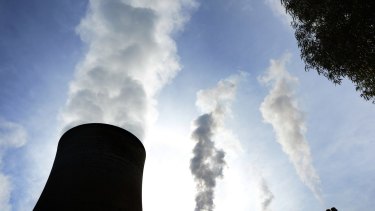
EnergyAustralia's Yallourn generator.
The world, meanwhile, is leaving Australia behind. While our politicians dither, a net-zero target is now embraced by almost half of the world’s gross domestic product – some 121 nations. It was just 16 per cent of GDP nine months ago, according to the Energy and Climate Intelligence Unit in Britain. Major global financial institutions, too, are declaring their exit from coal.
In Australia, where Labor has declared its commitment to net-zero by 2050, the party should be under scrutiny to provide its thinking on transition pathways and how they will be managed. But so should the Morrison government be pressured to substantiate its claim that Labor's path would cost jobs, raise electricity prices and hurt regional Australia. Both the Coalition and Labor should admit the tremendous opportunities for new industries and jobs from an effective energy transition.

Read the opinion piece from The Age by John Hewson - “Global finance leaves Australia behind in the march to net-zero emissions.”

26 February, 2020

Labor’s biggest climate problem is itself

Anthony Albanese doesn’t need to convince the majority of Australian voters to support his plan for net zero emissions by 2050. Let me say that again: Labor doesn’t need to “sell” its climate change policy. Instead, it’s an issue that needs to be managed.
Anthony Albanese.
The assumption that every prescription taken to an election must get majority support is just one of those fallacies of political analysis. As noted before, no one would seriously assert that Labor’s tenth-order campaign promise to “increase the numbers of doctors in remote, rural and regional Australia” got a thumbs down from the voters when they elected the Coalition in May last year. People voted primarily on other stuff. Not everything in a campaign is a vote decider; in fact, most of it isn’t.
It is revisionism of the highest order to describe climate policy as meaningfully responsible for Labor’s 2019 defeat. The fault for the loss of that winnable contest lies with the big juicy targets the party presented to the government, most importantly the thing the Coalition (and some in the media, helpfully) dubbed “the retirement tax,” along with the fictional “death tax” and the very real housing policy — probably in that order. Throw in Bill Shorten’s evasive demeanour and longer-term doubts about Labor and the economy (which both Bob Hawke and Kevin Rudd also had to deal with to win office), and it was a perfect storm.

Read the story from Inside Story by Peter Brent - “Labor’s biggest climate problem is itself.”

25 February, 2020

Labor’s climate policy is too little, too late. We must run faster to win the race

Opposition leader Anthony Albanese’s announcement on Friday that a Labor government would adopt a target of net-zero emissions by 2050 was a big step in the right direction. But a bit of simple maths reveals the policy is too little, too late.
Image result for Labor’s climate policy is too little, too late. We must run faster to win the race
Simple maths reveals it's too little, too late!
Perhaps the most robust way to assess whether a proposed climate action is strong enough to meet a temperature target is to apply the “carbon budget” approach. A carbon budget is the cumulative amount of carbon dioxide the world can emit to stay within a desired temperature target.
Once the budget is spent (in other words, the carbon dioxide is emitted), the world must have achieved net-zero emissions if the temperature target is to be met.
So let’s take a look at how Labor’s target stacks up against the remaining carbon budget.

Read the story from The Conversation by Will Steffen - “Labor’s climate policy is too little, too late. We must run faster to win the race.”

23 February, 2020

Anthony Albanese says Labor's 2050 zero-emissions target will be economy wide

Federal Opposition Leader Anthony Albanese has confirmed Labor's 2050 commitment to reduce carbon emissions is "economy wide".
A close up shot of Anthony Albanese looking away from the camera, with a concerned expression.
Mr Albanese says all energy sources
 need to be a part of the solution.
Shadow Cabinet has agreed to back the net zero-emissions international target by the middle of the century.
Labor went to the last election with the same overarching policy, but made special consideration for agriculture and transport. 
Mr Albanese said all energy sources needed to be a part of the solution.
"Net zero is carbon neutral so it's not just about reducing emissions, it's also about practices that can make a difference in terms of going negative emissions if you like and you can do that through agriculture, through forestry," Mr Albanese said.

Read the ABC News story by Anna Henderson - “Anthony Albanese says Labor's 2050 zero-emissions target will be economy wide.”


22 February, 2020

Labor MPs concern over job losses from 2050 climate target

Anthony Albanese's Labor colleagues want him to guarantee his aim to achieve zero net greenhouse gas emissions by 2050 won't send power prices soaring, make the energy grid more unreliable and cause mass job losses.
Labor leader Anthony Albanese is facing calls from his MPs to make sure jobs aren't lost in a transition to a net zero carbon emissions economy.
Labor leader Anthony Albanese is facing calls from his
 MPs to make sure jobs aren't lost in a transition to a
net-zero carbon emissions economy.
A group of Labor MPs now fear the Labor leader's move to set the long-term target has placed the party in a position of having climate goals, but no detailed plans on how to achieve them.
Some MPs told The Sydney Morning Herald and The Age they also want Mr Albanese to re-embrace carbon capture and storage technology as a way to reduce emissions.
The Opposition Leader maintains the net zero target, which was ticked off by shadow cabinet late last month after a lengthy debate, needed to be announced before more detailed measures are unveiled closer to the election.

Read the story from The Age by Mike Foley and Anthony Galloway - “Labor MPs concern over job losses from 2050 climate target.”

21 February, 2020

Bushfires highlight need for urgent climate action and 'a real target', Anthony Albanese says

Labor has to take the initiative in defending Australia against the dangers of climate change because the summer of catastrophe has highlighted our national vulnerability and because business and the states are now demanding national leadership, according to Anthony Albanese.
Anthony Albanese
Anthony Albanese - net-zero target by 2050.
As revealed by Guardian Australia, the Labor leader will use a speech to a progressive thinktank on Friday to commit the ALP to adopting a net-zero target by 2050 if it wins the next federal election, without the use of carryover credits from the Kyoto period.
While Scott Morrison is holding off from making a commitment to carbon neutrality by 2050, partly because of an internal brawl within the Coalition and partly because the prime minister says Australia should not sign up to targets in the absence of costings, Albanese will say on Friday that adopting net-zero “should be as non-controversial in Australia as it is in most nations”.

Read the story from The Guardian by Katharine Murphy - “Bushfires highlight need for urgent climate action and 'a real target', Anthony Albanese says.”

19 January, 2020

Anthony Albanese flags 'ambitious' emissions target but won't recommit to 45% reduction

Anthony Albanese has described the decision to recommit to a 45% emissions reduction target by 2030 as “a mistake” and declared Labor would not take the same franking credits policy to the next election.
Federal opposition leader Anthony Albanese
Anthony Albanese on Labor’s 2019 election policies:
‘Everything stayed the same and we just added
more on … [which] doesn’t end well.’
In comments to Sky News on Sunday, Albanese confirmed Labor had repositioned by dumping its 2016 election commitments since “our policies aren’t there until we announce them proactively, positively”.
Albanese promised Labor would “take climate change seriously” and had a “very strong” policy that aimed to be “as ambitious as possible” but did not commit to outbid the Coalition because he hoped the Morrison government would take action before the next election.

Read the story from The Guardian by Paul Karp - “Anthony Albanese flags 'ambitious' emissions target but won't recommit to 45% reduction.” 

11 December, 2019

New coalmines in Queensland don’t help existing communities, they hurt them

This week in Queensland, Anthony Albanese has been devastating in exposing the lies, hypocrisy and absurdity of the National party’s election “promise” to build a new coal-fired power station. 
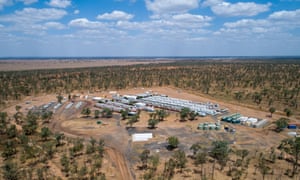
Overhead view of mine site and land clearing in campsite
The consequence of interstate competition to
attract new coalmines is that taxpayers and
the world’s climate pays a high price.
That even the idea of building such a power station hasn’t demolished the economic environmental and political credibility of the Morrison government tells you a lot about what is wrong in Australian politics today.
But how do we square the circle on the broader coal debate? Internationally, the debate between those who think it’s time we talked about fossil fuel supply (think Adani, the Keystone XL pipeline or the Canadian oil sands) and those who want to keep the focus on fossil fuel demand (think talk of targets, trajectories and closing down coal power stations) has been brewing for some time.
But there’s no need to fight. Alfred Marshall was the economist who invented what we now think of as supply and demand curves. He was once asked whether it was supply or demand that determined price – his response was that it was like asking if it was the upper or lower blade of the scissors that did the cutting.

Read the story from The Guardian by Richard Denniss - “New coalmines in Queensland don’t help existing communities, they hurt them.” 

29 October, 2019

Anthony Albanese recasts Labor's climate policy to make it 'all about jobs’

Anthony Albanese
Labor leader Anthony Albanese wants his
party's climate policy to be all about jobs. 

Anthony Albanese will seek to recast Labor’s climate policy as part of a new industrial “revolution”, saying the shift to clean energy will underpin an Australian manufacturing boom that unlocks new jobs and export opportunities.
In the first of the Labor leader’s vision statements that aim to reposition the party in the wake of the May election loss, Albanese will focus on jobs and the future of work, with a heavy emphasis on the job-creating potential of a low-carbon economy.
“The world is decarbonising. With the right planning and vision, Australia can not only continue to be an energy exporting superpower, we can also enjoy a new manufacturing boom. This means jobs,” Albanese will tell the Centre of Economic Development in Perth on Tuesday, according to excerpts of the speech released in advance.

Read the story from The Guardian by Sarah Martin - “Anthony Albanese recasts Labor's climate policy to make it 'all about jobs’.”