Showing posts with label net-zero emissions. Show all posts

05 May, 2020

Westpac abandons funding for thermal coal mining

Westpac says it will stop funding mining projects for coal to be used for power generation by 2030, as part of a broader commitment to reach a net-zero emissions business model by 2050.
It will also ensure that the emissions produced by the energy production projects it does finance are dramatically reduced by 2030.
In a statement, Westpac said it recognised that climate change was one of the most significant issues facing the “global economy and our way of life” and said it believed economic growth and emissions reductions were complementary goals.
According to Tim Buckley, a coal analyst with the Institute for Energy Economics and Financial Analysis, which supports a shift to a decarbonised economy, Westpac is the 30th major international financial institution this year to declare it was abandoning coal.
Read the story from The Age by Nick O’Malley - “Westpac abandons funding for thermal coal mining.”

27 February, 2020

Global finance leaves Australia behind in the march to net-zero emissions

Scott Morrison dismissed Anthony Albanese’s commitment to net-zero emissions by 2050 as "Bill Shorten 2.0". Surely better than the Prime Minister's effort – Tony Abbott 4.0. Then there's the equation proposed by the Nationals' senator Matt Canavan: net-zero emissions equals net-zero jobs. So, that would amount to no job losses, eh? Oh, the tyranny of all-too-simplistic slogans.

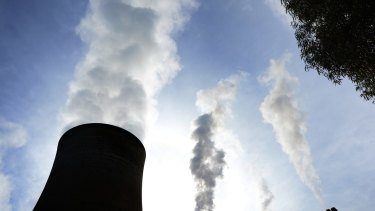
EnergyAustralia's Yallourn generator.
The world, meanwhile, is leaving Australia behind. While our politicians dither, a net-zero target is now embraced by almost half of the world’s gross domestic product – some 121 nations. It was just 16 per cent of GDP nine months ago, according to the Energy and Climate Intelligence Unit in Britain. Major global financial institutions, too, are declaring their exit from coal.
In Australia, where Labor has declared its commitment to net-zero by 2050, the party should be under scrutiny to provide its thinking on transition pathways and how they will be managed. But so should the Morrison government be pressured to substantiate its claim that Labor's path would cost jobs, raise electricity prices and hurt regional Australia. Both the Coalition and Labor should admit the tremendous opportunities for new industries and jobs from an effective energy transition.

Read the opinion piece from The Age by John Hewson - “Global finance leaves Australia behind in the march to net-zero emissions.”

26 February, 2020

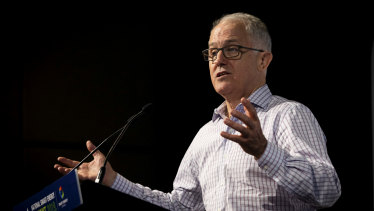
Turnbull warns of 'catastrophic' future if we don't move to net zero

Former prime minister Malcolm Turnbull has slammed the "false" and "misleading" claims in Parliament about the risk of achieving net zero emissions, rebuking his former colleagues for ignoring the cost of inaction on climate change.
Malcolm Turnbull.
Malcolm Turnbull - warnings of a "catastrophic future".
Mr Turnbull warned of a "catastrophic" future if Australia and other countries did not move to net zero greenhouse gas emissions as soon as possible, throwing more weight behind a 2050 deadline for target.
In a blunt speech to the Informa conference of energy executives, he fired a series of warning shots at Prime Minister Scott Morrison by warning the "bubble" debate in Canberra put the country in danger from inaction on climate change.
"We've got to stop this false debate, this misleading debate about whether getting to net zero emissions by 2050 ... is something that's optional," he said in Sydney on Tuesday.

Read the story from The Age by David Crowe - “Turnbull warns of 'catastrophic' future if we don't move to net zero.”

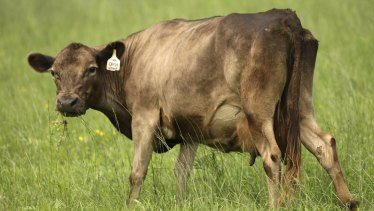
A net-zero emissions future provides a great opportunity for farmers

The recent announcement by federal Labor to target net zero emissions by 2050 provides a great opportunity for the agricultural sector in Australia to diversify and thrive.  I’ve watched with interest as some suggest this policy will wipe out Australian agriculture, just as they hypothesised the same for the fossil fuel industry. Nothing could be further from the truth. I see there is a huge opportunity for both farmers and brand Australia. However, we need to compare apples with apples – not apples to coal, as some are trying to do.
Although agricultural production contributes around 15 per cent of emissions, it also provides the greatest opportunity to reverse the current trajectory and get a two-for-one benefit in the process.
The red meat industry is committed to net zero emissions by 2030.
You see, investing in research and helping farmers change some agricultural practices will not only reduce CO2 and greenhouse gas emissions but sequestering carbon can actually reverse some of the damage. Additionally it makes famers more resilient to climate change.


Read the story from The Sydney Morning Herald by Niall Blair - “A net-zero emissions future provides a great opportunity for farmers.”

25 February, 2020

Labor’s climate policy is too little, too late. We must run faster to win the race

Opposition leader Anthony Albanese’s announcement on Friday that a Labor government would adopt a target of net-zero emissions by 2050 was a big step in the right direction. But a bit of simple maths reveals the policy is too little, too late.
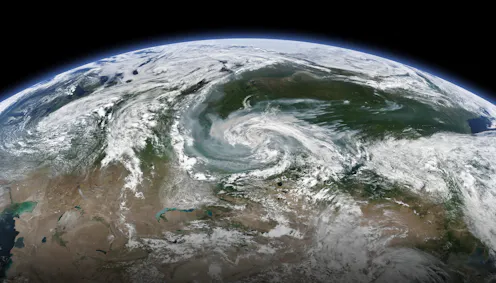
Image result for Labor’s climate policy is too little, too late. We must run faster to win the race
Simple maths reveals it's too little, too late!
Perhaps the most robust way to assess whether a proposed climate action is strong enough to meet a temperature target is to apply the “carbon budget” approach. A carbon budget is the cumulative amount of carbon dioxide the world can emit to stay within a desired temperature target.
Once the budget is spent (in other words, the carbon dioxide is emitted), the world must have achieved net-zero emissions if the temperature target is to be met.
So let’s take a look at how Labor’s target stacks up against the remaining carbon budget.

Read the story from The Conversation by Will Steffen - “Labor’s climate policy is too little, too late. We must run faster to win the race.”